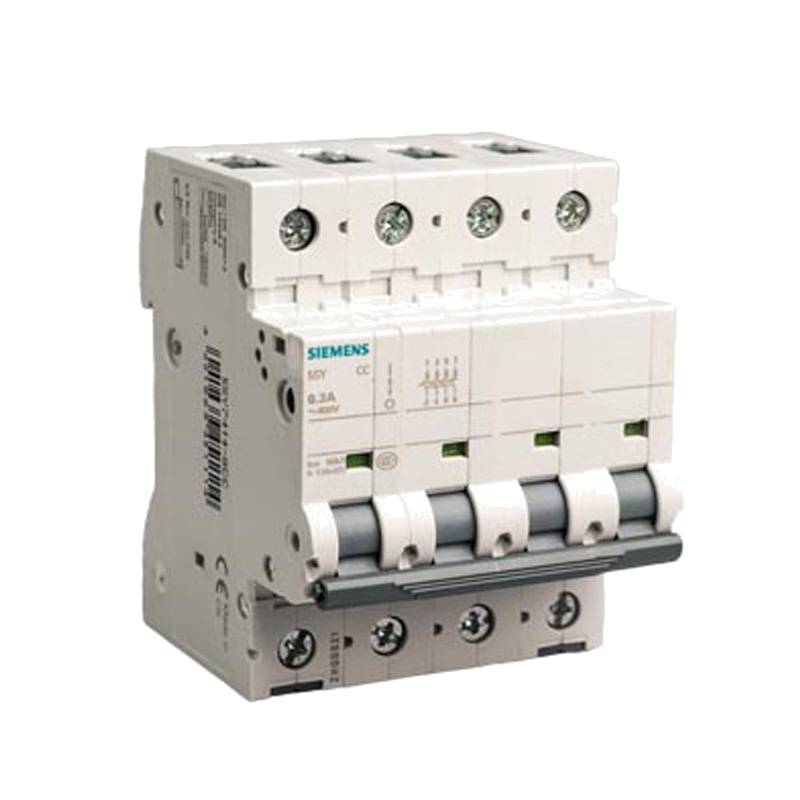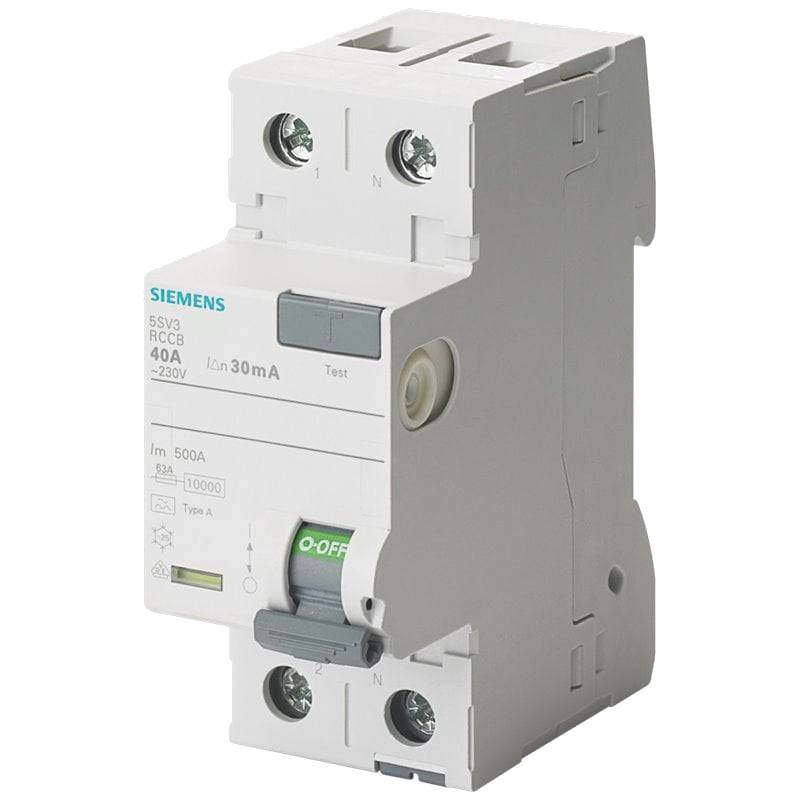












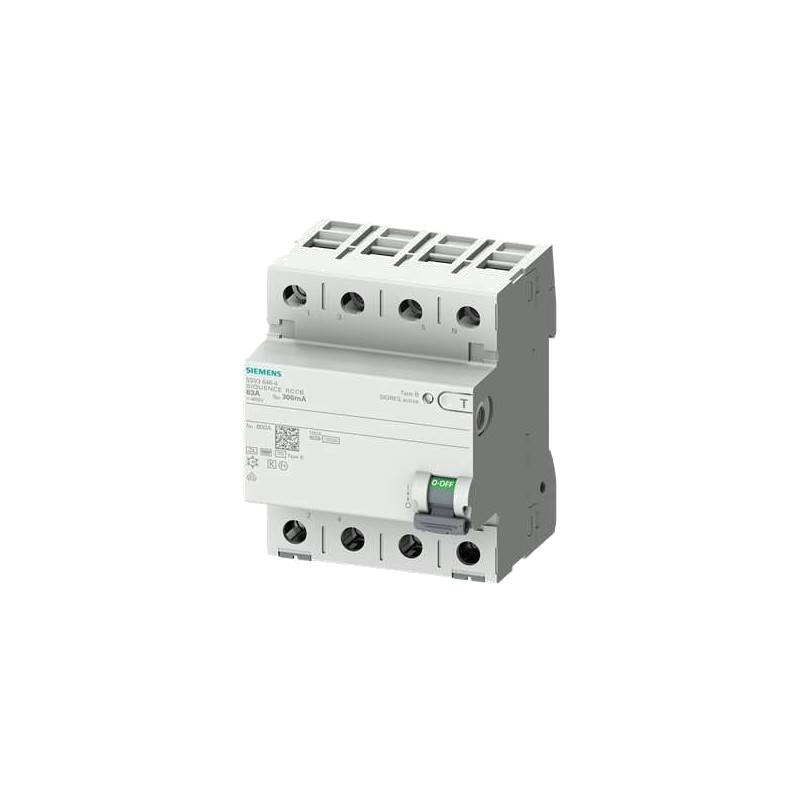
Siemens 5SV4342-0 Residual Current RCBO 4P 25A 30mA


The Siemens 5SV4342-0 Residual Current RCBO 4P 25A 30mA is a sophisticated circuit protection device designed for robust electrical safety in demanding industrial and commercial environments. This 4-pole Residual Current Circuit Breaker with Overcurrent protection (RCBO) offers a critical combination of overcurrent and earth leakage detection, safeguarding both personnel and equipment from electrical hazards. Its key advantages lie in its comprehensive protection capabilities, compact design, and Siemens' renowned reliability. Core features include a rated current of 25A, a highly sensitive tripping current of 30mA for early detection of dangerous earth faults, and a breaking capacity suitable for typical industrial fault levels. This device is engineered to meet stringent international safety standards, providing peace of mind for critical installations.
Product Specifications
| Feature | Specification |
| :----------------------- | :---------------------------------------- |
| Product Type | Residual Current RCBO |
| Manufacturer | Siemens |
| Model Number | 5SV4342-0 |
| Number of Poles | 4-Pole (4P) |
| Rated Current (In) | 25A |
| Rated Residual Operating Current (IΔn) | 30mA |
| Tripping Characteristic | Type AC (sensitive to sinusoidal AC residual currents) |
| Rated Voltage (Un) | 400V AC |
| Frequency | 50/60 Hz |
| Breaking Capacity (Icn) | 6kA (typical for this series) |
| Mounting Type | DIN Rail |
| Terminal Type | Screw Terminals |
| Protection Class | IP20 (device body) |
Core Features & Market Positioning
The Siemens 5SV4342-0 RCBO stands out in the market due to its integrated approach to circuit protection, combining the functions of a residual current device (RCD) and an overcurrent protective device (MCB) into a single, space-saving unit. This integration simplifies panel design and reduces installation complexity compared to using separate devices. Siemens' reputation for quality and durability is a significant market differentiator, ensuring a long operational lifespan even in harsh industrial settings. The 30mA sensitivity is crucial for protecting individuals against indirect contact, a standard requirement in many safety regulations. Furthermore, its Type AC characteristic makes it suitable for applications where AC fault currents are anticipated, a common scenario in many industrial power distribution systems.
Key Application Scenarios
This 4-pole RCBO is ideally suited for distribution boards in commercial buildings, industrial facilities, and specialized applications requiring robust protection against both earth faults and overcurrents. It provides essential safety for circuits powering machinery, control panels, and lighting systems where the presence of multiple conductors necessitates a 4-pole device. Specific scenarios include protecting circuits in manufacturing plants, data centers, and areas with higher humidity or potential for conductive dust, where the risk of earth leakage is amplified. Its application is critical in ensuring compliance with electrical safety codes and preventing costly downtime due to electrical faults.
Practical System Integration Guidance
Integrating the Siemens 5SV4342-0 RCBO into existing or new electrical systems is straightforward due to its standard DIN rail mounting and familiar terminal configuration. Wiring requires connecting the incoming live and neutral conductors to the line terminals and the outgoing protected circuit to the load terminals. For a 4-pole device, all four incoming conductors (L1, L2, L3, N) from the power source are connected to the corresponding line terminals, and the outgoing conductors from the protected load are connected to the respective load terminals. Proper grounding of the system is paramount, with the RCBO facilitating the detection of residual currents that indicate a fault path to earth. Overcurrent protection is managed by the internal thermal-magnetic tripping mechanism, which activates at specific overcurrent thresholds.
Operation and Risk Mitigation
The primary function of the Siemens 5SV4342-0 is to detect imbalances in the current flowing into and out of a circuit. When an imbalance exceeding 30mA occurs, indicative of current leaking to earth, the RCBO rapidly disconnects the circuit, preventing electric shock and potential fires. The overcurrent protection operates similarly to a standard circuit breaker, tripping due to sustained overloads or short circuits. To mitigate risks, ensure the device is correctly rated for the circuit's load and fault current levels. Regular testing of the residual current function using the integrated test button is crucial to verify its operational readiness. Avoid connecting single-phase loads to all four poles simultaneously; the 4-pole configuration is intended for three-phase circuits with a neutral conductor.
Scalability & Long-Term Value
While the Siemens 5SV4342-0 is a standalone protection device, its value is amplified within Siemens' broader industrial automation and power distribution ecosystem. It offers compatibility with other Siemens components, such as industrial circuit breakers, contactors, and control gear, allowing for integrated system solutions. For facilities undergoing digital transformation, such devices can be part of a larger smart electrical infrastructure, enabling remote monitoring and diagnostics if integrated with appropriate communication modules or advanced meter interfaces, aligning with IIoT principles. Its robust construction ensures long-term reliability, minimizing the need for frequent replacements and contributing to the overall operational efficiency and safety of the electrical system.
Frequently Asked Questions
What is the primary function of the Siemens 5SV4342-0?
This device integrates residual current and overcurrent protection. It safeguards against electric shock and equipment damage.
It detects earth leakage currents as low as 30mA. It also trips on overloads and short circuits.
The 4-pole design is suitable for three-phase systems. It ensures comprehensive circuit safety.
What does "4P 25A 30mA" signify?
"4P" denotes four poles, for three-phase plus neutral circuits. "25A" is the rated current the circuit can continuously handle.
"30mA" indicates the sensitivity for residual current detection. This is crucial for personal protection against electric shock.
These parameters define its capacity and safety features for specific electrical applications.
Is the Siemens 5SV4342-0 suitable for residential use?
This RCBO is designed for industrial and commercial applications. It offers higher breaking capacity and robust construction.
While it can provide safety, residential needs often use simpler 2-pole RCDs or RCBOs. Local regulations may differ.
Its 4-pole configuration is typically unnecessary for standard home electrical panels.
What is the breaking capacity of this RCBO?
The Siemens 5SV4342-0 generally has a breaking capacity of 6kA. This is suitable for many industrial and commercial fault levels.
This rating indicates the maximum fault current it can safely interrupt without damage. It's a critical safety specification.
Always verify the specific breaking capacity against the anticipated fault current of the installation.
How do I test the residual current function?
Locate the test button, usually marked with a "T" on the front of the device. Press and hold the button.
The RCBO should trip immediately, disconnecting the circuit. This confirms the residual current detection mechanism is working.
Perform these tests periodically, as recommended by safety standards, to ensure continued protection.
Can I use this for single-phase applications?
While technically possible to connect a single-phase load across two poles, it's not its intended primary use.
The 4-pole design is optimized for protecting three-phase circuits, including the neutral conductor. Using it for single-phase may be inefficient.
For single-phase protection, a 2-pole RCBO is usually the appropriate and more cost-effective choice.
What type of residual currents does it detect?
The "Type AC" designation means it is sensitive to sinusoidal AC residual currents. These are common in many electrical faults.
It is not designed to detect pulsating DC or smooth DC residual currents. For those, Type A, B, or F RCBOs are needed.
Understanding the potential fault current types in your application is key to selecting the correct RCBO.
How is this different from a standard circuit breaker?
A standard circuit breaker (MCB) only provides overcurrent protection (overload and short circuit). The RCBO adds earth leakage protection.
The RCBO combines the functions of an MCB and an RCD in a single unit, saving space and simplifying wiring.
This dual protection is essential for enhanced safety, especially in environments where personnel are present.
What is the warranty period for Siemens RCBOs?
Warranty periods can vary by region and distributor. Typically, industrial electrical components have a standard warranty of 12-24 months.
It is best to check the specific warranty terms provided by the supplier or Siemens directly for the most accurate information.
Proper installation and adherence to operational guidelines usually form the basis of warranty validity.
Where can I find the manual for the 5SV4342-0?
The product manual is usually available on the Siemens Industry Online Support (SIOS) portal. Search for the exact product number.
Alternatively, contact your Siemens sales representative or authorized distributor. They can provide technical documentation.
Referencing the manual ensures correct installation, operation, and maintenance procedures are followed.