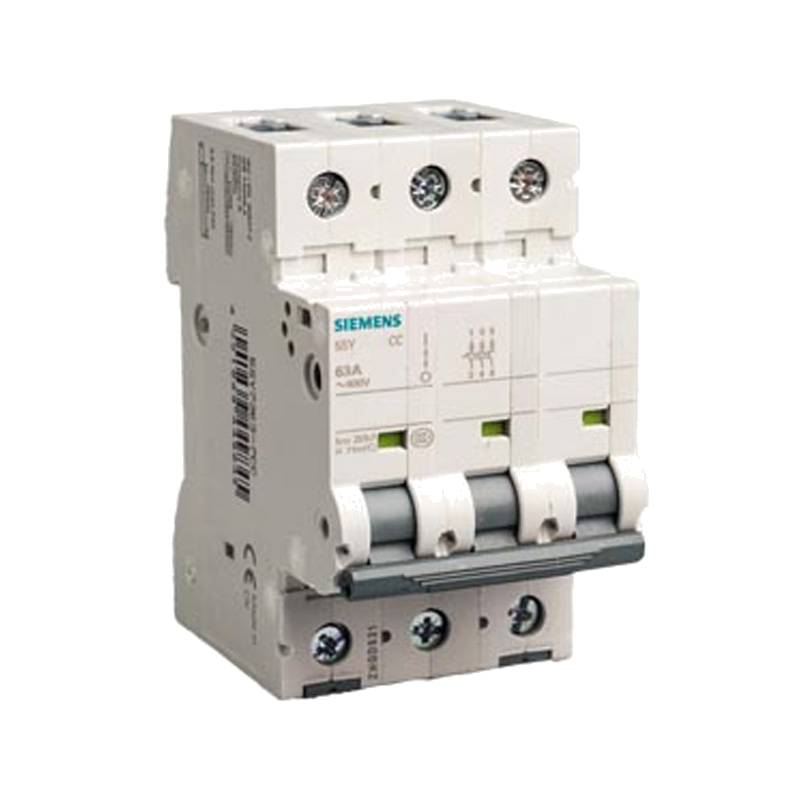













Siemens 3VA1116-4EE32-0AA0 High Breaking Capacity Molded Case Circuit Breaker 160A 3P 36kA


The Siemens 3VA1116-4EE32-0AA0 is a high-performance molded case circuit breaker designed for robust protection in industrial electrical systems. Boasting a breaking capacity of 36kA and a 160A rating across three poles, this breaker offers superior safety and reliability for critical infrastructure. Its advanced molded case construction ensures durability and compact design, facilitating seamless integration into various switchgear configurations. With its inherent reliability and adherence to stringent industry standards, the 3VA1116-4EE32-0AA0 provides essential overcurrent and short-circuit protection, safeguarding equipment and personnel.
Product Specifications
| Parameter | Value |
| :------------------------ | :-------------------------------------- |
| Manufacturer | Siemens |
| Product Series | 3VA |
| Model Number | 3VA1116-4EE32-0AA0 |
| Rated Current (In) | 160 A |
| Number of Poles | 3P |
| Breaking Capacity (Icu) | 36 kA |
| Frame Size | 160 |
| Type | Molded Case Circuit Breaker (MCCB) |
| Rated Voltage (Ue) | 400/415 V AC |
| Tripping Type | Electronic Trip Unit (ETU) |
| Overload Protection | Adjustable |
| Short-Circuit Protection | Adjustable |
| Ground Fault Protection | Optional |
| Mounting Type | DIN Rail / Panel Mount |
| Operating Temperature | -25 to +70 °C |
| Standards Compliance | IEC 60947-2, UL 489, CSA C22.2 No. 5 |
| Connection Type | Lug Terminals |
| Dimensions (H x W x D) | Varies by specific mounting |
Core Features & Market Positioning
The Siemens 3VA1116-4EE32-0AA0 stands out in the industrial circuit breaker market due to its combination of high breaking capacity and advanced electronic trip unit technology. This enables precise and reliable protection against overloads and short circuits, minimizing downtime and preventing damage to sensitive equipment. Its robust construction and compliance with multiple international standards (IEC, UL, CSA) position it as a versatile solution for global applications. The adjustability of the overload and short-circuit protection settings provides significant flexibility, allowing engineers to tailor protection levels to specific system requirements, a key differentiator in competitive industrial settings. The integration capabilities with Siemens' broader industrial automation platforms further enhance its value proposition for smart factory and IIoT deployments.
Key Application Scenarios
This Siemens 3VA1116-4EE32-0AA0 circuit breaker is ideally suited for distribution panels, motor control centers, and sub-distribution boards within various industrial environments. Its high breaking capacity of 36kA makes it a critical component in areas with potentially high fault currents, such as manufacturing plants, data centers, and commercial buildings. Applications include protecting main power feeds, branch circuits, and individual machinery. The electronic trip unit's adjustability is particularly beneficial for motor protection, where nuanced overload and short-circuit settings are crucial to prevent nuisance tripping while ensuring adequate protection.
Practical System Integration Guidance
Integrating the Siemens 3VA1116-4EE32-0AA0 into existing electrical infrastructure is straightforward due to its standard mounting options and connection terminals. For installation, ensure the breaker is de-energized and isolated. Connect the incoming power to the line-side terminals and outgoing load connections to the load-side terminals, strictly adhering to torque specifications for secure lug connections. Commissioning involves setting the overload (Ir) and short-circuit (Im) trip parameters via the electronic trip unit's interface, typically using integrated buttons and a display, or via communication interfaces if equipped. Ensure the rated voltage and frequency match the system.
Operation and Risk Mitigation
Safe operation of the Siemens 3VA1116-4EE32-0AA0 requires adherence to electrical safety protocols. Always ensure the breaker is in the "OFF" position and locked out before performing any maintenance or inspection. Regularly check for signs of wear or damage on terminals and insulation. While the electronic trip unit offers sophisticated protection, understanding its trip settings (e.g., I², time delays) is crucial for effective fault response. In case of a trip, identify the cause of the fault before resetting the breaker. Common troubleshooting involves checking for overload conditions, short circuits, or ground faults. Refer to the detailed manual for specific error codes or diagnostic indicators.
Scalability & Long-Term Value
The Siemens 3VA1116-4EE32-0AA0 offers significant long-term value through its compatibility with Siemens' extensive range of industrial control and automation products. Its modular design and communication capabilities (e.g., Modbus, Profibus via optional communication modules) allow for seamless integration into digitalized power monitoring and management systems, aligning with Industry 4.0 initiatives. This enables remote monitoring, diagnostics, and predictive maintenance, enhancing operational efficiency and reducing the total cost of ownership. The breaker's robust design ensures a long service life, and its adjustable settings provide adaptability for future system modifications or increased load demands.
Frequently Asked Questions
What is the breaking capacity of the Siemens 3VA1116-4EE32-0AA0?
The Siemens 3VA1116-4EE32-0AA0 features a high breaking capacity of 36kA. This rating is critical for safely interrupting fault currents. It ensures the breaker can withstand and extinguish severe short circuits without damage.
This high breaking capacity is essential for protecting equipment in areas with significant fault current potential. It provides a robust safety margin for industrial power distribution systems. Such a rating is a key specification for compliance with safety standards.
Ensuring the system's maximum prospective fault current does not exceed 36kA is vital. This breaker offers superior protection against dangerous electrical events. It is designed for demanding applications where reliability is paramount.
How do I adjust the trip settings on the 3VA1116-4EE32-0AA0?
Adjustment is typically done via the electronic trip unit's local interface. This often includes buttons and an LED display for setting overload and short-circuit parameters. Refer to the specific manual for precise instructions on navigating the menus.
The overload setting (Ir) is usually adjustable in increments, often expressed as a percentage of the breaker's nominal current. The short-circuit setting (Im) also offers adjustable thresholds and time delays. These adjustments allow tailoring protection to specific loads.
Careful consideration of the connected load's characteristics is necessary when setting these parameters. Incorrect settings can lead to nuisance tripping or inadequate protection. Always consult the technical documentation for recommended settings.
What are the main advantages of using a Siemens 3VA series breaker?
Siemens 3VA breakers offer high reliability and robust protection for electrical systems. Their advanced electronic trip units provide precise overcurrent and short-circuit detection. This minimizes downtime and prevents equipment damage.
These breakers are designed for easy integration into switchgear and automation systems. Many models support communication modules for remote monitoring and control. This is crucial for modern industrial environments and IIoT applications.
Compliance with international standards like IEC and UL ensures their suitability for diverse global markets. The durable construction and quality engineering contribute to a long operational lifespan. This offers excellent long-term value.
Can this circuit breaker be used for motor protection?
Yes, the Siemens 3VA1116-4EE32-0AA0 is well-suited for motor protection applications. Its adjustable electronic trip unit allows for precise setting of overload and short-circuit parameters. This is critical for protecting motors from damage.
The ability to customize thermal (overload) and magnetic (short-circuit) trip characteristics is essential. This helps prevent nuisance tripping during motor start-up while ensuring protection against sustained overloads or severe faults. Special motor protection functions may also be available.
Proper configuration of the trip unit is crucial for effective motor protection. Understanding the motor's full load current and starting characteristics is necessary. Consulting motor protection guidelines ensures optimal settings.
What is the difference between Icu and Ics breaking capacity?
Icu (Ultimate Breaking Capacity) is the maximum fault current a circuit breaker can safely interrupt under specified test conditions. Once Icu is reached, the breaker may be damaged and require replacement. It represents the absolute limit of its interrupting capability.
Ics (Service Breaking Capacity) is the breaking capacity of a circuit breaker that can be repeatedly interrupted under specified conditions. This is typically a percentage of Icu (e.g., 50%, 75%, or 100%). Breakers with a higher Ics rating can sustain multiple interruptions at fault levels without needing replacement.
For most industrial applications, understanding both Icu and Ics is important for ensuring safety and reliability. The 3VA1116-4EE32-0AA0 has an Icu of 36kA. The specific Ics rating would need to be verified in its detailed datasheet.
How does the electronic trip unit (ETU) work in this breaker?
An electronic trip unit (ETU) uses solid-state circuitry and sensors to monitor current levels. It accurately detects overloads and short circuits based on programmed parameters. This offers greater precision and flexibility than thermal-magnetic trip units.
When a fault is detected, the ETU signals a mechanism to open the circuit breaker contacts. The trip characteristics (e.g., time-current curves) are programmable. This allows engineers to fine-tune protection to specific system needs and load types.
Modern ETUs can also incorporate features like ground fault protection (optional) and communication capabilities. This enables integration with building management systems or SCADA for enhanced monitoring and diagnostics. The 3VA1116-4EE32-0AA0 utilizes such an ETU.
What are the typical installation requirements for this breaker?
Installation requires mounting the breaker securely on a DIN rail or panel. Ensure adequate clearances around the unit for ventilation and safe operation. Connect incoming power to the line terminals and load to the load terminals.
All connections must be torqued to the manufacturer's specifications to ensure reliable electrical contact and prevent overheating. The breaker must be installed in an environment within its specified operating temperature range. Always follow local electrical codes and standards.
Properly terminating cables with appropriate lugs is essential. For larger gauges, ensure compression lugs are used and crimped correctly. Verify that the incoming voltage and frequency are within the breaker's rated operational limits before energizing.
What is the significance of the 3-pole configuration (3P)?
A 3-pole configuration means the circuit breaker is designed to interrupt all three phases of a three-phase electrical system simultaneously. This is crucial for protecting three-phase loads and ensuring system stability. It prevents single-phasing, which can damage motors.
By disconnecting all three conductors during a fault, the 3P breaker provides comprehensive protection against overloads and short circuits across the entire three-phase supply. This is standard practice in most industrial and commercial power distribution systems.
This configuration is essential for safety and equipment protection in systems with three-phase motors, transformers, or other three-phase equipment. It ensures that all power conductors are de-energized when the breaker trips.
Does the Siemens 3VA1116-4EE32-0AA0 support communication protocols?
The Siemens 3VA1116-4EE32-0AA0, with optional communication modules, can support various industrial communication protocols. Common options include Modbus RTU and PROFIBUS DP. These modules enable integration into larger automation systems.
Through these communication interfaces, the breaker can transmit status information, trip events, and measured values to a control system. It also allows for remote control operations, such as resetting the breaker or adjusting settings. This is vital for smart grids and Industry 4.0 applications.
The ability to integrate into a networked system enhances monitoring, diagnostics, and predictive maintenance capabilities. This elevates the breaker beyond a simple protective device to a connected component in a digitalized power infrastructure.
What type of connections does this breaker use?
The Siemens 3VA1116-4EE32-0AA0 typically uses lug terminals for electrical connections. These are designed to accept appropriately sized ring or spade lugs for secure wire termination. Ensure the correct type and size of lugs are used for the connected conductors.
Proper torque application is critical when tightening the terminal screws onto the lugs. This ensures good electrical contact, prevents overheating, and maintains the mechanical integrity of the connection. Always refer to the manufacturer's specified torque values.
These lug terminals are designed for fixed installations and provide a robust connection point for incoming and outgoing power cables in switchgear and distribution panels. They are engineered to handle the rated current and fault current capabilities of the breaker.