











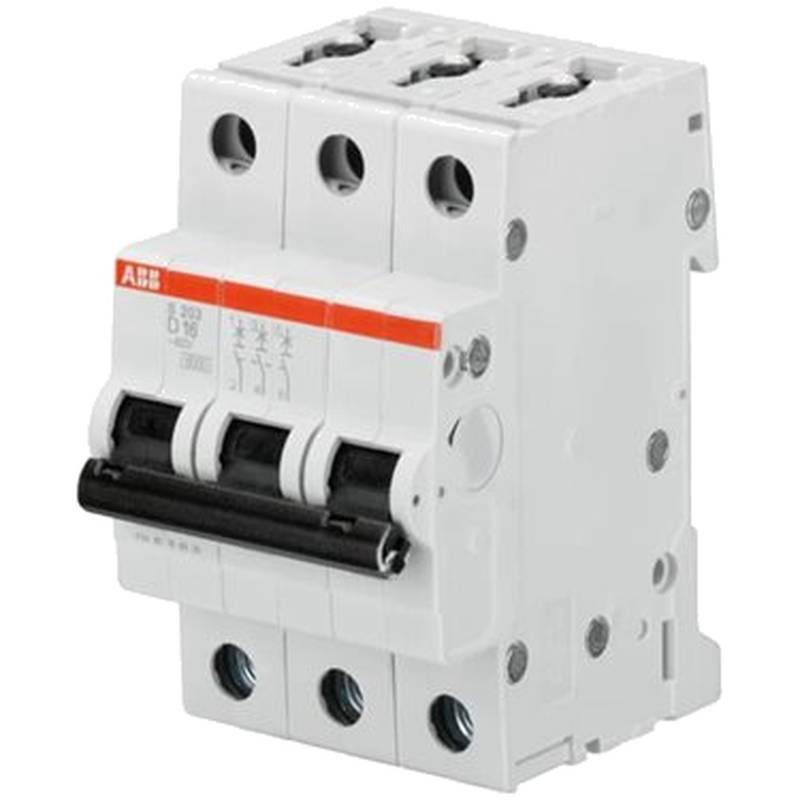
ABB S203M-C10 High Performance Breaker 10A C Curve


The ABB S203M-C10 is a high-performance, three-pole Miniature Circuit Breaker (MCB) designed for robust overcurrent protection in a wide range of electrical installations. This specific model, rated at 10A with a C-curve tripping characteristic, offers a reliable solution for safeguarding circuits against overloads and short circuits. Its advanced design ensures operational safety and system reliability, making it a staple in residential, commercial, and industrial applications. The S203M-C10 is part of ABB's System pro M compact S200M series, known for its current-limiting capabilities and adherence to stringent international standards.
Product Specifications
| Specification | Value |
| :-------------------------------- | :------------------------------------------------------------------ |
| Product Type | Miniature Circuit Breaker (MCB) |
| ABB Model | S203M-C10 |
| Series | System pro M compact S200M |
| Number of Poles | 3 (Three Pole) |
| Rated Current (In) | 10 A |
| Tripping Characteristic | Type C (5-10 times In) |
| Rated Operational Voltage (Ue)| 400 V AC (IEC/EN 60898-1), 440 V AC (IEC/EN 60947-2) |
| Rated Insulation Voltage (Ui) | 440 V AC |
| Rated Impulse Withstand Voltage (Uimp) | 4 kV |
| Rated Short-Circuit Capacity (Icn) | 10 kA at 400 V AC |
| Rated Ultimate Short-Circuit Breaking Capacity (Icu) | 25 kA at 230 V AC, 15 kA at 400 V AC |
| Energy Limiting Class | 3 |
| Frequency | 50/60 Hz |
| Terminal Type | Screw Terminals, Failsafe Bi-directional Cylinder-lift Terminal |
| Connecting Capacity | Rigid: 0.75 – 35 mm²; Flexible with Ferrule: 0.75 – 25 mm² |
| Tightening Torque | 2 N·m |
| Mounting | DIN Rail (TH35-7.5 or TH35-15) |
| Degree of Protection | IP20 (terminals), IP40 (in enclosure with cover) |
| Operating Temperature | -25°C to +55°C |
| Electrical Endurance | 20,000 AC cycles |
| Mechanical Endurance | 20,000 cycles |
| Weight | Approx. 0.375 kg |
| Standards Compliance | IEC/EN 60898-1, IEC/EN 60947-2, UL1077, CSA 22.2 No. 235 |
Core Features & Market Positioning
The ABB S203M-C10 distinguishes itself through its robust construction and adherence to global standards, positioning it as a reliable component in electrical distribution systems. Its primary function is to provide uncompromised safety by protecting installations from overloads and short circuits. The S200 series, to which the S203M-C10 belongs, features dual tripping mechanisms: a delayed thermal tripping for overload protection and a magnetic tripping mechanism for instantaneous short-circuit protection. This dual system ensures prompt and appropriate response to fault conditions. Furthermore, the S200 series offers a wide and complete range of Miniature Circuit Breakers (MCBs) catering to most applications and markets. The S203M-C10's C-curve characteristic makes it particularly suitable for applications with moderate inrush currents, such as lighting circuits and inductive loads, providing a balance between sensitivity to faults and tolerance for startup surges. Its compatibility with a wide range of accessories further enhances its flexibility and market appeal.
Key Application Scenarios
The ABB S203M-C10 is engineered for versatile application across various electrical environments. It serves as a critical component in protecting cable and line installations from overload and short circuits, adhering to international standards like DIN VDE 0100-430 and DIN VDE 0100-530. Its three-pole configuration is ideal for protecting three-phase circuits simultaneously, ensuring complete safety in industrial machinery, motor control systems, and commercial power distribution. Common scenarios include use in residential distribution boards, commercial building electrical systems, and light to medium industrial settings where reliable circuit protection is paramount. The C-curve tripping characteristic specifically lends itself to applications involving inductive loads, such as small motors, transformers, and switch-mode power supplies, where temporary inrush currents are expected but should not cause nuisance tripping.
Practical System Integration Guidance
Integrating the ABB S203M-C10 into existing or new electrical systems is straightforward due to its DIN-rail mounting compatibility and thoughtful terminal design. The device features a patented twin terminal system that accepts conductor cross-sections up to 35 mm² for rigid conductors and up to 25 mm² for flexible conductors. This twin terminal also allows for separate feeding of busbars and conductors, simplifying wiring and ensuring secure connections. Captive screws on the terminals prevent loss during installation, contributing to a more efficient and safe setup process. For busbar connections, a dedicated slot in the back of the unit provides good visibility during installation. The unit's IP20 rating ensures finger-safe operation for terminals, enhancing safety during installation and maintenance.
Operation and Risk Mitigation
Operating the ABB S203M-C10 involves understanding its protection mechanisms and safety features. The MCB provides clear contact position indication, typically in red (OFF) and green (ON). In the event of an overload or short circuit, the breaker trips, interrupting the power flow and preventing damage to connected equipment and wiring. The tripping mechanisms are thermal-magnetic, offering reliable protection against both sustained overloads (thermal) and sudden short circuits (magnetic). Troubleshooting typically involves identifying the cause of the trip, which could be a faulty appliance, an overloaded circuit, or a direct short circuit. Resetting the breaker is done by simply flipping the operating lever back to the ON position after the fault has been cleared. Risk mitigation is inherent in the product's design, adhering to standards like IEC/EN 60898-1 and IEC/EN 60947-2, which dictate stringent safety and performance requirements.
Scalability & Long-Term Value
The ABB S203M-C10 offers significant long-term value through its compatibility and integration capabilities. As part of the System pro M compact range, it seamlessly integrates with a wide array of ABB accessories and other compatible modular devices, such as residual current devices (RCDs) and surge protective devices (SPDs). This modularity allows for system expansion and adaptation to evolving protection requirements without needing to replace the entire distribution board. The use of durable materials, including halogen-free thermoplastics, also contributes to the product's longevity and environmental sustainability. For facilities looking towards enhanced monitoring and smart grid integration, ABB's broader ecosystem often includes options for digital connectivity, allowing these MCBs to be part of a larger Industrial Internet of Things (IIoT) strategy, although specific digital add-ons would be separate components.
FAQs
What is a C-curve circuit breaker?
A C-curve circuit breaker is designed to trip when the current reaches 5 to 10 times its rated current. This characteristic makes it suitable for circuits with moderate inductive loads that experience temporary inrush currents, such as motors or transformers.
The C-curve provides a balance, tripping quickly on severe short circuits but tolerating the brief surges during startup. It's a common choice for lighting circuits and general-purpose outlets in commercial and industrial settings.
Compared to B-curve breakers, C-curve devices offer higher short-circuit trip thresholds, preventing nuisance tripping under normal operating conditions for certain loads.
What is the difference between S200 and S200M series from ABB?
The S200 and S200M series are both part of ABB's System pro M compact line of MCBs. The S200M series, which includes the S203M-C10, generally offers higher breaking capacities and enhanced features suitable for more demanding industrial applications.
While both series provide reliable overload and short-circuit protection, the S200M models often meet stricter industrial standards and offer greater robustness. Key differentiators can include higher voltage ratings or breaking capacities in specific configurations.
Both series are designed for modularity and easy integration with other ABB components, ensuring flexibility in system design and expansion.
Can the ABB S203M-C10 be used for DC applications?
The ABB S203M-C10 is primarily designed for AC applications, with its operational voltage typically rated for 400V AC or 440V AC. While some ABB MCBs in similar series are available in AC/DC versions or specific DC ratings, this particular model's specifications focus on AC circuits.
For DC circuits, it's crucial to use MCBs specifically rated for direct current, as DC fault currents behave differently from AC currents. Using an AC-rated breaker in a DC system can lead to unsafe operation and failure to interrupt the circuit correctly.
Always refer to the manufacturer's datasheet and product markings to confirm suitability for DC applications. Special DC-rated breakers often have additional features to handle the arc suppression unique to DC circuits.
What are the main advantages of the ABB S203M-C10?
The primary advantage of the ABB S203M-C10 is its reliable and robust protection against overloads and short circuits, ensuring electrical system safety. Its C-curve characteristic makes it versatile for various inductive loads without causing nuisance tripping.
The S203M-C10 offers excellent build quality and adherence to international standards (IEC/EN, UL, CSA), ensuring compatibility and performance. Its compact, modular design simplifies installation in standard distribution boards and panels.
Additionally, its patented terminal design ensures secure and easy connections for a wide range of conductor sizes, contributing to efficient and safe electrical installations.
How do I install the ABB S203M-C10?
Installation of the ABB S203M-C10 involves mounting it on a standard 35mm DIN rail within an electrical enclosure. Ensure the power supply to the circuit is safely isolated before proceeding with any installation work.
Connect the incoming power conductors to the line terminals (typically at the top) and the outgoing load conductors to the load terminals (typically at the bottom). The twin terminals accommodate various conductor types and sizes, and proper tightening torque should be applied as specified.
Once connections are secure and verified, the breaker can be reset to the ON position. It's recommended to follow all local electrical codes and guidelines and, if unsure, consult a qualified electrician.
What does "C10" mean in ABB S203M-C10?
In the ABB S203M-C10 model number, "C10" signifies two key specifications. The "C" refers to the tripping characteristic (C-curve), which indicates the breaker's response to overcurrents. A C-curve breaker trips at 5 to 10 times its rated current.
The "10" denotes the rated current (In) of the circuit breaker, which is 10 Amperes. This is the maximum continuous current the breaker can safely carry without tripping under normal operating conditions.
Together, "C10" defines the breaker's sensitivity and trip threshold, making it suitable for circuits with specific load types and current demands.
What is the breaking capacity of the ABB S203M-C10?
The ABB S203M-C10 has a rated short-circuit breaking capacity (Icn) of 10 kA at 400 V AC, according to IEC/EN 60898-1 standards. It also has a rated ultimate short-circuit breaking capacity (Icu) of 25 kA at 230 V AC and 15 kA at 400 V AC, according to IEC/EN 60947-2 standards.
This high breaking capacity ensures that the breaker can safely interrupt fault currents without sustaining damage. It is critical for protecting electrical installations in environments where high fault levels are possible.
The energy-limiting class of 3 further indicates its ability to effectively limit the energy let through during a short-circuit event, enhancing overall system protection.
What applications is the ABB S203M-C10 suitable for?
The ABB S203M-C10 is suitable for a wide range of applications including residential, commercial, and industrial electrical installations. Its three-pole configuration is ideal for three-phase systems.
The C-curve tripping characteristic makes it particularly well-suited for inductive loads like motors, transformers, and lighting systems that experience moderate inrush currents. It protects cables and lines from overloads and short circuits effectively.
Its compliance with various international standards (IEC, UL, CSA) ensures its suitability for global markets and diverse electrical infrastructure needs.
What is the difference between a Type C and Type B breaker?
A Type B circuit breaker trips between 3 to 5 times its rated current, making it ideal for purely resistive loads and sensitive electronic equipment where rapid tripping is desired. It offers maximum protection for cables in residential settings with low fault currents.
A Type C circuit breaker, like the S203M-C10, trips between 5 to 10 times its rated current. This higher threshold makes it more suitable for circuits with moderate inductive loads, such as lighting, control circuits, and small motors, that experience temporary inrush currents.
Type B breakers are more sensitive to current surges, while Type C breakers provide a compromise, tolerating short-duration surges while still offering robust protection against overcurrents.
How does the C-curve characteristic protect inductive loads?
The C-curve characteristic provides protection for inductive loads by allowing for a higher inrush current during startup without tripping the breaker prematurely. Inductive loads, such as motors and transformers, draw a significantly higher current for a brief moment when they are initially energized.
A C-curve breaker is calibrated to trip at 5 to 10 times its rated current. This range accounts for the typical inrush current of many inductive devices, preventing nuisance tripping that would occur with a more sensitive B-curve breaker.
However, it still ensures rapid and safe interruption of the circuit in case of a genuine short circuit or a sustained overload, thereby protecting both the inductive load and the electrical system from damage.