











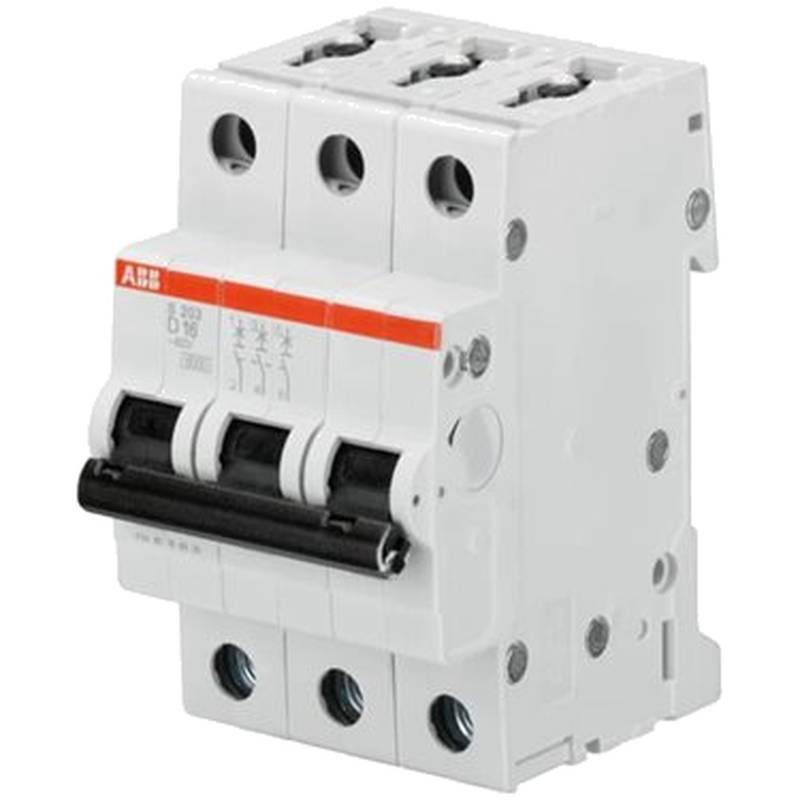
ABB S203-C16 16A Three Pole Miniature Circuit Breaker


The ABB S203-C16 16A Three Pole Miniature Circuit Breaker is a critical component for robust electrical protection in demanding industrial environments. Engineered for reliability, this three-pole breaker offers superior overcurrent and short-circuit protection, ensuring the safety and integrity of electrical systems. Its key advantages lie in its high breaking capacity, precise tripping characteristics (Type C), and durable construction, making it a preferred choice for safeguarding machinery and sensitive equipment. The S203-C16 boasts a rated current of 16A, a nominal voltage of 400V AC, and a breaking capacity of 6kA, essential parameters for industrial power distribution.
Product Specifications
| Feature | Specification |
| :------------------- | :------------------------------------------ |
| Product Type | Miniature Circuit Breaker (MCB) |
| Manufacturer | ABB |
| Series | S200 |
| Poles | 3 |
| Rated Current (In) | 16A |
| Tripping Curve | C |
| Rated Voltage (Un) | 400V AC |
| Breaking Capacity (Icn) | 6kA |
| Frequency | 50/60 Hz |
| Terminal Type | Screw Terminals |
| Mounting Type | DIN Rail |
| Protection Degree | IP20 |
| Operating Temperature | -25°C to +45°C |
| Compliance Standards | IEC/EN 60898-1, IEC/EN 60947-2 |
Core Features & Market Positioning
The ABB S203-C16 distinguishes itself through its adherence to rigorous international standards, including IEC/EN 60898-1 and IEC/EN 60947-2, underscoring its suitability for professional industrial applications. The Type C tripping curve is specifically designed to handle moderate inrush currents associated with inductive loads, such as motors and transformers, without nuisance tripping. This makes it an ideal solution for motor protection circuits and distribution boards where such transient currents are common. Its robust design ensures a long operational lifespan and consistent performance, positioning it as a reliable and cost-effective protective device in competitive industrial markets.
Key Application Scenarios
This three-pole miniature circuit breaker is extensively deployed in industrial power distribution systems, protecting three-phase loads from overcurrent and short circuits. Common applications include safeguarding motors, pumps, compressors, and other inductive equipment in manufacturing plants, processing facilities, and heavy industry settings. It is also integral to building installations, protecting main distribution boards and sub-distribution boards where three-phase power is utilized. The S203-C16's versatility extends to renewable energy installations, such as solar inverters, and control panel manufacturing, where precise and reliable circuit protection is paramount.
Practical System Integration Guidance
Integrating the ABB S203-C16 into existing electrical systems is straightforward due to its standard DIN rail mounting capability. Wiring is accomplished via screw terminals, which typically accommodate conductors up to 25mm². Ensuring proper torque application on these terminals is crucial for secure connections and preventing overheating. When wiring three-phase circuits, connect the incoming live conductors to the designated L1, L2, and L3 terminals and the outgoing protected conductors accordingly. For applications requiring auxiliary contacts (e.g., for remote signaling of tripping status), compatible accessories can be easily attached to the side of the breaker. It is essential to adhere to local electrical codes and standards during installation.
Operation and Risk Mitigation
The S203-C16 operates by automatically interrupting the circuit when the current exceeds a predefined threshold, protecting both personnel and equipment from damage. The 'C' curve means it trips between 5 to 10 times the rated current, offering a balance between protection and operational continuity for inductive loads. Risk mitigation is inherent in its design through its high breaking capacity (6kA), which can safely interrupt fault currents, preventing cascading failures. Regular visual inspection of connections and periodic testing of its tripping function, though not typically mandated for MCBs under normal operation, can further enhance system safety. Ensure proper isolation of the circuit before any maintenance or inspection is performed.
Scalability & Long-Term Value
The ABB S203-C16 is part of ABB's extensive S200 series, offering excellent compatibility with other products within the S200 and S2000 families, facilitating system expansion. This modularity ensures that as electrical demands grow, additional breakers or related protection devices can be seamlessly integrated without requiring a complete overhaul of the distribution system. While not inherently an IIoT device, its integration into smart panels or systems can be achieved through associated auxiliary switches that report status to a central monitoring system. This ensures long-term value by providing a foundation for future upgrades and smart grid compatibility.
Frequently Asked Questions
What is the tripping characteristic of the ABB S203-C16?
The ABB S203-C16 features a Type C tripping curve. This curve is designed to handle moderate inrush currents from inductive loads. It typically trips between 5 to 10 times the rated current.
This characteristic makes it suitable for applications involving motors, transformers, and fluorescent lighting. It prevents nuisance tripping during normal operation. The breaker ensures reliable protection against short circuits.
The Type C curve provides a good balance for industrial and commercial settings. It protects against sudden, high-level fault currents. This ensures operational continuity while maintaining safety.
What is the breaking capacity of the ABB S203-C16?
The breaking capacity of the ABB S203-C16 is rated at 6kA (6000 Amperes). This is the maximum fault current the breaker can safely interrupt. It ensures protection against severe short circuits.
A higher breaking capacity means the breaker can handle more energetic fault conditions. This prevents damage to the breaker itself and surrounding equipment. It is a crucial safety feature for industrial applications.
This 6kA rating is in line with common requirements for residential and light industrial distribution systems. It ensures compliance with safety standards like IEC/EN 60898-1.
Can the ABB S203-C16 be used for single-phase applications?
While the ABB S203-C16 is a three-pole breaker, it can be utilized in single-phase applications. You would simply connect the single-phase supply to two of the three poles. The third pole would remain unused.
Using a three-pole breaker for single-phase loads can offer advantages. It provides more robust construction and can be part of a modular system for future expansion. It also allows for simultaneous disconnection of all phases if needed.
Ensure that the load and circuit are appropriately rated for the 16A capacity of the breaker. Always follow proper wiring practices for single-phase connections.
What is the maximum voltage rating for the ABB S203-C16?
The ABB S203-C16 has a rated voltage of 400V AC. This voltage rating is standard for many industrial and commercial power distribution systems in Europe and other regions.
This breaker is designed to operate safely and effectively within this voltage range. Exceeding the rated voltage can lead to insulation failure and potential hazards. Always verify system voltage before installation.
It's important to note that this AC voltage rating does not mean it's suitable for DC circuits unless specifically stated by the manufacturer. Ensure compatibility with your specific system requirements.
How do I install the ABB S203-C16 miniature circuit breaker?
Installation involves mounting the breaker onto a standard 35mm DIN rail. Ensure the rail is securely fixed within the distribution board or enclosure. Connect the incoming power conductors to the appropriate terminals.
For a three-pole breaker, connect the three live conductors (L1, L2, L3) to the designated input terminals. Connect the output terminals to the protected circuit conductors. Use appropriate size conductors and ensure secure screw terminal connections.
Before installation, always de-energize the entire electrical panel or circuit. Verify that all power is off using a voltage tester. Adhere to local electrical codes and safety regulations during the entire installation process.
What are the dimensions of the ABB S203-C16?
The ABB S203-C16 typically has a width of three modular units (approximately 52.5mm). Its height is around 80mm, and its depth is approximately 70mm. These dimensions are standard for S200 series breakers.
These modular dimensions allow for easy integration into standard distribution boards and enclosures. The breaker occupies three slots on a DIN rail. This standardized sizing simplifies panel design and layout.
The compact size ensures efficient use of space within electrical panels. This is particularly important in installations where space is limited. Always refer to the product datasheet for precise dimensions if needed.
What is the difference between Type C and Type B circuit breakers?
Type C breakers are designed for circuits with moderate inrush currents, such as those powering motors or transformers. They trip between 5 to 10 times their rated current. This prevents nuisance tripping.
Type B breakers are designed for circuits with low inrush currents. They trip between 3 to 5 times their rated current. These are typically used for purely resistive loads like lighting or heating elements.
Choosing the correct curve is essential for proper protection. Using a Type B on a motor could lead to frequent unwanted tripping. Conversely, a Type C on a purely resistive load might offer less sensitive fault detection.
Can I use the ABB S203-C16 for DC applications?
The ABB S203-C16 is primarily designed and rated for AC (Alternating Current) applications. Its standard ratings and tripping characteristics are optimized for AC systems.
Using this breaker in a DC (Direct Current) system is generally not recommended without specific manufacturer approval or modifications. DC circuits have different arc extinguishing characteristics compared to AC. This can affect the breaker's ability to safely interrupt faults.
If DC application is necessary, consult ABB's technical documentation or contact their support to determine if a specific variant or different product is suitable. Using an AC-rated breaker on DC can be unsafe.
What does "16A" signify on the ABB S203-C16?
"16A" denotes the rated current of the circuit breaker. This is the maximum continuous current the breaker can carry without tripping under normal operating conditions. It represents the ampacity of the protected circuit.
If the current flowing through the breaker exceeds this 16A rating for a sustained period, the thermal element will begin to heat up. Once it reaches a certain temperature, it will trigger the tripping mechanism. This protects the wiring and connected equipment from overheating.
The 16A rating is crucial for selecting the appropriate breaker for a given circuit. It must be sized correctly to protect the wire gauge used in the circuit and the connected loads.
Where is the ABB S203-C16 commonly used in industrial settings?
This breaker is widely used in industrial power distribution panels. It provides protection for circuits feeding motors, pumps, and compressors in manufacturing plants. Its robust Type C curve is ideal for these inductive loads.
It is also found in control cabinets and automation systems. Here, it protects sensitive electronic components and machinery from overcurrents and short circuits. Its three-pole configuration is essential for three-phase equipment.
Furthermore, the S203-C16 is a staple in building services. It protects circuits in commercial buildings and infrastructure projects where three-phase power is standard.