











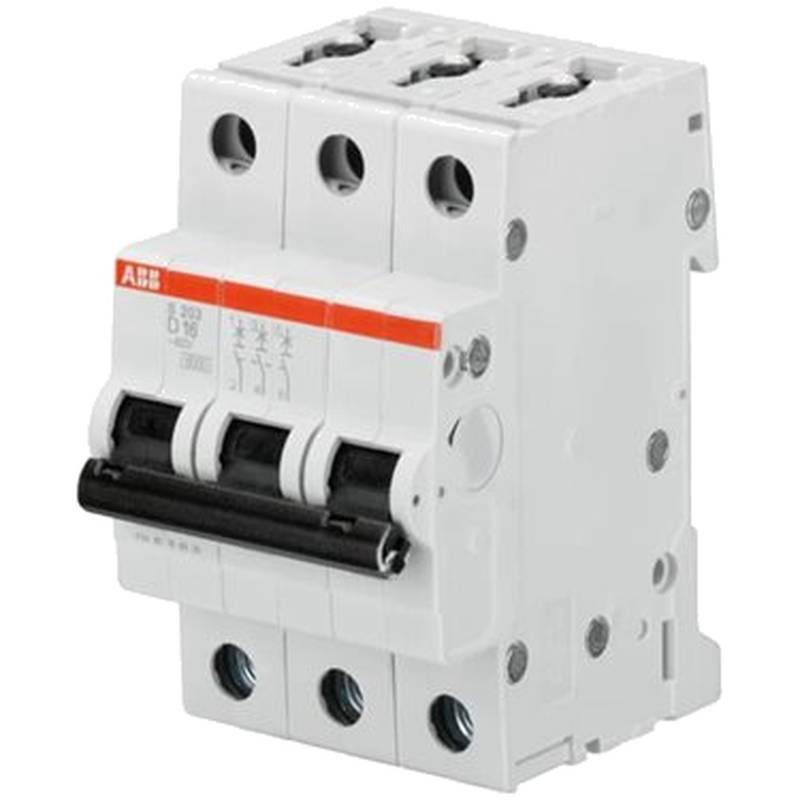
ABB S203-D32 32A Triple Pole Protection Device D Curve


The ABB S203-D32 32A Triple Pole Protection Device, featuring a D-curve tripping characteristic, stands as a robust and reliable circuit breaker designed for demanding industrial and commercial applications. Its primary advantage lies in its superior surge current handling capability, making it ideal for protecting circuits with high inrush currents, such as those associated with motors and transformers. The D-curve ensures that these devices do not trip unnecessarily during normal startup sequences while still providing effective protection against short circuits. Key technical parameters include a rated current of 32A, a tripping characteristic of Type D, and three poles for comprehensive circuit isolation. The device boasts a breaking capacity of 6kA, ensuring safety in fault conditions, and complies with international standards such as IEC/EN 60898-1 and IEC/EN 60947-2, underscoring its global applicability and reliability.
Product Specifications
| Specification | Value |
| :------------------- | :--------------------- |
| Product Name | S203-D32 |
| Rated Current (I_n) | 32 A |
| Tripping Curve | D |
| Number of Poles | 3 |
| Rated Voltage (U_n) | 400 V AC |
| Breaking Capacity (I_c) | 6 kA |
| Frequency | 50/60 Hz |
| Terminal Type | Screw Terminal |
| Mounting Type | DIN Rail |
| Protection Type | Overcurrent, Short Circuit |
| Certifications | IEC/EN 60898-1, IEC/EN 60947-2 |
Core Features & Market Positioning
The ABB S203-D32 distinguishes itself through its robust construction and adherence to stringent quality standards, positioning it as a premium choice for electrical protection. Its D-curve characteristic is a critical differentiator, specifically engineered for circuits with high inductive loads. Unlike Type B or C breakers, the D-curve offers a delayed trip, accommodating the significant inrush currents typical of motor startups without nuisance tripping. This significantly enhances operational continuity in industrial settings. Furthermore, ABB's reputation for reliability and longevity in the electrical components market adds substantial value, reassuring users of consistent performance and reduced maintenance requirements. The 6kA breaking capacity provides ample protection against severe short-circuit events, a crucial aspect for safety and equipment preservation in industrial environments.
Key Application Scenarios
The ABB S203-D32 32A triple pole protection device with its D-curve tripping characteristic is specifically engineered for applications where high inrush currents are prevalent. This includes the protection of circuits feeding electric motors, transformers, and other inductive loads commonly found in manufacturing plants, workshops, and commercial buildings. Its three-pole design ensures complete isolation of all live conductors, a mandatory safety requirement for three-phase equipment. Industries such as food processing, metal fabrication, and automated assembly lines, which rely heavily on motor-driven machinery, will find this device indispensable for safeguarding their electrical infrastructure. It's also suitable for power distribution boards in facilities with significant lighting systems that might experience temporary overloads during switching.
Practical System Integration Guidance
Integrating the ABB S203-D32 into an existing electrical system is straightforward due to its standard DIN rail mounting and screw terminal connections. Ensure the power source is de-energized before commencing installation. Connect the incoming phase conductors to the upper terminals and the outgoing load conductors to the lower terminals, strictly observing the pole configuration for three-phase systems. For optimal performance and safety, ensure that the cable cross-section is appropriately sized for the 32A rating and that all connections are securely tightened to prevent thermal issues. The device's internal mechanism is designed for reliable operation without external programming or complex setup procedures, simplifying commissioning.
Operation and Risk Mitigation
The operation of the ABB S203-D32 is governed by its D-curve tripping mechanism. In normal operation, it allows for transient overcurrents up to 10 to 20 times the rated current before tripping, accommodating the high inrush of inductive loads. For sustained overloads or short circuits exceeding this threshold, the breaker will trip rapidly, interrupting the circuit to prevent damage to connected equipment and mitigate fire hazards. Users should regularly inspect terminals for signs of overheating and ensure the surrounding environment is free from excessive dust or moisture. While robust, false tripping can occur if the connected load consistently exceeds the 32A rating. In such cases, a higher-rated device or a more detailed load analysis is necessary. Emergency shutdown procedures should be clearly communicated to all personnel operating in proximity to the protected equipment.
Scalability & Long-Term Value
The ABB S203-D32 offers significant long-term value through its compatibility with the broader ABB System pro M compact range, facilitating seamless integration and scalability within electrical installations. This modularity allows for easy expansion or modification of protection schemes as facility needs evolve. While the S203-D32 itself is a protective device, its integration into smart electrical panels and potential connection to monitoring systems via auxiliary contacts (if applicable and installed) can pave the way for future IIoT integration. This enables enhanced data collection on circuit status and fault events, supporting predictive maintenance strategies and improving overall operational efficiency over the lifespan of the equipment.
Frequently Asked Questions (FAQs)
What is the primary advantage of the D-curve on the ABB S203-D32?
The D-curve allows for high inrush currents. It prevents nuisance tripping during motor startups. This ensures operational continuity.
This characteristic is crucial for inductive loads. It protects against short circuits effectively. It offers a wide operational window.
The S203-D32 with a D-curve is ideal for motors. It handles transient overloads gracefully. This minimizes downtime significantly.
Can the ABB S203-D32 be used for single-phase applications?
No, the S203-D32 is a triple pole breaker. It is designed for three-phase systems. Using it on single-phase is not its intended application.
It provides isolation for all three phases. This is essential for three-phase motor protection. Its design ensures full circuit interruption.
While technically possible to use only two poles, it's inefficient. The correct device for single-phase loads would be a single or double pole breaker.
What is the breaking capacity of the ABB S203-D32?
The breaking capacity is 6 kA. This is the maximum fault current it can interrupt. It is suitable for many industrial environments.
This rating ensures safety during severe short circuits. It prevents catastrophic damage to the electrical system. It meets standard industrial safety requirements.
Ensure your system's prospective fault current does not exceed 6kA. If it does, a higher rated breaker is necessary. Always consult system design specifications.
How do I wire the ABB S203-D32 protection device?
Wire the incoming power to the top terminals. Connect the load to the bottom terminals. Observe correct phase sequence for three-phase systems.
Ensure conductors are securely fastened in the screw terminals. Use appropriate torque settings. This prevents overheating and connection issues.
De-energize the circuit completely before wiring. Follow local electrical codes and safety practices. Consult the device manual for specific diagrams.
What are the key technical parameters of the ABB S203-D32?
It has a 32A rated current and a D-curve. It features three poles for three-phase circuits. Its voltage rating is 400V AC.
The breaking capacity is 6 kA. It complies with IEC/EN 60898-1 and IEC/EN 60947-2 standards. These parameters define its protection capabilities.
It is designed for overcurrent and short-circuit protection. It mounts on a standard DIN rail. Terminal type is screw for secure connections.
What types of loads is the ABB S203-D32 best suited for?
It is ideal for inductive loads like motors. It handles high inrush currents from transformers. It's suitable for equipment with significant startup surges.
Applications include industrial machinery. Think pumps, fans, and compressors. Any load that draws much more current at startup.
This device prevents unwanted tripping. It ensures reliable operation for such loads. It maintains system stability during normal operations.
Does the ABB S203-D32 offer adjustable trip settings?
No, the ABB S203-D32 has fixed trip settings. The D-curve characteristic is factory-set. It is not adjustable by the user.
The tripping mechanism is internal and calibrated. This ensures consistent performance and reliability. Adjustments are not part of its design.
For adjustable protection, different breaker series or devices are required. Always select a device with the appropriate fixed characteristics for your application.
What are the dimensions and mounting requirements for this breaker?
It mounts on a standard 35mm DIN rail. This is common in industrial electrical panels. Its modular design allows for easy installation.
The specific dimensions are standard for its category. They ensure compatibility with most enclosures. Refer to the datasheet for exact measurements.
Ensure sufficient clearance around the breaker. This allows for heat dissipation and safe operation. Proper ventilation is crucial for electrical components.
What is the significance of the '32A' rating?
The '32A' denotes the rated current. It is the maximum continuous current. The breaker can handle without tripping under normal conditions.
This rating dictates the size of the protected circuit. It ensures the wiring and downstream equipment are not overloaded. It is a critical parameter for system design.
Exceeding this limit for extended periods will cause tripping. It protects against sustained overloads. Always match the breaker rating to the load demand.
Where is this product commonly used in industrial settings?
It's widely used for motor protection circuits. It safeguards transformers and power supplies. It is essential in control panels and distribution boards.
Applications include manufacturing facilities. Also found in HVAC systems and automation equipment. Anywhere with high-current starting equipment.
Its robust design ensures reliability. This is crucial for continuous industrial operations. It minimizes unexpected shutdowns.