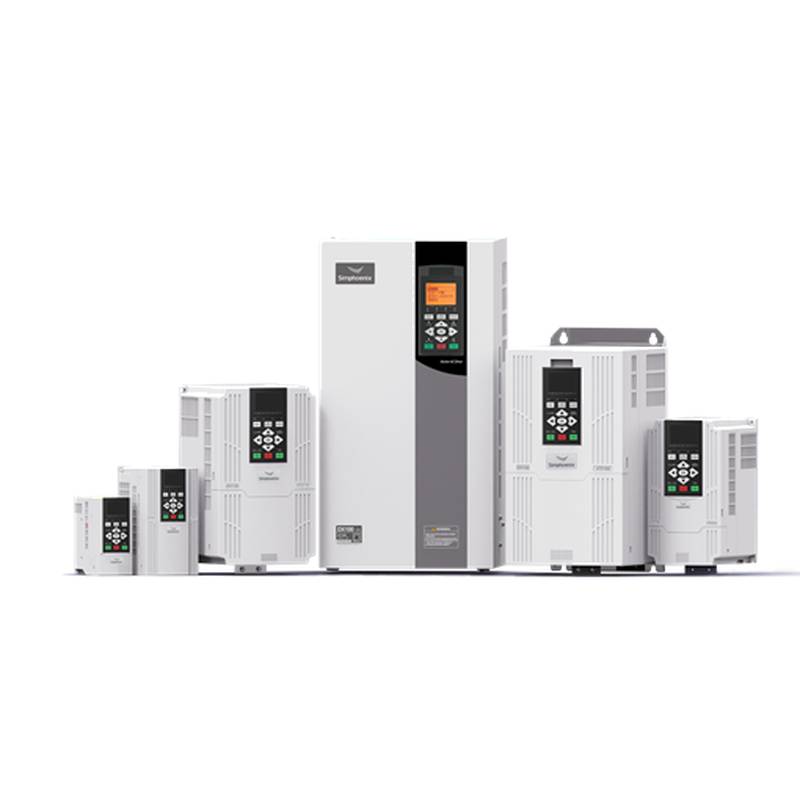













INVT GD270-011-4-L1 Goodrive270 Compact Pump Inverter 11kW Integrated Filter Configuration L1


The INVT GD270-011-4-L1 Goodrive270 Compact Pump Inverter, rated at 11kW, stands as a sophisticated variable frequency drive engineered for optimized pump control. This unit delivers exceptional energy efficiency, precise flow management, and robust system protection. Its integrated filter configuration (L1) enhances performance by mitigating harmonic distortion, ensuring cleaner power output and extended equipment lifespan. Key technical parameters include a nominal power of 11kW, a supply voltage of 3-phase 400-460V AC, an output frequency range of 0-400Hz, and an IP20 enclosure rating. The GD270 series is designed for seamless integration into a wide array of industrial and commercial water management systems.
Product Specifications
| Parameter | Specification |
| :------------------- | :-------------------------------- |
| Model | GD270-011-4-L1 |
| Rated Power | 11kW (15HP) |
| Input Voltage | 3-Phase, 400-460V AC |
| Output Frequency | 0-400Hz |
| Output Current | 25A |
| Control Method | V/f Control, Vector Control |
| Protection Rating | IP20 |
| Braking Unit | Internal |
| Filter | Integrated L1 Filter |
| Dimensions (H x W x D) | 285mm x 185mm x 170mm |
| Weight | 7.5 kg |
Core Features & Market Positioning
The INVT GD270-011-4-L1 distinguishes itself through its advanced control algorithms, offering both V/f and sensorless vector control modes for superior motor performance and torque response. Its compact design facilitates easy installation in space-constrained environments, a significant advantage in retrofits and modular system designs. The integrated L1 filter is a critical differentiator, actively reducing harmonic pollution and improving power factor, which translates to lower operational costs and compliance with stringent power quality standards. This focus on integrated functionality and efficiency positions the GD270 series as a cost-effective and reliable solution for demanding pump applications, competing effectively against drives that require separate filter installations.
Key Application Scenarios
This 11kW inverter is ideally suited for a broad spectrum of pump applications where precise speed control and energy savings are paramount. It excels in building water supply systems, managing constant pressure to ensure optimal comfort and reduced water wastage. In industrial settings, it is widely deployed for circulation pumps, cooling tower fans, and various process fluid transfer duties, delivering consistent flow rates and protecting equipment from cavitation and surge conditions. Its robust design and integrated protection features also make it a strong candidate for wastewater treatment plants and irrigation systems, where reliability and efficient energy consumption are critical operational factors.
Practical System Integration Guidance
Integrating the INVT GD270-011-4-L1 into existing systems is streamlined due to its user-friendly interface and comprehensive documentation. For optimal performance, ensure proper wiring of the motor, power supply, and any required control signals according to the manual's guidelines, paying close attention to grounding for safety and noise reduction. The inverter's parameter settings, particularly those related to motor data, acceleration/deceleration times, and overcurrent protection, should be carefully configured to match the specific pump and motor characteristics. For applications requiring external braking, the internal braking unit can be utilized, or an external braking resistor can be connected to dissipate excess energy during deceleration, prolonging component life.
Operation and Risk Mitigation
Operating the INVT GD270-011-4-L1 requires adherence to safety protocols, including ensuring the unit is de-energized before performing any wiring or maintenance. The inverter provides extensive protection functions, such as overcurrent, overvoltage, undervoltage, overload, and motor thermal protection, to safeguard both the drive and the connected equipment. Common fault codes, like E.OC (Overcurrent) or E.OL (Overload), often indicate issues with motor parameters, rapid acceleration settings, or mechanical impedance in the driven system. Proper commissioning and parameterization are key to mitigating these risks, alongside regular inspection of connections and environmental conditions.
Scalability & Long-Term Value
The INVT GD270 series offers a degree of scalability and long-term value through its modular design and compatibility with common industrial communication protocols, allowing for integration into SCADA and PLC-based control systems. While the GD270 is a compact solution, INVT's broader Goodrive product range provides options for higher power ratings and enhanced functionalities, facilitating system expansion or upgrades. The drive's efficient operation and integrated harmonic mitigation contribute to reduced energy bills and extended equipment life, representing a significant return on investment over the product's lifecycle. Integration with IIoT platforms is achievable via optional communication modules, enabling remote monitoring, diagnostics, and predictive maintenance strategies.
Frequently Asked Questions
Q1: What is the primary function of the L1 integrated filter in the INVT GD270-011-4-L1?
The L1 filter is designed to suppress high-frequency harmonics generated by the inverter's switching. It helps to improve the quality of the power supplied to the motor. This leads to reduced motor heating and increased efficiency.
This component also protects other sensitive electrical equipment on the same power line from harmonic disturbances. It ensures compliance with power quality regulations in many industrial environments.
By reducing harmonic content, the L1 filter contributes to a lower overall system electromagnetic interference (EMI). This can prevent operational issues with nearby control systems.
Q2: Can the INVT GD270-011-4-L1 be used with single-phase motors?
No, the INVT GD270-011-4-L1 is a three-phase output inverter. It requires a three-phase motor for operation. It is designed for three-phase motor applications.
The inverter converts the incoming three-phase AC power to a variable frequency and voltage output. This allows for precise speed control of three-phase induction motors.
Connecting a single-phase motor to this drive would result in damage to the motor and potentially the inverter. Always ensure motor type compatibility.
Q3: What are the typical applications for an 11kW variable frequency drive like the GD270-011-4-L1?
This 11kW inverter is ideal for medium-sized industrial pumps and fans. It is commonly used in HVAC systems for precise air flow control. It's also suitable for building water supply systems.
Wastewater treatment plants often utilize drives of this capacity for managing flow rates and lifting stations. Agricultural irrigation systems can also benefit from its energy-saving capabilities.
Any application requiring variable speed control of a three-phase motor up to 11kW, where energy efficiency and precise process control are important, is a good fit.
Q4: How do I connect an external braking resistor to the INVT GD270-011-4-L1?
Consult the product manual for the specific terminal designation for the braking resistor. Ensure the resistor's ohmic value and power rating are compatible with the drive. The drive's internal braking unit activates when necessary to dissipate excess energy.
Connect the resistor's leads to the designated terminals on the inverter, typically marked "B+" and "B-". Proper torque and secure connections are essential to prevent failures. The drive must be powered off and lockout/tagout procedures followed before making connections.
After wiring, configure the appropriate drive parameters to enable and control the braking resistor's operation, such as setting the braking chopper activation voltage. This ensures the resistor is engaged effectively during deceleration.
Q5: What are the main advantages of using a VFD over a direct-on-line starter for pumps?
VFDs offer significant energy savings by precisely matching motor speed to the system's demand, unlike DOL starters which run motors at full speed. This reduces electricity consumption and operational costs. It also eliminates the high inrush current associated with DOL starting, reducing mechanical stress on the motor and pump.
VFDs provide superior process control through variable speed adjustment, enabling constant pressure, flow, or temperature regulation. This improves system efficiency and product quality. DOL starters offer no control over motor speed.
The soft-start capability of VFDs reduces mechanical shock and wear on pumps, piping, and seals, leading to extended equipment lifespan and lower maintenance requirements. DOL starting creates a significant mechanical shock.
Q6: What causes an E.OC fault on the INVT GD270-011-4-L1, and how can it be resolved?
An E.OC (Overcurrent) fault indicates that the output current from the inverter has exceeded its safe operating limit. This can happen during rapid acceleration, a short circuit, or if the motor is overloaded. It can also be triggered by incorrect motor parameters.
To resolve this, first, check for any mechanical issues that might be causing the pump to draw excessive current, such as a jammed impeller or a blockage. Then, review the drive's acceleration time parameters; a too-short acceleration time can cause overcurrent. Reduce it if necessary.
Finally, verify that the motor parameters are correctly entered into the inverter. If the problem persists, inspect the motor and wiring for short circuits or insulation breakdown.
Q7: Does the INVT GD270-011-4-L1 support communication protocols for remote monitoring?
Yes, the INVT GD270 series typically supports communication via optional add-on modules. These modules enable integration with industrial networks like Modbus RTU. This allows for remote monitoring of drive status and parameters.
With the appropriate communication module, the inverter can be integrated into SCADA systems or PLCs for centralized control and data acquisition. This facilitates advanced automation and diagnostics.
Remote control capabilities, such as starting, stopping, and parameter adjustments, can also be achieved through these communication interfaces. This is crucial for IIoT implementations.
Q8: What is the recommended ambient temperature range for operating the GD270-011-4-L1?
The INVT GD270-011-4-L1 is typically designed to operate within an ambient temperature range of -10°C to +40°C. Always refer to the specific product manual for precise specifications. Operating outside this range can affect performance and lifespan.
To ensure optimal operation, especially in warmer environments, adequate ventilation and cooling are essential. Ensure the drive has sufficient clearance around it for airflow. Avoid installing the drive in direct sunlight or near heat sources.
If operating in very cold conditions, ensure the drive is protected from moisture and condensation. Some models may have specific startup procedures for sub-zero temperatures.
Q9: What is sensorless vector control, and what are its benefits for pump applications?
Sensorless vector control is an advanced motor control method that allows the VFD to precisely control motor torque and speed without requiring a speed encoder on the motor shaft. It estimates motor speed based on voltage and current measurements. This offers higher starting torque and better dynamic response compared to V/f control.
For pump applications, sensorless vector control provides smoother operation, improved efficiency, and better responsiveness to changes in load. It's particularly beneficial for systems requiring precise flow or pressure maintenance under varying conditions.
This control method reduces installation complexity and cost by eliminating the need for an encoder and its associated wiring. It is a robust solution for many industrial pump applications.
Q10: How does the integrated L1 filter contribute to system efficiency?
The L1 filter helps improve the power factor of the drive by reducing harmonic distortion in the current drawn from the power supply. A higher power factor means the system draws less reactive power, leading to more efficient use of electrical energy. This can result in lower electricity bills.
By cleaning up the output waveform to the motor, the filter can reduce motor losses due to eddy currents and hysteresis. This allows the motor to run cooler and more efficiently. Reduced motor heating also contributes to a longer motor lifespan.
Furthermore, by mitigating harmonics, the filter can reduce overall system energy losses, including those in transformers and cables. This enhances the total efficiency of the electrical installation.