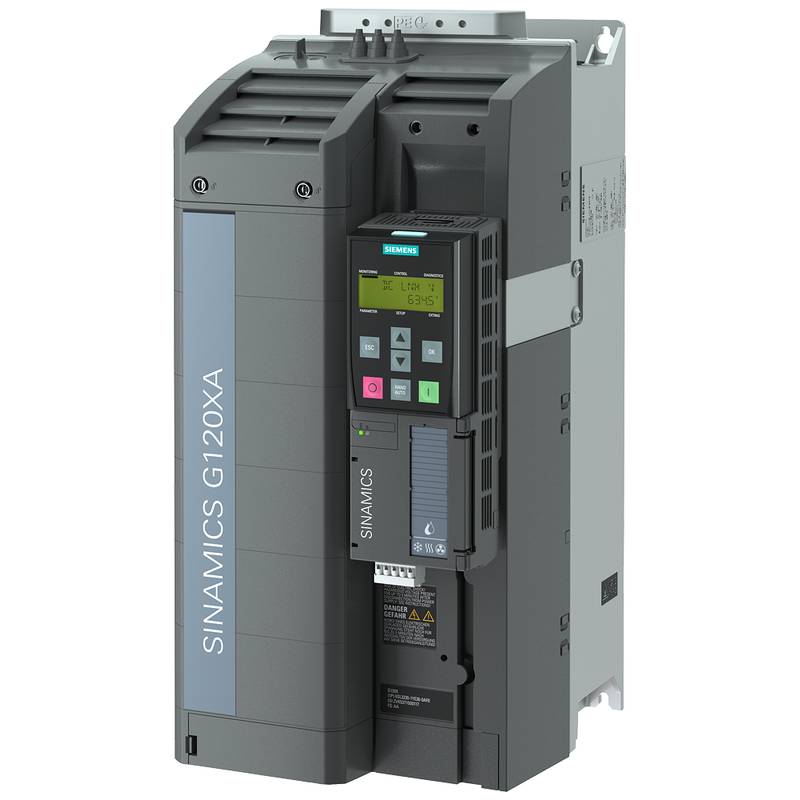













SIEMENS UAC:FN3440160118E2FAJXX Schaffner Line Harmonic Filter 160 kW 400V 50 Hz


The SIEMENS UAC:FN3440160118E2FAJXX Schaffner Line Harmonic Filter is a high-performance solution engineered to mitigate harmonic distortion in industrial power systems, ensuring compliance with stringent grid codes and protecting sensitive equipment. This 160 kW, 400V, 50 Hz filter offers superior harmonic attenuation, safeguarding motor drives and other inductive loads from damaging current and voltage waveforms. Its robust design and advanced filtering technology position it as a critical component for maintaining power quality and operational efficiency in demanding industrial environments.
Product Specifications
| Parameter | Value |
| :------------------------ | :----------------------------------- |
| Product Number | UAC:FN3440160118E2FAJXX |
| Manufacturer | SIEMENS / Schaffner |
| Filter Type | Line Harmonic Filter |
| Rated Power | 160 kW |
| Rated Voltage | 400 V |
| Rated Frequency | 50 Hz |
| Attenuation | High (specific dB reduction varies by harmonic order) |
| Compliance | EN 61000-3-2, EN 61000-3-12 |
| Protection Class | IP20 (standard) |
| Operating Temperature | -25°C to +55°C |
| Dimensions (H x W x D) | Specific dimensions vary by enclosure; consult datasheet |
| Weight | Specific weight varies by enclosure; consult datasheet |
Core Features & Market Positioning
The SIEMENS UAC:FN3440160118E2FAJXX Schaffner Line Harmonic Filter excels through its advanced LCL topology, providing exceptional attenuation of high-order harmonics generated by modern variable frequency drives (VFDs) and other non-linear loads. This superior performance directly translates to reduced electromagnetic interference (EMI), lower system temperatures, and extended lifespan for connected equipment, differentiating it from simpler filter solutions. Its robust construction and high overload capability ensure reliable operation under challenging industrial conditions, positioning it as a premium choice for applications where power quality is paramount. Industry professionals recognize Schaffner filters for their consistent quality and effectiveness in meeting increasingly strict harmonic emission standards.
Key Application Scenarios
This harmonic filter is indispensable in scenarios involving variable frequency drives (VFDs) powering pumps, fans, conveyors, and processing machinery in sectors such as manufacturing, water treatment, and HVAC. Its primary role is to mitigate the disruptive harmonic currents that VFDs inject back into the power supply, thereby preventing nuisance tripping of circuit breakers, overheating of transformers, and interference with sensitive control systems. Applications requiring strict adherence to harmonic distortion limits, such as those mandated by EN 61000-3-12, will benefit significantly from the reliable performance of the UAC:FN3440160118E2FAJXX.
Practical System Integration Guidance
Integrating the SIEMENS UAC:FN3440160118E2FAJXX filter into an industrial power system is straightforward. The filter is installed in series between the VFD and the power source. Ensure proper cable termination according to local electrical codes and manufacturer guidelines to maintain the integrity of the shielding and grounding. For optimal performance, the filter’s rated current capacity must exceed the VFD's nominal current. It is crucial to connect the filter's earth terminals securely to the system ground to ensure safety and effective harmonic current diversion.
Operation and Risk Mitigation
Proper operation of the SIEMENS UAC:FN3440160118E2FAJXX Schaffner Line Harmonic Filter involves ensuring it is correctly sized for the connected load and that ambient conditions remain within specified operating temperature limits. Risks such as overheating or premature failure can arise from under-sizing the filter or operating it outside its designed parameters. While these filters are designed for passive operation, regular visual inspections for signs of damage or loose connections are recommended. Consult the product manual for specific diagnostic indicators or fault codes, although these units typically do not possess active diagnostic reporting in their standard configuration.
Scalability & Long-Term Value
The SIEMENS UAC:FN3440160118E2FAJXX Schaffner Line Harmonic Filter provides long-term value by enhancing the reliability and longevity of connected electrical equipment. While the filter itself is a passive component and not directly upgradeable in terms of internal firmware, its effectiveness in protecting downstream VFDs and motors indirectly supports system scalability. By ensuring compliance with harmonic standards, it prevents costly penalties and downtime, thus maintaining operational continuity. Its compatibility with various VFD manufacturers and its robust design ensure it remains a valuable asset even as other system components are updated or expanded.
FAQs
What is the primary function of the SIEMENS UAC:FN3440160118E2FAJXX Schaffner Line Harmonic Filter?
The filter's core purpose is to significantly reduce harmonic distortion in electrical power systems. It specifically targets harmonics generated by non-linear loads, like VFDs.
This action protects sensitive equipment from premature failure and ensures compliance with grid regulations. It improves overall power quality and system efficiency.
By attenuating unwanted frequencies, it prevents issues such as overheating, nuisance tripping, and reduced equipment lifespan.
How does the UAC:FN3440160118E2FAJXX filter connect to a variable frequency drive (VFD)?
This filter is installed in series between the VFD's output and the main power supply or grid. It acts as an impedance to block harmonic currents.
Proper electrical connections, including secure grounding, are crucial for effective operation and safety. Follow manufacturer wiring diagrams precisely.
The filter's rated current must be matched or exceed the VFD's nominal operating current for optimal performance.
What are the main benefits of using a Schaffner line harmonic filter like the UAC:FN3440160118E2FAJXX?
Key benefits include enhanced power quality, extended equipment lifespan, and compliance with harmonic emission standards. It prevents disruptions caused by harmonic interference.
Reduced electromagnetic interference (EMI) is another significant advantage, leading to more stable system operation. Lower operating temperatures of connected components are also observed.
Using this filter can prevent costly penalties for non-compliance and reduce operational downtime, thereby increasing overall system reliability.
Is the SIEMENS UAC:FN3440160118E2FAJXX filter suitable for all types of industrial loads?
It is primarily designed for loads that introduce significant harmonic distortion, such as VFDs, rectifiers, and switch-mode power supplies. Its 160 kW rating is specific to certain power ranges.
For loads with minimal harmonic generation, a filter of this capacity might be over-specified, though it would still offer protection. Always verify compatibility with your specific load profile.
The filter is most effective when protecting downstream equipment from the harmonic content generated by the connected load.
What technical specifications are critical for selecting the correct harmonic filter?
Crucial specifications include the system's rated voltage (400V), frequency (50 Hz), and the total power (160 kW) or current rating of the load. Ensure the filter's rating exceeds the load's requirements.
Understanding the harmonic spectrum of the load is important, though this filter offers broad attenuation. Check compliance standards like EN 61000-3-12.
Physical dimensions, environmental operating conditions (temperature, IP rating), and connection terminal sizes are also practical considerations for installation.
How does the LCL topology of this filter contribute to its performance?
The LCL (Inductor-Capacitor-Inductor) topology provides superior harmonic attenuation compared to simpler LC filters. It offers better impedance matching.
This advanced design is highly effective at filtering both low- and high-order harmonics generated by modern power electronic devices like VFDs. It achieves better damping.
The LCL configuration helps to isolate the harmonic content from the grid, ensuring cleaner power delivery to sensitive equipment and compliance with standards.
Can this harmonic filter be used with different brands of VFDs?
Yes, the SIEMENS UAC:FN3440160118E2FAJXX Schaffner Line Harmonic Filter is designed to be compatible with a wide range of VFD manufacturers. Its passive nature makes it versatile.
Its primary function is to clean the power line, regardless of the specific VFD model connected, as long as it's within the power and voltage ratings. Ensure proper connection procedures are followed.
This compatibility reduces integration challenges and allows for flexible system design, making it a good choice for diverse industrial setups.
What are the typical installation requirements for the UAC:FN3440160118E2FAJXX filter?
Installation requires the filter to be connected in series between the power source and the load, typically a VFD. Secure and proper termination of all power cables is essential.
Adequate grounding of the filter's chassis to the system ground is a critical safety and performance requirement. Ensure proper torque on all connections.
The filter should be installed in a location that allows for adequate ventilation, respecting its operating temperature range and IP rating.
What kind of maintenance is required for this Schaffner line harmonic filter?
As a passive component, this filter requires minimal maintenance, typically involving periodic visual inspections. Check for loose connections, signs of overheating, or physical damage.
Ensure the filter's cooling vents, if applicable, are kept clear of dust and debris to maintain optimal operating temperatures. Routine electrical testing is generally not required unless issues are suspected.
Regular checks ensure the integrity of the electrical connections and the physical condition of the filter, contributing to its long operational life.
How does this filter help in meeting power quality standards like EN 61000-3-12?
The filter actively reduces harmonic currents injected into the power grid by non-linear loads. This directly addresses the requirements of standards like EN 61000-3-12.
By attenuating harmonics to acceptable levels, it ensures that the power system does not exceed the permissible limits for harmonic distortion. This prevents penalties.
Compliance with these standards is essential for grid connection and avoids potential operational disruptions or legal liabilities associated with poor power quality.