











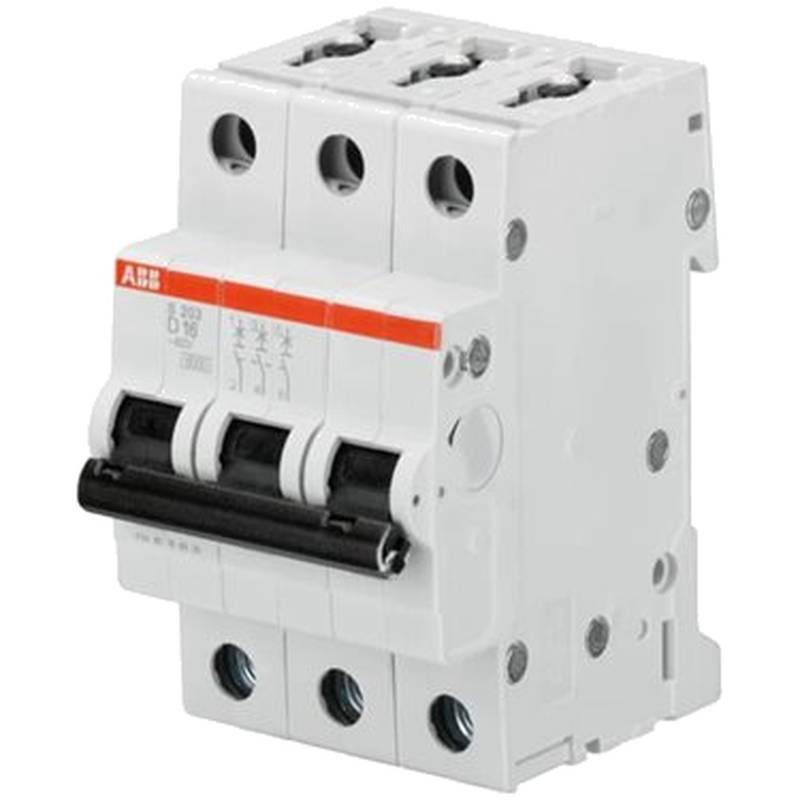
ABB S203-D63 63A D Curve Circuit Breaker Triple Pole


The ABB S203-D63 63A D Curve Circuit Breaker Triple Pole is a robust and reliable solution for protecting electrical installations against overcurrents and short circuits. This three-pole breaker offers superior tripping performance with its D-curve characteristic, making it ideal for inductive loads that draw high inrush currents. Its compact design and high breaking capacity ensure safety and efficiency in demanding industrial and commercial environments.
Product Specifications
| Feature | Specification |
| :----------------- | :---------------------------------- |
| Manufacturer | ABB |
| Product Series | S200 |
| Model Number | S203-D63 |
| Pole Configuration | 3-Pole |
| Rated Current (In) | 63 A |
| Tripping Curve | D |
| Breaking Capacity | 6 kA |
| Voltage Rating | 400 V AC |
| Frequency | 50/60 Hz |
| Protection Type | Overcurrent, Short-circuit |
| Terminal Type | Screw Terminals |
| Mounting Type | DIN Rail |
| Dimensions (HxWxD) | 88 mm x 52.5 mm x 70 mm |
| Operating Temp. | -25°C to +45°C |
| IP Rating | IP20 |
Core Features & Market Positioning
The ABB S203-D63 stands out in the market due to its specialized D-curve tripping characteristic. This feature is paramount for applications involving motors, transformers, and other inductive loads that exhibit significantly high inrush currents upon startup. Unlike standard B or C curves, the D-curve allows for these temporary overcurrents without nuisance tripping, thus ensuring operational continuity and preventing unnecessary shutdowns. This positions the S203-D63 as a superior choice for heavy-duty industrial settings where reliable motor protection is non-negotiable. Furthermore, its robust construction and adherence to stringent international safety standards (IEC/EN 60898-1) underscore ABB's commitment to quality and durability, offering a long-term, dependable protection solution.
Key Application Scenarios
The primary application for the ABB S203-D63 63A D Curve Circuit Breaker is in the protection of circuits with high inductive loads, most notably electric motors. Its D-curve is specifically designed to handle the large, transient current surges experienced when motors start up, preventing premature tripping while still offering robust protection against short circuits. This makes it an essential component in pump systems, conveyor belts, large ventilation fans, and other industrial machinery. Additionally, it is well-suited for protecting transformers and discharge lighting circuits, which also exhibit high inrush current characteristics. Its triple-pole configuration ensures comprehensive protection across all phases for three-phase systems commonly found in industrial power distribution.
Practical System Integration Guidance
Integrating the ABB S203-D63 into existing electrical systems is straightforward due to its standard DIN rail mounting and familiar terminal configuration. For wiring, ensure that the main power conductors are connected to the upper terminals and the load conductors to the lower terminals. The triple-pole design requires connecting all three phases to the breaker to ensure complete isolation when tripped. It is crucial to use appropriately sized conductors that match the 63A rating of the breaker to prevent overheating and ensure reliable performance. Always verify that the incoming voltage and frequency are within the specified limits (400V AC, 50/60 Hz) before energizing the circuit. When installing in series with other protective devices, consider the selectivity requirements of the system to ensure that only the faulted circuit is interrupted.
Operation and Risk Mitigation
Safe operation of the ABB S203-D63 requires adherence to electrical safety protocols. The breaker's clearly marked ON/OFF lever indicates the circuit status. In the event of an overload or short circuit, the breaker will trip, indicated by the lever moving to the OFF position. To reset, first identify and rectify the cause of the fault. Then, push the lever fully to the OFF position before resetting it to the ON position. Common troubleshooting involves checking for overloaded circuits, shorted loads, or incorrect wiring. If the breaker trips repeatedly under normal operating conditions, it may indicate a faulty load or an undersized breaker for the application. Always ensure the breaker is de-energized before performing any inspection or maintenance to mitigate the risk of electric shock.
Scalability & Long-Term Value
The ABB S203-D63 is designed for long-term value, offering excellent durability and compatibility within ABB's extensive S200 series and wider System pro M compact product range. This inherent compatibility facilitates seamless integration into existing electrical panels and allows for future system expansion or upgrades without requiring a complete overhaul of the protection infrastructure. While not directly an IIoT-enabled device itself, it can be integrated into smart power monitoring systems through the use of compatible upstream or downstream auxiliary contacts and smart metering solutions, enabling remote monitoring of its status and power consumption patterns. This modularity ensures that investments in ABB protection devices remain relevant and adaptable to evolving industrial automation and digitalization trends.
FAQs
What is the primary advantage of the ABB S203-D63's D-curve?
The D-curve is optimized for inductive loads. It allows for high inrush currents during startup. This prevents nuisance tripping of motors and transformers.
This characteristic ensures operational continuity. It is crucial for industrial machinery. It avoids costly downtime caused by false trips.
Overall, the D-curve provides reliable protection. It balances sensitivity with the need for high starting currents. It's key for heavy-duty applications.
What types of applications is the ABB S203-D63 best suited for?
This breaker excels in protecting electric motors. It handles their high startup current demands. It's ideal for pumps, conveyors, and fans.
It also protects transformers and lighting circuits. These also exhibit significant inrush currents. Its triple-pole design suits three-phase systems.
Essentially, any application with high inductive loads benefits. It ensures reliable operation and safety. It's a staple in industrial settings.
How do I properly wire the ABB S203-D63 circuit breaker?
Connect incoming power conductors to the top terminals. Route outgoing load conductors to the bottom terminals. Ensure all three poles are connected for three-phase circuits.
Use conductors rated for 63A or higher. This prevents overheating and ensures performance. Double-check connections for tightness.
Always de-energize the circuit before wiring. This prevents electrical shock hazards. Follow local electrical codes for best practices.
What is the breaking capacity of the S203-D63?
The ABB S203-D63 has a breaking capacity of 6 kA. This rating is crucial for safety. It indicates the maximum fault current it can interrupt safely.
This 6 kA rating is suitable for many residential and commercial systems. It ensures protection against damaging short circuits. Always verify system fault levels match this capacity.
Higher breaking capacities are available for more critical systems. For most standard industrial uses, 6 kA is adequate. It aligns with IEC/EN 60898-1 standards.
Can the ABB S203-D63 be used in extreme temperature environments?
The operating temperature range is -25°C to +45°C. This covers most standard industrial conditions. It is robust for typical environments.
Temperatures outside this range can affect performance. Extreme cold might impact tripping sensitivity. High heat can accelerate component aging.
For specialized environments, consult ABB documentation. They offer products for wider temperature ranges. Ensure proper ventilation if installed in hot areas.
How does the D-curve differentiate from B and C curves?
B-curve breakers trip between 3-5 times the rated current. They are for resistive loads and lighting. C-curve breakers trip between 5-10 times the rated current. They are for mixed loads.
The D-curve trips between 10-20 times the rated current. This is specifically for high inrush currents. Think motors, transformers, and heavy inductive loads.
Choosing the correct curve is vital for protection. An incorrect curve can lead to nuisance tripping or inadequate protection. Always match the curve to the load type.
What is the voltage rating for this triple-pole breaker?
This ABB S203-D63 breaker is rated for 400V AC. This is a standard voltage for three-phase power systems. It ensures safe operation at this voltage level.
It is designed to safely interrupt faults at 400V. Using it on higher voltages is dangerous and voids the warranty. Always confirm your system voltage matches the breaker's rating.
The 400V rating is common in industrial and commercial settings. It provides robust protection for such electrical networks. Ensure your supply matches this requirement.
What does "Triple Pole" signify for this circuit breaker?
"Triple Pole" means it has three distinct poles. Each pole protects a separate phase conductor. It is designed for three-phase electrical systems.
When a fault occurs, all three poles trip simultaneously. This ensures complete isolation of the three-phase load. It provides balanced protection across all phases.
Using a triple-pole breaker is essential for three-phase motors. It prevents single-phasing issues. This protects motor windings from damage.
Is the ABB S203-D63 compatible with smart home or IIoT systems?
The S203-D63 itself is not an IIoT device. It's a traditional mechanical circuit breaker. It lacks built-in digital communication capabilities.
However, it can be monitored indirectly. Use auxiliary contacts and smart meters. These devices can report breaker status and energy usage.
Integration into IIoT requires external smart components. These connect to the breaker's circuits. This allows for remote monitoring and control.
What safety certifications does the ABB S203-D63 hold?
This breaker complies with IEC/EN 60898-1 standards. These are key international safety requirements. This ensures reliable and safe operation.
It is designed to protect against overcurrents and short circuits. Adherence to these standards means it's tested rigorously. It guarantees a high level of safety for users.
Certifications indicate it meets global performance benchmarks. This assures users of its quality and dependability. Look for the CE mark on the product.