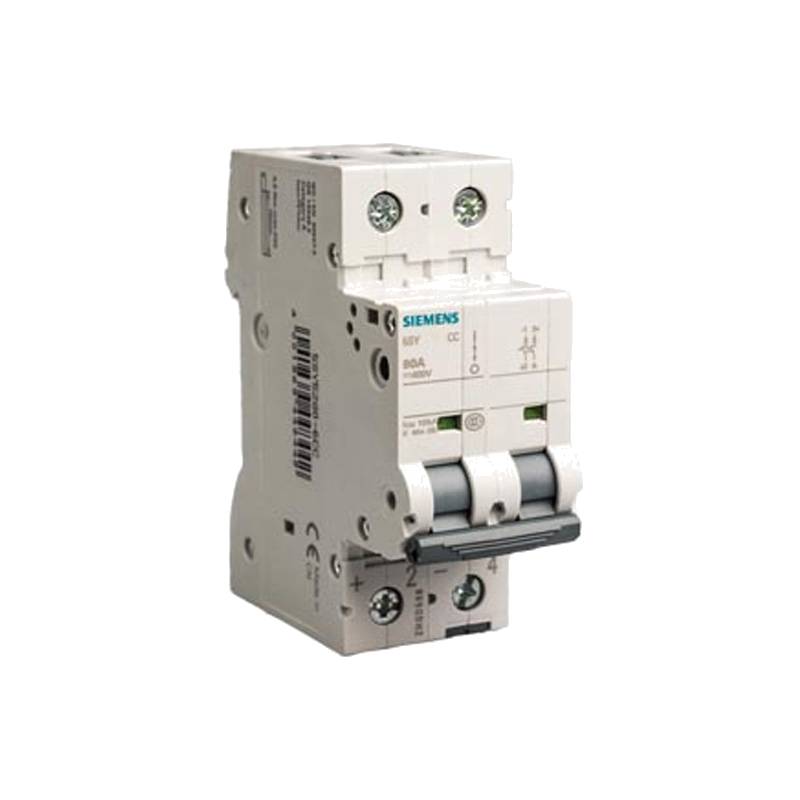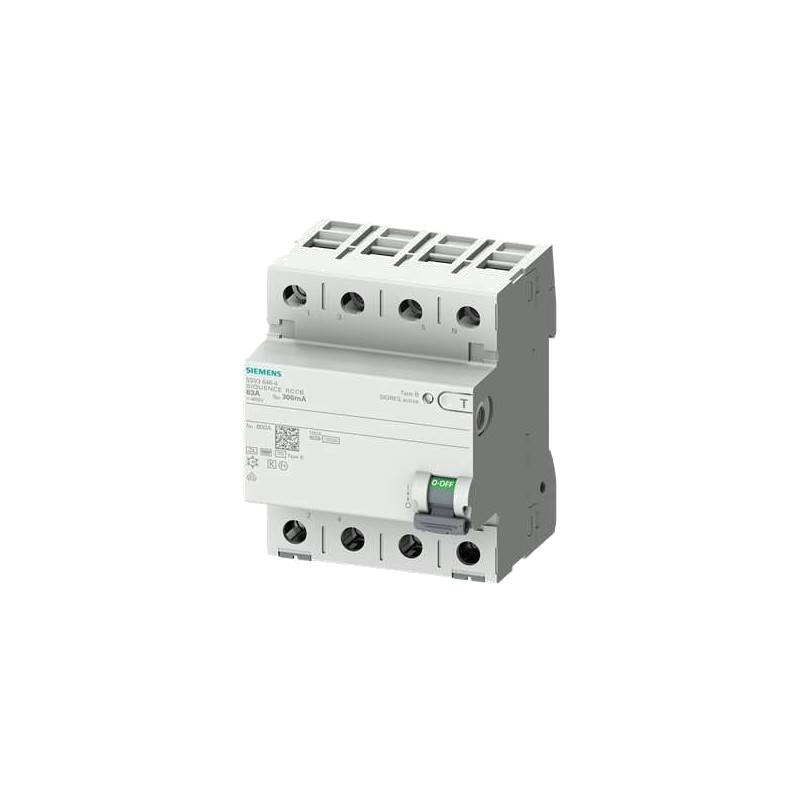












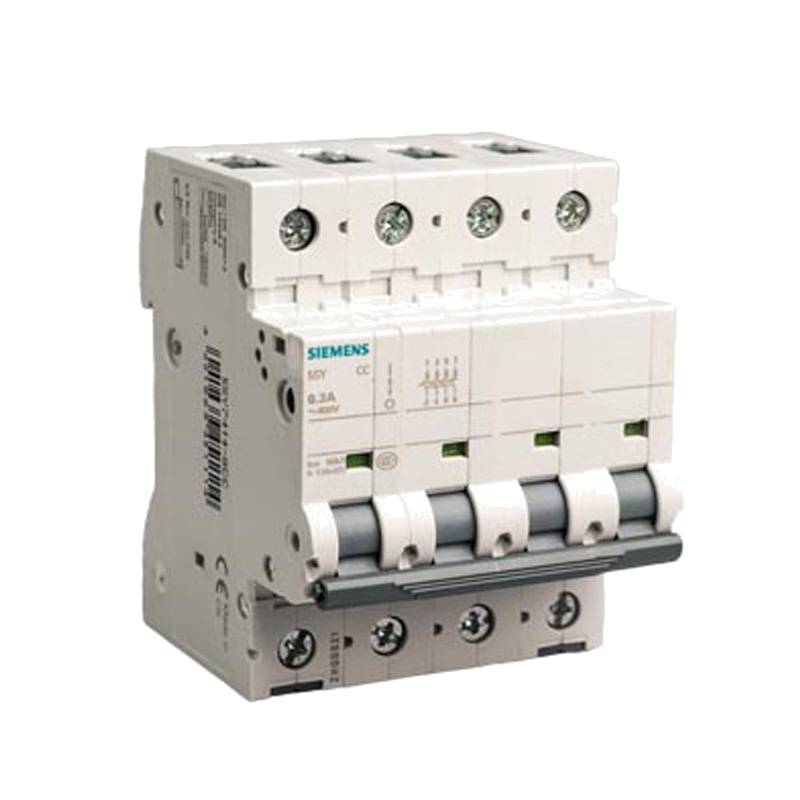
Siemens 5SY6406-8CC Single Phase Small Power Motor Circuit Breaker 4P 6A


The Siemens 5SY6406-8CC single-phase small power motor circuit breaker, a 4-pole 6A device, stands as a robust solution for safeguarding electrical circuits in demanding industrial environments. Engineered for reliability and precision, this miniature circuit breaker (MCB) offers superior protection against overcurrents and short circuits, crucial for maintaining the operational integrity of motors and sensitive equipment. Its key advantages lie in its compact design, high breaking capacity, and adherence to stringent international safety standards, making it an indispensable component for panel builders, system integrators, and maintenance professionals.
Product Specifications
| Feature | Specification |
| :------------------- | :------------------------------------------ |
| Product Type | Miniature Circuit Breaker (MCB) |
| Manufacturer | Siemens |
| Series | 5SY6 |
| Poles | 4P |
| Rated Current | 6A |
| Rated Voltage | 230/400V AC |
| Breaking Capacity | 6kA |
| Tripping Curve | C |
| Frequency | 50/60 Hz |
| Protection Type | Thermal-magnetic |
| Insulation Voltage | 500V |
| Terminal Type | Screw terminal |
| Mounting Type | DIN rail (35mm) |
| Ambient Temperature | -25°C to +45°C |
| Protection Degree | IP20 |
| Compliance Standards | IEC/EN 60898-1, IEC/EN 60947-2 |
| Application | Small power motor protection, lighting circuits, socket outlets |
Core Features & Market Positioning
The Siemens 5SY6406-8CC distinguishes itself through its advanced thermal-magnetic tripping mechanism, ensuring reliable protection across a wide range of overload and short-circuit conditions. Its C-curve characteristic is specifically designed to handle moderate inrush currents typical of motor starting, preventing nuisance tripping while maintaining prompt response to dangerous fault currents. This feature positions the 5SY6406-8CC as a preferred choice for applications where motor loads are prevalent, offering a balanced approach to protection and operational continuity. The robust construction and high breaking capacity of 6kA provide a significant safety margin, even in high-fault current scenarios, a testament to Siemens' commitment to industrial safety and product durability.
Key Application Scenarios
This 4-pole 6A MCB is exceptionally well-suited for safeguarding small to medium-sized three-phase motors, fractional horsepower motors, and other inductive loads commonly found in manufacturing, HVAC systems, and pump applications. Its versatility extends to protecting lighting circuits and general power distribution panels where a 6A rating is specified. For system integrators and panel builders, the Siemens 5SY6406-8CC offers a reliable and compliant solution for motor control circuits, auxiliary circuits, and general power outlets in industrial automation, building services, and commercial installations.
Practical System Integration Guidance
Integrating the Siemens 5SY6406-8CC into existing electrical systems is straightforward due to its standard DIN rail mounting and familiar terminal configurations. Ensure the ambient temperature at the installation site does not exceed the specified operating range of -25°C to +45°C for optimal performance and longevity. Proper wiring practices are critical; connect the incoming power supply to the line terminals and the outgoing load to the load terminals. For 4-pole configurations, ensure all four poles are correctly connected and utilized according to the circuit design requirements, typically for three-phase loads with a neutral conductor or for specific control circuit configurations. Always verify that the circuit's total connected load does not exceed the breaker's 6A rating to prevent premature tripping.
Operation and Risk Mitigation
The thermal-magnetic operation of the Siemens 5SY6406-8CC provides dual protection. The thermal element responds to sustained overloads by gradually heating and tripping the breaker, preventing motor damage from prolonged low-level overcurrents. The magnetic element reacts instantaneously to high short-circuit currents, rapidly interrupting the circuit to prevent catastrophic damage to equipment and mitigate fire hazards. Users should always follow lockout/tagout procedures during maintenance or replacement. If the breaker trips frequently, investigate the load for excessive inrush, continuous overload conditions, or potential short circuits before resetting. Never attempt to bypass or disable the tripping mechanism, as this severely compromises safety.
Scalability & Long-Term Value
While the Siemens 5SY6406-8CC is designed for specific current and pole configurations, its value lies in its integration within the broader Siemens industrial portfolio. It serves as a foundational protective device that can be incorporated into larger control panels and integrated with other Siemens components, such as contactors, overload relays, and programmable logic controllers (PLCs). This compatibility ensures that systems can be scaled and upgraded over time while maintaining a consistent standard of protection and control. For facilities moving towards digitalization, these breakers, when part of a larger intelligent panel, contribute to overall system monitoring and data collection, supporting IIoT initiatives by providing reliable circuit status information.
Frequently Asked Questions
What is the primary function of the Siemens 5SY6406-8CC?
Its primary role is circuit protection against overcurrents. It safeguards electrical circuits from damage caused by overloads and short circuits.
This ensures the longevity and reliable operation of connected equipment. It acts as an automatic safety switch for electrical systems.
The breaker interrupts the flow of electricity when fault conditions are detected. This prevents potential hazards like fires or equipment failure.
How does the C-curve tripping characteristic benefit motor applications?
The C-curve allows for higher inrush currents during motor startup. It prevents nuisance tripping when motors briefly draw more power to start.
This ensures that the motor can start successfully without interrupting the power supply unnecessarily. It balances the need for quick fault response with normal operational demands.
However, it still provides rapid protection against dangerous short-circuit currents that exceed expected inrush levels. This offers robust protection tailored for inductive loads.
Can the Siemens 5SY6406-8CC be used for single-phase and three-phase applications?
This specific model is a 4-pole breaker, typically used for three-phase circuits. It provides protection across all three phases and the neutral conductor.
While primarily for three-phase, it can be configured for specific single-phase applications requiring four protected conductors. However, its common use is in balanced three-phase systems.
Always consult wiring diagrams and electrical codes to ensure correct application for your specific voltage and phase requirements. Proper configuration is key to safety and performance.
What are the typical installation requirements for this circuit breaker?
Installation requires mounting on a standard 35mm DIN rail within an electrical enclosure. Ensure adequate ventilation around the breaker to prevent overheating.
Terminals are designed for secure screw connections, so proper torque must be applied to prevent loose connections and potential arcing. Follow all local electrical codes and safety regulations.
Verify that the ambient temperature is within the operational limits of -25°C to +45°C for consistent performance and to avoid premature failure. Always disconnect power before installation.
What does the "6kA" breaking capacity signify?
The 6kA rating indicates the maximum short-circuit current the breaker can safely interrupt. It signifies the fault current level it can withstand and clear without sustaining damage.
This capacity ensures that the breaker can effectively disconnect the circuit even during severe fault conditions. It's a critical safety parameter for determining suitability in different electrical environments.
A higher breaking capacity is generally required in areas where higher fault currents are anticipated, such as near power transformers, to ensure adequate protection. This breaker is rated for typical distribution levels.
What is the difference between a C-curve and a B-curve breaker?
A B-curve breaker trips at lower current multiples, typically for resistive loads and sensitive electronics. It offers faster tripping for smaller overloads.
A C-curve breaker allows for higher inrush currents before tripping, making it suitable for inductive loads like motors and transformers. It provides a compromise between sensitivity and surge tolerance.
The choice depends on the nature of the load; B-curves are for low inrush, C-curves for moderate inrush, and D-curves for very high inrush loads, like large motors or solenoids. The 5SY6406-8CC features a C-curve.
How do I troubleshoot a tripped Siemens 5SY6406-8CC?
First, identify the cause of the trip by checking for visible signs of damage or overloaded equipment. Do not simply reset the breaker without investigating the underlying issue.
Investigate for overloads, short circuits, or equipment malfunctions that caused the initial trip. Ensure the load is within the 6A rating and check for any faults in the connected devices.
If the breaker trips repeatedly after addressing potential issues, or if there are signs of damage, it may require replacement by a qualified electrician to ensure safety and system integrity.
What is the role of the thermal-magnetic tripping mechanism?
The thermal element provides protection against sustained overloads, preventing gradual overheating of conductors and connected equipment. It responds to heat buildup over time.
The magnetic element offers instantaneous tripping for severe short-circuit currents, providing rapid protection against catastrophic damage and fire hazards. It reacts instantly to sudden high currents.
Together, these elements ensure comprehensive protection against both slow-developing overcurrents and sudden, dangerous fault conditions, offering a reliable safety net.
Is this circuit breaker suitable for DC applications?
The Siemens 5SY6406-8CC is primarily designed and rated for AC (Alternating Current) applications. Its specifications, such as voltage ratings, are based on AC power systems.
Using this breaker in DC circuits is generally not recommended and could lead to unsafe operation or failure. DC circuits have different arc quenching requirements compared to AC circuits.
For DC applications, you must select circuit breakers specifically designed and certified for DC voltage and current, ensuring proper interruption and safety. Always check product datasheets for intended use.
What are the compliance standards for the Siemens 5SY6406-8CC?
This breaker complies with international standards IEC/EN 60898-1 for household and similar applications. It also meets IEC/EN 60947-2 for low-voltage switchgear and controlgear.
Adherence to these standards ensures the product has undergone rigorous testing for safety, performance, and reliability. It guarantees the breaker meets essential design and operational requirements.
These certifications are crucial for system integrators and end-users to verify the product's suitability and ensure compliance with electrical installation regulations in various regions.