











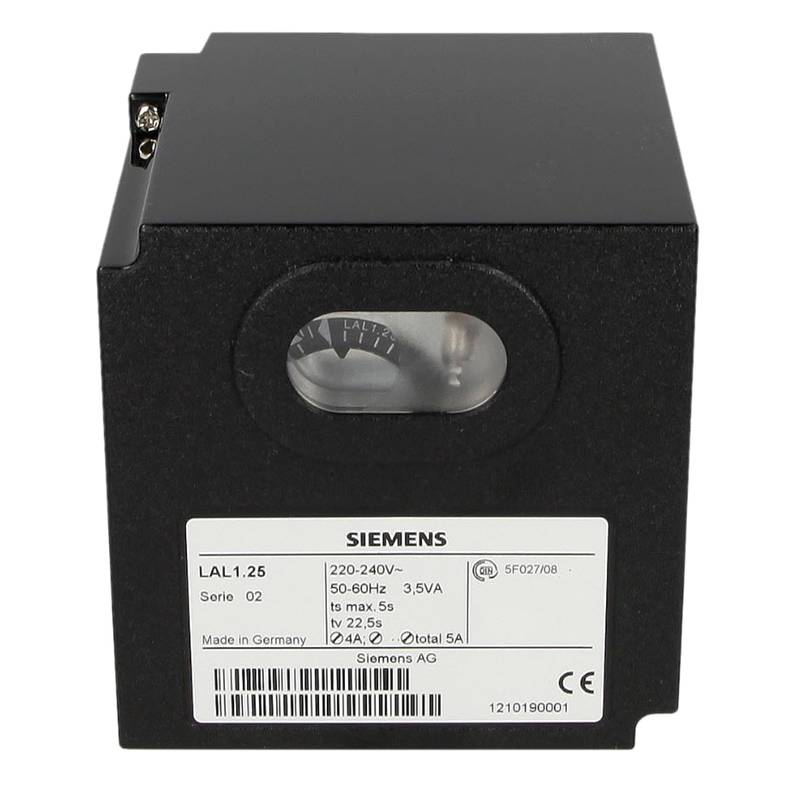
SIEMENS LDU11.323A17 Burner Ignition and Monitoring Unit


The SIEMENS LDU11.323A17 Burner Ignition and Monitoring Unit is a critical component for ensuring safe and efficient operation in industrial combustion systems. This advanced unit offers robust flame detection, ignition control, and comprehensive safety interlocks, making it indispensable for a wide range of applications. Key advantages include its high reliability, compact design, and seamless integration capabilities. Core features encompass precise flame monitoring, direct or indirect ignition sequencing, and robust safety shut-off functions. Technically, the LDU11.323A17 operates with a voltage supply of 110-127/220-240 V AC, features a flame signal current of 1.5 to 5 µA, and boasts an operating temperature range of -20 to +60 °C.
Product Specifications
| Feature | Specification |
| :---------------------------- | :------------------------------------------ |
| Product Type | Burner Ignition and Monitoring Unit |
| Model Number | LDU11.323A17 |
| Manufacturer | SIEMENS |
| Voltage Supply | 110-127/220-240 V AC |
| Flame Signal Current | 1.5 to 5 µA |
| Operating Temperature | -20 to +60 °C |
| Ambient Humidity | Max. 95% relative humidity (non-condensing) |
| Dimensions (W x H x D) | Approx. 143 x 143 x 120 mm |
| Protection Class | IP40 |
| Mounting Type | Direct mounting on burner control panel |
| Max. Pre-purge Time | 180 seconds |
| Max. Post-purge Time | 20 seconds |
| Ignition Time Limit | 10 seconds |
Core Features & Market Positioning
The SIEMENS LDU11.323A17 distinguishes itself through its advanced flame monitoring technology, ensuring immediate detection and response to flame failures, thereby enhancing operational safety. Its robust design and adherence to stringent industrial standards position it as a reliable choice for demanding environments. The unit's market competitiveness is amplified by its integration flexibility with various burner types and control systems, offering a versatile solution for system integrators and end-users seeking dependable combustion control. Unlike simpler ignition modules, the LDU11.323A17 provides comprehensive monitoring functions, significantly reducing the risk of unsafe operating conditions and potential equipment damage.
Key Application Scenarios
This burner ignition and monitoring unit is ideally suited for a variety of industrial heating applications. It is commonly employed in industrial boilers, process heaters, and thermal oxidizers where precise control over the ignition and combustion process is paramount. For facility managers and maintenance engineers, the LDU11.323A17 provides essential safety interlocks for gas and oil burners, mitigating risks associated with fuel-air mixture control and flame stability. Its reliability makes it a preferred choice for sectors including manufacturing, power generation, and chemical processing, where continuous and safe operation of combustion equipment is critical.
Practical System Integration Guidance
Integrating the SIEMENS LDU11.323A17 involves careful consideration of wiring and power supply. The unit requires a stable AC power source within its specified voltage range (110-127/220-240 V AC) and must be connected to appropriate flame detectors (e.g., UV scanners or flame rods) and ignition sources. Ensure proper grounding to prevent electrical interference. The unit's plug-in design facilitates installation, typically mounting directly onto the burner control panel for easy access and maintenance. Following the manufacturer's wiring diagrams precisely is crucial for safe and correct operation, ensuring all safety interlocks are correctly wired to the burner management system.
Operation and Risk Mitigation
Safe operation of the SIEMENS LDU11.323A17 is ensured through its built-in safety logic. The unit continuously monitors the flame signal during operation and initiates an immediate shutdown sequence if the flame is lost or if ignition fails within the set time limit. This prevents the accumulation of unburnt fuel, a significant safety hazard. Common troubleshooting involves checking for proper flame signal strength, ensuring the pilot flame is stable, and verifying electrical connections. Error codes, if displayed on an associated interface, will indicate specific fault conditions, guiding maintenance personnel towards the root cause of any operational issues.
Scalability & Long-Term Value
The SIEMENS LDU11.323A17 offers excellent long-term value due to its compatibility with broader SIEMENS automation platforms and its robust build quality, ensuring a long service life. While not directly supporting IIoT connectivity, its integration into a larger control system allows for data acquisition and remote monitoring through SCADA or DCS systems. This backward compatibility and adherence to industry standards mean it can be effectively integrated into existing or future plant upgrades, providing a reliable foundation for combustion control and contributing to the overall efficiency and safety of industrial processes.
---
Frequently Asked Questions (FAQs)
What is the primary function of the SIEMENS LDU11.323A17?
The SIEMENS LDU11.323A17 functions as a burner ignition and monitoring unit. It controls the ignition sequence and continuously monitors the flame during burner operation. This ensures safe and efficient combustion processes in industrial applications.
Its core purpose is to prevent unsafe conditions by rapidly detecting flame failure. It also manages the precise timing required for igniting fuel safely. The unit is designed for reliability in demanding industrial environments.
This device plays a critical role in safety interlock systems for boilers and process heaters. It provides peace of mind by ensuring that combustion equipment operates within safe parameters at all times.
How does the SIEMENS LDU11.323A17 detect a flame?
This unit typically uses a flame rod or a UV scanner to detect the presence of a flame. The flame rod senses the electrical conductivity of the flame. A UV scanner detects ultraviolet radiation emitted by the flame.
The LDU11.323A17 processes the signal from the flame detector. It requires a specific flame signal current range to confirm a stable flame. This signal strength is a key parameter for its operation.
If the flame signal falls below the minimum threshold or is absent, the unit initiates a safety shutdown. This immediate response is crucial for preventing hazardous fuel accumulation.
What are the typical applications for the SIEMENS LDU11.323A17?
This ignition and monitoring unit is widely used in industrial boilers and process heaters. It's essential for applications requiring controlled ignition of gas or oil burners. Its reliability makes it suitable for continuous operation settings.
It is commonly found in manufacturing plants, power generation facilities, and chemical processing sites. Any industrial setup with burners needing precise control and safety interlocks benefits from its use. The unit ensures safe startup and operation.
Examples include thermal oxidizers, furnaces, and hot air generators. Its robust design withstands demanding environmental conditions. It's a key component in maintaining operational integrity.
What voltage supply does the SIEMENS LDU11.323A17 require?
The SIEMENS LDU11.323A17 requires an AC voltage supply for operation. It is designed to work with dual voltage ranges for flexibility. These are typically 110-127 V AC and 220-240 V AC.
Ensuring the correct voltage is supplied is critical for the unit's performance and longevity. Incorrect voltage can lead to malfunction or damage. Always verify the site's electrical supply matches the unit's requirements.
This dual-voltage capability simplifies installation in different regions or facilities with varying power standards. Proper wiring according to the manual is essential for safe and effective power connection.
What is the operating temperature range for this unit?
The SIEMENS LDU11.323A17 is designed to operate within a specific temperature range. This range is from -20 °C to +60 °C. This allows for its use in a variety of industrial environments.
Operating outside of this specified temperature range can affect the unit's performance and reliability. Extreme cold or heat can lead to component failure or inaccurate readings. Ensure proper environmental controls are in place if needed.
Maintaining the unit within its optimal operating temperature is key to its long service life and consistent safety function. This specification is crucial for installation planning in diverse climates.
How is the SIEMENS LDU11.323A17 installed?
Installation of the LDU11.323A17 typically involves direct mounting on the burner control panel. This ensures easy access for wiring and maintenance. The unit features a plug-in design for straightforward integration.
Precise wiring connections are paramount. The unit needs to be connected to the appropriate power supply, flame detector, and ignition source. Referencing the official Siemens installation manual is essential for correct hookups.
Proper grounding and adherence to local electrical codes are also critical. Correct installation ensures the unit functions as intended and meets all safety standards.
What does the flame signal current specification (1.5 to 5 µA) mean?
The flame signal current of 1.5 to 5 µA indicates the strength of the signal generated by the flame detector. This range is interpreted by the unit to confirm the presence of a stable flame. A signal within this range confirms safe combustion.
If the signal is too low, it suggests an unstable or absent flame. If it's too high or erratic, it might indicate interference or a faulty detector. The unit monitors this within its operational cycle.
This parameter is crucial for the unit's safety logic. It ensures that the burner only operates when a reliable flame is present, preventing dangerous situations.
What safety features are integrated into the LDU11.323A17?
This unit incorporates multiple safety features, including automatic shutdown upon flame failure. It also has a limited ignition time to prevent fuel buildup. Pre-purge and post-purge cycles are managed for safe burner startup and shutdown.
It acts as a critical component in the burner management system (BMS). The unit ensures that all safety interlocks are functional before ignition and during operation. This prevents hazardous scenarios.
Its design adheres to strict industry safety standards for combustion controls. This ensures a high level of protection against operational risks.
Can the SIEMENS LDU11.323A17 be used with any type of burner?
The LDU11.323A17 is designed for use with various industrial gas and oil burners. Its compatibility depends on the burner's control system and the type of flame detection employed. It is often used with single-electrode ignition systems.
It's crucial to consult the SIEMENS product documentation and the burner manufacturer's specifications. This ensures proper matching of the LDU11.323A17 with the specific burner and flame detection method (e.g., flame rod or UV scanner).
While versatile, it's not a universal fit for every single burner configuration. System integrators must verify compatibility for safe and effective operation.
What troubleshooting steps can be taken if the unit fails to ignite the burner?
First, check the main power supply to ensure it is within the specified voltage range. Verify that all electrical connections to the unit, flame detector, and ignition source are secure and free from corrosion. Ensure the gas or fuel supply is adequate and correctly regulated.
Next, inspect the flame detector for cleanliness and proper alignment. If using a flame rod, check for proper grounding and ensure it is not damaged. If a UV scanner is used, confirm its lens is clean and that it can "see" the flame. Also, verify the ignition electrode is properly gapped and functioning.
Finally, examine the unit's status indicators or error codes for any fault indications. Refer to the user manual to interpret these codes and identify specific issues, such as a weak flame signal, failed ignition proving, or internal unit faults.