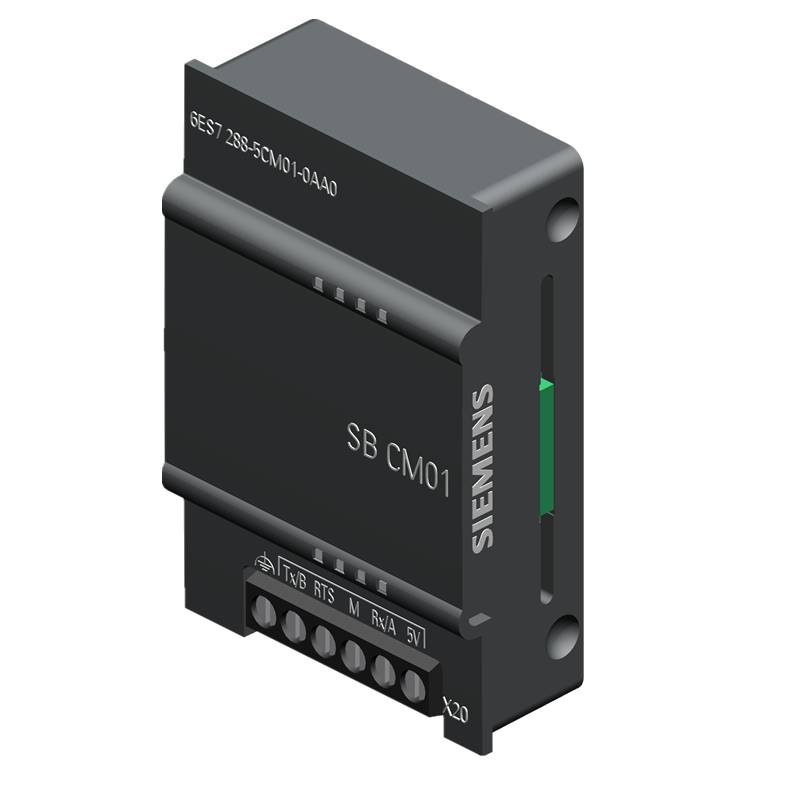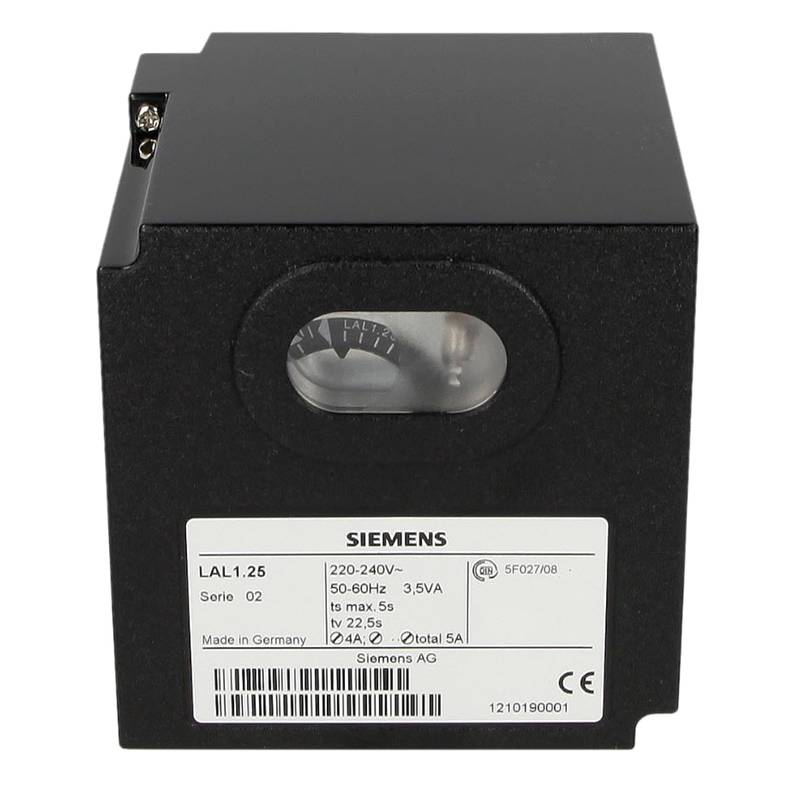
SIEMENS LDU11.523A27 Flame and Ignition Control LDU11 230V


The SIEMENS LDU11.523A27 Flame and Ignition Control unit, operating at 230V, stands as a robust solution for industrial combustion control, offering enhanced safety and operational efficiency. Its critical advantages lie in its reliable flame monitoring, precise ignition sequencing, and comprehensive diagnostic capabilities. Key technical parameters include its 230V operating voltage, advanced flame detection circuitry, and integrated safety interlocks, ensuring stable and secure burner operation across a variety of applications.
Product Specifications
| Parameter | Specification |
| :--------------------- | :-------------------- |
| Product Number | LDU11.523A27 |
| Manufacturer | Siemens |
| Voltage | 230 VAC |
| Function | Flame and Ignition Control |
| Application | Burner Management |
| Safety Functionality | Integrated |
| Control Type | Automatic sequencing |
| Flame Signal Input | Ionization/UV |
| Ignition Output | Yes |
| Operating Temperature | Varies by specific model variant; generally industrial range |
Core Features & Market Positioning
The SIEMENS LDU11.523A27 is engineered with a focus on reliability and user-friendliness, positioning it as a premium choice for demanding industrial environments. Its advanced flame detection algorithms minimize nuisance shutdowns while ensuring rapid response to flame failure, a critical safety feature. The unit's robust construction and proven Siemens quality contribute to its long operational lifespan and reduced maintenance requirements, differentiating it from less durable alternatives.
Key Application Scenarios
This flame and ignition control unit is ideally suited for a wide range of industrial combustion systems. It is extensively used in controlling industrial boilers, process heaters, incinerators, and thermal oxidizers where precise and safe burner management is paramount. Its 230V operation makes it compatible with standard industrial power supplies, simplifying integration into new or existing plant infrastructure.
Practical System Integration Guidance
Integrating the SIEMENS LDU11.523A27 involves careful attention to wiring and system configuration. The unit typically connects to a flame sensor (ionization rod or UV scanner), an ignition transformer, fuel valves, and safety interlocks such as pressure switches and airflow sensors. Proper grounding and electrical isolation are essential to prevent interference and ensure accurate flame signal detection. Referencing the detailed installation manual for specific wiring diagrams and terminal assignments is crucial for successful commissioning.
Operation and Risk Mitigation
Safe operation of the LDU11.523A27 relies on correct installation and adherence to established combustion safety standards. The unit performs an automated pre-purging sequence before ignition and a post-purging cycle after shutdown to clear residual fuel. In the event of a flame failure or internal fault, the unit will initiate a safety shutdown, preventing unburned fuel from accumulating. Understanding the diagnostic indicators and potential fault codes (e.g., flame failure, ignition failure, lockout) allows for prompt troubleshooting and risk mitigation.
Scalability & Long-Term Value
The SIEMENS LDU11.523A27 offers robust long-term value through its durability and compatibility with broader Siemens control systems. While not directly upgradeable in terms of firmware, its modular design often allows for integration with advanced PLCs or SCADA systems for enhanced monitoring and data logging capabilities. This facilitates a path towards industrial digitalization and the implementation of predictive maintenance strategies, extending the overall lifecycle value of the combustion control system.
FAQs
Q1: What is the primary function of the SIEMENS LDU11.523A27?
It manages the ignition and flame monitoring for industrial burners. This ensures safe and efficient combustion processes.
The unit controls the sequence from ignition to stable flame presence. It automatically responds to flame loss.
Its core role is to prevent hazardous situations arising from ignition or flame failure in combustion systems.
Q2: What voltage does the SIEMENS LDU11.523A27 operate on?
This model is specifically designed to operate on a 230 Volt AC power supply. This is a standard industrial voltage.
Ensure your electrical infrastructure is compatible with 230V to safely install and operate this control unit. Proper power conditioning may be advisable.
Using the correct voltage is critical for the unit's performance and longevity, preventing damage or malfunction.
Q3: How does the LDU11.523A27 detect a flame?
It typically utilizes either an ionization probe or a UV scanner for flame detection. These sensors provide a signal when a flame is present.
The control unit analyzes the electrical conductivity of the flame (ionization) or ultraviolet radiation emitted. This differentiates a live flame from other heat sources.
If the flame signal is lost during operation, the LDU11.523A27 will initiate a safety shutdown sequence to prevent hazardous fuel accumulation.
Q4: Can the SIEMENS LDU11.523A27 be used for ignition control?
Yes, a key function of the LDU11.523A27 is to manage the ignition sequence. It controls the timing and power to the ignition source.
The unit ensures the ignition system is active only when needed, typically during the startup phase of a burner. It then deactivates once the flame is established.
This precise control over ignition timing is vital for safe and reliable burner startup, preventing potential ignition failures or explosions.
Q5: What are the main advantages of using the SIEMENS LDU11.523A27?
It offers high reliability in flame detection and ignition sequencing, crucial for safety. Its robust design ensures longevity.
The unit provides integrated safety interlocks and diagnostic capabilities, simplifying troubleshooting and minimizing operational risks.
Its ability to integrate into standard industrial systems and Siemens ecosystem adds long-term value and potential for system expansion.
Q6: In which industrial applications is this control unit commonly found?
It is widely deployed in industrial boilers and process heaters where continuous and safe operation is required.
Other common applications include incinerators, thermal oxidizers, and industrial furnaces that rely on automated combustion control.
Its suitability for high-temperature environments and demanding operational cycles makes it a robust choice for these industries.
Q7: What are common troubleshooting steps for the LDU11.523A27?
First, check for any active fault codes or indicator lights on the unit. These provide initial diagnostic information.
Verify power supply stability and correct wiring connections to all components, including flame sensors and valves. Ensure proper grounding.
Inspect flame sensors for contamination or damage, and check safety interlock devices (e.g., pressure switches) for proper function.
Q8: Does the SIEMENS LDU11.523A27 require programming?
The LDU11.523A27 typically operates with pre-programmed logic for standard burner sequences. Specific parameters may be adjustable.
Advanced configuration or integration with PLC systems might involve programming, but the core flame and ignition control functions are often self-contained.
Refer to the product manual for details on any user-configurable settings or specific integration protocols required for your application.
Q9: What safety features are built into the LDU11.523A27?
It incorporates automatic safety shutdowns upon flame failure or ignition failure. This prevents hazardous conditions.
The unit ensures a safe pre-purge and post-purge of the combustion chamber to clear flammable gases.
Integrated safety interlocks from external devices are also monitored and acted upon by the control unit to maintain operational safety.
Q10: How does this unit contribute to system scalability and long-term value?
Its reliable performance and durability reduce downtime and maintenance costs, contributing to long-term operational value.
The unit can often be integrated into broader SCADA or PLC systems for enhanced monitoring and data acquisition, supporting scalability.
Its compatibility with other Siemens industrial components allows for easier expansion and upgrades within a Siemens-centric automation environment.