











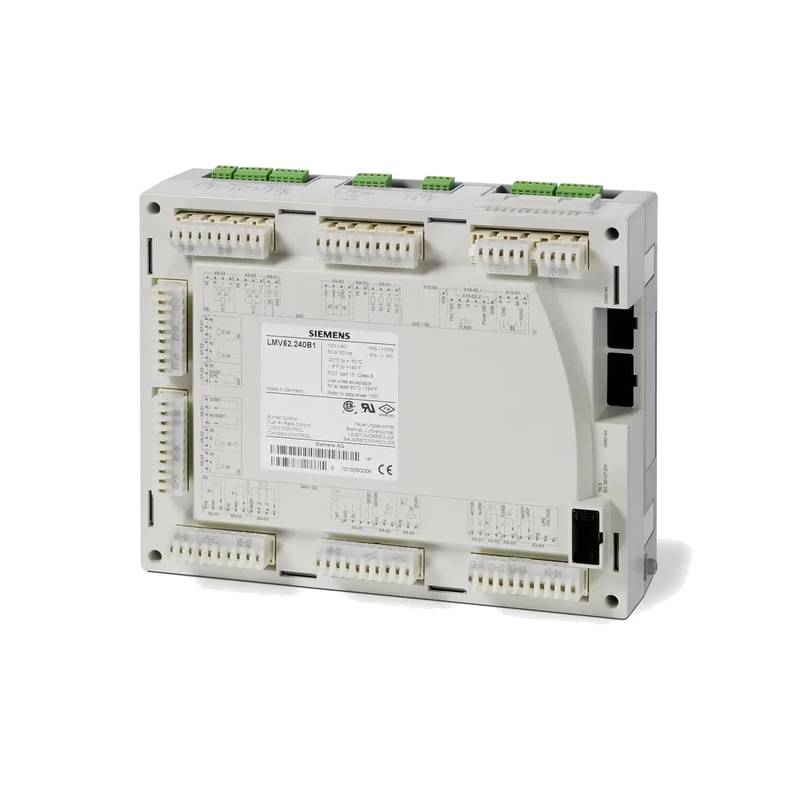
SIEMENS LMV51.100C2 Electronic Air/Fuel System LMV51 Modulating


The SIEMENS LMV51.100C2 Electronic Air/Fuel System LMV51 Modulating stands as a sophisticated solution for precise combustion control in industrial applications. Engineered for optimal efficiency and reliability, this modulating burner control system integrates advanced electronic capabilities to manage air and fuel ratios dynamically. Its core advantages lie in its precise modulation, ensuring consistent performance and reduced emissions across varying load conditions. Key technical parameters include an operating voltage range of 100-240 VAC, a frequency of 50/60 Hz, and a temperature range of -20 to +60 °C, making it robust for diverse industrial environments. The LMV51.100C2 is designed for seamless integration and delivers exceptional fuel savings and enhanced operational safety.
Product Specifications
| Feature | Specification |
| :--------------------- | :------------------------------------------------- |
| Product Type | Electronic Air/Fuel System Modulating |
| Model Number | LMV51.100C2 |
| Manufacturer | Siemens |
| Operating Voltage | 100-240 VAC |
| Frequency | 50/60 Hz |
| Ambient Temperature | -20 to +60 °C |
| Protection Class | IP40 |
| Max. Load | 2000 VA (for LMV51.xxx models) |
| Max. Cable Length | 200 m (for LMV51.xxx models) |
| Control Output | 0-10 VDC |
| Communication Interface | Optional (e.g., MODBUS) |
| Application | Gas, oil, dual-fuel burners |
Core Features & Market Positioning
The SIEMENS LMV51.100C2 distinguishes itself through its advanced digital control architecture, offering superior precision compared to older pneumatic or mechanical systems. Its "modulating" capability allows for continuous adjustment of the air-fuel mixture, maintaining optimal combustion efficiency and significantly reducing fuel consumption and harmful emissions. This capability positions the LMV51.100C2 as a premium solution for environmentally conscious and cost-driven industrial operations. Industry reviews often highlight its reliability and ease of integration, making it a preferred choice for original equipment manufacturers (OEMs) and system integrators seeking a high-performance burner management system. The inherent safety features, including internal diagnostics and fail-safe mechanisms, further solidify its market standing as a dependable and advanced combustion control component.
Key Application Scenarios
This electronic air/fuel system is exceptionally well-suited for a wide array of industrial heating applications where precise combustion control is paramount. It finds extensive use in industrial boilers, process heaters, and thermal oxidizers across sectors such as chemical processing, manufacturing, and food production. The LMV51.100C2's modulating function is particularly beneficial in applications with fluctuating load demands, ensuring stable temperatures and optimal energy utilization. For instance, in a manufacturing plant requiring consistent steam production for machinery, this system dynamically adjusts to maintain precise steam pressure, preventing energy wastage during periods of lower demand while ensuring sufficient output during peak times. Its compatibility with various fuel types, including gas, oil, and dual-fuel configurations, enhances its versatility, allowing it to be deployed in diverse operational environments.
Practical System Integration Guidance
Integrating the SIEMENS LMV51.100C2 into an existing or new burner system requires careful attention to wiring and initial setup. The unit typically connects to the burner's ignition transformer, fuel valve, damper actuators, and combustion air fan. Power is supplied via a 100-240 VAC, 50/60 Hz source, with proper grounding being essential for safety and performance. The control outputs, often 0-10 VDC, are used to modulate the position of fuel valves and air dampers in response to burner demand signals. For optimal performance, it's crucial to calibrate the system's parameters, such as flame detection thresholds and modulation limits, using the Siemens compatible interface software or local control panel. Adhering to the manufacturer's installation manual, which details specific wiring diagrams for different burner configurations and actuator types, is critical to ensure correct operation and prevent system malfunctions.
Operation and Risk Mitigation
Safe operation of the SIEMENS LMV51.100C2 Electronic Air/Fuel System relies on understanding its operational logic and built-in safety interlocks. The system continuously monitors flame signal strength and other critical parameters to ensure a stable and safe combustion process. In the event of a flame failure or any detected operational anomaly, the LMV51.100C2 initiates a safe shutdown sequence, preventing fuel accumulation and potential hazards. Common troubleshooting often involves checking the flame detector for fouling or misalignment, ensuring adequate air supply, and verifying the integrity of fuel and air actuator linkages. Fault codes displayed on a connected interface or diagnostic module provide specific indicators for troubleshooting, such as "flame signal loss" or "actuator fault," guiding technicians toward the root cause. Regular preventative maintenance, including cleaning of the flame sensor and inspection of all electrical connections, is vital for mitigating operational risks and ensuring long-term system reliability.
Scalability & Long-Term Value
The SIEMENS LMV51.100C2 offers significant long-term value through its inherent scalability and compatibility with modern industrial control platforms. While a standalone unit, its potential for integration with supervisory control and data acquisition (SCADA) systems or building management systems (BMS) via optional communication interfaces like MODBUS enhances its utility in an increasingly connected industrial landscape. This allows for remote monitoring, data logging, and advanced performance analysis, which are crucial for optimizing energy efficiency and predictive maintenance strategies. For facilities looking to embrace Industry 4.0 principles, the LMV51.100C2 can serve as a foundational component within a broader digital ecosystem, feeding real-time combustion data for process optimization and integration with enterprise resource planning (ERP) systems. Its robust design and Siemens' commitment to product longevity ensure that it remains a reliable and efficient solution for many years.
Frequently Asked Questions
What is the primary function of the SIEMENS LMV51.100C2?
The LMV51.100C2 acts as a sophisticated burner management system. It precisely controls the air and fuel mixture for optimal combustion in industrial burners.
This system modulates these inputs dynamically to maintain desired thermal output efficiently. It ensures consistent performance across varying operational loads and environmental conditions.
Its core purpose is to enhance combustion efficiency, reduce fuel consumption, and minimize harmful emissions. It also incorporates critical safety features for reliable operation.
How does the modulating feature of the LMV51.100C2 benefit industrial operations?
The modulating capability allows for continuous, fine-tuned adjustments of the air-fuel ratio. This prevents inefficient on-off cycles common in simpler systems.
This dynamic control ensures stable operating temperatures and precise energy input, leading to significant fuel savings. It adapts seamlessly to fluctuating process demands.
By maintaining optimal combustion, the modulating function also leads to cleaner exhaust gases, reducing environmental impact and helping facilities meet stringent emissions regulations.
What are the typical applications for the SIEMENS LMV51.100C2?
This system is widely deployed in industrial boilers and process heaters requiring precise combustion control. It's common in manufacturing, chemical plants, and food processing facilities.
It is also suitable for thermal oxidizers and other combustion equipment where stable temperatures and efficient fuel usage are critical. Its versatility extends to dual-fuel burners.
The LMV51.100C2 is ideal for applications with variable load requirements, ensuring consistent output and energy efficiency in dynamic industrial environments.
What is the recommended voltage and frequency for operating the LMV51.100C2?
The SIEMENS LMV51.100C2 is designed to operate with a wide input voltage range. This makes it adaptable to various power supply configurations globally.
Specifically, it functions reliably within a voltage band of 100 to 240 VAC. This broad range simplifies installation in different electrical infrastructures.
The system is engineered to work seamlessly with both 50 Hz and 60 Hz power frequencies. This dual-frequency compatibility ensures its applicability across diverse international markets.
How does the LMV51.100C2 ensure operational safety?
The system incorporates multiple integrated safety interlocks and continuous self-diagnostic functions. It constantly monitors critical combustion parameters for any deviations.
In case of flame failure, unstable combustion, or detected faults, the LMV51.100C2 automatically initiates a safe shutdown sequence. This prevents hazardous conditions like fuel accumulation.
It employs robust flame detection technology and fail-safe mechanisms to ensure that the burner operates only within safe, defined parameters, safeguarding personnel and equipment.
What types of fuel can be used with the SIEMENS LMV51.100C2?
The LMV51.100C2 is engineered for versatility and supports a range of common industrial fuels. It is capable of managing both single-fuel and dual-fuel configurations.
It can effectively control burners utilizing natural gas and other gaseous fuels. It also efficiently manages burners fired by various types of fuel oil.
When configured for dual-fuel operation, the system can seamlessly switch between gas and oil, providing operational flexibility and resilience in fuel supply situations.
Can the LMV51.100C2 be integrated with modern digital control systems?
Yes, the LMV51.100C2 offers compatibility for integration into advanced control architectures. It can connect to SCADA and BMS platforms for enhanced monitoring.
Optional communication modules, such as those supporting MODBUS, enable data exchange for remote supervision and control. This facilitates integration into Industry 4.0 environments.
This connectivity allows for real-time data logging, performance analysis, and integration with higher-level plant management systems, supporting predictive maintenance and optimization initiatives.
What is the environmental operating temperature range for this product?
The SIEMENS LMV51.100C2 is built to withstand challenging industrial conditions. It is designed for operation within a wide thermal envelope.
Its specified operating temperature range is from -20 degrees Celsius up to +60 degrees Celsius. This broad range ensures reliable performance in both cold and moderately hot environments.
This robust temperature tolerance makes it suitable for deployment in various geographical locations and industrial settings, from cold climates to heated process areas.
What does "modulating" mean in the context of the LMV51.100C2?
"Modulating" refers to the system's ability to continuously adjust and regulate the air and fuel inputs to the burner. It's a variable, rather than on-off, control.
This dynamic adjustment ensures that the combustion process remains at its most efficient point for the current heat demand. It avoids wasted fuel and reduces emissions.
Essentially, the system precisely controls burner output by continuously fine-tuning the air-to-fuel ratio, delivering exactly the amount of heat required at any given moment.
What are some common troubleshooting steps for the LMV51.100C2?
Begin by checking the flame signal strength and the condition of the flame detector for cleanliness and proper alignment. Verify that the fuel and air actuators are responding correctly to control signals.
Ensure that the burner has adequate combustion air supply and that all electrical connections are secure and free from corrosion. Review any error codes displayed by the system for specific diagnostic information.
Consult the official Siemens LMV51.100C2 technical manual for detailed troubleshooting procedures related to specific fault codes and operational issues. Proper calibration after any adjustments is also crucial.