











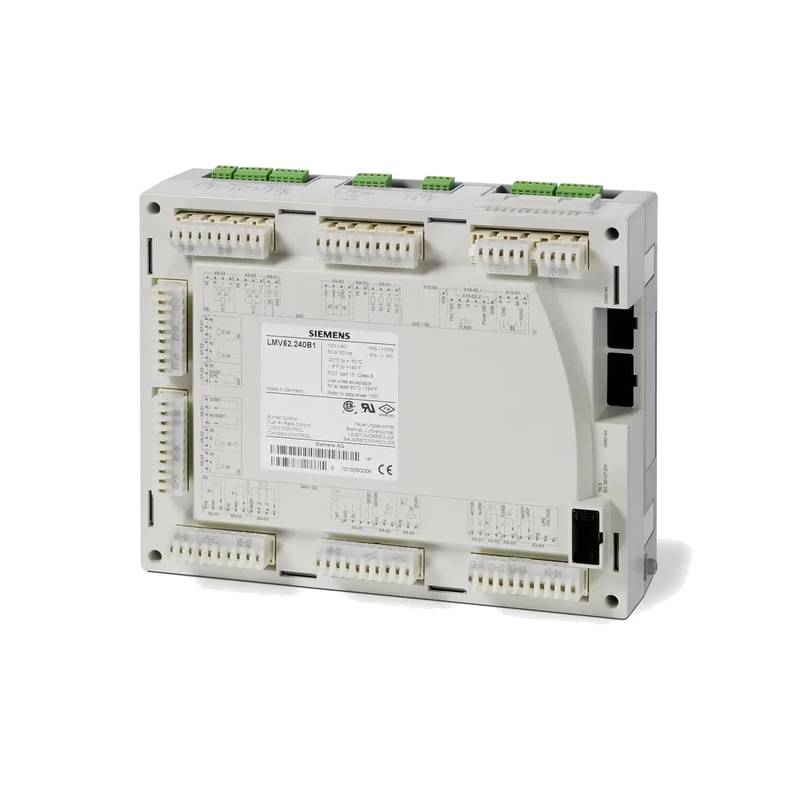
SIEMENS LMV51.140C1 LMV5 Burner Management System 120V


The SIEMENS LMV51.140C1 LMV5 Burner Management System 120V stands as a robust and reliable solution for industrial combustion control, engineered to deliver exceptional safety, efficiency, and operational flexibility. This advanced system is designed for a wide array of burner applications, offering precise control and monitoring capabilities. Its core advantages lie in its sophisticated safety interlock functions, comprehensive diagnostic features, and seamless integration into larger automation networks. Key technical parameters include its 120V operating voltage, ensuring compatibility with standard industrial power supplies, and its advanced burner management logic that guarantees safe and efficient startup, operation, and shutdown sequences.
| Parameter | Specification |
| :-------------------- | :------------------------------------------- |
| Product Type | Burner Management System |
| Model Number | LMV51.140C1 |
| Manufacturer | Siemens |
| Operating Voltage | 120V AC |
| Communication Interface | Varies by configuration (e.g., Modbus RTU) |
| Safety Functions | Integrated flame supervision, lockout logic |
| Environmental Rating | Industrial grade |
| Control Capabilities | Multi-stage, modulating control |
The SIEMENS LMV51.140C1 distinguishes itself in the market through its intelligent flame monitoring technology and its ability to manage complex multi-burner or single burner sequences with exceptional accuracy. This system provides critical safety interlocks, preventing hazardous operating conditions by continuously monitoring flame presence and fuel flow. Its market positioning is as a high-reliability, industrial-grade control system for demanding combustion processes, offering a compelling alternative to less sophisticated or integrated solutions. The robust design and extensive testing by Siemens ensure compliance with stringent industry safety standards, providing users with confidence in its operational integrity.
Key application scenarios for the SIEMENS LMV51.140C1 LMV5 Burner Management System include its deployment in industrial boilers, furnaces, thermal oxidizers, and incinerators across various sectors such as power generation, chemical processing, and manufacturing. Its ability to manage both pilot and main flame sequences makes it ideal for applications requiring reliable ignition and stable combustion. The system's adaptability allows it to control single or multiple burners in complex heating systems where precise temperature control and fuel efficiency are paramount. This system is particularly well-suited for environments where stringent safety regulations are in place and operational uptime is critical.
Practical system integration of the SIEMENS LMV51.140C1 involves careful consideration of wiring and component selection. The system typically interfaces with flame detectors (UV, IR, or flame rods), fuel valves, ignition transformers, and various sensors for pressure, temperature, and air flow. Proper wiring according to the LMV5 series wiring diagrams is crucial for ensuring correct functionality and safety. Commissioning involves configuring the system parameters, such as flame detection thresholds, purge times, and fuel staging logic, often through a connected HMI or PC software. A typical setup involves interconnecting the LMV5 controller with safety shut-off valves, combustion air fans, and a control panel for operator interface.
Operation and risk mitigation with the SIEMENS LMV51.140C1 are heavily focused on its built-in safety features and diagnostic capabilities. The system's lockout logic is designed to prevent burner operation in unsafe conditions, such as a failure to establish a pilot flame or a loss of main flame. Critical error codes displayed on the control interface or logged through a communication interface provide immediate insight into potential issues, enabling prompt troubleshooting. Regular maintenance, including checks of flame detectors, valve operation, and electrical connections, is vital for preventing malfunctions and ensuring sustained safe operation. Understanding and responding to these diagnostic codes are key to minimizing downtime and potential hazards.
The SIEMENS LMV51.140C1 LMV5 Burner Management System offers significant scalability and long-term value through its modular design and compatibility with broader Siemens automation platforms. Its ability to integrate with SCADA systems and IIoT solutions via standard communication protocols allows for advanced data logging, remote monitoring, and predictive maintenance strategies. This facilitates upgrades and expansion of combustion control capabilities as operational demands evolve. Compatibility with other Siemens industrial components ensures a cohesive and integrated automation architecture, enhancing overall plant efficiency and reducing the total cost of ownership over the system's lifecycle.
FAQs
What is the primary function of the SIEMENS LMV51.140C1?
The SIEMENS LMV51.140C1 acts as a safety and control system for industrial burners. It ensures safe startup, operation, and shutdown sequences. It monitors flame status and controls fuel delivery.
How does the LMV51.140C1 ensure burner safety?
It incorporates integrated flame supervision and lockout logic. The system continuously checks for flame presence. It will initiate a shutdown if unsafe conditions are detected.
What types of burners can the LMV51.140C1 control?
It is suitable for various industrial burners, including those in boilers and furnaces. The system can manage both pilot and main flame sequences. It supports single and multiple burner configurations.
What is the typical operating voltage for this system?
The SIEMENS LMV51.140C1 operates on a 120V AC power supply. This voltage is standard in most industrial electrical systems. Ensure proper power conditioning for reliable operation.
Can the LMV51.140C1 be integrated with other control systems?
Yes, it supports integration with SCADA and DCS. It often uses communication protocols like Modbus RTU. This allows for remote monitoring and data acquisition.
What are common troubleshooting indicators for the LMV51.140C1?
Error codes displayed on the control interface are key indicators. Lockout conditions signal a safety-related issue. Flame failure or ignition problems are also common.
How is the LMV51.140C1 commissioned?
Commissioning involves parameter configuration via software. Key settings include purge times and flame thresholds. Proper wiring and component checks are essential first steps.
What flame detection methods does the LMV51.140C1 support?
It is compatible with various flame detection technologies. These commonly include UV sensors, IR sensors, and flame rods. The specific detector depends on the burner type and application.
What are the benefits of using a Siemens burner management system?
Siemens systems offer high reliability and safety compliance. They provide advanced diagnostics for troubleshooting. Integration with other Siemens automation products is seamless.
Where can I find detailed technical specifications for the LMV51.140C1?
Detailed specifications are found in the official Siemens product documentation. This includes user manuals and technical datasheets. Always refer to the manufacturer's official literature for accuracy.