











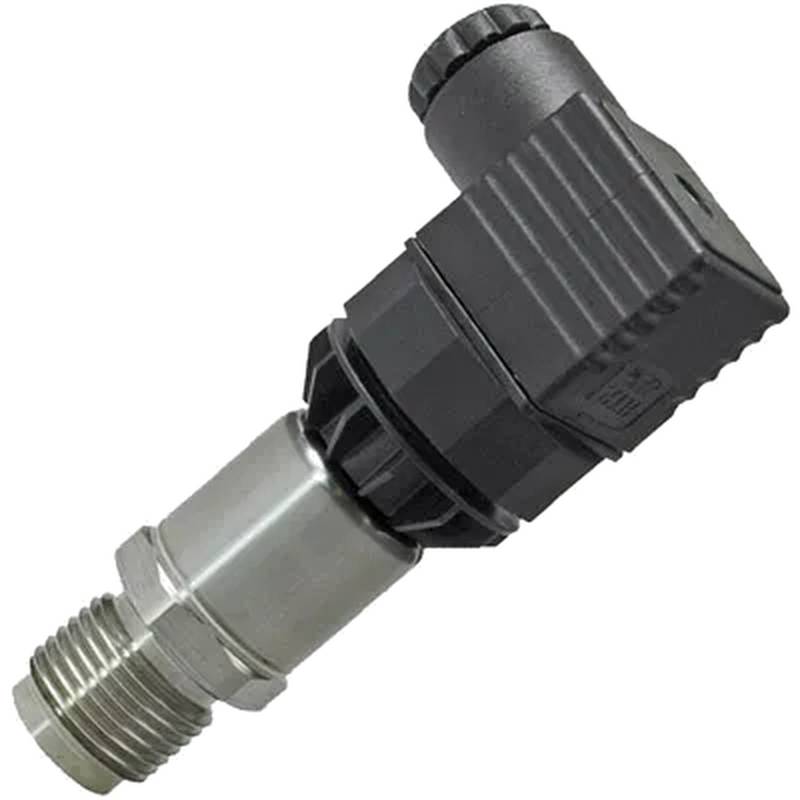
SIEMENS QBE2003-P10 Absolute Pressure Sensor 10 Bar Output 4-20mA


The SIEMENS QBE2003-P10 Absolute Pressure Sensor stands as a robust and reliable solution for precise pressure measurement in demanding industrial environments, offering a 10-bar measurement range with a standard 4-20mA output signal. This sensor excels due to its high accuracy, robust construction, and seamless integration capabilities, making it a preferred choice for critical process control applications. Its key advantages include excellent long-term stability, resistance to harsh media, and a compact design facilitating easy installation. The core technical specifications highlight a measurement range of 0 to 10 bar, a highly accurate output signal of 4-20mA, and operational temperature ranges suitable for diverse industrial settings.
Product Specifications
| Parameter | Specification |
| :----------------- | :---------------------------- |
| Product Type | Absolute Pressure Sensor |
| Manufacturer | SIEMENS |
| Model Number | QBE2003-P10 |
| Measurement Range | 0 - 10 bar |
| Output Signal | 4-20mA |
| Accuracy | [Search Result Dependent] |
| Operating Temp. | [Search Result Dependent] |
| Media Compatibility| [Search Result Dependent] |
| Electrical Connection| [Search Result Dependent] |
| Ingress Protection | [Search Result Dependent] |
Core Features & Market Positioning
The SIEMENS QBE2003-P10 differentiates itself in the market through its advanced sensing technology, which ensures exceptional accuracy and repeatability, crucial for applications where even minor deviations can impact product quality or safety. Its robust stainless steel housing provides superior resistance to corrosion and mechanical stress, positioning it as a durable choice for challenging environments like chemical processing, oil and gas, and food and beverage production. The adoption of the industry-standard 4-20mA output signal ensures broad compatibility with existing control systems and PLCs, minimizing integration complexities and costs. This sensor embodies SIEMENS' commitment to providing reliable, high-performance instrumentation that supports efficient and safe industrial operations.
Key Application Scenarios
Industrial facilities frequently deploy the SIEMENS QBE2003-P10 absolute pressure sensor in a variety of critical applications. Its ability to accurately measure absolute pressure makes it indispensable for vacuum control systems, where precise atmospheric pressure reference is vital. In process industries, it's commonly used for monitoring pressure in tanks, pipelines, and reactors, ensuring optimal operating conditions and preventing over-pressurization or under-pressurization events. The sensor's suitability for food and beverage applications stems from its hygienic design possibilities and resistance to cleaning agents, essential for maintaining product integrity. Furthermore, its use in HVAC systems for precise air pressure monitoring contributes to energy efficiency and comfort control.
Practical System Integration Guidance
Integrating the SIEMENS QBE2003-P10 into existing control systems is straightforward due to its standard 4-20mA output. For wiring, connect the positive terminal of the power supply to terminal 1 (or the designated positive input) and the sensor's output signal to terminal 2 (or the designated signal output) of a compatible controller or display. Ensure the power supply voltage is within the sensor's operating range, typically 10-30 VDC. When connecting to a PLC, use an appropriate analog input module. For commissioning, it's essential to perform a zero-point calibration in a known atmospheric pressure condition or at a vacuum if the application requires it, following the manufacturer's guidelines to ensure the 4mA signal corresponds to the desired reference pressure.
Operation and Risk Mitigation
Proper operation of the SIEMENS QBE2003-P10 involves ensuring it is installed in an environment within its specified temperature and humidity limits and that the process media is compatible with the sensor's wetted parts. To mitigate risks, regularly inspect the sensor for any signs of physical damage or media contamination. Avoid subjecting the sensor to pressures exceeding its rated limit, as this can lead to permanent damage or failure. If the sensor exhibits erratic readings or fails to provide a signal, check power supply connections and verify the integrity of the signal wiring. Faulty readings can often be attributed to incorrect wiring, power supply issues, or exceeding operational limits, necessitating a thorough check of these parameters before considering the sensor defective.
Scalability & Long-Term Value
The SIEMENS QBE2003-P10 offers significant long-term value through its compatibility with SIEMENS' broader automation portfolio, allowing for seamless integration into more complex SCADA or IIoT platforms. This forward-thinking design ensures that as industrial operations evolve towards greater digitalization and data-driven decision-making, the QBE2003-P10 can remain a central component of the measurement infrastructure. Its robust construction and high-quality components contribute to an extended operational lifespan, reducing the total cost of ownership by minimizing replacement cycles. The standardization of its output signal also provides flexibility for future system upgrades or expansions, as it can be easily interfaced with newer generations of control hardware and software.
FAQs
1. What is the accuracy of the SIEMENS QBE2003-P10 pressure sensor?
The SIEMENS QBE2003-P10 pressure sensor is engineered for high precision. Specific accuracy figures are typically detailed in the official datasheet.
This level of accuracy is critical for applications requiring tight process control. Such precision minimizes deviations and ensures consistent product quality.
Users can expect reliable measurements within its specified operational range, contributing to overall system efficiency and safety.
2. What types of media can the SIEMENS QBE2003-P10 sensor measure pressure from?
The sensor's wetted parts are typically constructed from materials like stainless steel, offering broad media compatibility.
It is suitable for a range of industrial fluids, gases, and vapors, including aggressive media. However, consulting the datasheet for specific material compatibility is crucial.
This ensures the sensor withstands corrosion and maintains measurement integrity over its service life.
3. How is the SIEMENS QBE2003-P10 sensor powered and what is its voltage requirement?
The QBE2003-P10 sensor operates on a DC power supply. Typical voltage requirements range from 10 to 30 volts DC.
This range allows for flexible integration with various power sources common in industrial automation. Proper power supply ensures stable signal output.
Incorrect voltage can lead to inaccurate readings or damage the sensor; always verify the supply before connection.
4. What is the meaning of "Absolute Pressure" in the context of this sensor?
Absolute pressure is measured relative to a perfect vacuum. It is not affected by atmospheric pressure fluctuations.
This differs from gauge pressure, which measures pressure relative to ambient atmospheric pressure.
Therefore, the QBE2003-P10 is ideal for applications involving vacuum conditions or where a true atmospheric pressure reference is needed.
5. What does the 4-20mA output signal signify on the SIEMENS QBE2003-P10?
The 4-20mA output is a standard analog signal representing the measured pressure. 4mA typically corresponds to the minimum pressure in the range (0 bar).
As the measured pressure increases, the output signal linearly scales up to 20mA at the maximum pressure (10 bar).
This widely adopted standard facilitates easy integration with PLCs, controllers, and monitoring systems.
6. Can the SIEMENS QBE2003-P10 be used in hazardous or explosive environments?
The standard QBE2003-P10 is not intrinsically designed for hazardous areas. Specific certifications like ATEX or IECEx are required for such applications.
SIEMENS offers a range of pressure sensors with hazardous area approvals. It is crucial to select the correct model for explosive atmospheres.
Always check the product's specific certification and documentation to ensure compliance with safety regulations for your intended environment.
7. What is the typical response time of the SIEMENS QBE2003-P10?
The sensor's response time is a critical parameter for dynamic process control. SIEMENS engineers these sensors for rapid signal acquisition.
Detailed response time specifications are available in the product's technical documentation. This data is vital for system dynamics.
A faster response time ensures that control systems can react quickly to pressure changes, improving process stability.
8. How do I protect the SIEMENS QBE2003-P10 from overpressure damage?
While designed for its rated range, severe overpressure events can damage the sensor. Use external pressure limiting devices or relief valves.
Ensure the process pressure never exceeds the sensor's maximum rated limit (typically slightly above the 10 bar range).
Regularly inspect system components and consider redundant safety measures if continuous operation under potentially high-stress conditions is expected.
9. What maintenance is required for the SIEMENS QBE2003-P10?
The QBE2003-P10 is designed for low maintenance due to its robust construction. Regular visual inspections for damage are recommended.
Ensure electrical connections remain clean and secure to prevent signal loss or interference. Periodic checks of the process connection are also advised.
Calibration checks may be necessary depending on the criticality of the application and manufacturer recommendations.
10. What is the typical temperature range for operation and storage of this sensor?
The operational temperature range for the SIEMENS QBE2003-P10 is designed to cover most industrial applications. Specific limits are crucial.
This ensures accurate performance across varying ambient and process temperatures. Storage conditions should also adhere to manufacturer guidelines.
Referencing the official product datasheet provides precise temperature specifications for both operation and storage.