











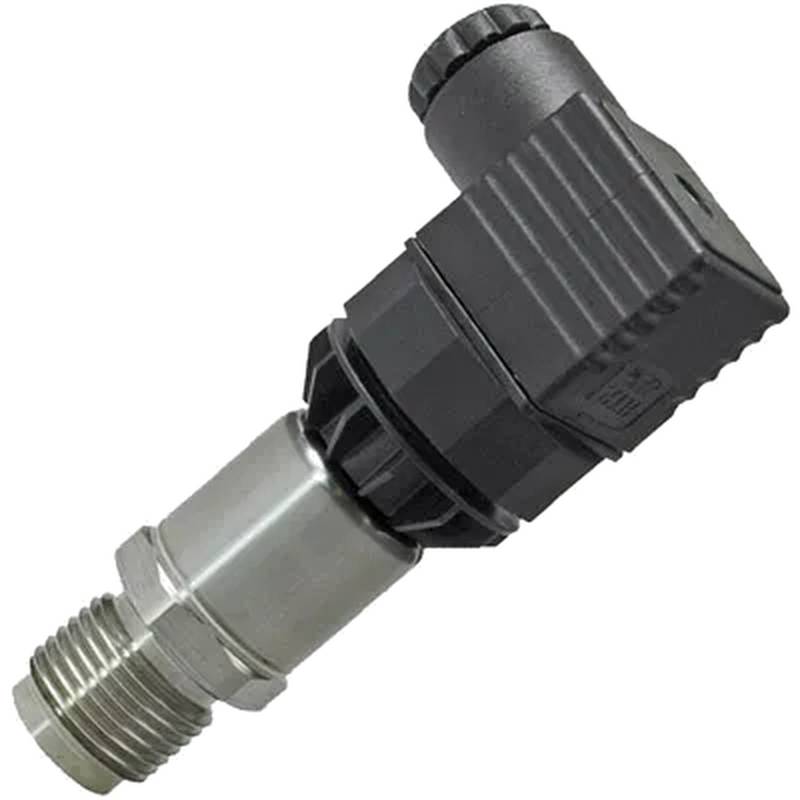
SIEMENS QBE3100-D16 Differential Pressure Sensor 16 Bar Liquid


The SIEMENS QBE3100-D16 Differential Pressure Sensor, with its robust 16 Bar liquid pressure rating, stands out as a critical component for precise pressure monitoring in demanding industrial environments. This advanced sensor delivers exceptional accuracy and reliability, boasting a measuring range of 0 to 16 bar and an output signal of 4…20 mA. Its key advantages include superior durability for liquid applications, a high maximum overpressure capability, and seamless integration into automated control systems. The QBE3100-D16 is engineered for efficiency, featuring a compact design and a straightforward connection interface, making it an ideal choice for a wide array of process control applications.
Product Specifications
| Feature | Specification |
| :--------------------- | :---------------------------------------- |
| Product Type | Differential Pressure Sensor |
| Manufacturer | SIEMENS |
| Model | QBE3100-D16 |
| Pressure Range | 0…16 bar |
| Output Signal | 4…20 mA |
| Media | Liquids |
| Maximum Overpressure | 32 bar |
| Accuracy | ±0.5% FS (typical) |
| Operating Temperature | -20…+85 °C |
| Ingress Protection | IP65 |
| Electrical Connection | M12 connector |
| Process Connection | G 1/4" |
| Power Supply | 24 V DC |
Core Features & Market Positioning
The SIEMENS QBE3100-D16 distinguishes itself through its specialized design for liquid media, offering enhanced resistance to common industrial fluids and ensuring stable performance where other sensors might falter. Its robust construction, including a maximum overpressure rating of 32 bar, provides a significant safety margin and operational resilience, positioning it as a premium solution for critical pressure management. The sensor's typical accuracy of ±0.5% Full Scale (FS) meets stringent industry demands for precise control, a feature highly valued in applications where even minor deviations can impact product quality or system efficiency. Furthermore, the 4…20 mA output signal ensures broad compatibility with existing PLC and SCADA systems, underscoring its straightforward integration and market appeal.
Key Application Scenarios
This differential pressure sensor is ideally suited for monitoring liquid levels in pressurized tanks, a common requirement in chemical processing and water treatment plants. It excels in flow measurement applications across closed pipe systems, where the pressure drop across an orifice plate or venturi tube directly correlates to flow rate, crucial for precise process control in industries like oil and gas. Additionally, the QBE3100-D16 is an excellent choice for pump and filter monitoring, detecting blockages or pressure imbalances that indicate maintenance needs or operational inefficiencies within hydraulic systems and industrial fluid circuits.
Practical System Integration Guidance
Integrating the SIEMENS QBE3100-D16 into your system begins with proper electrical connection. Utilize the M12 connector, ensuring the 24 V DC power supply is correctly wired according to the sensor's pinout to prevent damage. For process connection, the G 1/4" thread allows for direct mounting into compatible pipework or fittings, ensuring a leak-free seal for liquid applications. When connecting to a PLC, the 4…20 mA output signal can be interfaced with an analog input module, typically requiring loop power. Configuration might involve setting input scaling within the PLC program to match the sensor's 0…16 bar range for accurate reading.
Operation and Risk Mitigation
Operating the QBE3100-D16 within its specified temperature range of -20 to +85 °C is crucial for maintaining accuracy and preventing premature failure. Ensure the liquid media is compatible with the sensor's wetted parts to avoid corrosion or material degradation. The sensor's IP65 rating provides protection against dust and water jets, but avoid submersion or exposure to high-pressure washing. In case of erratic readings, verify power supply stability and check for any physical obstructions in the process connections. Always adhere to the maximum overpressure limit of 32 bar to prevent diaphragm damage.
Scalability & Long-Term Value
The SIEMENS QBE3100-D16 offers significant long-term value through its compatibility with established industrial automation platforms. Its standard 4…20 mA output ensures seamless integration with a wide range of PLCs and SCADA systems, facilitating easy upgrades or expansions of existing monitoring infrastructure. For organizations moving towards Industry 4.0 initiatives, this sensor can be readily incorporated into IIoT solutions by pairing it with appropriate data acquisition gateways and cloud platforms, enabling remote monitoring, predictive maintenance, and advanced analytics for enhanced operational efficiency and reduced downtime.
Frequently Asked Questions
What is the primary function of the SIEMENS QBE3100-D16?
This sensor measures the difference between two pressures in liquid systems. It's vital for controlling and monitoring flow rates or liquid levels. Its robust design ensures reliable operation in industrial settings.
How does the SIEMENS QBE3100-D16 handle different liquid types?
The sensor is designed for a broad spectrum of liquid media. It's constructed with materials resistant to common industrial fluids. Always confirm compatibility for highly corrosive or specialized liquids.
What is the accuracy of the SIEMENS QBE3100-D16 differential pressure sensor?
The QBE3100-D16 offers excellent accuracy, typically within ±0.5% of the full scale range. This precision is critical for demanding process control applications. It ensures reliable measurements for operational efficiency.
What is the maximum pressure the SIEMENS QBE3100-D16 can withstand?
The sensor can handle a maximum overpressure of 32 bar. This high rating provides a significant safety buffer. It protects the sensor from damage in transient pressure events.
What are the typical industrial applications for this sensor?
This sensor is commonly used for liquid level measurement in pressurized vessels. It's also applied for flow measurement across pipe constrictions. Filter monitoring and pump control are other key uses.
How is the SIEMENS QBE3100-D16 installed in a system?
Installation involves connecting the G 1/4" process port to the liquid system. Electrical connection is made via the M12 connector. Proper sealing is essential for liquid integrity.
What type of output signal does the QBE3100-D16 provide?
The sensor outputs a standard 4…20 mA analog signal. This signal is widely compatible with most industrial control systems. It represents the measured differential pressure.
What power supply is required for the SIEMENS QBE3100-D16?
This differential pressure sensor requires a 24 V DC power supply. Ensuring correct voltage is critical for sensor function and longevity. Always refer to the wiring diagram for precise connections.
How does the ingress protection rating (IP65) benefit this sensor?
The IP65 rating means the sensor is protected against dust ingress and water jets. This makes it suitable for harsh industrial environments. It ensures reliable operation even in challenging conditions.
Can the SIEMENS QBE3100-D16 be integrated with IIoT platforms?
Yes, the sensor's standard analog output facilitates integration with IIoT systems. Data can be transmitted via gateways for analysis. This enables remote monitoring and predictive maintenance.