












SIEMENS 6SL3720-1TE41-0AA3 SINAMICS S120 Single Motor Module with CIM for CU320-2 560kW 985A Efficiency Drive 400V


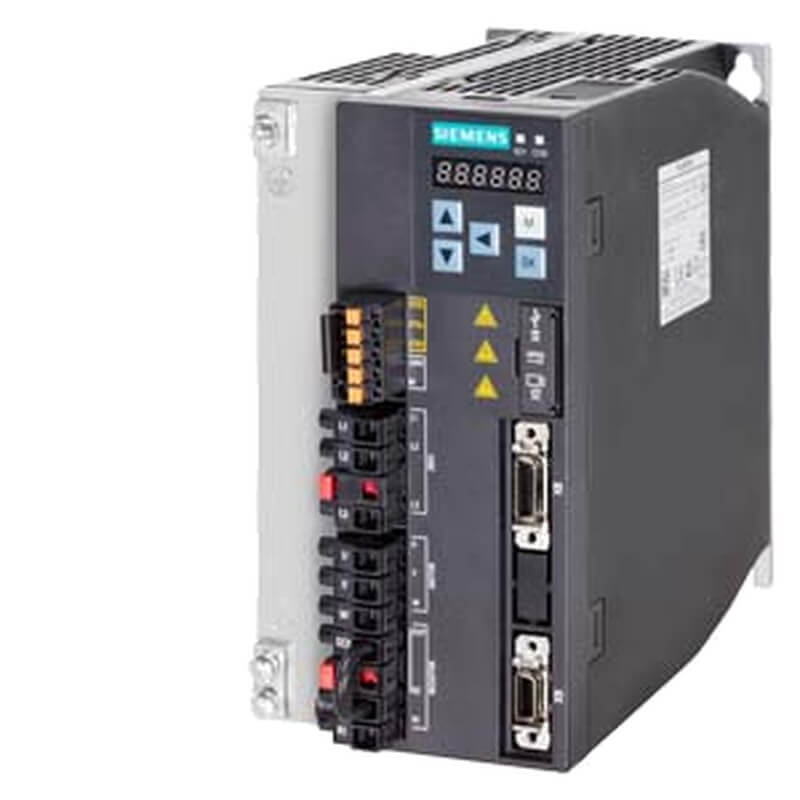
The SIEMENS 6SL3720-1TE41-0AA3 SINAMICS S120 Single Motor Module stands as a formidable solution for demanding industrial automation tasks, delivering 560kW of power with a robust 985A current rating. This 400V efficiency drive is engineered for superior performance and reliability. Key advantages include its advanced control capabilities, high power density, and seamless integration within the SINAMICS ecosystem. Core features revolve around its sophisticated motor control algorithms, enhanced thermal management for continuous operation, and built-in safety functions. With its impressive technical parameters, this module is poised to optimize complex machinery and drive processes across various industrial sectors.
Product Specifications
| Feature | Specification |
| :--------------------- | :--------------------------------------------------- |
| Product Type | SINAMICS S120 Single Motor Module with CIM |
| Manufacturer | Siemens |
| Model Number | 6SL3720-1TE41-0AA3 |
| Motor Power | 560 kW |
| Continuous Output Current | 985 A |
| Nominal Voltage | 400 V |
| Control Unit | CU320-2 |
| Drive Type | Efficiency Drive |
| Protection Rating | Varies by configuration, typically IP20 for module |
| Cooling | Integrated air cooling |
| Communication Interface | Control Interface Module (CIM) |
Core Features & Market Positioning
The Siemens SINAMICS S120 family, and specifically the 6SL3720-1TE41-0AA3, distinguishes itself through its advanced vector control, enabling precise speed and torque regulation essential for high-performance applications. Its modular design facilitates scalability and maintenance, positioning it as a long-term investment for industries seeking robust and adaptable drive solutions. The integrated Control Interface Module (CIM) ensures seamless communication and diagnostics, a critical factor in modern automated systems. Industry reviews often highlight the SINAMICS S120's reliability and its capacity to handle dynamic load changes, making it a preferred choice for complex machinery where uptime is paramount. The drive's high efficiency contributes to reduced operational costs and a smaller carbon footprint, aligning with industry trends towards sustainability.
Key Application Scenarios
The SIEMENS 6SL3720-1TE41-0AA3 SINAMICS S120 drive is ideally suited for high-power applications requiring dynamic performance and precise control. This includes heavy-duty industrial machinery such as large extruders, mixers, and presses in the plastics and rubber industries. It is also critical for material handling systems, including large conveyors and cranes, where accurate speed and positioning are essential. Furthermore, its capabilities are leveraged in the metal processing sector for rolling mills and drawing machines. The drive's ability to handle demanding torque requirements and frequent starts/stops makes it a prime candidate for demanding manufacturing processes where consistent performance is non-negotiable.
Practical System Integration Guidance
Integrating the SIEMENS 6SL3720-1TE41-0AA3 SINAMICS S120 module with a CU320-2 control unit is a structured process. Ensure proper ventilation and adherence to electrical codes for safe installation within an enclosure. The Control Interface Module (CIM) connects the motor module to the CU320-2, enabling data exchange for control and monitoring. Parameterization is typically performed using Siemens' STARTER engineering software, allowing for detailed configuration of motor data, control modes, and safety functions. Careful attention to the motor cable shielding and grounding is crucial to prevent electromagnetic interference and ensure reliable operation. For complex networked systems, proper integration with PROFIBUS or PROFINET via the CU320-2 is a common requirement.
Operation and Risk Mitigation
Operating the SIEMENS 6SL3720-1TE41-0AA3 requires adherence to safety protocols, including proper lockout/tagout procedures during maintenance. Overload protection is inherent in the drive's design, but it's crucial to ensure the motor's thermal capacity is not exceeded. Common fault codes often relate to motor overtemperature (F0001), encoder faults (F0002), or communication errors. Regularly checking motor and drive temperatures, monitoring current draw, and performing periodic diagnostic checks via the CU320-2 interface can proactively mitigate potential issues. Understanding the specific fault codes and their recommended corrective actions, detailed in the Siemens documentation, is vital for minimizing downtime.
Scalability & Long-Term Value
The modular architecture of the SINAMICS S120 platform, including the 6SL3720-1TE41-0AA3, offers significant scalability. Additional motor modules can be added to a single CU320-2 or distributed across multiple control units to manage larger, more complex drive systems. This inherent flexibility ensures that the investment remains valuable as production demands evolve. The drive is designed for compatibility with Siemens' broader automation portfolio and supports integration with Industrial Internet of Things (IIoT) initiatives through various communication protocols. This forward-looking design allows for seamless incorporation into smart factory environments, enabling advanced data analytics and predictive maintenance strategies, thereby maximizing long-term operational efficiency and return on investment.
Frequently Asked Questions
What is the primary function of the CIM in the Siemens 6SL3720-1TE41-0AA3?
The Control Interface Module (CIM) acts as the vital communication link between the SINAMICS S120 motor module and the CU320-2 control unit. It facilitates the exchange of all necessary control, status, and diagnostic data. This ensures that the CU320-2 can effectively manage and monitor the motor's operation.
The CIM translates control commands from the CU into signals understandable by the motor module. It also relays real-time feedback on motor performance, such as speed, current, and temperature, back to the control unit. This bidirectional communication is fundamental for precise motor control and system diagnostics.
Without the CIM, the CU320-2 and the motor module could not operate in tandem, rendering the drive system non-functional. Its role is indispensable for the integrated operation of the SINAMICS S120 drive.
How does the 560kW power rating of the 6SL3720-1TE41-0AA3 impact its applications?
The substantial 560kW power output enables this drive to control very large and demanding industrial motors. It is suitable for applications requiring high torque and continuous operation under heavy loads. This makes it ideal for machinery like large extruders, heavy-duty conveyors, and main drives in manufacturing plants.
With its high power capacity, the drive can handle the significant energy requirements of sophisticated industrial processes. It ensures that even the most power-intensive machinery can operate reliably and efficiently. This reduces the need for multiple smaller drives, simplifying system design and maintenance.
The 560kW rating signifies that the SIEMENS 6SL3720-1TE41-0AA3 is engineered for extreme industrial environments and performance expectations. It offers a robust solution for applications where power delivery is a critical factor for productivity.
What are the key benefits of the SINAMICS S120 platform for industrial users?
The SINAMICS S120 platform offers exceptional flexibility and scalability, allowing users to adapt their systems as needs change. Its modular design means components can be easily replaced or expanded, reducing long-term costs. This ensures the drive system remains relevant and efficient over its lifecycle.
Advanced control algorithms provide precise motor management, leading to improved product quality and process efficiency. This precision is crucial for applications demanding exact speed and torque control, minimizing waste and maximizing throughput. The platform’s intelligent features enhance overall operational performance.
Furthermore, the SINAMICS S120 integrates seamlessly with other Siemens automation products and digital solutions. This connectivity supports smart factory initiatives, enabling advanced diagnostics, remote monitoring, and predictive maintenance for increased uptime and reduced operational risks.