











ABB AX260-30-11-80 260A Industrial Power Contactor


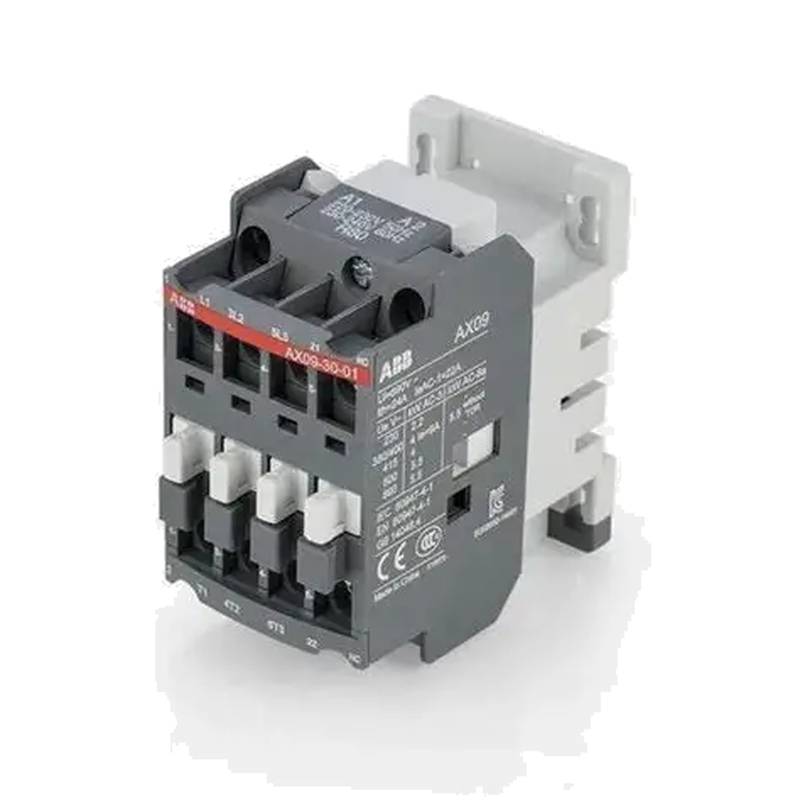
The ABB AX260-30-11-80 is a robust 260A industrial power contactor engineered for demanding applications, offering superior reliability and operational efficiency. Its key advantages lie in its high switching capacity, compact design, and advanced thermal management, ensuring consistent performance under heavy loads. Core features include a robust construction for extended lifespan, built-in surge suppression, and straightforward installation. Crucial technical parameters for the AX260-30-11-80 include a rated operational current of 260A, a rated operational voltage of up to 1000V AC, and a control circuit voltage of 80V AC.
| Parameter | Specification |
| :------------------------- | :----------------------------- |
| Rated operational current | 260 A |
| Rated operational voltage | Up to 1000 V AC |
| Control circuit voltage | 80 V AC |
| Number of poles | 3 |
| Auxiliary contacts | 1 NO + 1 NC |
| Mounting type | DIN rail or panel mounting |
| Ambient temperature range | -40 to +70 °C |
| Protection class | IP20 |
Core Features & Market Positioning
The ABB AX260-30-11-80 stands out in the industrial power contactor market due to its exceptional durability and performance in high-cycle applications. Its advanced arc-quenching technology ensures rapid and safe interruption of electrical circuits, minimizing wear and tear and extending contact life. This makes it a preferred choice for manufacturers and system integrators seeking long-term, low-maintenance solutions for motor control, capacitor banks, and lighting systems. Compared to competitors, ABB's AX series contactors often provide a more compact footprint without compromising on switching capabilities, a critical factor in panel space optimization. The integrated auxiliary contacts (1 Normally Open, 1 Normally Closed) offer immediate feedback and control integration capabilities.
Key Application Scenarios
This industrial power contactor, the ABB AX260-30-11-80, is extensively deployed in sectors requiring reliable power management for heavy-duty machinery. Its primary applications include the direct control of three-phase motors in manufacturing plants, HVAC systems, and material handling equipment where high starting currents are common. Furthermore, its suitability for switching capacitor banks makes it vital for power factor correction in industrial facilities, ensuring efficient energy usage. It is also a critical component in main power distribution circuits and large lighting control systems, demonstrating its versatility across various industrial electrical infrastructures.
Practical System Integration Guidance
Integrating the ABB AX260-30-11-80 into existing industrial control systems is streamlined due to its standardized mounting options and familiar terminal configurations. The contactor can be easily mounted on a standard 35mm DIN rail or directly to a panel using appropriate screws. Wiring the power circuit involves connecting the incoming power lines to the main terminals (L1, L2, L3) and the outgoing load to the corresponding output terminals. The control circuit, operating at 80V AC, connects to the A1 and A2 terminals, with careful attention to polarity not being a concern for AC control. For control logic, standard relay or PLC outputs can drive the coil, typically requiring a suitable current-limiting resistor or surge suppressor across the coil terminals if not already integrated by the control system.
Operation and Risk Mitigation
Safe operation of the ABB AX260-30-11-80 power contactor necessitates adherence to electrical safety standards and proper installation. Always ensure power is de-energized before performing any wiring or maintenance. The ambient temperature range of -40 to +70 °C ensures reliable operation in diverse environmental conditions, but adequate ventilation within enclosures is still recommended to prevent overheating. While the AX260-30-11-80 features robust arc suppression, potential risks include contact welding under extreme overload conditions or coil failure due to overvoltage. Regular visual inspection of terminals for signs of wear or corrosion, and periodic testing of auxiliary contact functionality, are best practices for proactive risk mitigation.
Scalability & Long-Term Value
The ABB AX260-30-11-80 offers significant long-term value through its inherent durability and compatibility with evolving industrial automation trends. Its robust design ensures a lengthy service life, reducing total cost of ownership by minimizing replacements. While the AX260-30-11-80 is a specific model, ABB's broader AX series provides a range of contactors that allow for system expansion or upgrades. Its integration into modern IIoT platforms is facilitated by its standard control inputs and the availability of compatible monitoring modules, enabling remote diagnostics and predictive maintenance strategies. This adaptability ensures that systems built around this contactor can remain efficient and responsive to future technological advancements.
Frequently Asked Questions (FAQs)
What is the maximum voltage the ABB AX260-30-11-80 can handle?
The AX260-30-11-80 is rated for operational voltages up to 1000V AC. This high voltage rating makes it suitable for various industrial power distribution needs.
This contactor is designed for robust power switching applications. Its specification ensures reliable operation within demanding electrical environments found in factories and heavy industries.
Ensure your system's voltage requirements do not exceed this maximum to maintain safe and optimal performance of the device.
Can the ABB AX260-30-11-80 be used for DC applications?
This specific model, the AX260-30-11-80, is primarily designed and rated for AC applications. Using it with DC loads may lead to arc instability.
For DC switching, it is crucial to consult ABB's product datasheets for specific DC-rated contactors. These often incorporate different arc suppression mechanisms tailored for direct current.
ABB offers a wide range of contactors, so selecting a DC-specific model will ensure safety and reliable performance for your direct current control requirements.
How do I wire the control circuit for the AX260-30-11-80?
Connect the 80V AC control supply to the A1 and A2 terminals of the contactor. Polarity is not critical for AC control circuits.
Ensure the control circuit is properly protected with fuses or circuit breakers as per local electrical codes and standards. Verify the voltage source matches the 80V AC requirement precisely.
For safety, always de-energize the control circuit before making or breaking connections. If using a PLC, ensure the output module can safely drive the contactor coil's current draw.
What are the typical applications for a 260A industrial power contactor?
Typical uses include controlling large three-phase motors in manufacturing. It's also common for switching capacitor banks for power factor correction.
This size contactor is ideal for main power circuits, heavy-duty lighting systems, and industrial HVAC equipment. It handles significant load currents reliably.
Its high switching capacity makes it a workhorse for applications requiring frequent and robust power interruption and connection in industrial settings.
Does the AX260-30-11-80 come with auxiliary contacts?
Yes, the AX260-30-11-80 is equipped with standard auxiliary contacts. It typically includes one Normally Open (NO) and one Normally Closed (NC) contact.
These auxiliary contacts are valuable for signaling, interlocking, and monitoring purposes within a control system. They provide status feedback and enable more complex control logic.
You can use the NO contact for signaling that the main circuit is energized, and the NC contact for safety interlocks or to indicate the de-energized state.
What is the mounting method for this ABB contactor?
The ABB AX260-30-11-80 offers versatile mounting options. It can be readily installed on a standard 35mm DIN rail.
Alternatively, it can be securely mounted directly to an equipment panel using appropriate screws. This flexibility aids in panel design and integration.
Ensure the mounting surface is stable and properly grounded. Proper mounting is essential for both electrical safety and the mechanical integrity of the installation.
What ambient temperature range is suitable for operating this contactor?
The AX260-30-11-80 is designed to operate within a broad ambient temperature range. This range typically spans from -40°C to +70°C.
This wide operating window ensures reliable performance in diverse and often extreme industrial environments, from cold storage to hot processing areas.
However, ensure adequate ventilation within enclosures to prevent excessive heat buildup, which can impact performance and longevity, even within the specified range.
How can I ensure safe installation and operation of the AX260-30-11-80?
Always follow proper electrical safety procedures. Ensure power is disconnected before performing any wiring or maintenance on the contactor or connected circuits.
Install the contactor in an environment that adheres to its IP20 protection rating, meaning it is protected against solid objects larger than 12.5mm but not against water. Ensure proper grounding of the enclosure and the contactor itself.
Regularly inspect terminals for signs of corrosion or damage. Periodic testing of the contactor's function and auxiliary contacts can help identify potential issues before they lead to failure or hazards.
What is the role of the 1 NO and 1 NC auxiliary contacts?
The 1 Normally Open (NO) contact closes when the main contactor coil is energized. It's often used for status indication or to energize other control devices.
The 1 Normally Closed (NC) contact opens when the main contactor coil is energized. This is commonly used for safety interlocks or to signal that the main power is off.
These auxiliary contacts provide essential feedback and control capabilities, allowing the contactor to be seamlessly integrated into complex automation and safety circuits.
Is this contactor suitable for frequent switching applications?
Yes, the ABB AX260-30-11-80 is engineered for high-frequency switching applications. Its design incorporates robust materials and arc-quenching technology.
This ensures durability and a long operational life even when the contactor is cycled thousands or millions of times. It's built to withstand the demands of continuous industrial operation.
For applications with extremely high switching rates, always verify the rated operational current and duty cycle against your specific requirements to confirm suitability.