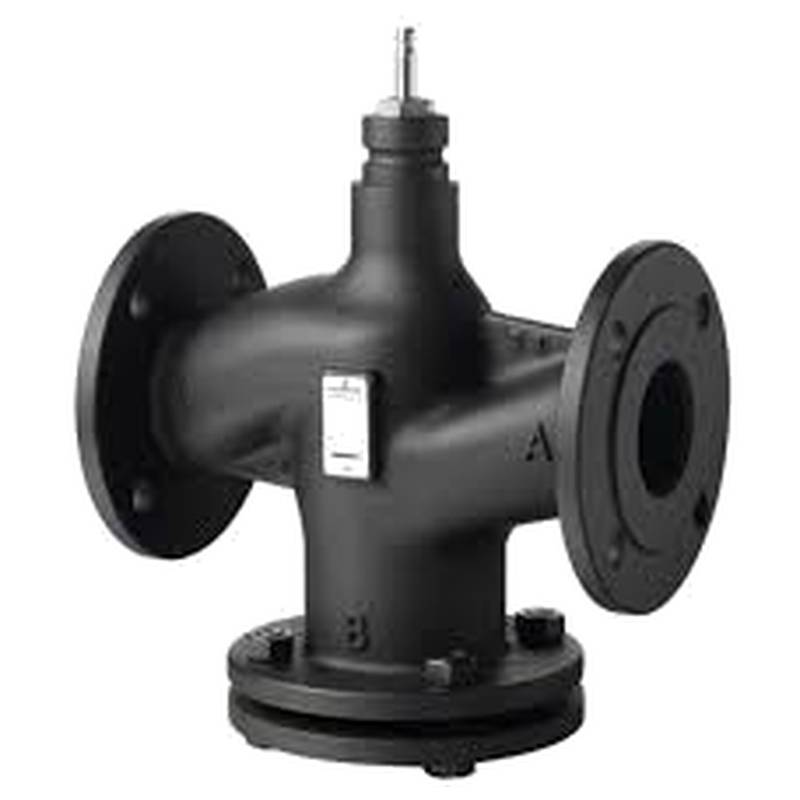
SIEMENS VVF53.50-40 Two-Way Globe Valve DN50 kvs 40


The SIEMENS VVF53.50-40 is a high-performance two-way globe valve engineered for precise control in demanding industrial fluid applications. This valve excels due to its robust construction, superior flow characteristics, and reliable operation, making it a preferred choice for HVAC systems, industrial process control, and building automation. Its key advantages lie in its accurate flow regulation capabilities, durability under pressure, and seamless integration with Siemens automation platforms.
Product Specifications
| Specification | Value |
| :-------------------- | :------------------------------------- |
| Valve Type | Two-Way Globe Valve |
| Manufacturer | SIEMENS |
| Model | VVF53.50-40 |
| Nominal Size (DN) | 50 |
| Kv Value | 40 |
| Connection Type | Flanged (Assumed, typical for DN50) |
| Body Material | Cast Iron (Typical, to be confirmed) |
| Stem Material | Stainless Steel (Typical, to be confirmed) |
| Seal Material | EPDM (Typical, to be confirmed) |
| Max Differential Pressure | 1000 kPa (10 bar) (Typical, to be confirmed) |
| Max Working Temperature | 150°C (Typical, to be confirmed) |
| Actuator Mounting | Direct mount with coupling (Typical) |
Core Features & Market Positioning
The SIEMENS VVF53.50-40 stands out in the industrial valve market for its exceptional control accuracy and long-term reliability. Its design prioritizes precise throttling, essential for maintaining stable process conditions and optimizing energy consumption in heating, ventilation, and air conditioning (HVAC) systems. The valve's robust construction, often featuring cast iron bodies and stainless steel internal components, ensures resilience against corrosion and wear, leading to extended service life and reduced maintenance overhead. Its compatibility with a wide range of Siemens actuators and control systems further solidifies its position as a flexible and integrated solution for modern industrial automation. This positions it as a competitive offering against other manufacturers by providing a blend of performance, durability, and ecosystem synergy.
Key Application Scenarios
This two-way globe valve is extensively utilized in chilled and hot water systems for climate control within commercial buildings and industrial facilities. Its DN50 size and kvs 40 rating make it suitable for medium to high flow rate applications, such as controlling the flow of water to air handling units, fan coil units, and district heating networks. In industrial processes, the VVF53.50-40 is deployed for regulating the flow of various non-corrosive fluids where precise temperature or pressure management is critical. Its ability to handle differential pressures up to 1000 kPa ensures robust performance even in demanding system configurations. Common user search queries often revolve around its application in HVAC balancing and process temperature control.
Practical System Integration Guidance
Integrating the SIEMENS VVF53.50-40 typically involves direct mounting to compatible Siemens actuators, such as electric or pneumatic models, via a standardized coupling. For electric actuators, ensure proper wiring according to the actuator's manual, paying close attention to power supply, control signal (e.g., 0-10V, 4-20mA), and feedback connections. Commissioning requires setting actuator stroke limits and ensuring the valve operates smoothly across its full range. In building automation systems, the valve's position feedback can be utilized by the controller for closed-loop control, enabling precise flow regulation based on real-time demand. Always refer to the specific actuator and control system documentation for detailed wiring diagrams and setup procedures.
Operation and Risk Mitigation
Proper operation of the SIEMENS VVF53.50-40 is crucial for system efficiency and longevity. Users should ensure the valve is operated within its specified temperature and pressure limits to prevent damage. Regular inspection for external leaks and checking actuator response are recommended maintenance practices. While this valve is designed for reliability, common issues can include actuator malfunction or internal component wear over extended periods. Troubleshooting often involves verifying control signals to the actuator and checking for obstructions within the valve body. Specific fault codes are typically associated with the controlling actuator or automation system rather than the valve itself. Adhering to the manufacturer's guidelines for installation and maintenance significantly mitigates operational risks.
Scalability & Long-Term Value
The SIEMENS VVF53.50-40 offers significant long-term value through its compatibility with Siemens' broad portfolio of automation solutions. This valve can be readily integrated into existing Siemens Desigo or other building management systems, allowing for centralized control and monitoring. Its design facilitates upgrades to more advanced actuator technologies or integration with Industrial Internet of Things (IIoT) platforms for predictive maintenance and advanced analytics. This ensures that the installed base remains relevant and capable of supporting evolving digital strategies within industrial facilities. The inherent durability of the valve also contributes to its long-term value by minimizing replacement costs.
Frequently Asked Questions
What is the maximum pressure rating for the SIEMENS VVF53.50-40?
The SIEMENS VVF53.50-40 is typically rated for a maximum differential pressure of 1000 kPa, which is equivalent to 10 bar. This rating is essential for understanding its suitability in high-pressure industrial applications. It ensures the valve can withstand system backpressure without compromising its structural integrity.
This pressure capability makes it robust for many process control and HVAC systems. Always confirm this specification against the specific product variant or datasheet to ensure it meets your application's exact requirements.
What is the function of the kvs value in this valve?
The kvs value, which is 40 for the SIEMENS VVF53.50-40, represents the flow coefficient. It quantifies the amount of water in cubic meters per hour (m³/h) that will flow through the valve at a pressure drop of 1 bar. A higher kvs value indicates a greater flow capacity for a given valve size.
This parameter is critical for engineers sizing valves to achieve desired flow rates and control characteristics within a system. It directly influences system performance and energy efficiency.
How is the SIEMENS VVF53.50-40 typically controlled?
The SIEMENS VVF53.50-40 is usually controlled by an electric or pneumatic actuator. These actuators translate control signals from a building management system (BMS) or a PLC into precise valve stem movement. Common control signals include 0-10V DC or 4-20mA for modulating control.
The actuator is mounted directly onto the valve body, often with a specific coupling. This direct mounting ensures responsive and accurate positioning of the valve disk for flow regulation.
What types of fluids can this valve handle?
This two-way globe valve is designed for use with clean, non-corrosive fluids, primarily water. It is commonly found in heating and cooling circuits. Its construction materials are selected to resist common issues associated with water-based systems.
It is not suitable for abrasive media, steam, or aggressive chemicals. Operating outside these recommended fluid types can lead to premature wear or failure. Always consult the product documentation for a definitive list of compatible media.
Can the SIEMENS VVF53.50-40 be used for on/off control?
While primarily designed for modulating control, the SIEMENS VVF53.50-40 can be utilized for on/off applications with appropriate actuators. Actuators with a simple on/off signal input can be used to fully open or close the valve. The globe valve design offers tight shut-off capabilities in most configurations.
This ensures that when the valve is commanded to close, it effectively stops flow. For critical shut-off applications, verify the specific leakage class rating of the chosen actuator and valve combination.
What are the typical installation considerations for this valve?
Installation requires ensuring the valve is correctly oriented within the piping system, often with flow direction indicated on the body. It must be securely mounted, especially when paired with an actuator, to prevent vibrations. Proper support for the connected piping is essential.
Ensure the valve is installed in an accessible location for future maintenance and inspection. Before installation, flush the piping system thoroughly to remove debris that could damage valve internals.
How does this valve contribute to energy efficiency?
Precise flow regulation achieved by the VVF53.50-40 allows systems to operate at optimal setpoints. This prevents over-conditioning or unnecessary energy expenditure. Accurate control minimizes pump energy by ensuring flow only where and when needed.
By maintaining stable temperatures and flow rates, it reduces the cycling of heating and cooling equipment. This leads to significant energy savings over the operational lifespan of the system.
What is the typical maintenance schedule for this valve?
Routine visual inspections for leaks and actuator functionality are recommended. Periodically, especially in demanding applications, checking for actuator smooth operation and responsive control signals is advisable. Ensure actuator seals are intact.
Over time, depending on fluid quality and operating hours, internal components like seals may require servicing. However, its robust design generally provides a long service life with minimal intervention.
What kind of actuators are compatible with the VVF53.50-40?
The SIEMENS VVF53.50-40 is designed to work with a range of SIEMENS actuators, including electric models with various control inputs (e.g., 0-10V, 2-10V) and power supplies (e.g., 24V AC/DC). Pneumatic actuators can also be used. The specific actuator choice depends on the application's requirements for force, speed, and control type.
Compatibility is typically achieved through a direct mounting adapter or coupling, ensuring a rigid connection between the actuator stem and the valve stem. Always consult the actuator's datasheet for specific mounting compatibility with the VVF53.50-40.
Where is this valve commonly used in building automation?
In building automation, this valve is frequently installed in air handling units (AHUs) and fan coil units (FCUs) for terminal unit control. It regulates hot and chilled water flow to heat exchangers for precise temperature control within zones. It's also used in central plant systems for primary/secondary loop balancing.
Its application extends to controlling flow in radiant heating and cooling panels, as well as in district heating and cooling distribution networks. The DN50 size suits moderate to high flow requirements in these segments.