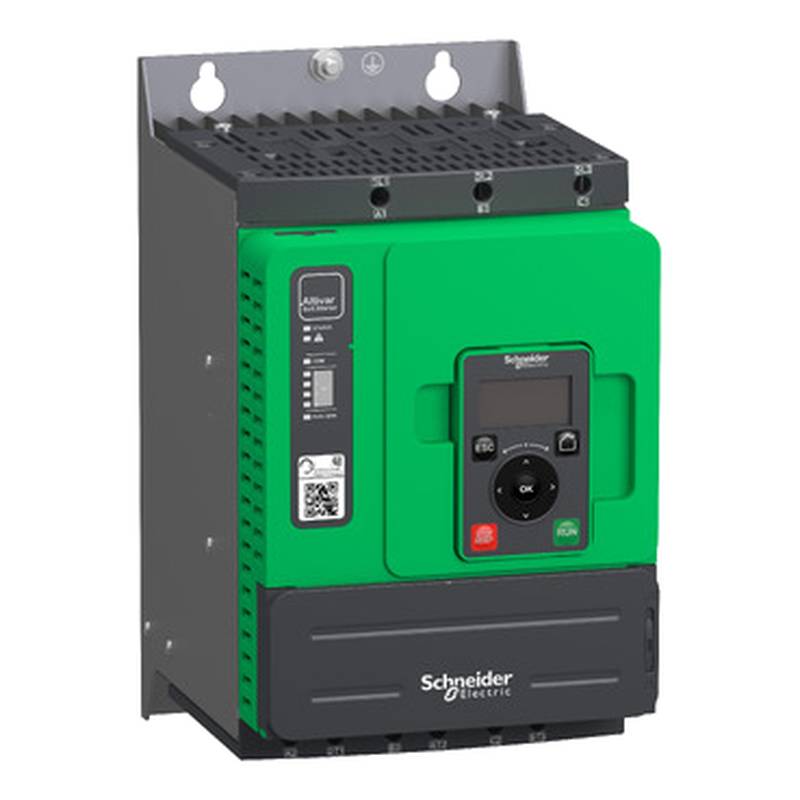













SCHNEIDER ATS22C25Q 250A Industrial Soft Starter


The SCHNEIDER ATS22C25Q 250A is a robust industrial soft starter engineered for reliable motor control, offering significant advantages in reduced mechanical stress, energy savings, and extended equipment lifespan. This sophisticated device boasts a rated operational current of 250A and a nominal voltage of up to 600V, making it suitable for a wide range of heavy-duty applications. Its core benefits include smooth acceleration and deceleration profiles, preventing the damaging inrush currents associated with direct-on-line (DOL) starting. The ATS22C25Q 250A is designed with advanced control algorithms for precise motor performance, ensuring optimal operation even under demanding industrial conditions.
Product Specifications
| Parameter | Value |
| :------------------------------ | :--------------------- |
| Rated Operational Current (AC-53b) | 250 A |
| Nominal Voltage (Un) | 208-600 V AC |
| Control Voltage | 24 V AC/DC |
| Number of Phases | 3 |
| Bypass | Integrated |
| Protection Functions | Motor overload, phase loss, short circuit |
| Mounting | DIN rail or surface mount |
| Dimensions (H x W x D) | 270 x 175 x 208 mm |
| Weight | 8.5 kg |
Core Features & Market Positioning
The SCHNEIDER ATS22C25Q 250A stands out in the industrial motor control market due to its integrated bypass contactor, simplifying installation and reducing panel space requirements. This feature eliminates the need for an external bypass, contributing to a more compact and cost-effective solution for end-users. The soft starter's advanced adaptive control technology ensures optimal performance across various motor types and loads, differentiating it from simpler starting methods. Its robust construction and comprehensive protection features, including motor overload and phase loss detection, position it as a reliable choice for critical industrial processes where equipment downtime is unacceptable. The integration of a digital display provides clear status monitoring and simplifies parameter adjustments.
Key Application Scenarios
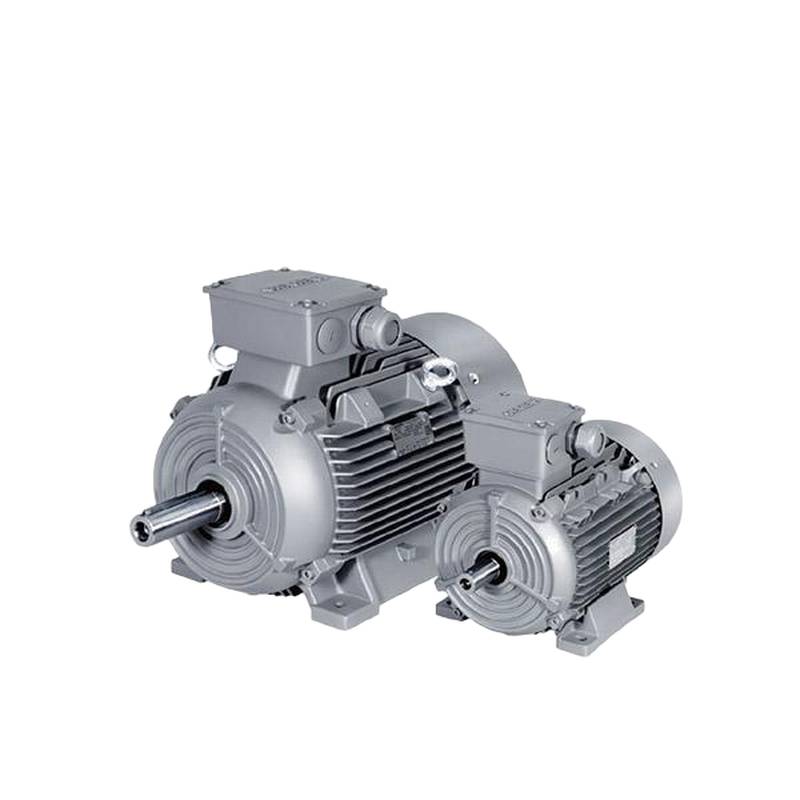
This SCHNEIDER ATS22C25Q 250A soft starter is ideally suited for applications requiring gradual motor ramp-up and ramp-down to minimize mechanical shock and wear. Common scenarios include the control of large pumps in water treatment plants, conveyor systems in manufacturing and logistics, fans in HVAC systems for large buildings, and compressors in industrial refrigeration. Its ability to manage high starting currents makes it indispensable for applications where power system stability is a concern, preventing voltage sags that could affect other connected equipment. The 250A rating is particularly relevant for medium to large three-phase induction motors commonly found in heavy machinery.
Practical System Integration Guidance
Integrating the SCHNEIDER ATS22C25Q 250A into an industrial control system is straightforward, facilitated by clear terminal markings and comprehensive documentation. Proper wiring involves connecting the main power supply to the line terminals, the motor to the load terminals, and the control signals to the appropriate low-voltage inputs. For optimal performance, it is crucial to correctly configure the motor overload protection settings via the digital interface, matching them to the motor's full-load current and service factor. The integrated bypass contactor can be wired to automatically engage once the motor reaches full speed, enhancing energy efficiency and reducing heat generation within the soft starter during continuous operation.
Operation and Risk Mitigation
Operating the SCHNEIDER ATS22C25Q 250A is intuitive, with a user-friendly interface for setting acceleration/deceleration times, current limits, and other parameters. Risk mitigation is a core design principle, with built-in protections against common motor faults. The overload protection continuously monitors motor current and will trip the starter if excessive current persists, preventing motor burnout. Phase loss detection ensures that the motor is not operated with an incomplete power supply, which could lead to severe damage. In the event of a fault, the digital display will indicate a specific error code, allowing for quick diagnosis and troubleshooting, thereby minimizing potential operational risks and downtime.
Scalability & Long-Term Value
The SCHNEIDER ATS22C25Q 250A offers significant long-term value through its robust design and compatibility with broader automation systems. While it is a standalone soft starter, its electrical characteristics and control inputs allow for integration into PLC-based systems for remote control and monitoring. For applications requiring more advanced motor control features, such as variable speed drives (VSDs), Schneider Electric offers a comprehensive range of VSDs that can serve as an upgrade path, leveraging the same reliable motor protection and control principles. The inherent durability of the ATS22 series ensures a long operational life, reducing the total cost of ownership.
Frequently Asked Questions
Q1: What is the maximum motor size the ATS22C25Q 250A can start?
The ATS22C25Q 250A is rated for 250A at AC-53b duty, which is a key parameter for motor sizing. This typically allows it to start motors up to approximately 125-150 kW (170-200 HP) at 400V, depending on the motor's starting torque requirements and the duty cycle. Always consult the detailed motor data sheet and application-specific conditions to ensure correct sizing.
Accurate sizing prevents premature wear on the soft starter and motor, optimizing system reliability and performance. Incorrect sizing can lead to nuisance tripping or insufficient starting torque.
Consider factors like load inertia, desired acceleration time, and ambient temperature when making your final motor selection.
Q2: How do I set the overload protection on the SCHNEIDER ATS22C25Q 250A?
The overload protection is typically set by entering the motor's full-load ampere (FLA) rating into the soft starter's parameters. The digital display allows for easy navigation through the menu to find the overload setting.
Once the FLA is entered, the ATS22C25Q 250A will monitor the motor current and trip if it exceeds the set limit for a predefined time, preventing thermal damage to the motor.
Refer to the user manual for the specific menu structure and any additional settings related to overload class or thermal ramp-up, which fine-tune the protection characteristics.
Q3: Can the ATS22C25Q 250A be used with 50Hz or 60Hz power systems?
Yes, the SCHNEIDER ATS22C25Q 250A is designed to operate reliably on both 50Hz and 60Hz power systems. The nominal voltage range of 208-600V AC accommodates various global power standards.
When configuring the soft starter, ensure that any frequency-dependent parameters are set correctly for your local grid frequency to maintain optimal performance.
The primary function of soft starting is voltage and current control during startup, which is largely independent of the system frequency itself, but some motor-specific settings might be frequency-adjusted.
Q4: What is the purpose of the integrated bypass on the ATS22C25Q 250A?
The integrated bypass contactor allows the motor to run at full speed directly across the line once soft starting is complete. This bypass significantly reduces energy consumption and heat generation within the soft starter during normal operation.
By bypassing the soft starter's power components when not actively controlling acceleration or deceleration, it extends the lifespan of the soft starter itself and improves overall system efficiency.
This feature simplifies panel design by eliminating the need for an external bypass contactor and associated wiring, saving space and installation labor.
Q5: How does the SCHNEIDER ATS22C25Q 250A protect against phase loss?
The soft starter actively monitors the current in each phase of the motor circuit. If it detects a significant imbalance or a complete loss of current in one or more phases, it will initiate a shutdown to prevent motor damage.
Phase loss can cause a three-phase motor to overheat rapidly and can lead to single-phasing, which severely damages motor windings. The ATS22C25Q 250A's built-in phase loss protection is a critical safety feature.
This protection is typically enabled by default but can often be adjusted or disabled through the parameter settings if required by specific application logic or safety protocols.
Q6: What are the typical acceleration and deceleration times I can set?
Acceleration and deceleration times on the SCHNEIDER ATS22C25Q 250A can be adjusted to suit the application's needs, typically ranging from 0.1 to 30 seconds. Shorter times provide quicker starts, while longer times offer smoother acceleration and reduced mechanical stress.
The optimal setting depends on the inertia of the load and the desired starting smoothness. For example, a pump might require a longer ramp to avoid water hammer, while a conveyor might benefit from a quicker start.
Fine-tuning these times is crucial for maximizing the benefits of soft starting, minimizing wear on drive train components, and preventing nuisance trips from excessive starting torque.
Q7: Is the ATS22C25Q 250A suitable for variable speed applications?
No, the SCHNEIDER ATS22C25Q 250A is a soft starter, designed for controlled starting and stopping only, not for continuous variable speed operation. For variable speed control, a Variable Frequency Drive (VFD) or Variable Speed Drive (VSD) is required.
Soft starters provide fixed acceleration and deceleration profiles, whereas VFDs offer continuous adjustment of motor speed by altering the frequency and voltage supplied to the motor.
While they share some control principles, a soft starter cannot replicate the energy savings or precise speed regulation achievable with a VFD in variable speed applications.
Q8: How do I wire the control power for the ATS22C25Q 250A?
The control power terminals on the SCHNEIDER ATS22C25Q 250A are designed for 24V AC or DC input. This low voltage is typically supplied from a separate control transformer or a PLC output.
Ensure the control power source is stable and correctly fused to protect the soft starter's internal control circuitry. Connect the positive and negative (or live and neutral for AC) terminals as indicated on the device.
Proper control wiring enables features such as remote start/stop commands, fault signaling, and interaction with external control systems, allowing for seamless integration into automated processes.
Q9: What are the typical fault codes for this soft starter?
Common fault codes include F01 for overload, F02 for phase loss, F03 for external fault, and F04 for internal fault. Each code indicates a specific issue requiring investigation.
Consulting the product's user manual is essential for a complete list of fault codes and their detailed explanations, including troubleshooting steps.
Understanding these codes is critical for rapid diagnosis and resolution of operational problems, minimizing downtime and ensuring the safe operation of the motor and connected equipment.
Q10: Can this soft starter be integrated into an IIoT or Industry 4.0 setup?
While the ATS22C25Q 250A is not inherently an IIoT device, it can be integrated into Industry 4.0 environments through external communication modules or by interfacing with a PLC. These systems can collect status data and send commands.
By connecting the soft starter to a PLC that has communication capabilities (e.g., EtherNet/IP, Profinet), operational data like run time, fault status, and current can be transmitted to a SCADA or MES system.
This allows for remote monitoring, predictive maintenance, and optimization of motor control processes within a broader digital manufacturing ecosystem.