











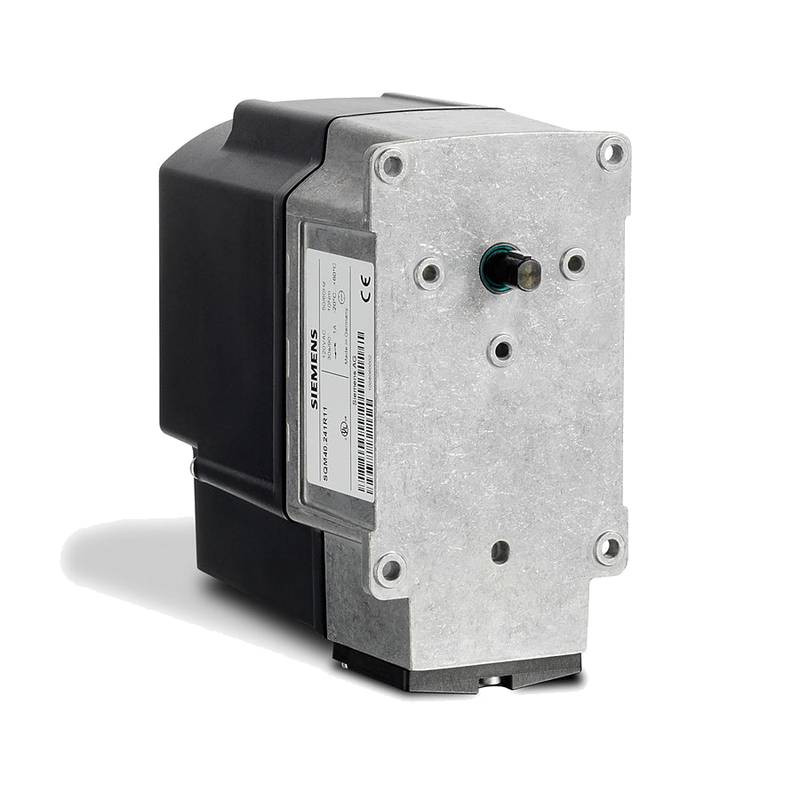
Siemens SQM48.497B9 Linear Actuator


The Siemens SQM48.497B9 linear actuator is a robust and precise electromechanical device engineered for demanding industrial applications, particularly within burner control systems and thermal process plants. It excels in driving air and gas dampers, butterfly valves, and oil pressure controllers, offering reliable and accurate positioning for critical process control. Its design prioritizes durability, efficiency, and seamless integration into automated systems.
Siemens SQM48.497B9 Linear Actuator: Specifications
| Feature | Specification |
| :-------------------- | :---------------------------------------------------- |
| Model | SQM48.497B9 |
| Holding Torque | Up to 20 Nm |
| Rated Torque | 20 Nm |
| Running Time (90°) | 30 to 120 seconds |
| Rotation Angle | 90 degrees |
| Operating Voltage | 2 x 12 V AC |
| IP Rating (Housing) | IP54 (with suitable M16 glands) |
| Housing Material | Die-cast aluminum lower housing, plastic cover |
| Drive Shaft | Hardened steel, 14 mm keyed shaft |
| Gears | Steel spur gears |
| Cable Entries | 2x M16 |
| Operating Temperature | -20 to +60 °C |
| Direction of Rotation | Swappable (Clockwise/Anti-clockwise) |
| Communication | CAN bus |
| Weight | Approx. 1.6 kg |
Core Features & Market Positioning
The Siemens SQM48.497B9 distinguishes itself through a combination of high holding torque and a precisely controllable running time, making it ideal for applications requiring stable positioning under load and accurate response. Its die-cast aluminum housing and hardened steel components ensure resilience in harsh industrial environments, contributing to its reputation for reliability and longevity. The IP54 rating provides essential protection against dust and water ingress, further enhancing its suitability for demanding conditions. Market positioning is strongly centered on its role in burner management systems, where precise control of fuel and air flow is paramount for efficiency and safety. Its integration capabilities via CAN bus also position it as a modern, adaptable solution for industrial automation.
Key Application Scenarios
The Siemens SQM48.497B9 linear actuator is predominantly employed in industrial combustion and burner control systems. Its primary applications include:
Oil and Gas Burner Control: It precisely modulates the flow of gas, oil, and combustion air to optimize burner performance and ensure safe operation. This is crucial for industrial boilers, furnaces, and thermal processing equipment. Butterfly Valve Actuation: The actuator effectively drives butterfly valves used for regulating fluid or gas flow in various industrial processes. Damper Control: It provides accurate positioning for air dampers, enabling fine-tuning of airflow in combustion systems and HVAC applications. Oil Pressure Controller Driving: The actuator is suitable for applications involving the control of oil pressure in industrial machinery.
The actuator's robust design and specific torque capabilities make it a preferred choice for OEMs integrating these components into their products, ensuring reliable performance in critical applications.
Practical System Integration Guidance
Integrating the Siemens SQM48.497B9 into existing or new systems requires careful attention to wiring and communication protocols. The actuator utilizes a CAN bus for communication, enabling seamless integration with compatible control systems like the Siemens LMV5. For electrical connections, the actuator requires a 2x 12 V AC power supply. Proper installation involves ensuring that M16 glands are used to maintain the IP54 rating, and that cable strain relief is employed. The electrical connection between conduit fittings is not automatic and must be established during installation. Earthing of the conduit fittings is essential and must be secured with adequate washers and wire links. Cabling must adhere to a strictly serial topology, with no branching permitted. When replacing an actuator, it is vital to check and potentially correct the addressing (function assignment), bus termination, and curve point adjustments of connected electronic fuel/air ratio controllers.
Operation and Risk Mitigation
Safe and effective operation of the Siemens SQM48.497B9 demands adherence to manufacturer guidelines and general electrical safety practices. The actuator contains ESD-sensitive components, and care must be taken to avoid static charges during handling. The housing cover should only be removed for short periods for wiring or addressing, and measures must be taken to prevent dust or dirt ingress. Ensure that the actuator's housing is connected to the system's functional earth (FE). In North America, only flexible conduits with relevant accessories are permitted. If the actuator does not extend or retract, a thorough check of the power source, wiring continuity, and connections is recommended. Overloading can lead to slow movement, while lack of lubrication or dirt can cause jerky or noisy operation. If the motor buzzes but the actuator does not move, the motor or gears may be stuck or damaged.
Scalability & Long-Term Value
The Siemens SQM48.497B9 is designed for integration within broader industrial automation frameworks. Its CAN bus communication capability facilitates its inclusion in networked control systems, offering a degree of scalability for more complex plant operations. While specific upgrade paths are not explicitly detailed, its compatibility with Siemens' LMV5 system and other burner control components suggests a cohesive ecosystem for long-term solutions. The robust construction and high-quality materials used in its manufacture contribute to its long-term value by ensuring durability and minimizing maintenance requirements in demanding industrial settings.
Frequently Asked Questions
What is the primary function of the Siemens SQM48.497B9 linear actuator?
The Siemens SQM48.497B9 is primarily designed as an electromechanical actuator for industrial burner control systems. It is engineered to drive components like air dampers, gas valves, and oil pressure controllers with precision and reliability. Its robust construction makes it suitable for demanding environments found in thermal process plants and commercial boilers.
What are the key technical specifications of the Siemens SQM48.497B9?
Key specifications include a holding torque of up to 20 Nm, a rated torque of 20 Nm, and a running time of 30-120 seconds for a 90-degree rotation. It operates on 2x 12 V AC, features an IP54 housing rating, and a 14 mm keyed shaft. The actuator supports CAN bus communication.
In which industries or applications is the Siemens SQM48.497B9 commonly used?
This actuator is predominantly found in the oil and gas industry for burner management systems. It is also utilized in thermal process plants, HVAC systems for damper control, and other industrial applications requiring precise rotary motion control of valves and dampers.
How is the Siemens SQM48.497B9 integrated into control systems?
Integration is achieved through its CAN bus communication interface, allowing it to connect with compatible control systems, such as the Siemens LMV5 series. Proper electrical connections, including specific voltage requirements and cable entry methods, are crucial for successful integration.
What are the typical challenges or troubleshooting steps for this actuator?
Common issues can include no movement, slow or weak operation, or jerky motion. Troubleshooting involves checking power supply, wiring integrity, voltage, and current draw. Overloading, insufficient lubrication, or mechanical obstructions can also cause problems.
What is the meaning of the IP54 rating on the SQM48.497B9?
The IP54 rating signifies that the actuator is protected against dust ingress to a harmful degree and is also protected against water projected from any angle. This rating is achieved when suitable M16 glands are used, ensuring its suitability for environments with potential dust or moisture.
Can the direction of rotation be changed on the Siemens SQM48.497B9?
Yes, the direction of rotation for the Siemens SQM48.497B9 actuator can be swapped between clockwise and anti-clockwise. This adaptability allows for flexibility in mechanical linkage and system design.
What are the torque capabilities of this actuator?
The Siemens SQM48.497B9 offers a holding torque of up to 20 Nm, ensuring it can maintain its position under load. It also provides a rated torque of 20 Nm for active movement and control.
What are the environmental operating conditions for the SQM48.497B9?
The actuator is designed to operate within a temperature range of -20 to +60 degrees Celsius. Its robust housing and component materials contribute to its reliability in a variety of industrial operating conditions.
Does this actuator require special installation procedures?
Installation requires qualified personnel to ensure compliance with national safety regulations. Attention must be paid to electrical connections, earthing, cable strain relief, and ensuring the housing is connected to functional earth. Adherence to mounting instructions prevents inadmissible loads on bearings.