











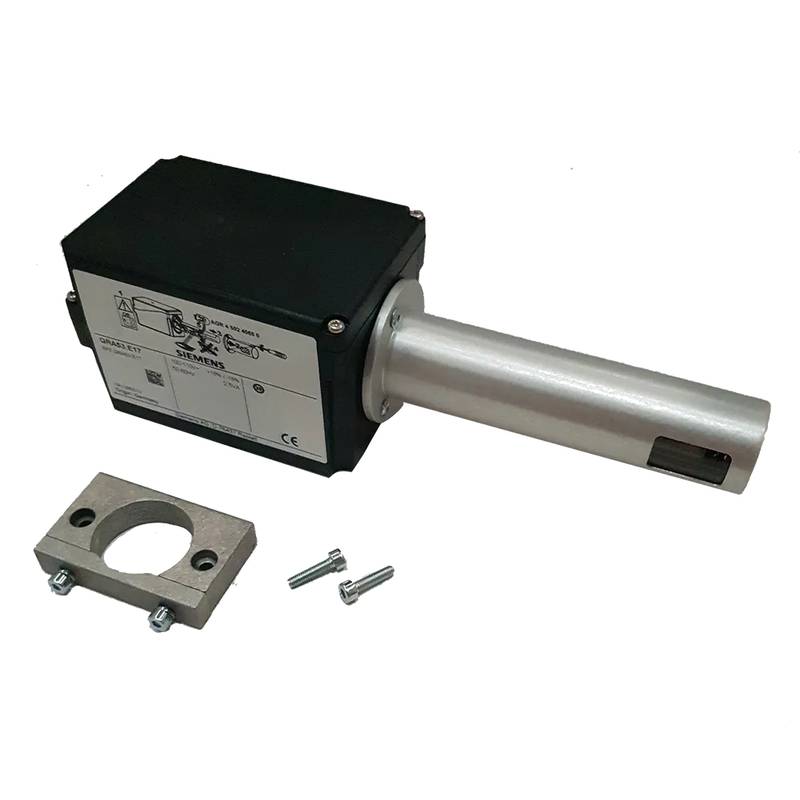
SIEMENS QRA53.E17 UV Flame Detector QRA53 Burner Control


The SIEMENS QRA53.E17 UV Flame Detector is a pivotal component in modern burner control systems, engineered for robust and reliable detection of UV radiation emitted by flames. This detector offers a critical safety and operational advantage through its rapid response time and high sensitivity. Key technical parameters include its operating temperature range, typically from -40°C to +60°C, a voltage supply requirement of 24V AC/DC, and an IP65 protection rating ensuring resilience in harsh industrial environments. The QRA53.E17's core design prioritizes safety integrity, making it an indispensable part of industrial combustion processes.
Product Specifications
| Parameter | Specification |
| :----------------------- | :---------------------------------- |
| Flame Detection | UV Radiation |
| Operating Temperature | -40°C to +60°C |
| Voltage Supply | 24V AC/DC |
| Protection Rating | IP65 |
| Response Time | < 1 second |
| Housing Material | Die-cast aluminum |
| Connection Type | Screw terminals |
| Mounting | Standard flange or threaded fitting |
Core Features & Market Positioning
The SIEMENS QRA53.E17 UV Flame Detector distinguishes itself through its advanced UV sensing technology, offering superior flame signal discrimination and immunity to nuisance shutdowns caused by extraneous UV sources. Its market positioning is firmly established as a high-reliability, industrial-grade solution for demanding burner management applications. The detector's rugged die-cast aluminum housing and IP65 rating underscore its suitability for continuous operation in environments with dust, moisture, and significant temperature fluctuations. This robust construction, coupled with a response time under one second, ensures rapid detection of flame failure, thereby enhancing operational safety and efficiency. Siemens' reputation for quality and engineering excellence further solidifies the QRA53.E17's standing as a preferred choice for critical combustion control.
Key Application Scenarios
The SIEMENS QRA53.E17 is predominantly employed in industrial combustion applications where reliable flame monitoring is paramount. Common scenarios include its integration into burner control systems for industrial boilers, furnaces, and thermal oxidizers. It is particularly well-suited for applications involving natural gas, oil, or dual-fuel burners, where precise flame detection is essential for safe and efficient operation. Users seeking to ensure process continuity and prevent hazardous conditions, such as unburnt fuel accumulation, will find the QRA53.E17 to be a critical safety component. Its versatility also extends to applications in the chemical and petrochemical industries, as well as power generation, where consistent flame presence must be verified.
Practical System Integration Guidance
Integrating the SIEMENS QRA53.E17 UV Flame Detector into a burner management system (BMS) involves straightforward electrical connections. The detector typically interfaces with a burner control unit, such as a Siemens LFE or LGB series, via a two-wire connection. Power is supplied via the 24V AC/DC terminals on the BMS. Installation requires careful alignment of the detector's viewing window towards the flame, ensuring an unobstructed line of sight. For optimal performance, the detector should be mounted on a suitable flange or threaded fitting on the burner housing, maintaining its specified operating temperature range. Wiring should adhere to local electrical codes and the specific guidelines provided in the QRA53.E17 installation manual to prevent interference and ensure signal integrity.
Operation and Risk Mitigation
The QRA53.E17 operates by sensing the ultraviolet radiation emitted by a burning flame. When a flame is present, it generates UV light that is detected by the sensor. This signal is then transmitted to the burner control unit, which confirms the flame status. In the event of flame failure, the detector ceases to transmit the UV signal, prompting the burner control unit to initiate a safe shutdown sequence. Risk mitigation is achieved through the detector's inherent reliability and rapid response, minimizing the potential for dangerous situations like flameouts or explosions. While rare, potential troubleshooting might involve checking for physical obstructions to the viewing window, ensuring proper electrical connections, and verifying the detector's alignment. Fault codes, if generated by the connected control unit, would typically indicate a loss of signal or a detector malfunction.
Scalability & Long-Term Value
The SIEMENS QRA53.E17 UV Flame Detector offers significant long-term value due to its compatibility with a wide range of Siemens burner control systems, facilitating seamless upgrades and expansions of existing combustion infrastructures. Its robust design ensures longevity and reduces the frequency of replacements, contributing to lower operational costs over time. Integration with modern industrial control platforms and the emerging Industrial Internet of Things (IIoT) is achievable through its reliable signal output, allowing for remote monitoring and data analysis of burner performance. This capability supports predictive maintenance strategies and optimizes overall plant efficiency, ensuring the QRA53.E17 remains a relevant and valuable component in evolving industrial environments.
FAQs
What is the primary function of the SIEMENS QRA53.E17?
The SIEMENS QRA53.E17 detects UV radiation from flames. It is crucial for confirming flame presence in industrial burners. This ensures safe and efficient combustion processes.
How does the QRA53.E17 detect flames?
It utilizes a sensitive UV sensor to pick up specific wavelengths of light. Only ultraviolet radiation from a flame triggers a signal. This method prevents false detection from other heat sources.
What are the main benefits of using the QRA53.E17?
Its benefits include high reliability and rapid response times. It ensures operational safety by quickly signaling flame loss. The robust construction also guarantees long service life.
Can the QRA53.E17 be used with any burner control system?
It is primarily designed for Siemens burner control units. Compatibility with other systems may require specific interface modules. Always consult the product documentation for integration details.
What voltage is required for the QRA53.E17?
The detector operates on 24V AC or 24V DC. This is a standard voltage for industrial control applications. Ensure the power supply is stable and within specifications.
What is the environmental protection rating of the QRA53.E17?
It has an IP65 protection rating. This means it is protected against dust ingress and low-pressure water jets. It is suitable for challenging industrial environments.
How is the QRA53.E17 installed?
Installation involves mounting it on the burner housing. It requires a clear line of sight to the flame. Electrical connections are made via screw terminals to the control unit.
What is the typical response time of the QRA53.E17?
The response time is less than one second. This rapid detection is critical for safety interlocks. It allows the control system to react quickly to flame failure.
What is the operating temperature range for the QRA53.E17?
It operates reliably between -40°C and +60°C. This wide range makes it suitable for diverse climatic conditions. It ensures consistent performance in extreme temperatures.
How does the QRA53.E17 contribute to safety?
It provides a vital safety signal to the burner control system. This enables immediate shutdown if a flame is not detected. It prevents fuel accumulation and potential explosions.