











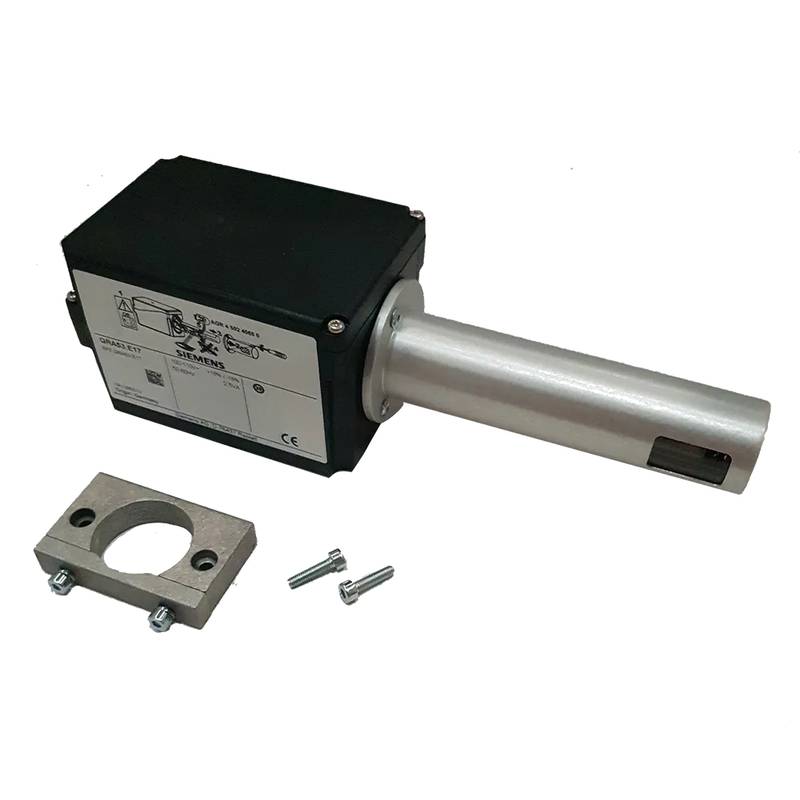
SIEMENS QRA73.A17 UV Flame Detector QRA73 Long Sensor


The SIEMENS QRA73.A17 UV Flame Detector QRA73 Long Sensor stands as a critical component in industrial combustion control systems, offering robust flame detection capabilities for a wide array of applications. This detector is engineered for reliability and precision, featuring a long sensor design that enhances its operational range and effectiveness in challenging environments. Its core advantages lie in its rapid response time to flame signals, superior resistance to environmental interference, and seamless integration with Siemens burner control systems. Key technical parameters include an operating voltage range of 20-30 V AC, a signal output of 0-20 mA, and an operating temperature range of -40 to +60 °C. The UV sensor technology ensures high sensitivity to ultraviolet radiation emitted by flames, making it an indispensable tool for ensuring safe and efficient industrial combustion processes.
Product Specifications
| Parameter | Specification |
| :------------------------ | :------------------------------------------ |
| Product Type | UV Flame Detector |
| Model Number | QRA73.A17 |
| Sensor Type | Ultraviolet (UV) |
| Sensor Length | Long |
| Operating Voltage | 20-30 V AC |
| Signal Output | 0-20 mA |
| Operating Temperature | -40 to +60 °C |
| Storage Temperature | -40 to +80 °C |
| Humidity | Max. 95% relative humidity, non-condensing |
| Protection Class | IP43 |
| Dimensions (W x H x D) | 46 x 75 x 63 mm |
| Weight | Approx. 150 g |
Core Features & Market Positioning
The SIEMENS QRA73.A17 distinguishes itself through its advanced UV flame sensing technology, providing a highly reliable method for detecting the presence of flames in industrial burners. Its long sensor design offers extended reach and improved signal acquisition compared to standard-length sensors, a significant advantage in large combustion chambers or when dealing with specific flame characteristics. This detector is positioned as a high-performance component for demanding industrial environments where safety and operational continuity are paramount. Its compatibility with various Siemens burner control units, such as the LFE series, solidifies its role as a robust and integrated solution within the industrial automation landscape. The QRA73.A17 is recognized for its durability and consistent performance, minimizing downtime and maintenance requirements.
Key Application Scenarios
The SIEMENS QRA73.A17 UV Flame Detector is extensively utilized in industrial furnaces, boilers, process heaters, and incinerators where precise and reliable flame monitoring is essential for safe operation. Its long sensor is particularly well-suited for applications involving large combustion zones, such as in power generation plants, chemical processing facilities, and heavy industrial manufacturing. Common user search needs revolve around ensuring burner safety, preventing flame-out incidents, and optimizing combustion efficiency. This detector's robust design also makes it a suitable choice for challenging environments with high temperatures or significant dust and particulate presence, ensuring continuous operation in critical sectors like oil and gas, and metallurgy.
Practical System Integration Guidance
Integrating the SIEMENS QRA73.A17 UV Flame Detector into existing control systems is straightforward, typically involving direct connection to a compatible Siemens burner controller, such as the LFE or LGB series. The detector features a standardized 3-pin connector for power and signal transmission. Wiring should follow the manufacturer's guidelines, ensuring proper grounding and adherence to voltage specifications to prevent damage and ensure accurate signal output. For optimal performance, the sensor should be positioned to have a clear, unobstructed view of the flame. Regular checks of the sensor's viewing window for dirt or obstructions are crucial for maintaining reliable detection.
Operation and Risk Mitigation
Safe operation of the SIEMENS QRA73.A17 relies on correct installation and regular maintenance. The detector continuously monitors for UV radiation. Upon sensing a flame, it generates a 0-20 mA signal, which is processed by the burner control unit to maintain or initiate combustion. In the absence of flame or if a fault is detected, the control unit will initiate a safety shutdown sequence. Risk mitigation is achieved through the detector's inherent sensitivity and rapid response, preventing hazardous conditions such as unburnt fuel accumulation. Common troubleshooting involves verifying power supply, signal wiring integrity, and ensuring the sensor is free from contamination. Fault codes are typically indicated by the connected burner control unit, requiring reference to its specific manual for interpretation.
Scalability & Long-Term Value
The SIEMENS QRA73.A17 UV Flame Detector offers significant long-term value due to its compatibility with a broad range of Siemens burner management systems, facilitating upgrades and expansions. Its robust construction ensures a long service life, reducing the total cost of ownership. Integration with modern industrial internet of things (IIoT) platforms is achievable through the data output capabilities of the connected burner controllers, enabling remote monitoring, predictive maintenance, and advanced process optimization. This forward-looking design ensures that the QRA73.A17 remains a relevant and valuable component in evolving industrial automation strategies, supporting digital transformation initiatives.
Frequently Asked Questions (FAQs)
What is the primary function of the SIEMENS QRA73.A17 UV Flame Detector?
Its main role is to detect the presence of flame in industrial combustion applications. It achieves this by sensing the ultraviolet radiation emitted by flames. This detection is crucial for safe burner operation and control.
This UV detection capability allows for rapid confirmation of ignition and continuous flame monitoring. It forms a vital safety interlock within the burner management system. Without this, safe automated combustion would be impossible.
The detector's output signal informs the burner controller whether a flame is present or not. This information dictates subsequent actions, such as fuel supply or shutdown procedures.
How does the long sensor of the QRA73.A17 benefit industrial applications?
The extended sensor length provides enhanced detection range within larger combustion chambers. It allows for more flexible placement options in complex burner configurations. This increased reach can improve signal quality and reliability.
A longer sensor can be advantageous when the flame is not consistently positioned within a narrow field of view. It helps in applications where direct line-of-sight might be challenging or obstructed. This versatility makes it suitable for a wider array of industrial furnaces and boilers.
Ultimately, the long sensor design contributes to more robust and consistent flame monitoring. This can lead to improved combustion stability and reduced nuisance shutdowns. It is a key feature for demanding industrial environments.
What are the typical environmental conditions the QRA73.A17 can withstand?
This UV flame detector operates reliably within a wide temperature range, from -40 to +60 °C. It is also designed to handle high humidity levels, up to 95% relative humidity, as long as it is non-condensing. Its IP43 protection class offers a degree of defense against solid objects and water.
The robust construction of the QRA73.A17 makes it suitable for challenging industrial settings. These often include environments with significant dust, moisture, or fluctuating temperatures. These specifications ensure operational continuity.
Proper installation and maintenance are still important to maximize its lifespan and performance. Protecting the sensor from direct water ingress and excessive particulate buildup is recommended. This ensures its long-term reliability.
Can the QRA73.A17 be used with non-Siemens burner control systems?
While primarily designed for seamless integration with Siemens burner control units, the 0-20 mA signal output offers a degree of compatibility with other systems. However, direct integration without proper interface or configuration is not guaranteed. It is essential to consult the manual for any non-Siemens controller.
Third-party systems would need to be capable of interpreting a 0-20 mA current loop signal as a flame status indicator. The voltage supply requirements and signal scaling must also match. Careful engineering review is advised for such configurations.
For optimal performance, reliability, and warranty support, using the QRA73.A17 with recommended Siemens burner controllers is always the preferred approach. This ensures full functionality and system integrity.
What is the expected lifespan and maintenance schedule for the QRA73.A17?
The expected lifespan of the QRA73.A17 is considerable, owing to its robust industrial design and high-quality components. Regular maintenance primarily involves visual inspection of the sensor's viewing window for any dirt, soot, or obstruction. Cleaning should be performed using a soft, dry cloth or a mild cleaning solution if necessary.
It is recommended to incorporate these visual checks into routine burner system maintenance schedules. The frequency of inspection can depend on the specific operating environment and the potential for contamination. Early detection of any issues prevents premature failure.
While specific replacement intervals are not mandated, performance degradation or consistent fault indications would necessitate an evaluation. The overall longevity is dependent on adherence to operating parameters and environmental conditions.
How does the UV sensor technology work in the QRA73.A17?
UV flame detectors operate by sensing the ultraviolet portion of the electromagnetic spectrum emitted by flames. Flames, during combustion, produce UV radiation that falls within a specific wavelength range. The QRA73.A17's sensor is designed to be sensitive to this specific UV output.
When UV radiation strikes the sensor element within the detector, it generates a small electrical current or voltage. This signal is then amplified and processed. The resulting output signal is used by the burner control system to confirm flame presence.
This technology offers a high degree of selectivity, as other common industrial heat sources or light sources typically do not emit significant UV radiation in the same sensitive range. This minimizes false flame signals, enhancing system safety and reliability.
What are the critical technical parameters to consider when selecting the QRA73.A17?
Key parameters include the operating voltage (20-30 V AC) and the signal output (0-20 mA) to ensure compatibility with the burner control system. The operating temperature range (-40 to +60 °C) is vital for deployment in specific industrial environments. The IP43 protection class indicates its suitability for certain atmospheric conditions.
The long sensor aspect is a crucial differentiator, impacting its application scope and detection capabilities. Users must consider the size of their combustion chamber and flame geometry. Understanding these aspects will ensure effective flame coverage.
Additionally, understanding the storage temperature range (-40 to +80 °C) is important for logistics and warehousing. Proper handling and storage prevent damage before installation.
What troubleshooting steps can be taken if the QRA73.A17 is not detecting a flame?
First, verify the power supply to the detector is within the specified 20-30 V AC range. Next, inspect the wiring connections to ensure they are secure and free from damage. Check the sensor's viewing window for any obstructions like soot or dust that might block UV radiation.
Ensure the connected burner control unit is correctly configured to interpret the QRA73.A17's output signal. Consult the burner control system's manual for specific error codes or diagnostic indicators it might be displaying. These often provide direct clues to the issue.
If these steps do not resolve the problem, a more in-depth diagnostic may be required, potentially involving recalibration or replacement of the detector. Consider the ambient conditions for any unusual light sources that might interfere with UV detection.
How does the QRA73.A17 integrate with Siemens burner management systems like the LFE series?
The QRA73.A17 is designed to interface directly with Siemens LFE and LGB series burner control units. It typically connects via a multi-pin connector, providing both power and signal transmission. The 0-20 mA output signal is standard for these systems, indicating flame status.
Integration involves correctly wiring the detector to the designated terminals on the burner controller. Following the wiring diagrams provided in the respective product manuals is essential for proper setup. Configuration within the burner controller software often needs to acknowledge the presence and type of flame detector.
This tight integration ensures optimal performance and safety interlocking. The burner control system interprets the QRA73.A17's signal to manage fuel flow, pilot ignition, and emergency shutdown sequences.
What are the safety implications of using the SIEMENS QRA73.A17 UV Flame Detector?
The primary safety implication is the prevention of dangerous combustion events. By reliably detecting flame presence, it ensures that fuel is only supplied when ignition is confirmed and maintained. This avoids the accumulation of unburnt fuel, which could lead to an explosion.
The detector acts as a critical safety interlock. If the flame signal is lost unexpectedly, the burner control system will safely shut down the fuel supply. This rapid response is crucial for preventing hazardous situations.
Adhering to installation, operation, and maintenance guidelines ensures the detector functions as intended. Regular checks and proper handling contribute to the overall safety of the combustion process and the industrial facility.