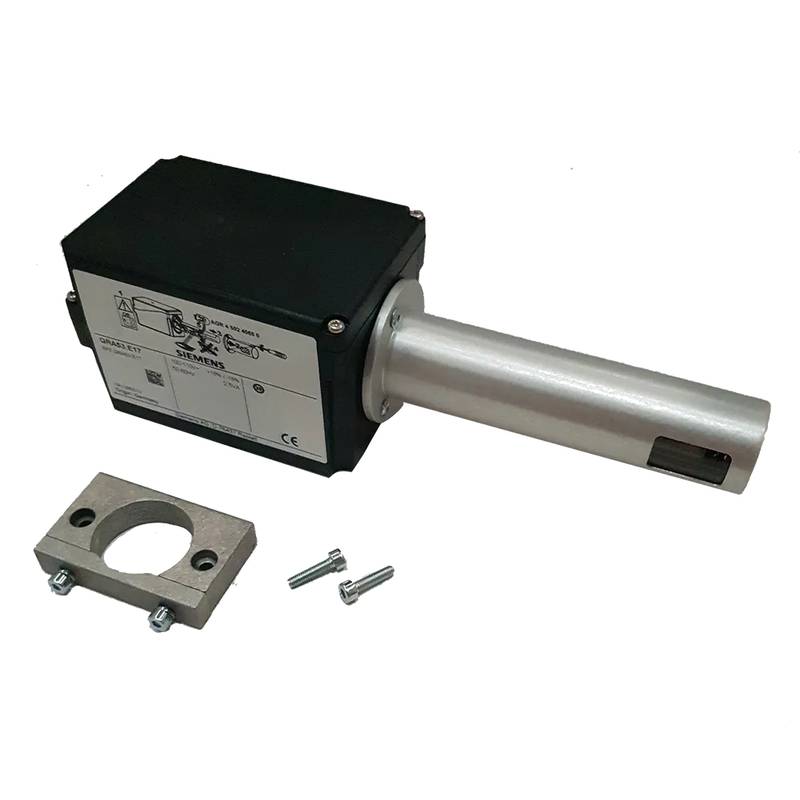
SIEMENS QRA73.A27 Ultraviolet Flame Sensor QRA73


The SIEMENS QRA73.A27 Ultraviolet Flame Sensor is a critical component for ensuring safe and reliable combustion processes in industrial applications. This advanced flame detector offers robust performance, characterized by its rapid response time, high sensitivity to ultraviolet radiation emitted by flames, and excellent resistance to environmental interference. Key technical parameters include its operating temperature range of -40 to +60 °C, a supply voltage of 24 V AC, and an IP65 degree of protection, making it suitable for harsh industrial environments. The QRA73.A27's primary advantage lies in its ability to detect flame presence reliably, preventing burner malfunction and potential safety hazards.
Product Specifications
| Parameter | Specification |
| :-------------------- | :------------------------------ |
| Product Type | Ultraviolet Flame Sensor |
| Model | QRA73.A27 |
| Brand | SIEMENS |
| Detection Method | Ultraviolet Radiation |
| Operating Temperature | -40 to +60 °C |
| Supply Voltage | 24 V AC |
| Degree of Protection | IP65 |
| Connection Type | Terminal Block |
| Dimensions | (Refer to manufacturer datasheet) |
| Weight | (Refer to manufacturer datasheet) |
| Certifications | (Refer to manufacturer datasheet) |
Core Features & Market Positioning
The SIEMENS QRA73.A27 stands out in the industrial flame detection market due to its specialized ultraviolet (UV) sensing technology, which provides a highly selective and reliable method for flame monitoring. Unlike sensors that rely on visible light or infrared, UV sensors are less susceptible to interference from hot surfaces or incandescent materials, ensuring accurate flame detection even in challenging conditions. This inherent reliability positions the QRA73.A27 as a preferred choice for critical combustion safety applications where false shutdowns or missed flame signals can have severe consequences. Its robust design and Siemens' reputation for quality further solidify its competitive advantage in industrial burner management systems.
Key Application Scenarios
This ultraviolet flame sensor is indispensable in a wide array of industrial combustion equipment. Its primary applications include safeguarding industrial boilers, furnaces, kilns, and thermal oxidizers. It plays a crucial role in ensuring the safe startup and continuous operation of gas and oil burners across sectors such as power generation, chemical processing, and manufacturing. The sensor's ability to detect the UV spectrum emitted by combustion is vital for safety interlocks, preventing unburned fuel release and optimizing combustion efficiency.
Practical System Integration Guidance
Integrating the SIEMENS QRA73.A27 into existing burner management systems typically involves connecting it to a compatible flame amplifier or safety control unit. The sensor features a simple terminal block for electrical connections, requiring a 24 V AC supply. Proper installation involves mounting the sensor in a line of sight to the flame, ensuring the quartz window is clean and unobstructed. For optimal performance, it's essential to consult the specific wiring diagrams provided by Siemens for the QRA73.A27 and the associated control system to ensure correct signal transmission and power supply.
Operation and Risk Mitigation
The QRA73.A27 operates by continuously monitoring for UV radiation. When flame is present, it emits UV light that strikes the sensor's internal elements, generating a signal. This signal is then processed by the burner control unit to confirm flame presence. To mitigate risks, regular inspection of the sensor and its viewing window for soiling or damage is paramount. If the sensor fails to detect a flame when one is present, or if it signals a flame when none exists (false call for flame), it can lead to operational issues or safety failures. In such scenarios, troubleshooting typically involves checking power supply, wiring integrity, and the cleanliness of the UV window. Referencing the product's technical documentation for specific fault codes or diagnostic procedures is crucial.
Scalability & Long-Term Value
The SIEMENS QRA73.A27 is designed for integration into sophisticated industrial automation platforms, offering significant long-term value. Its compatibility with various Siemens burner control systems, such as the LFE series, allows for seamless upgrades and expansions of combustion monitoring capabilities. As industries increasingly adopt Industry 4.0 principles, flame sensors like the QRA73.A27 can be part of a connected system, feeding data into industrial internet of things (IIoT) platforms for predictive maintenance and enhanced operational insights. This ensures that the investment in flame detection technology remains relevant and contributes to overall plant efficiency and safety.
FAQs
What is the primary function of the SIEMENS QRA73.A27?
The QRA73.A27 is an ultraviolet flame sensor for industrial burners. It detects the UV radiation emitted by flames to ensure safe combustion. This allows for immediate shutdown if a flame is lost.
It is a critical safety component in boiler and furnace management systems. The sensor's rapid detection prevents hazardous conditions. Its robust design ensures reliable operation.
This UV sensor provides highly selective flame detection, minimizing false alarms from hot surfaces. It's designed for harsh environments, offering IP65 protection.
What are the key technical specifications of the QRA73.A27?
The sensor operates within a temperature range of -40 to +60 °C. It requires a 24 V AC supply voltage for operation. Its IP65 rating signifies excellent protection against dust and water ingress.
It detects flames by sensing ultraviolet radiation. The connection is made via a standard terminal block for easy integration. Detailed dimensions and weight are available in the manufacturer's datasheet.
The QRA73.A27 is built for demanding industrial settings. It ensures reliable flame monitoring for various combustion applications.
How does the QRA73.A27 detect a flame?
The sensor detects ultraviolet (UV) radiation, which is a primary component of flame emissions. When a flame is present, it emits UV light that is captured by the sensor's internal components. This captured UV light generates an electrical signal.
This signal is then sent to a connected flame amplifier or burner control unit. The control unit interprets this signal as confirmation of flame presence. This process is rapid, ensuring quick response to flame conditions.
The UV detection method is highly selective, differentiating flame signatures from other heat sources. This reduces the likelihood of false positives in industrial environments.
Can the QRA73.A27 be used in outdoor applications?
Yes, the SIEMENS QRA73.A27 is suitable for outdoor use due to its robust design and high degree of protection. It features an IP65 rating, meaning it is dust-tight and protected against water jets. This ensures reliable performance even in exposed environmental conditions.
This protection level makes it resilient to weather elements like rain and humidity. Proper installation, as per manufacturer guidelines, is essential for maintaining this environmental resistance.
While rated for outdoor use, extreme conditions or direct prolonged exposure to harsh elements should be considered during system design. Its primary function remains critical flame detection in various industrial settings.
What type of burners is the QRA73.A27 suitable for?
The QRA73.A27 is designed for use with a wide variety of industrial burners, including gas and oil-fired types. It is commonly employed in boilers, furnaces, kilns, and thermal oxidizers. Its versatility makes it a staple in many industrial combustion applications.
Its ultraviolet detection capability is effective for flames that emit UV radiation. This includes most common industrial fuel flames. It ensures safety during startup, operation, and shutdown cycles.
The sensor's reliability is crucial for continuous processes and safety-critical operations. It supports efficient and safe combustion in manufacturing and energy sectors.
How do I install the SIEMENS QRA73.A27?
Installation involves mounting the sensor with a clear line of sight to the flame. Ensure the quartz viewing window remains clean and unobstructed to allow UV radiation to reach the sensor. Connect the sensor's terminals to the designated power supply and control unit inputs as per the wiring diagram.
The sensor requires a 24 V AC power supply. It connects to a compatible flame amplifier or safety control module. Always refer to the specific installation manual and wiring schematics provided by SIEMENS for your control system.
Proper alignment and secure mounting are critical for accurate flame detection. Avoid positioning it where it might be directly exposed to excessive heat or steam, which could affect its longevity or performance.
What is the typical lifespan of a QRA73.A27 sensor?
The typical lifespan of a SIEMENS QRA73.A27 flame sensor is generally long, provided it is installed and operated correctly. Factors influencing lifespan include the operating environment, frequency of flame detection cycles, and regular maintenance. Siemens products are known for their durability in industrial settings.
While specific figures vary, industrial flame sensors are engineered for thousands of operational hours. Regular inspection of the UV window and overall sensor integrity can help prolong its useful life and ensure consistent performance.
For critical applications, a proactive replacement schedule based on manufacturer recommendations or system performance monitoring is advisable. This ensures continuous safety and operational reliability.
What are common troubleshooting steps for the QRA73.A27?
Common troubleshooting involves checking the power supply (24 V AC) and ensuring all wiring connections are secure and correct according to the wiring diagram. Inspect the quartz viewing window for any dirt, soot, or obstructions that could block UV light from reaching the sensor. A dirty window is a frequent cause of flame detection failures.
If the sensor is not detecting a flame, verify the flame amplifier or control unit is functioning correctly and is compatible with the QRA73.A27. Check for any error codes or diagnostic indicators on the control unit. Sometimes, recalibration or a reset of the control system may be necessary.
If flame is detected when no flame is present (false call for flame), this could indicate interference from other UV sources or a faulty sensor. Ensure the sensor's field of view is not compromised by other radiant heat sources. If problems persist, consult the SIEMENS technical documentation or contact their support.
What is the difference between UV and IR flame sensors?
UV flame sensors, like the QRA73.A27, detect ultraviolet radiation emitted by flames. This spectrum is produced by the initial stages of combustion and is less likely to be confused with heat from hot surfaces. UV sensors offer a fast response and are highly selective.
IR flame sensors detect infrared radiation. Different types of IR sensors respond to different wavelengths and combustion products. Some IR sensors can detect the flickering of flames, while others monitor heat.
The choice between UV and IR depends on the application, the type of fuel, and potential sources of interference. UV sensors are generally preferred for their quick response and ability to detect flame presence reliably in many industrial settings.
How does the IP65 rating benefit the QRA73.A27?
The IP65 rating indicates that the SIEMENS QRA73.A27 is protected against dust ingress and is also shielded from water jets. This makes the sensor highly durable and reliable in harsh industrial environments where dust, moisture, and cleaning processes are common.
This protection ensures the sensor's internal components are safeguarded from contaminants that could impair its performance or lead to premature failure. It allows for straightforward cleaning without compromising the sensor's integrity, which is crucial for maintaining optimal detection capabilities.
The IP65 rating facilitates the sensor's use in a wide range of applications, including those exposed to the elements or requiring frequent washdowns. It contributes to reduced maintenance costs and increased operational uptime by preventing environmental degradation.