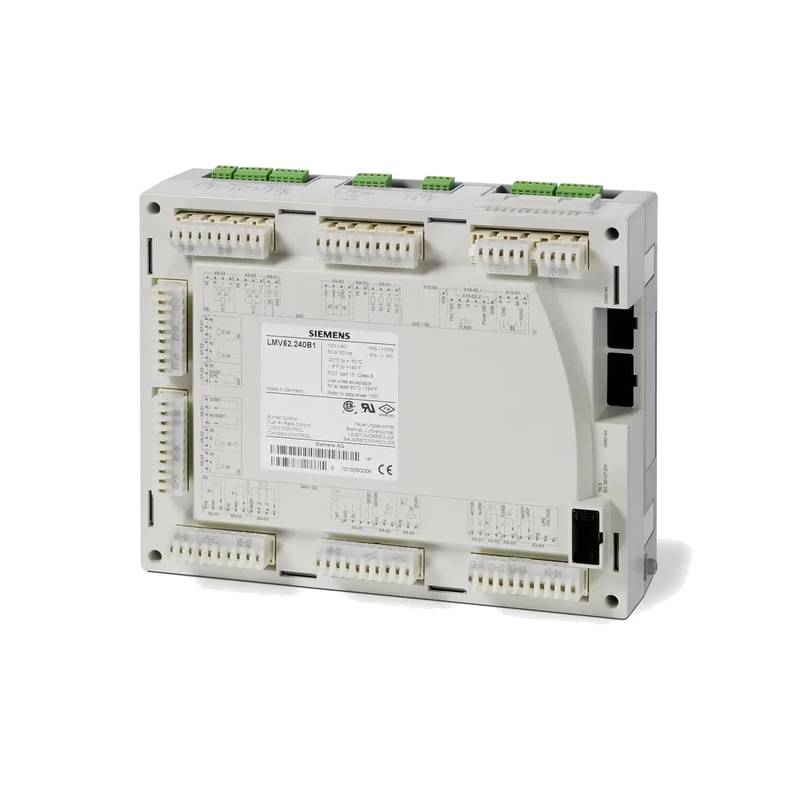












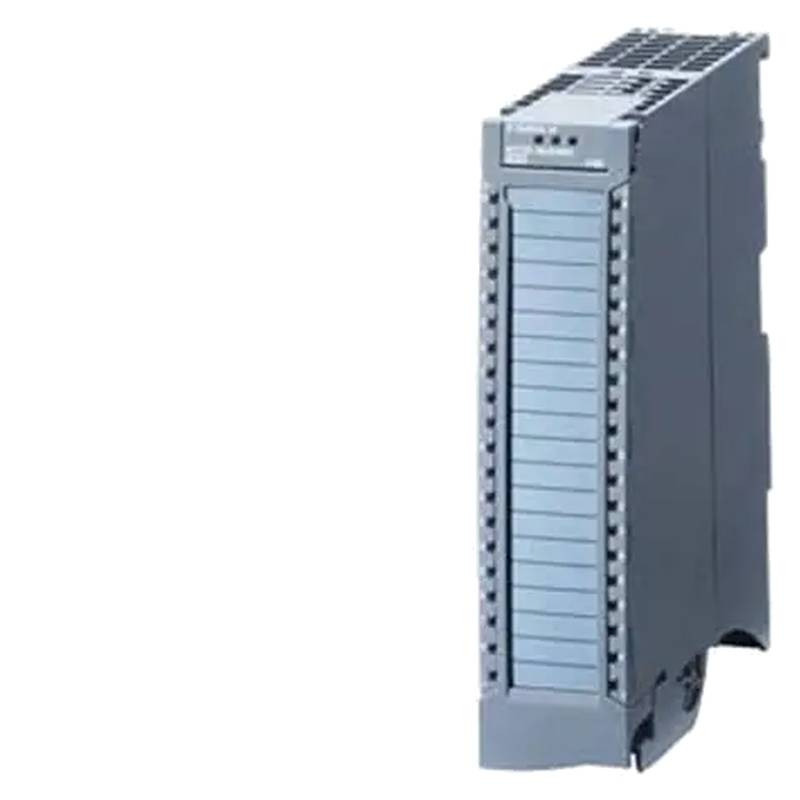
Siemens 6ES7531-7QD00-0AB0 4-channel RTD Resistance Thermometer Module


The Siemens 6ES7531-7QD00-0AB0 is a high-performance 4-channel RTD resistance thermometer module designed for precise temperature measurement in demanding industrial environments. This module offers superior accuracy, rapid response times, and robust diagnostics, making it a critical component for process control and automation within the SIMATIC S7-1500 system. Its key advantages include its ability to interface with various RTD sensor types, flexible configuration options, and seamless integration into the TIA Portal engineering framework. Technical parameters such as its 4-channel input, support for 2-, 3-, and 4-wire RTD configurations, and diagnostic capabilities ensure reliable and efficient operation.
Product Specifications
| Feature | Specification |
| :-------------------- | :------------------------------------------------ |
| Module Type | Analog Input Module |
| Product ID | 6ES7531-7QD00-0AB0 |
| Channels | 4 |
| Input Type | Resistance Thermometer (RTD) |
| Sensor Compatibility | Pt100, Pt200, Pt500, Pt1000, Ni100, Ni120, Ni200, Ni1000 |
| Measuring Range | Configurable via software |
| Resolution | 16-bit |
| Accuracy | Typically ±0.1% of full scale |
| Conversion Time | Approx. 5 ms per channel |
| Isolation | Channel-to-backplane isolation |
| Supply Voltage | 24 V DC |
| Current Consumption | < 100 mA |
| Operating Temperature | -20 °C to +60 °C |
| Dimensions (W x H x D)| 35 mm x 147 mm x 129 mm |
| Protection Class | IP20 |
Core Features & Market Positioning
The Siemens 6ES7531-7QD00-0AB0 distinguishes itself through its exceptional accuracy and versatility, supporting a wide array of RTD sensor types, including Pt100 and Ni100, across 2-, 3-, and 4-wire configurations. This adaptability ensures compatibility with diverse existing sensor installations and allows for optimal precision regardless of wiring methodology. Its integration within the SIMATIC S7-1500 platform provides advanced diagnostics, enabling proactive maintenance and minimizing downtime. The module's rapid conversion time of approximately 5 milliseconds per channel makes it ideal for high-speed control loops and critical process monitoring where timely data is paramount. Positioned as a premium solution, it offers unparalleled reliability and performance for complex automation tasks in industries demanding stringent temperature control.
Key Application Scenarios
This 4-channel RTD module finds extensive use in applications requiring precise temperature monitoring and control. Industries such as chemical processing, pharmaceuticals, food and beverage, and power generation frequently leverage its capabilities. Specific use cases include monitoring reactor temperatures, controlling pasteurization processes, managing boiler temperatures, and ensuring precise climate control in sensitive manufacturing environments. The module's robustness and diagnostic features are particularly valuable in hazardous or remote locations where reliable, unattended operation is essential. Its ability to interface with multiple sensors simultaneously streamlines data acquisition and reduces the need for multiple input modules.
Practical System Integration Guidance
Integrating the Siemens 6ES7531-7QD00-0AB0 into a SIMATIC S7-1500 system is facilitated through the TIA Portal software. Wiring involves connecting the RTD sensors to the module's terminals, paying close attention to the correct polarity for 2- or 3-wire configurations and ensuring proper grounding for noise reduction. For 4-wire RTDs, the module automatically compensates for lead wire resistance, enhancing accuracy. Within TIA Portal, the module is configured by assigning input addresses, selecting the appropriate sensor type (e.g., Pt100), and defining scaling and alarm limits. Function blocks within the PLC program then read the processed temperature values for control and visualization.
Operation and Risk Mitigation
Safe operation of the Siemens 6ES7531-7QD00-0AB0 relies on adhering to standard industrial safety practices and the module's inherent diagnostic capabilities. Over-temperature conditions or sensor failures are typically detected by the module, which then generates diagnostic alarms that can be programmed into the PLC logic for appropriate action, such as shutting down a process or alerting an operator. Incorrect wiring is a common source of initial commissioning issues; verifying sensor connections against the module's terminal layout and the selected sensor type in TIA Portal is crucial. Fault codes, accessible through TIA Portal's diagnostic buffer, provide specific information on module status and potential errors, aiding in rapid troubleshooting.
Scalability & Long-Term Value
The Siemens 6ES7531-7QD00-0AB0 offers significant long-term value through its seamless integration within the scalable SIMATIC S7-1500 platform. This allows for easy expansion of I/O capacity by adding more modules as process requirements evolve. Its compatibility with the TIA Portal ensures that the system can be updated and maintained efficiently over its lifecycle. Furthermore, the module's robust design and Siemens' commitment to backward compatibility provide a stable foundation for future upgrades and integration with emerging Industrial Internet of Things (IIoT) and Industry 4.0 initiatives, enabling enhanced data analytics and predictive maintenance strategies.
Frequently Asked Questions
What types of RTD sensors does the Siemens 6ES7531-7QD00-0AB0 support?
The module supports a wide range of resistance thermometer detectors (RTDs), including standard types like Pt100, Pt200, Pt500, and Pt1000.
It also accommodates nickel-based sensors such as Ni100, Ni120, Ni200, and Ni1000, offering significant flexibility for diverse applications.
This broad compatibility ensures it can interface with many existing sensor installations and readily adapt to new sensor choices.
How is the Siemens 6ES7531-7QD00-0AB0 configured for specific sensor types and wiring?
Configuration is performed using Siemens' TIA Portal engineering software, providing a user-friendly interface.
Within the software, you select the exact RTD sensor type (e.g., Pt100) and the desired wiring configuration (2-, 3-, or 4-wire).
The module's internal circuitry adjusts automatically based on these software settings to ensure accurate measurement.
What are the advantages of using a 4-wire configuration with this RTD module?
A 4-wire configuration significantly improves measurement accuracy by eliminating the influence of lead wire resistance.
The module actively compensates for the resistance of the two outer wires, ensuring the measured resistance is solely from the RTD element.
This makes it the preferred choice for high-precision applications or when sensor leads are long or of varying resistance.
Can the Siemens 6ES7531-7QD00-0AB0 be used with non-Siemens PLCs?
This module is designed specifically for seamless integration with the Siemens SIMATIC S7-1500 PLC system.
While it might be technically possible to interface with other PLC systems via specialized gateways or communication protocols, it is not natively supported.
Using it outside the intended Siemens ecosystem can lead to complex integration challenges and is generally not recommended for optimal performance and support.
What diagnostic information is available from the 6ES7531-7QD00-0AB0 module?
The module provides comprehensive diagnostic information, including sensor circuit breaks and short circuits.
It can also detect faults related to incorrect sensor wiring or if the measured resistance falls outside the expected range.
All diagnostic events are reported to the S7-1500 CPU and can be accessed and analyzed within TIA Portal's diagnostic tools.
How does the module handle lead wire resistance in 2- and 3-wire configurations?
In 2-wire configurations, the lead wire resistance is measured along with the sensor resistance and can introduce errors, especially with long wires.
For 3-wire configurations, the module uses the third wire to compensate for the resistance of one of the other two lead wires, significantly improving accuracy over 2-wire.
The module's internal algorithms and software settings help to mitigate, but not completely eliminate, lead wire effects in these configurations.
What is the typical conversion time for this RTD module?
The Siemens 6ES7531-7QD00-0AB0 boasts a fast conversion time, typically around 5 milliseconds per channel.
This rapid data acquisition is crucial for applications requiring real-time temperature monitoring and fast control loops.
The overall module scan time will also depend on the PLC program's processing speed and the number of active channels.
Is the module suitable for use in hazardous or explosive environments?
The module itself has an IP20 protection rating, indicating it is suitable for standard industrial environments and must be protected from dust and moisture.
It is not intrinsically safe and therefore not designed for direct installation within hazardous (explosive) areas without appropriate safety barriers or enclosures.
For hazardous area applications, specialized intrinsically safe sensors and associated safety equipment must be used in conjunction with this module.
How does the 16-bit resolution impact measurement accuracy?
A 16-bit analog-to-digital converter (ADC) provides a high level of detail in the temperature reading.
This translates to a finer granularity of measurement, allowing for the detection of smaller temperature variations and more precise control.
Combined with the module's inherent accuracy specifications, the 16-bit resolution ensures that temperature readings are both detailed and precise.
What is the power requirement for the Siemens 6ES7531-7QD00-0AB0 module?
The module requires a 24 V DC supply voltage for its operation.
This is a standard voltage level for industrial automation components, ensuring compatibility with most power supplies used in S7-1500 systems.
The current consumption is relatively low, typically less than 100 mA, minimizing its impact on the overall system power budget.