











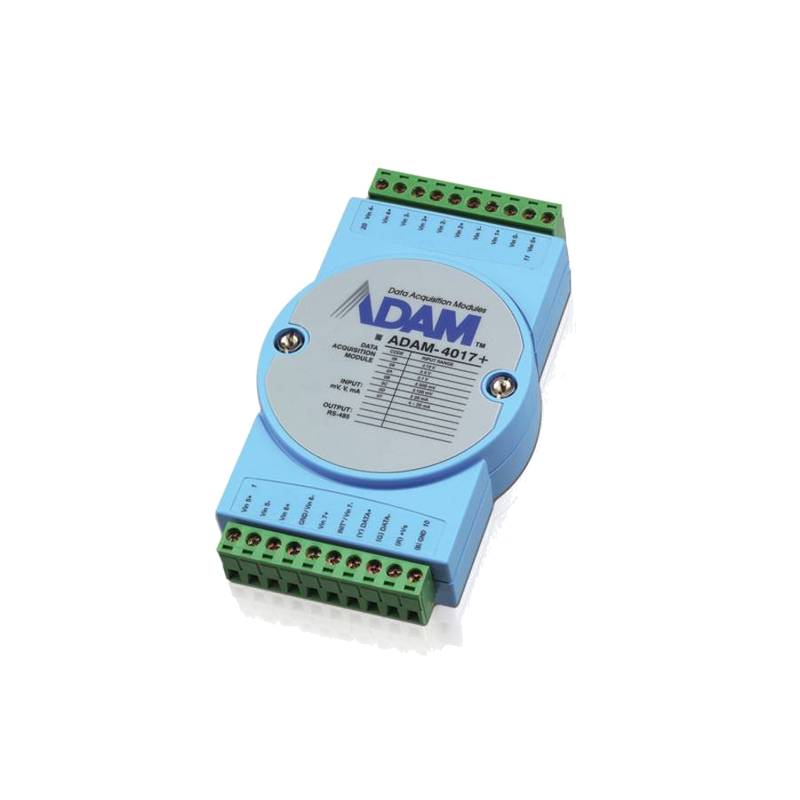
Advantech ADAM-4572-CE Serial Device Server Networking Module


The Advantech ADAM-4572-CE Serial Device Server Networking Module is engineered to bridge the gap between legacy serial devices and modern Ethernet networks, offering robust connectivity and management for industrial automation. This module excels in transforming RS-232/422/485 serial communication into TCP/IP Ethernet, enabling remote monitoring and control of industrial equipment. Key advantages include its compact design, wide operating temperature range, and flexible configuration options. Its core technical specifications emphasize reliable data transmission and seamless network integration for demanding industrial environments.
Product Specifications
| Feature | Specification |
| :---------------------- | :-------------------------------------------------- |
| Serial Port Type | RS-232, RS-422, RS-485 (selectable via software) |
| Ethernet Port | 10/100 Mbps Ethernet (RJ-45) |
| Protocols | TCP/IP, UDP, ICMP, DHCP, DNS, ARP |
| Baud Rate | Up to 115.2 kbps |
| Data Bits | 5, 6, 7, 8 |
| Parity | None, Even, Odd |
| Stop Bits | 1, 1.5, 2 |
| Flow Control | RTS/CTS, XON/XOFF |
| Power Input | 9-30 VDC |
| Operating Temperature | -20°C to 70°C |
| Dimensions (W x H x D) | 90 mm x 37 mm x 60 mm |
| Mounting | DIN-rail, Wall-mount |
Core Features & Market Positioning
The ADAM-4572-CE distinguishes itself through its dual-personality serial ports, offering unparalleled flexibility for integrating diverse serial devices into a unified network. Its support for Modbus TCP/RTU gateway functionality simplifies the migration of Modbus-based systems to Ethernet, a crucial capability for many industrial control applications. Advantech's reputation for industrial-grade hardware further solidifies the ADAM-4572-CE's market position as a reliable and durable solution for mission-critical deployments. The module's inherent ability to handle multiple TCP connections simultaneously enhances its utility in scenarios requiring concurrent data access from various monitoring stations.
Key Application Scenarios
This serial device server is ideally suited for transforming standalone serial devices into network-accessible assets. Common applications include connecting Programmable Logic Controllers (PLCs), sensors, meters, and other industrial instrumentation to SCADA systems or plant-wide networks. Its robust construction and wide temperature tolerance make it an excellent choice for harsh environments found in manufacturing plants, substations, and remote monitoring stations. The module facilitates remote diagnostics and configuration, reducing the need for on-site maintenance and enabling proactive issue resolution in sectors like oil and gas, water treatment, and building automation.
Practical System Integration Guidance
Integrating the Advantech ADAM-4572-CE into an existing network is streamlined by its user-friendly configuration utility, Advantech Device Manager. This software allows for easy setting of IP addresses, serial port parameters, and network protocols. For physical installation, the module supports standard DIN-rail mounting, common in industrial control cabinets, or wall-mounting for distributed installations. Wiring involves connecting the serial device to the DB-9 connector and the Ethernet port to the local network via an RJ-45 cable. Power can be supplied via a standard 9-30 VDC industrial power source.
Operation and Risk Mitigation
Proper operation of the ADAM-4572-CE hinges on correct serial and network parameter configuration. Users must ensure that the baud rate, data bits, parity, and stop bits on the module precisely match those of the connected serial device to avoid communication errors. Network configuration, including IP addressing and subnet masks, must align with the local network infrastructure to ensure seamless connectivity. While the module is built for reliability, potential issues can arise from incorrect wiring, mismatched serial settings, or network conflicts. Thorough testing after initial setup is critical.
Scalability & Long-Term Value
The Advantech ADAM-4572-CE offers significant scalability by allowing numerous serial devices to be consolidated onto a single Ethernet network. This approach not only reduces cabling complexity and cost but also lays the groundwork for integration with Industrial Internet of Things (IIoT) platforms and cloud-based analytics. Its compatibility with standard industrial communication protocols ensures it can be integrated into existing infrastructure while providing an upgrade path to more advanced networking solutions. The module's robust design and Advantech's commitment to product longevity contribute to its long-term value proposition in evolving industrial environments.
Frequently Asked Questions
1. How do I configure the serial port settings on the ADAM-4572-CE?
Configuration of serial port settings such as baud rate, data bits, parity, and stop bits is achieved through Advantech's Device Manager software. This utility allows for precise matching of the module's serial interface to the specifications of the connected legacy device, ensuring reliable data exchange. It's crucial to consult the serial device's manual to obtain its exact communication parameters before configuring the ADAM-4572-CE.
2. What is the maximum number of TCP connections the ADAM-4572-CE can support?
The ADAM-4572-CE typically supports multiple simultaneous TCP connections, allowing several client devices to access the serial data concurrently. This feature is essential for centralized monitoring systems where multiple users or applications need to interact with the connected serial devices without interference. The exact number of supported connections is detailed in the product's technical specifications.
3. Can the ADAM-4572-CE be used with RS-485 multi-drop configurations?
Yes, the ADAM-4572-CE fully supports RS-485 communication, including multi-drop configurations. This enables the connection and management of multiple serial devices on a single RS-485 bus, which are then accessible over Ethernet. Proper termination resistors and addressing schemes are necessary for optimal performance in such setups.
4. How does the ADAM-4572-CE act as a Modbus gateway?
The ADAM-4572-CE can function as a Modbus gateway, translating Modbus RTU (serial) commands into Modbus TCP (Ethernet) and vice-versa. This allows Modbus TCP-compatible master devices on an Ethernet network to communicate seamlessly with Modbus RTU slave devices connected via the serial ports. It simplifies the integration of legacy Modbus RTU systems into modern IP-based networks.
5. What are the power requirements for the ADAM-4572-CE?
The ADAM-4572-CE requires a DC power input, typically within a range of 9 to 30 VDC. This broad input voltage range provides flexibility in selecting power supplies commonly found in industrial environments. It is recommended to use a regulated power supply to ensure stable operation and prevent potential communication disruptions.
6. What types of industrial environments is the ADAM-4572-CE suitable for?
Designed for industrial use, the ADAM-4572-CE operates reliably within a wide temperature range, typically from -20°C to 70°C. This makes it suitable for deployment in harsh conditions, including manufacturing floors, outdoor enclosures, and other locations subject to significant temperature fluctuations. Its robust enclosure also offers protection against environmental factors.
7. How is firmware updated on the ADAM-4572-CE?
Firmware updates for the ADAM-4572-CE are generally performed using Advantech's provided utility software via the Ethernet connection. This process allows for the incorporation of new features or bug fixes released by Advantech, ensuring the module remains up-to-date. Users should download the latest firmware from Advantech's official support website.
8. Does the ADAM-4572-CE support security features like firewalls or encryption?
While the ADAM-4572-CE is designed for robust industrial communication, advanced security features like built-in firewalls or data encryption are typically not its primary function. For enhanced security in critical networks, it is recommended to deploy these functionalities at a higher network level, such as using managed switches or network firewalls. Secure configuration practices are essential.
9. What is the purpose of the selectable serial port type (RS-232/422/485)?
The ability to select between RS-232, RS-422, and RS-485 serial interfaces via software on a single port provides exceptional versatility. This means one ADAM-4572-CE unit can interface with a wide array of serial devices without requiring different hardware modules for each serial standard. This flexibility simplifies inventory and deployment for integrators working with diverse equipment.
10. How does the ADAM-4572-CE facilitate IIoT integration?
The ADAM-4572-CE serves as a crucial enabler for IIoT by converting legacy serial data into a format readily usable by IP-based systems. This allows older machinery and sensors to become part of a smart factory or IoT ecosystem, enabling data collection for analytics, remote monitoring, and predictive maintenance. Its Ethernet connectivity is the key to bridging operational technology (OT) with information technology (IT).