











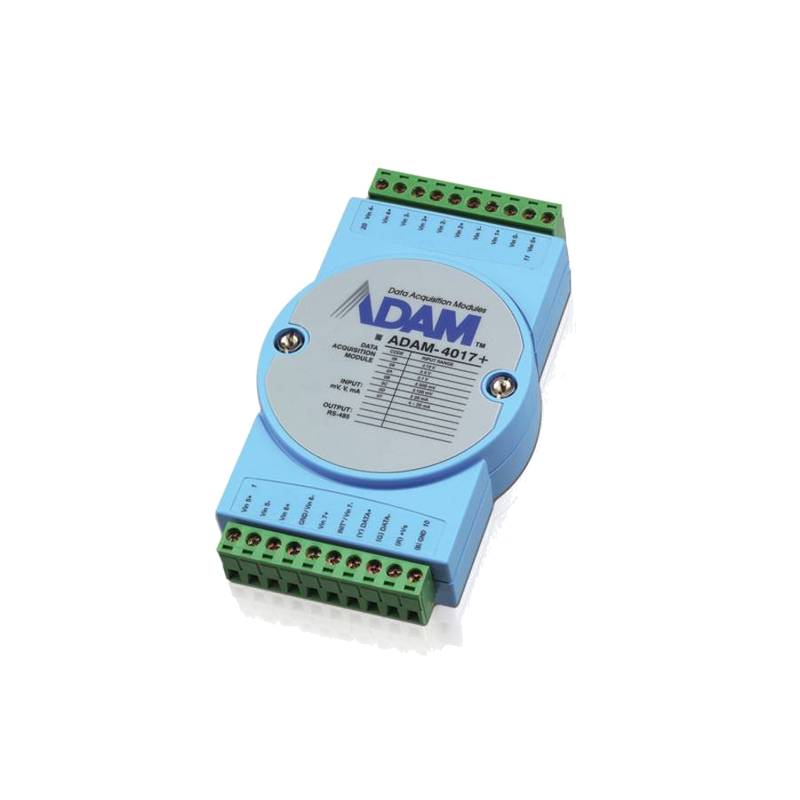
Advantech ADAM-6250-B Industrial Ethernet Digital Input I/O Module


The Advantech ADAM-6250-B Industrial Ethernet Digital Input Module stands as a robust solution for industrial automation, offering reliable data acquisition and seamless integration into networked control systems. Its key advantages lie in its high channel density, extensive operating temperature range, and robust communication capabilities. The module features 16 digital input channels, supporting voltage ranges from 0 to 10 VDC, and is designed for DIN-rail mounting, facilitating straightforward installation in industrial environments. Its IP30 protection rating ensures durability against dust and small objects, while its compact dimensions (145 x 97 x 45 mm) allow for efficient use of panel space. The ADAM-6250-B operates within a wide temperature range of -25 to 70°C, making it suitable for demanding industrial settings.
Product Specifications
| Feature | Specification |
| :------------------- | :-------------------------------------------- |
| Digital Input Channels | 16 |
| Input Voltage Range | 0 to 10 VDC |
| Isolation Protection | 3000 VDC |
| Communication | Ethernet (10/100 Mbps) |
| Protocol Support | Modbus TCP, UDP, DHCP, Telnet, HTTP |
| Power Input | 12 to 48 VDC |
| Operating Temperature| -25 to 70°C |
| Mounting | DIN-rail |
| Dimensions (W x H x D)| 145 x 97 x 45 mm |
| Protection Rating | IP30 |
Core Features & Market Positioning
The Advantech ADAM-6250-B distinguishes itself through its high channel count within a single module, significantly reducing wiring complexity and panel space requirements compared to discrete input solutions. Its native Ethernet connectivity, supporting standard industrial protocols like Modbus TCP, positions it as a direct competitor to serial-based I/O modules, offering the advantages of higher bandwidth, longer cable runs, and easier network integration. The module's inherent isolation protection of 3000 VDC shields connected devices and the control system from voltage transients and ground loops, a critical feature for maintaining system integrity in noisy industrial environments. This focus on robust data acquisition and networking makes the ADAM-6250-B a strong contender for applications demanding reliability and ease of deployment within an Ethernet infrastructure.
Key Application Scenarios
The Advantech ADAM-6250-B finds extensive use in machine monitoring, where its 16 digital inputs can track the status of various operational states, such as machine running, fault conditions, or the open/closed status of doors and safety gates. In building automation, it excels at monitoring discrete events like occupancy sensors, alarm contacts, or simple switch closures across multiple zones. For environmental monitoring, the module can be employed to acquire data from simple sensors indicating leak detection, vibration alerts, or the status of pumps and valves. Its suitability for harsh industrial conditions also lends itself to process control applications, where it can interface with limit switches, push buttons, and other binary devices on the plant floor, feeding this critical data into SCADA or PLC systems via Ethernet.
Practical System Integration Guidance
Integrating the Advantech ADAM-6250-B into an industrial network is streamlined through its standard Ethernet interface. For initial setup, users can configure the module's IP address using Advantech's ADAM Utility software or by setting it to DHCP mode to obtain an IP address from a network server. Wiring involves connecting the 12-48 VDC power supply to the designated terminals and then connecting the digital input signals to the respective input terminals, observing proper polarity. The module's screw terminals accommodate standard industrial wiring gauges. For programming, Modbus TCP is the most common protocol. This involves creating Modbus TCP client functionality within a PLC or SCADA system to read the status of the input registers (typically holding registers for digital inputs) from the ADAM-6250-B's IP address.
Operation and Risk Mitigation
The ADAM-6250-B operates by continuously monitoring its 16 digital input channels and reporting their states (high or low voltage) over the Ethernet network using configured protocols. Risk mitigation is inherent in its design: the 3000 VDC isolation prevents ground loops and protects against electrical surges that could damage sensitive control equipment. Ensuring the power supply voltage remains within the specified 12-48 VDC range is critical to prevent module failure. Over-voltage conditions on the input channels, while protected by the module's design, should still be avoided by ensuring input signals do not exceed the specified 0-10 VDC range or by using appropriate signal conditioning if higher voltages are present. Regular network health checks and secure network configurations are also vital for reliable operation.
Scalability & Long-Term Value
The Advantech ADAM-6250-B offers significant scalability through its Ethernet-based architecture. Multiple ADAM-6250-B modules, or a combination of different ADAM-6000 series Ethernet I/O modules, can be easily added to an existing network infrastructure, expanding I/O capacity without the limitations of serial bus lengths or complex daisy-chaining. Its compatibility with standard Modbus TCP ensures seamless integration with a wide array of PLCs, HMIs, and SCADA systems from various manufacturers, providing flexibility for future system upgrades or platform changes. The module's robust industrial design and Advantech's reputation for reliability contribute to its long-term value, ensuring consistent performance and minimizing the need for frequent replacements. This makes it a strategic choice for IIoT initiatives aiming to collect data from numerous discrete points across a facility.
Frequently Asked Questions
What is the maximum voltage for each digital input on the ADAM-6250-B?
Each digital input on the Advantech ADAM-6250-B module is designed to accept a voltage range of 0 to 10 VDC. This specification ensures compatibility with common low-voltage industrial sensors and switches. Exceeding this voltage limit can potentially damage the module or lead to inaccurate readings.
How do I connect the ADAM-6250-B to my industrial network?
The ADAM-6250-B connects to your industrial network via its built-in 10/100 Mbps Ethernet port. You can configure its IP address using Advantech's utility software or set it to DHCP for automatic assignment. Ensure proper network cabling and connectivity to your switch or router.
Can the ADAM-6250-B be used in extreme temperature environments?
Yes, the ADAM-6250-B is engineered for demanding industrial conditions, operating reliably within a wide temperature range of -25 to 70°C. This broad operational temperature ensures consistent performance across various environmental settings.
What communication protocols does the ADAM-6250-B support?
The module supports key industrial Ethernet protocols including Modbus TCP, UDP, DHCP, Telnet, and HTTP. Modbus TCP is commonly used for data acquisition with PLCs and SCADA systems.
How is the ADAM-6250-B powered?
Power for the ADAM-6250-B is supplied via a DC input ranging from 12 to 48 VDC. This flexible power input allows for integration into various existing power infrastructures.
What is the physical mounting method for the ADAM-6250-B?
The ADAM-6250-B is designed for easy installation on standard 35mm DIN rails. This mounting method is prevalent in industrial control panels for organized and secure component placement.
Does the ADAM-6250-B offer isolation protection?
Yes, the module provides 3000 VDC isolation protection for its digital input channels. This critical feature safeguards connected devices and the control system from voltage spikes and ground loops.
What is the typical use case for this specific Advantech module?
This module is ideal for applications requiring monitoring of multiple discrete digital signals, such as machine status, alarm inputs, or simple on/off switches. Its Ethernet connectivity simplifies integration into modern automation systems.
How many digital inputs does the ADAM-6250-B module provide?
The ADAM-6250-B features a high density of 16 independent digital input channels. This allows for comprehensive data gathering from a significant number of discrete points within a single module.
Is the ADAM-6250-B suitable for IIoT deployments?
Absolutely, its Ethernet interface and support for standard protocols make it an excellent choice for IIoT (Industrial Internet of Things) applications. It facilitates remote data collection and integration into cloud-based platforms.