











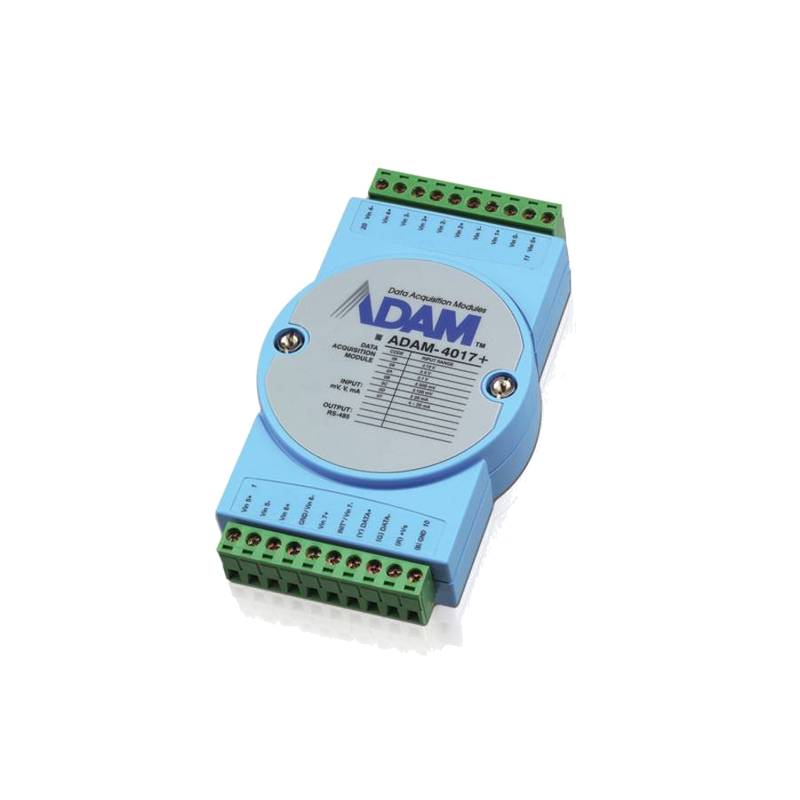
Advantech ADAM-6051-D Industrial Equipment Control Ethernet I/O Module


The Advantech ADAM-6051-D is a robust Ethernet I/O module engineered for demanding industrial equipment control applications. This module excels in providing reliable digital I/O connectivity, facilitating seamless integration into a wide range of automation systems. Its key advantages lie in its high channel density, flexible configuration options, and straightforward network integration, making it an ideal choice for modern industrial environments. The ADAM-6051-D boasts 6 digital input channels and 6 digital output channels, offering versatility for various control tasks. It operates within a wide temperature range of -20 to 70 °C and features an IP30 protection rating, ensuring dependable performance even in harsh conditions. The module supports Modbus TCP/IP protocol, simplifying communication with PLCs and SCADA systems.
Product Specifications
| Feature | Specification |
| :------------------- | :------------------------------------------ |
| Digital Inputs | 6 |
| Digital Outputs | 6 |
| Communication | Ethernet (10/100 Mbps), Modbus TCP/IP |
| Input Voltage Range | 0-30 VDC |
| Output Voltage Rating| 5-30 VDC |
| Isolation Voltage | 2500 VDC |
| Operating Temperature| -20 to 70 °C |
| Storage Temperature | -40 to 85 °C |
| Humidity | 5-95% RH (non-condensing) |
| Protection Rating | IP30 |
| Power Consumption | 1.7 W |
| Dimensions | 100 mm x 70 mm x 33 mm |
| Mounting | DIN-rail, Wall-mount |
Core Features & Market Positioning
The Advantech ADAM-6051-D distinguishes itself through its high channel count in a compact form factor, offering a cost-effective solution for expanding digital I/O capabilities. Its inherent flexibility allows for easy configuration of input and output functionalities, catering to diverse application requirements. Positioned as a reliable bridge between the physical world of industrial machinery and the digital realm of network control, the ADAM-6051-D is favored for its robust design and straightforward integration. The module's support for Modbus TCP/IP is a significant differentiator, ensuring broad compatibility with existing industrial automation infrastructure. This makes it a compelling choice for system integrators and end-users seeking dependable and scalable I/O solutions.
Key Application Scenarios
This Ethernet I/O module is ideally suited for applications requiring digital signal acquisition and control across various industrial sectors. It finds extensive use in factory automation for tasks such as monitoring machine status, controlling actuators, and managing discrete I/O signals. In building automation, the ADAM-6051-D can be employed for lighting control, access control systems, and environmental monitoring. Its rugged design also makes it suitable for outdoor applications, including remote monitoring of pumps, gates, and other equipment in utilities and infrastructure projects. The module's ease of integration via Ethernet makes it a practical solution for distributed I/O systems where centralized control is paramount.
Practical System Integration Guidance
Integrating the Advantech ADAM-6051-D into an existing system is streamlined through its standard Ethernet connectivity and Modbus TCP/IP protocol. For installation, secure the module onto a DIN-rail or wall using the provided mounting options. Power is supplied via a terminal block, requiring a voltage compatible with the module's specifications. Wiring of digital inputs and outputs should follow the module's pinout diagram, ensuring correct polarity for DC signals. Network configuration involves assigning an IP address to the ADAM-6051-D, typically done via Advantech's ADAM Utility software or through DHCP if supported by the network. Once networked, the module can be addressed using Modbus TCP/IP commands from a PLC, SCADA system, or custom application, enabling real-time data exchange and control.
Operation and Risk Mitigation
The ADAM-6051-D operates by receiving digital signals on its input channels and executing commands to toggle its output channels, all managed over its Ethernet interface. To mitigate operational risks, ensure proper wiring to prevent short circuits or overvoltage, especially considering the input voltage limits. Always verify that the power supply is stable and within the specified range. For output channels, avoid exceeding their current or voltage ratings to prevent damage. Regular firmware updates from Advantech can address potential vulnerabilities and improve performance. In fault conditions, monitor network connectivity and device status indicators. Common troubleshooting steps include verifying network cable integrity, checking IP address conflicts, and confirming Modbus communication parameters.
Scalability & Long-Term Value
The Advantech ADAM-6051-D offers excellent scalability, allowing for easy expansion of digital I/O points by simply adding more modules to the network. Its compatibility with standard Ethernet infrastructure means it can be integrated into existing industrial networks without specialized cabling. This facilitates a phased approach to system upgrades and expansions. The module's support for Modbus TCP/IP ensures it aligns with industry-standard communication protocols, providing long-term value and interoperability with a wide array of control systems and software platforms. As industries move towards IIoT and Industry 4.0, the ADAM-6051-D's networked nature makes it a foundational component for building smart, connected industrial environments.
Frequently Asked Questions
What are the input and output capabilities of the Advantech ADAM-6051-D?
The ADAM-6051-D is equipped with six digital input channels, designed to accept voltage signals for status monitoring. It also features six digital output channels, capable of switching external loads based on control commands.
How does the ADAM-6051-D connect to a network and communicate?
This module utilizes a standard Ethernet port for network connectivity, supporting 10/100 Mbps speeds. Communication is primarily handled via the Modbus TCP/IP protocol, allowing seamless integration with PLCs and SCADA systems.
What environmental conditions can the ADAM-6051-D withstand?
The module is built for industrial environments, operating reliably within a temperature range of -20 to 70°C. It also boasts an IP30 protection rating against solid objects and is designed to function in non-condensing humidity conditions.
How is the ADAM-6051-D powered and what are its power requirements?
Power is supplied to the ADAM-6051-D through a terminal block, requiring a DC voltage within its specified range. The module is energy-efficient, consuming a maximum of 1.7 watts, which is advantageous for power-constrained applications.
What mounting options are available for the ADAM-6051-D?
The ADAM-6051-D offers versatile mounting solutions to fit various installation scenarios. It can be conveniently mounted on a standard 35mm DIN-rail or directly to a wall using appropriate hardware.
Can the ADAM-6051-D be used for remote monitoring applications?
Yes, its Ethernet connectivity and Modbus TCP/IP support make it ideal for remote monitoring. It can transmit status data from remote I/O points over a network to a central control system.
What is the typical use case for the ADAM-6051-D in factory automation?
In factory automation, the ADAM-6051-D is commonly used for acquiring machine status signals (e.g., running, stopped, fault) and for controlling discrete outputs like indicator lights or small actuators.
How does the ADAM-6051-D integrate with SCADA systems?
The module integrates with SCADA systems by acting as a Modbus TCP/IP slave device. The SCADA system, acting as the master, can poll the ADAM-6051-D for input statuses and send commands to its output channels.
What safety considerations should be observed when wiring the ADAM-6051-D?
When wiring, ensure correct polarity for digital inputs and outputs to prevent damage. Adhere to the specified voltage and current ratings for both inputs and outputs to avoid overloading the module.
Does the ADAM-6051-D support any utility software for configuration?
Advantech typically provides utility software, such as ADAM Utility, which facilitates initial setup, IP address configuration, and diagnostics for the ADAM-6051-D module.