











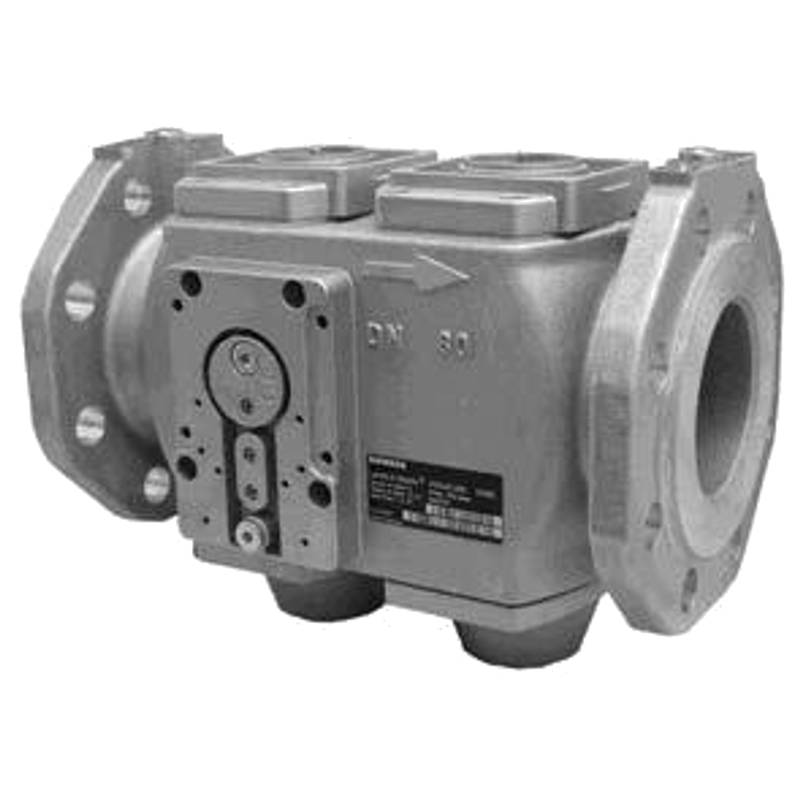
SIEMENS VGD40.050 Double Safety Shut-off Gas Valve DN50


The SIEMENS VGD40.050 Double Safety Shut-off Gas Valve DN50 stands as a robust and reliable solution for critical gas control applications, offering unparalleled safety and operational efficiency. This valve is engineered with advanced features designed to meet stringent industrial demands, ensuring the secure management of gas flow. Key advantages include its double shut-off capability, providing an exceptional level of safety by preventing gas leakage. Its compact design and high-performance materials facilitate seamless integration into diverse industrial environments. The VGD40.050 boasts a DN50 nominal diameter, ensuring substantial flow capacity, and operates effectively within a broad temperature and pressure range, making it a versatile choice for various industrial processes.
Product Specifications
| Feature | Specification |
| :-------------------------- | :-------------------------------------- |
| Product Name | Double Safety Shut-off Gas Valve |
| Manufacturer | SIEMENS |
| Model Number | VGD40.050 |
| Nominal Diameter (DN) | 50 mm |
| Connection Type | Flanged |
| Max. Operating Pressure | 100 mbar (or as specified by SIEMENS) |
| Max. Differential Pressure | 100 mbar (or as specified by SIEMENS) |
| Sealing Class | Class A |
| Response Time (Closing) | ≤ 1 second (typical) |
| Voltage | 230 V AC (or as specified by SIEMENS) |
| Power Consumption | ≤ 20 VA (typical) |
| Ambient Temperature Range | -20°C to +60°C (or as specified) |
| Material (Body) | Aluminum (or as specified) |
| Material (Seat) | NBR (or as specified) |
| Protection Class | IP54 (or as specified) |
Core Features & Market Positioning
The SIEMENS VGD40.050 differentiates itself through its inherent double safety shut-off mechanism, a critical feature for applications where gas integrity is paramount. This design significantly reduces the risk of uncontrolled gas release, positioning it as a premium choice for safety-conscious industries. Its robust construction, typically featuring an aluminum body and NBR sealing, ensures longevity and reliable performance even in demanding environments. The valve's rapid closing time is a testament to its engineering, providing immediate response in emergency situations. Compared to single shut-off valves, the VGD40.050 offers a superior safety profile, making it an ideal component for boiler systems, industrial burners, and gas supply lines where adherence to strict safety regulations is non-negotiable.
Key Application Scenarios
The SIEMENS VGD40.050 Double Safety Shut-off Gas Valve is indispensable in numerous industrial settings requiring precise and secure gas flow management. Its primary applications include industrial combustion systems, such as large boilers and furnaces, where it ensures the safe fuel supply and immediate shut-off in case of flame failure or operational anomalies. It is also a critical component in gas distribution networks within chemical plants and refineries, managing the flow of various industrial gases to different processing units. Furthermore, the VGD40.050 finds use in gas turbine fuel systems, where rapid and reliable valve operation is essential for engine safety and performance. Its DN50 size makes it suitable for medium to high flow rate applications, ensuring efficient gas delivery to industrial processes.
Practical System Integration Guidance
Integrating the SIEMENS VGD40.050 into an industrial system requires careful attention to its electrical and mechanical interfaces. The valve is typically supplied with flanged connections, necessitating appropriate mating flanges and gasket materials compatible with the specific gas and operating pressure. Electrical connection involves wiring the solenoid coils to a suitable control system, often a burner management system (BMS) or a Programmable Logic Controller (PLC). It is crucial to ensure the power supply voltage (commonly 230V AC) and frequency match the valve's specifications to prevent damage and ensure proper operation. The valve's internal mechanism is designed for fail-safe operation, meaning it closes automatically upon loss of power or signal, a critical aspect to consider during system design and wiring.
Operation and Risk Mitigation
Safe operation of the SIEMENS VGD40.050 relies on understanding its fail-safe design and ensuring proper maintenance. The double shut-off mechanism provides an inherent safety layer; however, regular inspection of seals, diaphragms, and electrical connections is vital to prevent leaks or operational failures. In the event of a fault, such as a failure to open or close, troubleshooting often begins with verifying the electrical supply and control signals. Fault codes, if generated by an integrated control system, should be cross-referenced with the system's diagnostic manual. Over-pressurization or contamination of the gas supply are common risks that can impair valve function; therefore, incorporating appropriate filtration and pressure regulation upstream of the valve is a recommended risk mitigation strategy.
Scalability & Long-Term Value
The SIEMENS VGD40.050 offers significant long-term value through its compatibility with advanced control systems and its inherent durability. As industrial processes evolve and digital integration becomes more prevalent, this valve can be readily incorporated into Industrial Internet of Things (IIoT) platforms when paired with appropriate sensors and communication modules, enabling remote monitoring and predictive maintenance. Its modular design may also facilitate future upgrades or modifications if SIEMENS offers compatible accessories or enhanced control units. The robust construction and high-quality materials ensure a long service life, minimizing the need for frequent replacements and contributing to lower total cost of ownership in complex industrial operations.
Frequently Asked Questions (FAQs)
Q1: What is the primary function of the SIEMENS VGD40.050?
The SIEMENS VGD40.050 is a double safety shut-off gas valve designed for critical industrial applications. It is engineered to provide highly reliable control over gas flow, ensuring operational safety by preventing unintended gas release. Its core purpose is to manage the supply of fuel gases to combustion equipment and industrial processes with a high degree of security.
This valve incorporates two independent shut-off elements, meaning that even if one fails, the second ensures the gas line is closed. This redundant safety feature is crucial for applications where gas leaks could pose significant risks to personnel, equipment, or the environment. It is often found in boiler systems, industrial furnaces, and gas burner applications.
The VGD40.050 actively contributes to compliance with stringent safety regulations in the gas industry. Its robust design and rapid closing mechanism provide immediate response in emergency scenarios, such as flame failure detection or power loss, thereby minimizing potential hazards and safeguarding operations.
Q2: What are the typical installation requirements for the VGD40.050?
Installation requires a secure mounting of the valve in the gas line, typically using flanged connections that must be properly aligned and sealed. Ensure the valve is installed in the correct flow direction as indicated on the valve body. The surrounding environment should be free from excessive dust, moisture, and extreme temperatures to maintain optimal performance.
Electrical connections must be made to a suitable control system, such as a burner management system (BMS) or PLC, with the correct voltage (e.g., 230V AC) and wiring configuration. Proper grounding of the valve and control system is essential for electrical safety and to prevent interference. The control system should be programmed to manage the valve's open and close signals correctly.
Before commissioning, perform a thorough leak test of all pipework and connections to ensure gas integrity. Verify that the valve operates correctly through its full cycle—opening and closing—in response to the control signals. Ensure that the fail-safe function (automatic closure on power loss) is confirmed during the initial setup.
Q3: How does the double safety shut-off feature enhance safety?
The double safety shut-off mechanism provides an enhanced layer of protection by incorporating two independent sealing elements within a single valve body. Each element is capable of closing the gas flow, meaning that two independent faults would typically be required for a gas leak to occur. This redundancy significantly reduces the probability of an unintended release of combustible gas.
This feature is particularly vital in preventing catastrophic events such as gas explosions or fires. In applications like industrial burners, if the primary safety system fails to detect an issue or if one solenoid fails, the second shut-off ensures that no gas enters the combustion chamber, thereby averting potential hazards.
The VGD40.050's design ensures that both shut-off elements operate reliably and respond quickly. This immediate closure capability, often within milliseconds, is critical for mitigating risks during emergency shutdown scenarios, making it a cornerstone of modern industrial gas safety protocols.
Q4: What types of gases can the SIEMENS VGD40.050 handle?
The SIEMENS VGD40.050 is primarily designed for the safe handling of natural gas and other fuel gases commonly used in industrial combustion processes. Its material construction, particularly the seals, is typically specified for compatibility with these types of gases. Always confirm the specific gas compatibility with the manufacturer's documentation.
It is important to ensure that the gas being used is clean and free from solid particles or corrosive elements that could damage the valve's internal components. The valve's sealing class (e.g., Class A) indicates its leak tightness, but it does not inherently filter the gas. Therefore, upstream gas filtration is highly recommended.
While suitable for standard fuel gases like natural gas and propane, the valve may not be appropriate for highly aggressive or chemically reactive gases. For such specific applications, specialized valves made from different materials or with different sealing configurations might be necessary. Consult SIEMENS technical data for detailed compatibility.
Q5: What is the typical pressure rating of the VGD40.050?
The SIEMENS VGD40.050 is typically designed to operate safely within a specific pressure range, commonly up to 100 mbar. This makes it well-suited for low-pressure gas applications, such as those found in domestic and commercial heating systems or industrial burner fuel lines.
It is crucial to verify the exact maximum operating pressure and maximum differential pressure as specified in the product's technical datasheet. Operating the valve outside these parameters can lead to malfunction, reduced lifespan, or hazardous situations. Ensure system pressure is consistently within the valve's design limits.
For applications requiring higher pressures, different models or series of SIEMENS gas valves may be available. Always consult the product documentation and, if necessary, SIEMENS technical support to ensure the selected valve meets the pressure requirements of your specific installation.
Q6: How is the valve controlled and actuated?
The SIEMENS VGD40.050 is an electrically actuated valve, meaning it opens and closes in response to electrical signals. It typically utilizes solenoid coils that, when energized, open the valve, allowing gas to flow. When the electrical signal is removed (de-energized), the solenoids release, and internal springs, along with the gas pressure, force the valve to close.
This electrical actuation allows for seamless integration into automated control systems, such as Programmable Logic Controllers (PLCs) or dedicated burner management systems (BMS). These systems send the necessary voltage (commonly 230V AC) to the solenoid coils based on process conditions, demand, or safety interlocks.
The valve's fail-safe design means it is inherently closed when unpowered. This characteristic is a fundamental safety feature, ensuring that in the event of a power outage or control system failure, the gas supply is automatically and safely interrupted without external intervention.
Q7: What maintenance is required for the VGD40.050?
Regular visual inspections are essential to check for any signs of external damage, leaks, or corrosion on the valve body and its connections. Ensure that electrical connections remain clean, tight, and free from moisture or corrosion. Periodically check that the valve casing is securely fastened.
While internal maintenance is typically not recommended for end-users due to the complexity and safety-critical nature of the seals and mechanisms, external checks of the solenoid operation can be performed. Listen for the characteristic click when the valve is energized and de-energized. Confirm that the valve opens and closes smoothly in response to control signals.
The most critical aspect of maintenance is ensuring that the valve operates within its specified pressure and temperature limits and that any upstream filtration systems are maintained to prevent debris from entering the valve. Any suspected internal issues should be addressed by qualified service personnel.
Q8: Can the VGD40.050 be used for high-temperature applications?
The standard SIEMENS VGD40.050 is designed to operate within a specific ambient temperature range, typically between -20°C and +60°C. This range covers most common industrial operating conditions but does not extend to high-temperature process fluids or environments directly exceeding these limits.
For applications where the valve itself would be exposed to temperatures significantly above +60°C, modifications or specialized versions may be required. This could involve using materials with higher temperature resistance or implementing cooling measures for the valve body and electrical components.
It is imperative to consult the specific technical documentation for the VGD40.050 model being used, as SIEMENS may offer variations or accessories that cater to elevated temperature requirements. Operating the valve outside its specified temperature limits can lead to premature failure and safety hazards.
Q9: What is the response time of the VGD40.050?
The SIEMENS VGD40.050 typically features a rapid closing response time, often specified as being less than or equal to 1 second. This fast action is critical for safety applications, ensuring that gas flow is interrupted almost instantaneously when a shut-off command is received or when power is lost.
The opening time can vary but is generally designed to be sufficiently quick to meet the demands of industrial processes without causing operational delays. The exact opening and closing times will be detailed in the product's official technical specifications provided by SIEMENS.
This swift response characteristic is a key performance indicator for safety shut-off valves, directly impacting the overall safety and efficiency of the controlled gas system. It ensures that the system can react promptly to abnormal conditions, minimizing risks and potential damage.
Q10: How does the VGD40.050 integrate with modern IIoT systems?
Integrating the VGD40.050 with IIoT systems typically involves leveraging its electrical control interface and potentially adding external monitoring devices. The valve's status (open/closed) can be read by a PLC or control system, which can then transmit this data to an IIoT platform via appropriate communication protocols (e.g., MQTT, OPC UA).
To achieve more advanced IIoT capabilities like predictive maintenance, additional sensors might be installed in conjunction with the valve. These could monitor parameters such as vibration, temperature, or subtle changes in actuation force. This data, combined with operational history, can help predict potential failures before they occur.
While the VGD40.050 itself may not have native IIoT connectivity, its reliable and predictable operation makes it an excellent foundational component for smart industrial systems. By coupling it with compatible communication gateways and software analytics, it can contribute valuable data for optimizing process efficiency and enhancing plant safety through remote monitoring and diagnostics.