











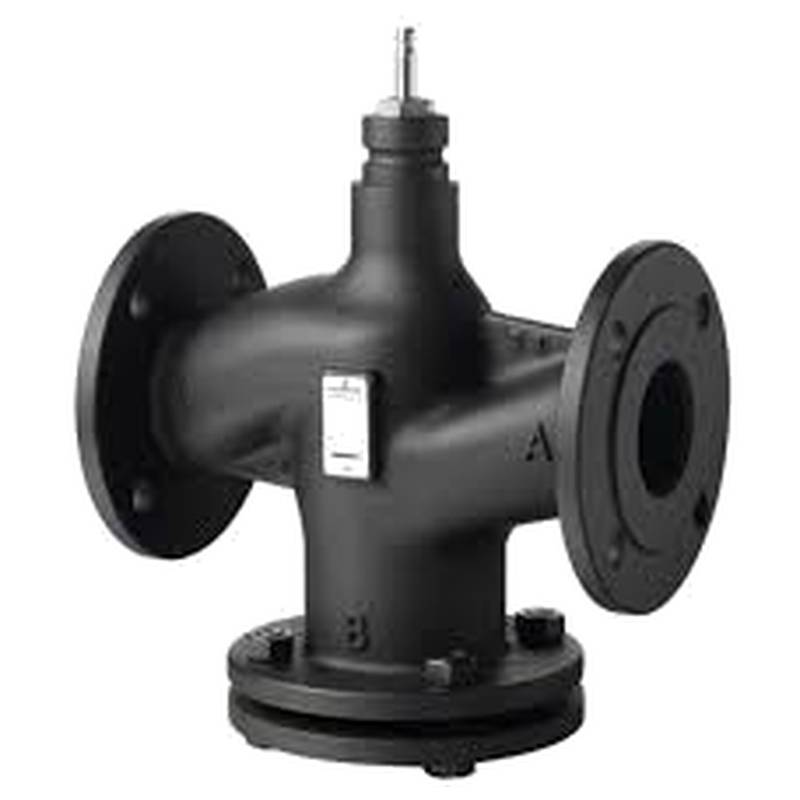
SIEMENS VVF42.80-100C Two-Way Flanged Valve DN80 kvs 100


The SIEMENS VVF42.80-100C is a high-performance two-way flanged valve engineered for precise flow control in demanding industrial applications. This valve boasts a DN80 nominal size and a KVS value of 100, signifying its substantial capacity for managing significant fluid volumes. Its robust construction and advanced design elements ensure reliability, efficiency, and longevity, making it a cornerstone component in various HVAC and building automation systems. The VVF42.80-100C is designed for ease of integration and offers superior control accuracy, minimizing energy waste and optimizing operational performance.
Product Specifications
| Specification | Value |
| :------------ | :---- |
| Product Type | Two-Way Flanged Valve |
| Model Number | VVF42.80-100C |
| Nominal Size (DN) | 80 |
| KVS Value | 100 |
| Connection Type | Flanged |
| Actuator Type | Typically electric or electro-hydraulic (specific to actuator chosen) |
| Material | Cast iron (GGG40) or similar robust material |
| Pressure Rating | PN16 |
| Temperature Range | -10 to 120 °C (typically, depending on seal material) |
| Flow Characteristic | Equal percentage |
Core Features & Market Positioning
The SIEMENS VVF42.80-100C stands out in the industrial valve market due to its exceptional flow control capabilities and robust build. Its equal percentage flow characteristic ensures that the valve's response is linear across its entire range of operation, providing predictable and stable control, which is critical in dynamic industrial processes. This precision minimizes energy consumption and contributes to significant operational cost savings. Positioned as a premium solution, it competes effectively with other high-end industrial valve manufacturers by offering a combination of advanced technology, Siemens' renowned reliability, and long-term durability. The valve's design anticipates integration with sophisticated control systems, aligning with the industry's shift towards intelligent automation and the Industrial Internet of Things (IIoT).
Key Application Scenarios
This versatile two-way flanged valve finds extensive use in closed-loop heating and cooling systems within commercial buildings, district heating networks, and industrial process control. Its capacity to handle high flow rates (KVS 100) makes it ideal for main control points in large HVAC systems, managing the flow of water or other compatible fluids to maintain precise temperature setpoints. Applications include controlling the primary flow in building heating systems, managing chilled water loops in air conditioning plants, and regulating process fluids in manufacturing facilities where accurate temperature and flow regulation are paramount for product quality and process efficiency.
Practical System Integration Guidance
Integrating the SIEMENS VVF42.80-100C into existing or new systems is streamlined due to its standard flanged connections, ensuring compatibility with common piping standards. Proper installation involves ensuring the valve is oriented correctly within the pipeline, typically with the actuator mounted vertically or horizontally, avoiding inverted positions that could trap air or sediment. For optimal performance, it is crucial to select an appropriate Siemens actuator (e.g., electric actuators from the SKP series) that matches the valve's torque requirements and control signal (e.g., 0-10V, 4-20mA). Careful consideration of the system's pressure and temperature ratings against the valve's specifications is essential during the design phase. Commissioning typically involves calibrating the actuator to the valve stroke and ensuring the control signal accurately translates to desired flow rates through the valve.
Operation and Risk Mitigation
Safe and efficient operation of the SIEMENS VVF42.80-100C hinges on adherence to operational guidelines and proactive risk mitigation. Users must ensure the valve is operated within its specified temperature and pressure limits to prevent mechanical failure or seal degradation. Regular inspection for leaks, corrosion, or physical damage is recommended. In the event of actuator malfunction, diagnostic feedback from the actuator and control system should be the primary troubleshooting resource. While specific error codes are actuator-dependent, common issues like loss of control signal, incorrect actuator stroke, or system pressure fluctuations can lead to operational anomalies. Always consult the specific actuator's manual for detailed troubleshooting procedures and recommended corrective actions to maintain system integrity and safety.
Scalability & Long-Term Value
The SIEMENS VVF42.80-100C is designed for long-term value and integration within evolving automation landscapes. Its compatibility with a wide range of Siemens actuators and controllers facilitates seamless integration into existing Building Management Systems (BMS) or SCADA platforms. For enhanced scalability and future-proofing, the valve is well-suited for connection to IIoT platforms, enabling advanced analytics, predictive maintenance, and remote monitoring capabilities. This allows facility managers to optimize system performance, reduce downtime, and adapt to changing operational demands without requiring a complete overhaul of their fluid control infrastructure. The robust construction also ensures a long service life, minimizing the need for premature replacement and contributing to overall operational cost-effectiveness.
Frequently Asked Questions
1. What is the maximum operating pressure for the SIEMENS VVF42.80-100C valve?
The SIEMENS VVF42.80-100C valve is rated for a nominal pressure (PN) of 16 bar. This ensures it can reliably handle typical operating pressures in many industrial and HVAC applications. Exceeding this pressure can lead to valve damage and system failure.
2. Can I use this valve with steam or aggressive chemicals?
This valve is typically designed for water or water-glycol mixtures in HVAC systems. Using it with steam or aggressive chemicals may require specialized seal materials and is generally not recommended without consulting Siemens for specific material compatibility.
3. How do I determine the correct actuator for the VVF42.80-100C valve?
Actuator selection depends on torque requirements, desired stroke time, and control signal type (e.g., 0-10V). Siemens offers various actuators compatible with this valve. Always refer to the valve's technical documentation for specific torque values and compatibility charts.
4. What does the KVS value of 100 signify?
The KVS value represents the flow rate in cubic meters per hour (m³/h) of water at 20°C that will flow through the valve with a pressure drop of 1 bar. A KVS of 100 indicates a high flow capacity, suitable for larger systems.
5. What is the typical temperature range for this valve?
The standard operating temperature range for the SIEMENS VVF42.80-100C valve is generally between -10°C and 120°C. However, the exact range can depend on the specific seal material used in the valve construction.
6. How is the flow characteristic of the VVF42.80-100C valve described?
This valve features an "equal percentage" flow characteristic. This means that for equal increments of valve travel, the flow rate increases by an equal percentage, providing more stable control at lower flow rates.
7. What type of connection does the SIEMENS VVF42.80-100C valve have?
The "F" in the model number VVF42.80-100C typically indicates a flanged connection. This valve utilizes standard flanged ends for secure and reliable integration into piping systems.
8. Is the VVF42.80-100C valve suitable for modulating control?
Yes, the SIEMENS VVF42.80-100C is designed for modulating control applications. When paired with a suitable modulating actuator, it provides precise, continuous adjustment of flow rates.
9. Where can I find the installation manual for the VVF42.80-100C valve?
The installation manual is typically available through Siemens' official website or from authorized distributors. It is crucial to download and review the specific manual for your valve model and actuator.
10. How does the VVF42.80-100C valve contribute to energy efficiency?
Its precise flow control, especially with the equal percentage characteristic, ensures that only the necessary amount of heating or cooling media is used, minimizing energy waste. This leads to reduced energy consumption and operational costs.