











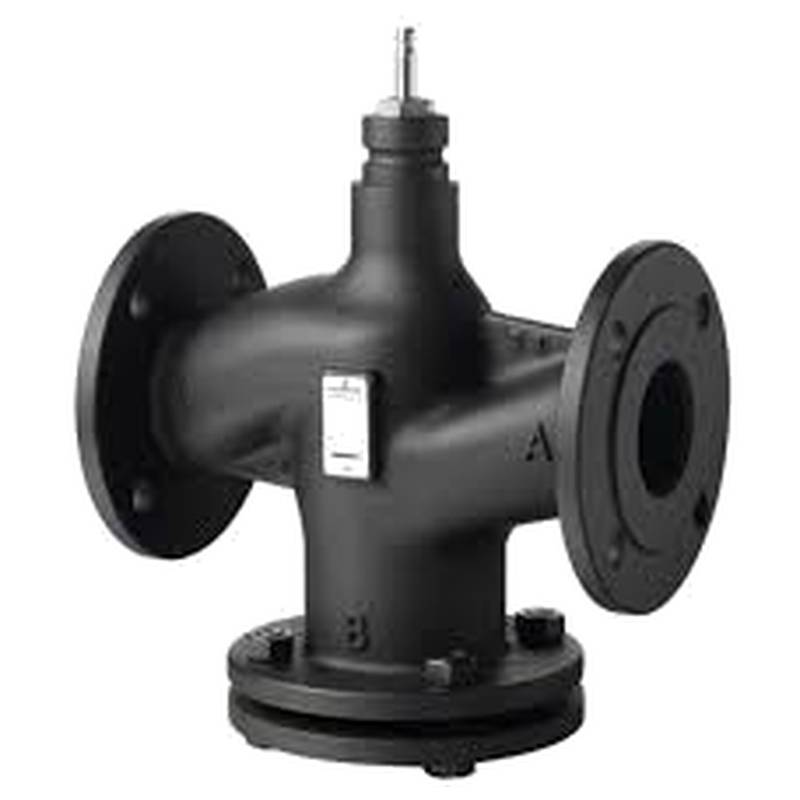
SIEMENS VVF43.125-220K Flanged Two-Way Valve DN125 kvs 220


The SIEMENS VVF43.125-220K is a high-performance flanged two-way control valve designed for demanding industrial applications. With a nominal diameter (DN) of 125 and a KVS value of 220, this valve offers precise flow control and robust construction, making it a superior choice for HVAC systems, district heating networks, and industrial process control. Its key advantages include exceptional sealing capabilities, a wide operating temperature range, and compatibility with various Siemens actuators, ensuring seamless integration and reliable performance.
| Feature | Specification |
|---|---|
| Product Type | Flanged Two-Way Control Valve |
| Model Number | VVF43.125-220K |
| Nominal Diameter (DN) | 125 |
| KVS Value | 220 m³/h |
| Connection Type | Flanged |
| Body Material | Cast Iron (GG25) |
| Seal Material | EPDM |
| Max. Differential Pressure | 160 kPa (for water at 150°C) |
| Temperature Range | -20 to 150°C |
| Actuator Compatibility | Siemens GQD.. / GLD.. series |
Core Features & Market Positioning
The SIEMENS VVF43.125-220K distinguishes itself through its robust cast iron body (GG25) and durable EPDM seals, providing excellent resistance to wear and chemical attack in demanding environments. This valve is engineered for precise flow regulation, minimizing energy waste and optimizing system efficiency in applications where accurate temperature and pressure control are paramount. Its market positioning is firmly within the industrial and commercial building automation sectors, where reliability and long-term operational cost savings are critical factors. The valve's design facilitates easy maintenance and actuator replacement, further enhancing its appeal to system integrators and facility managers seeking dependable, low-maintenance solutions.
Key Application Scenarios
This flanged two-way valve finds extensive use in building services, particularly in controlling the flow of hot water in district heating and cooling systems, as well as large-scale HVAC applications. Its DN125 size and KVS 220 rating make it suitable for managing significant flow rates within central heating plants and industrial process loops. Specific applications include primary and secondary circuit control in heating systems, temperature regulation in air handling units, and process fluid control in manufacturing facilities. The valve's ability to handle varying differential pressures ensures stable operation across a range of system loads.
Practical System Integration Guidance
Integrating the SIEMENS VVF43.125-220K into existing systems is streamlined due to its standard flanged connections, which comply with EN 1092-1 PN16. For optimal performance, it is crucial to select a compatible Siemens actuator, such as the GQD or GLD series, ensuring proper torque and stroke characteristics. Installation should adhere to local piping codes, with adequate support provided to prevent undue stress on the valve body. Commissioning involves verifying actuator travel and programming the control logic via the building management system (BMS) or directly on the actuator, if applicable, to achieve the desired flow regulation profile. Ensure correct valve orientation (flow direction indicated on the body) and a clean piping system to prevent debris from affecting valve seating.
Operation and Risk Mitigation
Safe and efficient operation of the SIEMENS VVF43.125-220K hinges on adhering to its specified operating parameters, particularly the maximum differential pressure of 160 kPa for water at 150°C and the temperature range of -20 to 150°C. Regular inspection for leaks and proper function of the actuator are essential. Potential issues include actuator failure, valve seat leakage, or blockage due to system contaminants. Users should consult the actuator's manual for specific error codes and troubleshooting steps. Preventative maintenance, such as periodic flushing of the system and checking actuator limit switches, can significantly mitigate operational risks and prolong the valve's service life.
Scalability & Long-Term Value
The SIEMENS VVF43.125-220K offers significant long-term value through its compatibility with Siemens' broader automation ecosystem, enabling seamless integration into advanced Building Management Systems (BMS) and Industrial Internet of Things (IIoT) platforms. This compatibility allows for remote monitoring, predictive maintenance, and sophisticated control strategies, enhancing system scalability. As building or process requirements evolve, the valve can be easily integrated into upgraded control architectures or networked with other intelligent devices, ensuring its relevance and maximizing return on investment. Its durable construction and readily available spare parts, such as EPDM seals, further contribute to its long-term operational viability.
FAQs
1. What is the maximum operating pressure for the SIEMENS VVF43.125-220K?
The maximum differential pressure for the SIEMENS VVF43.125-220K is specified as 160 kPa when used with water at temperatures up to 150°C. This parameter is critical for ensuring valve longevity and system stability.
Exceeding this differential pressure can lead to premature wear of internal components and potential sealing failures. Always consult system design specifications to confirm operating pressures align with the valve's capabilities.
Proper system design and pressure regulation are key to preventing over-pressurization and ensuring the safe operation of this control valve.
2. Can the SIEMENS VVF43.125-220K be used with steam?
This specific valve model, the SIEMENS VVF43.125-220K, is designed for water and non-corrosive liquid applications within its specified temperature range. It is not typically recommended for direct steam service.
Using the valve with steam could lead to rapid degradation of the EPDM seals and potential damage to the valve body due to the high temperatures and specific properties of steam.
For steam applications, Siemens offers specialized valves engineered to withstand steam conditions and associated operating pressures.
3. What type of actuator is compatible with the SIEMENS VVF43.125-220K?
The SIEMENS VVF43.125-220K is designed to be compatible with Siemens' GQD.. and GLD.. series of electric actuators. These actuators provide the necessary torque and control signals for accurate valve positioning.
Selecting the correct actuator ensures optimal performance, responsiveness, and longevity of the control valve assembly. The actuator's specifications must match the valve's requirements, including stroke length and thrust.
Always refer to the latest Siemens documentation for the most up-to-date compatibility list and installation guidelines for actuator integration.
4. What is the KVS value and why is it important?
The KVS value of 220 m³/h for the SIEMENS VVF43.125-220K quantifies the maximum flow rate the valve can handle when there is a pressure drop of 1 bar across it. It is a key parameter for sizing control valves in fluid systems.
Understanding the KVS value is crucial for hydraulic balancing and ensuring the valve can deliver the required flow at specific system conditions. Incorrect sizing leads to poor control or system inefficiencies.
Engineers use the KVS value along with other system parameters like flow rate and pressure drop to select the appropriate valve for a given application.
5. How do I install the SIEMENS VVF43.125-220K valve?
Installation requires aligning the valve with the mating flange, ensuring correct flow direction as indicated on the valve body, and using appropriate PN16 flanges and gaskets. Securely fasten bolts in a star pattern to ensure even sealing.
It is vital to ensure the piping is clean and free from debris before installation to prevent damage to the valve seat or internal components. Proper pipe support should also be considered to avoid undue stress on the valve.
Before connecting the actuator, ensure the valve is in a suitable position for mounting and that all electrical connections are made according to the actuator's specific wiring diagram.
6. What is the body material of the SIEMENS VVF43.125-220K?
The body of the SIEMENS VVF43.125-220K is constructed from cast iron, specifically GG25 (also known as EN-JL1040). This material provides good mechanical strength and corrosion resistance for many industrial water applications.
Cast iron is a common choice for industrial valves due to its durability, cost-effectiveness, and ability to withstand moderate pressures and temperatures. It ensures the valve's structural integrity in typical HVAC and process environments.
While robust, cast iron has limitations, particularly concerning impact resistance and susceptibility to certain aggressive chemicals. Always verify material compatibility with the specific fluid being handled.
7. What is the sealing material used in this valve?
The SIEMENS VVF43.125-220K utilizes EPDM (Ethylene Propylene Diene Monomer) for its sealing material. EPDM is known for its excellent resistance to hot water, steam, and various chemicals, making it suitable for HVAC and heating applications.
EPDM seals offer good flexibility and resilience, ensuring tight shut-off and minimizing leakage even under varying operating conditions. They also perform well across a relatively wide temperature range.
It is important to note that EPDM may not be suitable for all fluids, particularly those containing oils or certain aggressive solvents. For such applications, alternative seal materials might be necessary.
8. What is the temperature range for this valve?
The SIEMENS VVF43.125-220K is designed to operate within a temperature range of -20 to 150°C. This broad range allows for flexibility in various heating and cooling applications, including those with significant temperature fluctuations.
Operating the valve outside this specified temperature range can compromise the integrity of the seals and other components, leading to reduced performance or failure. Always confirm the system's operating temperatures align with the valve's capabilities.
The EPDM seals contribute significantly to the valve's ability to perform reliably across this temperature spectrum, offering good thermal stability.
9. Where can I find the technical specifications for the SIEMENS VVF43.125-220K?
Comprehensive technical specifications, including dimensions, performance data, and compatible actuators, are typically found in the official product datasheet or catalog provided by Siemens. This document is usually available on the Siemens building technologies or industrial automation website.
Referencing the official datasheet ensures you have the most accurate and up-to-date information for proper system design, selection, and installation. It will detail all critical parameters, such as KVS values, pressure ratings, and material compositions.
In an industrial setting, maintaining easy access to these technical documents is crucial for maintenance, troubleshooting, and any future system modifications or upgrades involving the SIEMENS VVF43.125-220K.
10. What are common troubleshooting issues with this valve?
Common issues can include the valve not closing completely (leakage), insufficient flow, or actuator not responding. Leakage might be due to debris on the seat or worn seals, while flow problems could stem from incorrect sizing or system pressure issues.
Actuator issues, such as a lack of response, often point to electrical connection problems, incorrect programming, or a faulty actuator itself. Always check wiring and control signals before suspecting the valve body.
Troubleshooting often involves isolating the valve, checking for obstructions, verifying actuator operation independently, and confirming that system parameters like pressure and temperature are within the valve's design limits.