











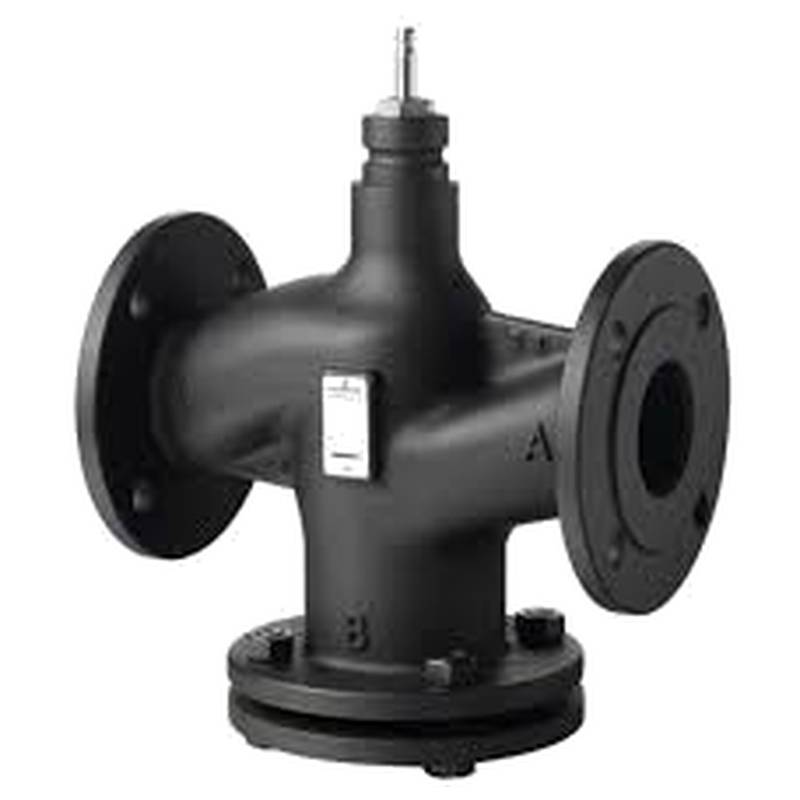
SIEMENS VVF43.250-630K Two-Way Flanged Globe Valve DN250


The SIEMENS VVF43.250-630K Two-Way Flanged Globe Valve DN250 stands as a robust and precise control valve engineered for demanding industrial fluid applications. Its core advantages lie in its exceptional control accuracy, durable construction, and seamless integration capabilities within complex automation systems. Key features include a high-performance globe body design, advanced sealing technology for leak-free operation, and compatibility with a wide range of actuators and control systems. Technically, this valve boasts a nominal diameter (DN) of 250, a Kvs value of 630 m³/h, and is designed for flanged connections, ensuring reliable and secure installation in critical pipelines.
Product Specifications
| Parameter | Specification |
| :----------------- | :---------------------------------------------- |
| Product Type | Two-Way Flanged Globe Valve |
| Manufacturer | SIEMENS |
| Model Number | VVF43.250-630K |
| Nominal Diameter | DN250 |
| Kvs Value | 630 m³/h |
| Connection Type | Flanged |
| Valve Body Material| Cast Iron (GGG40) |
| Seat Material | EPDM |
| Stem Material | Stainless Steel |
| Max. Differential Pressure | 250 kPa |
| Working Temperature | -10...+120 °C |
| Actuator Mounting | Direct Mounting (with adapter) |
| Body Design | Globe |
Core Features & Market Positioning
The SIEMENS VVF43.250-630K distinguishes itself through its superior flow characteristic linearity, a critical factor for precise process control in sectors like HVAC, district heating, and industrial cooling. Its cast iron body (GGG40) provides excellent resistance to corrosion and mechanical stress, making it a long-term investment for plant operators. The valve's design prioritizes minimal leakage through its EPDM seat and stem sealing, directly contributing to energy efficiency and reduced environmental impact. In the competitive landscape of industrial valves, SIEMENS' VVF43 series is recognized for its reliability, ease of maintenance, and integration flexibility, often outperforming competitors in demanding applications requiring precise flow regulation and long service life.
Key Application Scenarios
This SIEMENS VVF43.250-630K valve is ideally suited for modulating control of water in closed and open circuits. Its DN250 size and Kvs of 630 make it a prime candidate for large-scale HVAC systems in commercial buildings, industrial process cooling loops, and district heating networks where precise temperature control is paramount. Users commonly seek this valve for applications involving the regulation of heating and cooling media, ensuring optimal performance of boilers, chillers, and heat exchangers. The flanged connection simplifies installation in existing pipework, a significant advantage for retrofitting or expanding industrial facilities.
Practical System Integration Guidance
Integrating the SIEMENS VVF43.250-630K into an automation system is streamlined through its direct mounting capability with compatible SIEMENS actuators. For optimal performance, ensure the actuator selected matches the valve's torque requirements and control signal (e.g., 0-10 V, 4-20 mA). Proper alignment during flanged installation is crucial; use appropriate gaskets and follow torque specifications for the ANSI/ASME or DIN flange standards to prevent leaks and mechanical stress. Commissioning typically involves setting actuator stroke limits and calibrating the control signal to ensure accurate positioning throughout the valve's operational range.
Operation and Risk Mitigation
Safe operation of the SIEMENS VVF43.250-630K relies on adherence to its specified operating parameters, particularly regarding pressure and temperature limits (max. 250 kPa differential pressure, -10 to +120 °C). Regular inspection of the valve body, stem, and actuator for signs of wear or leakage is recommended. If the valve exhibits erratic control, verify the actuator's functionality and the integrity of the control signal. A common troubleshooting step involves checking for obstructions within the valve body, which can lead to reduced flow or inaccurate positioning. Always ensure proper lockout/tagout procedures are followed during any maintenance.
Scalability & Long-Term Value
The SIEMENS VVF43.250-630K offers significant long-term value through its robust construction and compatibility with SIEMENS' broader automation portfolio. Its integration potential with digital platforms, including IIoT solutions, allows for remote monitoring, predictive maintenance, and performance optimization. This valve can be a key component in upgrading older control systems to more intelligent, data-driven operations. The availability of spare parts and SIEMENS' established service network ensures continued operational efficiency and a reduced total cost of ownership over the valve's extended lifespan, supporting scalable plant expansions and upgrades.
FAQs
What is the primary function of the SIEMENS VVF43.250-630K valve?
This two-way flanged globe valve is designed for precise modulating control of fluid flow. It excels in regulating water in both open and closed industrial circuits. Its main purpose is to ensure accurate temperature and flow management within process systems.
Its Kvs value of 630 m³/h signifies a high flow capacity, suitable for larger pipelines and significant fluid volumes. The globe design facilitates accurate throttling, making it ideal for applications demanding fine control. It is commonly employed in HVAC and district heating systems.
The valve's robust construction with a cast iron body and stainless steel stem ensures durability and reliability in demanding industrial environments. It is engineered to provide consistent performance over its operational life.
What are the key technical specifications of the SIEMENS VVF43.250-630K?
The valve features a nominal diameter of DN250, indicating its substantial size for industrial applications. Its Kvs value is rated at 630 m³/h, defining its maximum flow rate under specific conditions.
It is a two-way flanged globe valve, built for reliable connection and precise flow regulation. The maximum differential pressure it can withstand is 250 kPa, and it operates within a temperature range of -10 to +120 °C.
The body is constructed from GGG40 cast iron, the seat from EPDM, and the stem from stainless steel, providing excellent material integrity and resistance to common industrial media.
How is the SIEMENS VVF43.250-630K valve typically installed?
Installation involves connecting the valve to existing pipework using its flanged ends. Proper gasket selection and adherence to specified bolt torque values are crucial for a secure, leak-free seal.
The valve is designed for direct mounting of compatible SIEMENS actuators, simplifying the mechanical connection. Ensure correct orientation and alignment to prevent strain on the valve body and actuator.
Before commissioning, it's vital to flush the pipeline to remove any debris that could damage the valve seat or internals. Verify all connections are tight and that the actuator is correctly positioned on the valve stem.
What are common applications for this specific SIEMENS valve?
This valve is widely used in building automation and industrial processes for controlling heating and cooling media. It is particularly effective in large-scale HVAC systems and district heating networks.
Its DN250 size and high Kvs rating make it suitable for regulating flow to major equipment like boilers, chillers, and heat exchangers. It ensures precise temperature control for optimized energy efficiency.
Other applications include industrial cooling loops, process control where accurate fluid modulation is required, and any system needing reliable flow regulation in a DN250 flanged line.
What maintenance is required for the SIEMENS VVF43.250-630K?
Regular visual inspections for leaks around the stem and flanges are essential. Check for any external corrosion or damage to the valve body and actuator.
Periodically verify actuator performance and control signal accuracy to ensure correct valve positioning. Listen for unusual noises during operation, which could indicate internal issues.
Depending on the fluid's cleanliness and operating conditions, periodic internal inspection or cleaning might be necessary. Always follow safety protocols, including lockout/tagout, during any maintenance activities.
Can this valve be integrated with digital control systems or IIoT platforms?
Yes, the SIEMENS VVF43.250-630K is designed for integration with modern automation systems. Its compatibility with SIEMENS actuators allows for connection to digital controllers.
By using appropriate gateways and communication protocols, the valve's operational data can be fed into IIoT platforms. This enables remote monitoring, diagnostics, and advanced analytics for predictive maintenance.
This integration supports smart building management and Industry 4.0 initiatives, offering enhanced control, efficiency, and data-driven decision-making for plant operations.
What is the Kvs value, and why is it important for this valve?
The Kvs value (flow coefficient) represents the volume of water in cubic meters per hour that flows through the valve with a pressure drop of 1 bar. A Kvs of 630 m³/h signifies a high flow capacity for this DN250 valve.
This parameter is crucial for sizing the valve correctly within a system. It allows engineers to calculate the expected flow rate at different pressure drops, ensuring the valve meets the system's demand.
Accurate Kvs data is vital for achieving precise flow control. It enables the control system to position the valve correctly to maintain desired flow rates and temperatures efficiently.
What materials are used in the construction of the SIEMENS VVF43.250-630K?
The valve body is constructed from GGG40 cast iron, known for its strength and resistance to corrosion, suitable for a wide range of industrial fluids. The seat is made of EPDM (Ethylene Propylene Diene Monomer) rubber.
EPDM provides excellent sealing properties and good resistance to water and many other common industrial media. The stem is manufactured from stainless steel, offering durability and resistance to wear and corrosion.
These material choices ensure the valve's longevity and reliable performance in demanding operational environments, minimizing the risk of premature failure.
What is the maximum operating pressure for this valve?
The SIEMENS VVF43.250-630K valve is designed to operate with a maximum differential pressure of 250 kPa. This specification is critical for ensuring the valve's structural integrity and preventing leakage.
Exceeding this maximum differential pressure can lead to premature wear of internal components, particularly the seat and plug, and potentially cause valve body damage or seal failure.
Operators must ensure that the system's operating conditions remain within this specified limit to guarantee safe and reliable performance and to maintain the valve's warranty.
How does the globe valve design benefit this industrial application?
The globe valve design inherently offers excellent throttling characteristics, allowing for precise flow regulation over a wide range of positions. This is crucial for applications requiring accurate control.
Compared to other valve types, globe valves provide a more linear flow characteristic, meaning the flow rate changes proportionally to the valve stem's travel. This simplifies control system tuning.
Furthermore, the globe design, with its internal structure, can better withstand higher differential pressures across the seat, contributing to its suitability for demanding process control tasks.