











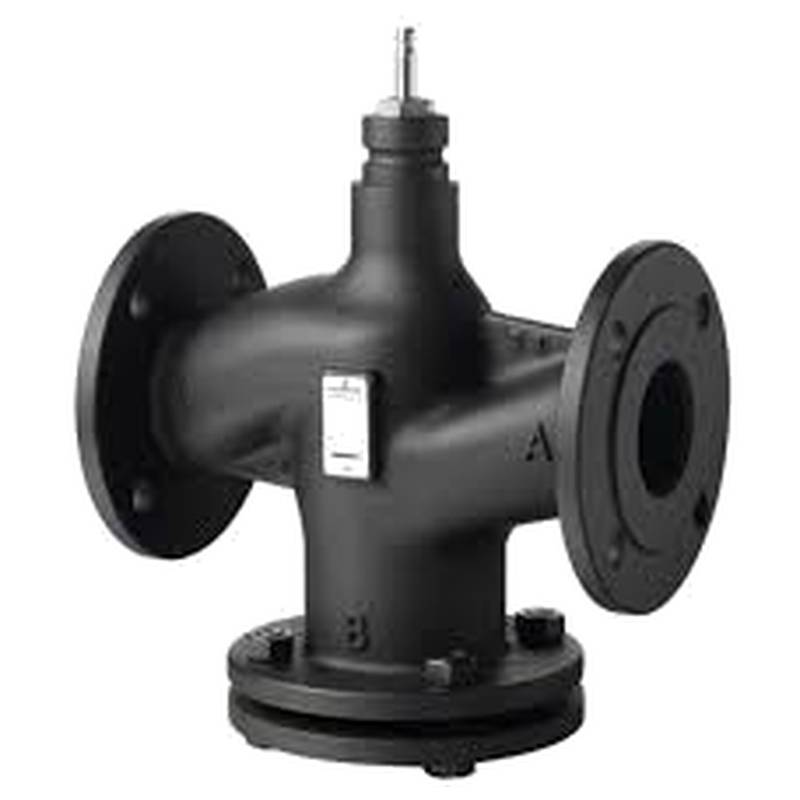
SIEMENS VVF53.100-160 Two-Way Valve DN100 kvs 160


The SIEMENS VVF53.100-160 is a high-performance two-way control valve designed for demanding industrial applications. This DN100 valve boasts a kvs of 160, making it suitable for controlling significant flow rates with precision. Its robust construction and advanced Siemens engineering ensure reliability and longevity in challenging environments. Key advantages include its exceptional control accuracy, durable materials for extended service life, and seamless integration into automated process control systems. The VVF53.100-160 is engineered for optimal performance in HVAC, industrial heating, and cooling circuits, delivering efficient and stable fluid management.
Product Specifications
| Parameter | Specification |
| :------------------ | :-------------------------------- |
| Product Type | Two-Way Control Valve |
| Manufacturer | SIEMENS |
| Model | VVF53.100-160 |
| Nominal Diameter (DN) | 100 |
| Flow Coefficient (kvs)| 160 m³/h |
| Connection Size | DN100 |
| Connection Type | Flanged |
| Material | Cast Iron (GGG40) |
| Sealing Material | EPDM |
| Max. Differential Pressure | 160 kPa (1.6 bar) |
| Max. Working Pressure | 16 bar |
| Operating Temperature | -10…120 °C |
| Actuator Type | Electric |
| Control Signal | 0…10 V, 2…10 V, 4…20 mA |
| Stroke | 40 mm |
Core Features & Market Positioning
The SIEMENS VVF53.100-160 distinguishes itself through its superior design for precise flow regulation in large-scale systems. Its robust cast iron body (GGG40) and EPDM sealing ensure compatibility with a wide range of fluids and offer excellent resistance to wear and tear, positioning it as a reliable choice for continuous operation. The valve's compatibility with various electronic actuators and control signals (0-10V, 2-10V, 4-20mA) provides significant flexibility for integration into diverse control architectures. This flexibility, coupled with its high kvs value, makes it a preferred component for applications where precise temperature and flow control are paramount, offering a competitive edge over less capable valve solutions.
Key Application Scenarios
This SIEMENS two-way valve finds critical application in large-scale HVAC systems for commercial buildings, controlling chilled water and hot water flow to air handling units and terminal units. In industrial process control, it's employed in heating and cooling circuits for temperature regulation of machinery, reactors, and heat exchangers, where accurate process parameters are essential. District heating and cooling networks also benefit from its robust performance, managing flow distribution and maintaining desired temperature levels across extensive distribution systems. Its capability to handle substantial flow rates (kvs 160) makes it ideal for applications where efficient energy management and precise environmental control are primary objectives.
Practical System Integration Guidance
Integrating the SIEMENS VVF53.100-160 involves careful consideration of its flanged connection, ensuring proper gasket selection and bolt torque for a leak-free seal according to DN100 standards. The valve is designed to work with a range of SIEMENS electro-mechanical or electro-hydraulic actuators; ensure the chosen actuator's stroke (40 mm) and force characteristics match the valve's requirements. Electrical connections for the actuator should follow the specific wiring diagrams provided by SIEMENS, paying close attention to the control signal type (e.g., 0-10 V) and power supply. Proper commissioning includes calibrating the actuator's position feedback to ensure accurate valve opening and closing corresponding to the control signal, thereby optimizing process control.
Operation and Risk Mitigation
Proper operation of the SIEMENS VVF53.100-160 requires adherence to its specified operating temperature range (-10 to 120 °C) and maximum working pressure (16 bar) to prevent component failure. Avoid exceeding the maximum differential pressure of 160 kPa to maintain seating integrity and prevent premature wear. Regular visual inspection for leaks at the flange connections and around the stem packing is crucial. In case of actuator failure or loss of control signal, the valve will typically move to a pre-defined fail-safe position, which should be accounted for in system design to mitigate potential process disruption or safety hazards.
Scalability & Long-Term Value
The SIEMENS VVF53.100-160 offers excellent long-term value due to its robust construction and compatibility with SIEMENS' extensive automation ecosystem. Its modular design allows for easy replacement of actuators or seals if required, extending its operational lifespan. For facilities looking to upgrade to advanced digital control, this valve's compatibility with standard analog and digital control signals facilitates integration into Building Management Systems (BMS) or SCADA platforms, supporting the transition towards Industry 4.0 initiatives and IIoT-enabled smart operations without requiring a complete valve replacement.
Frequently Asked Questions
What is the maximum flow rate the SIEMENS VVF53.100-160 can handle?
The SIEMENS VVF53.100-160 has a kvs value of 160 m³/h. This indicates its capacity for controlling substantial fluid volumes. This high flow coefficient is critical for systems requiring rapid response.
What types of actuators are compatible with the VVF53.100-160 valve?
This valve is designed for compatibility with SIEMENS electric actuators. It supports various control signals, including 0-10 V, 2-10 V, and 4-20 mA. Ensure the actuator's stroke matches the valve's 40 mm requirement.
What is the recommended operating temperature range for this valve?
The VVF53.100-160 is rated for operation between -10 °C and 120 °C. Operating outside this range can compromise sealing materials and valve performance. Always verify fluid compatibility with EPDM seals.
Can this valve be used in high-pressure systems?
The valve has a maximum working pressure of 16 bar. However, the maximum differential pressure it can withstand across the seat is 160 kPa (1.6 bar). Exceeding differential pressure can lead to leakage.
What material is the body of the SIEMENS VVF53.100-160 made of?
The valve body is constructed from GGG40 cast iron. This material provides durability and good resistance to corrosion in many industrial environments. It is suitable for standard water applications.
How is the SIEMENS VVF53.100-160 connected to piping?
The VVF53.100-160 features a flanged connection for DN100 piping. Proper flange sealing using appropriate gaskets and bolting is essential for installation. Always follow manufacturer installation guidelines.
What is the purpose of the kvs value in this valve specification?
The kvs value quantifies the flow rate of water in m³/h at a pressure drop of 1 bar across the valve. A kvs of 160 indicates a high flow capacity. It's crucial for hydraulic calculations.
What are the primary industries where this valve is typically used?
This valve is commonly used in HVAC systems for commercial buildings and industrial process control. It is also applied in district heating and cooling networks. Its capacity suits large-scale applications.
What is the sealing material used in the VVF53.100-160?
The valve utilizes EPDM for its sealing material. EPDM is known for its good resistance to hot water and steam. It's important to check chemical compatibility for specific process fluids.
How does this valve contribute to energy efficiency in a system?
Precise control offered by the VVF53.100-160 optimizes fluid flow, reducing energy waste. Accurate temperature management leads to more efficient heating and cooling operations. This reduces operational costs.