











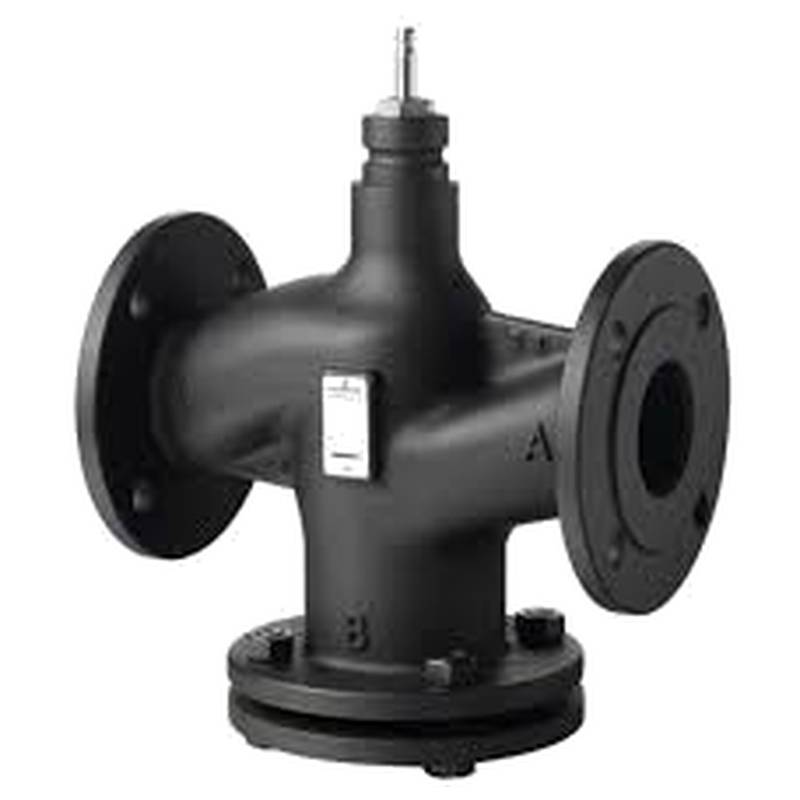
SIEMENS VVF53.150-315K Two-Way Globe Valve DN150 kvs 315


The SIEMENS VVF53.150-315K Two-Way Globe Valve is a robust and precise control valve engineered for demanding industrial applications. This DN150 valve boasts a high KVS value of 315, signifying its exceptional flow handling capacity. Its core advantages lie in its durable construction, superior sealing capabilities, and the precise control offered by its characteristic diaphragm actuator. Key technical parameters include a nominal size of DN150, a KVS value of 315 m³/h, and a connection type typically flanged, designed for reliable integration into complex piping systems. This valve is a critical component for maintaining optimal flow and temperature in HVAC, industrial process control, and district heating networks.
Product Specifications
| Feature | Specification |
| :--------------------- | :-------------------------------------------------- |
| Product Type | Two-Way Globe Valve |
| Manufacturer | SIEMENS |
| Model Number | VVF53.150-315K |
| Nominal Size (DN) | 150 |
| KVS Value | 315 m³/h |
| Connection Type | Flanged (typically according to EN 1092-1 PN16) |
| Actuator Type | Diaphragm Actuator (typically pneumatic) |
| Material | Cast Iron (body), Stainless Steel (internals) |
| Temperature Range | -20 to 150 °C (depending on actuator and medium) |
| Pressure Rating | PN16 (typical for flanged connection) |
| Control Characteristic | Equal percentage (typically) |
Core Features & Market Positioning
The SIEMENS VVF53.150-315K distinguishes itself through its advanced design, enabling superior flow regulation and longevity. Its equal percentage characteristic ensures precise control across a wide range of flow rates, a critical factor in maintaining stable process conditions and energy efficiency. The robust cast iron body and stainless steel internals provide excellent resistance to corrosion and wear, positioning it as a high-value solution for challenging industrial environments where reliability is paramount. Compared to simpler valve types, its design facilitates maintenance and offers a longer service life, reducing total cost of ownership for end-users.
Key Application Scenarios
This globe valve finds extensive use in building automation and industrial process control systems, particularly in applications requiring high flow rates and precise regulation. It is a cornerstone in large-scale HVAC systems for controlling the flow of chilled or hot water in heating and cooling coils. In district heating networks, the VVF53.150-315K plays a vital role in distributing thermal energy efficiently to multiple consumers. Furthermore, it is employed in various industrial processes where accurate control of liquid or gas flow is essential for product quality and operational safety.
Practical System Integration Guidance
Seamless integration of the SIEMENS VVF53.150-315K into existing control systems is facilitated by its standard flanged connections and compatibility with common pneumatic actuators. For pneumatic control, ensure a clean and dry compressed air supply meeting the actuator's specifications. Valve commissioning typically involves setting actuator stroke limits and verifying fail-safe positions. For advanced digital integration, consider pairing the valve with Siemens controllers or compatible Building Management Systems (BMS) that can interpret the valve's position feedback. Proper pipe alignment and support during installation are crucial to prevent undue stress on the valve body and flanges.
Operation and Risk Mitigation
Safe and efficient operation of the SIEMENS VVF53.150-315K relies on adherence to specified operating parameters and regular maintenance. Users should consult the product manual for detailed operating procedures and safety precautions. Common operational issues can include actuator malfunction due to air supply problems or control signal discrepancies. Risk mitigation involves implementing a preventive maintenance schedule that includes checking actuator performance, valve sealing, and control signal integrity. In case of unexpected behavior, immediate cessation of operation and consultation with qualified service personnel are recommended to prevent potential damage or safety hazards.
Scalability & Long-Term Value
The SIEMENS VVF53.150-315K offers significant long-term value through its inherent durability and compatibility with evolving control technologies. Its modular design allows for potential upgrades or replacements of actuators without necessitating a full valve overhaul, enhancing adaptability to new control strategies or performance requirements. Integration with Industrial Internet of Things (IIoT) platforms is achievable by incorporating position transmitters or feedback devices, enabling remote monitoring, predictive maintenance, and advanced data analytics. This forward-looking design ensures the valve remains a relevant and efficient component within smart industrial and building management ecosystems for years to come.
FAQs
What is the primary function of the SIEMENS VVF53.150-315K?
The SIEMENS VVF53.150-315K is a two-way globe valve designed for precise flow control in industrial and HVAC applications. It regulates the volume of liquids or gases passing through a pipe.
Its high KVS value of 315 m³/h indicates it can handle significant flow rates. This makes it suitable for large-scale systems like district heating or major building cooling circuits.
The valve's robust construction ensures reliability and longevity, minimizing downtime and maintenance costs in demanding operational environments.
How do I install the SIEMENS VVF53.150-315K globe valve?
Installation requires careful alignment of the valve with the piping system, ensuring the flow direction arrow on the body is correctly oriented. The flanged connections must be properly gasketed and bolted according to EN standards.
Ensure the valve is isolated and depressurized before any installation work begins. Mechanical supports for the piping should be adequate to prevent stress on the valve body and flanges.
After installation, verify all connections are secure and leak-free. Connect the actuator, ensuring proper air supply and signal connections as per the actuator's manual.
What are the typical applications for a DN150 globe valve with a KVS of 315?
A DN150 valve with a KVS of 315 is ideal for high-capacity flow control in industrial processes. This includes managing large volumes of water in district heating or cooling plants.
It is commonly used in central HVAC systems for large commercial buildings, controlling flow to air handling units or large terminal units. Its precise control is vital for maintaining comfortable indoor environments.
Other applications include chemical processing, power generation, and water treatment plants where large flow rates require accurate regulation for optimal performance and safety.
What type of actuator is typically used with the SIEMENS VVF53.150-315K?
The SIEMENS VVF53.150-315K is typically actuated by a pneumatic diaphragm actuator. These actuators provide the necessary force to operate the valve effectively.
These pneumatic actuators offer precise positioning capabilities, crucial for the equal percentage control characteristic of the VVF53 series. They respond to control signals from a building management system or process controller.
Electric actuators can also be compatible depending on the specific model and system requirements, offering alternative control solutions for certain installations.
How can I ensure the longevity of my SIEMENS VVF53.150-315K valve?
Regular preventive maintenance is key to the longevity of the VVF53.150-315K. This includes periodic inspection of the valve body, internals, and actuator.
Ensure the medium flowing through the valve meets the specified operating conditions regarding temperature, pressure, and purity. Contaminants can accelerate wear.
Regularly check and maintain the actuator's air supply if pneumatic, ensuring it is clean, dry, and at the correct pressure to prevent operational issues.
What is the significance of the KVS value for this valve?
The KVS value, 315 m³/h, represents the volume of water in cubic meters that will flow through the valve per hour at a pressure drop of 1 bar. A higher KVS indicates a greater flow capacity.
This specific KVS value signifies that the SIEMENS VVF53.150-315K is designed for applications requiring substantial fluid throughput. It's crucial for accurately sizing the valve for optimal system performance.
Understanding the KVS value is essential for engineers to match the valve's capacity to the system's demand, ensuring efficient operation and preventing under- or over-sizing.
What are the main advantages of using a globe valve for flow control?
Globe valves offer excellent throttling and control capabilities due to their design, which forces flow to change direction. This precise control is vital for maintaining desired flow rates.
They provide superior sealing capabilities, minimizing leakage when closed compared to some other valve types. This is critical for system efficiency and safety.
Globe valves are also generally robust and can withstand high pressures and temperatures, making them suitable for a wide range of industrial applications.
Is the SIEMENS VVF53.150-315K compatible with digital control systems?
Yes, the valve can be integrated into digital control systems. While it primarily uses pneumatic actuation, feedback devices can be added.
Position transmitters can be fitted to provide real-time valve position data to a Building Management System (BMS) or SCADA. This allows for remote monitoring and advanced control strategies.
This compatibility enables integration into Industrial Internet of Things (IIoT) ecosystems, facilitating data analytics and predictive maintenance for enhanced operational efficiency.
What maintenance is required for the SIEMENS VVF53.150-315K?
Routine maintenance should include visual inspections for leaks or external damage. The actuator's air supply lines should be checked for proper function and cleanliness.
Periodically, especially in systems with potential for debris, the valve internals may require inspection and cleaning. Actuator stroke and response should be tested.
Consult the official SIEMENS maintenance guidelines for specific intervals and procedures. Proper maintenance ensures optimal performance and extends the valve's service life.
How does the equal percentage control characteristic benefit the application?
An equal percentage characteristic means that the flow rate changes by a fixed percentage of the maximum flow for each equal increment of stem movement. This provides stable control across a wide range of valve openings.
This characteristic is highly beneficial for maintaining precise control over variable loads, common in HVAC systems where heating or cooling demand fluctuates. It prevents over-shooting or instability.
It ensures that the valve performs predictably, allowing for accurate system balancing and efficient operation, regardless of whether the valve is nearly closed or nearly fully open.