











SIEMENS VVF53.15-2 Two-Way Valve DN15 kvs 2.0 Standard


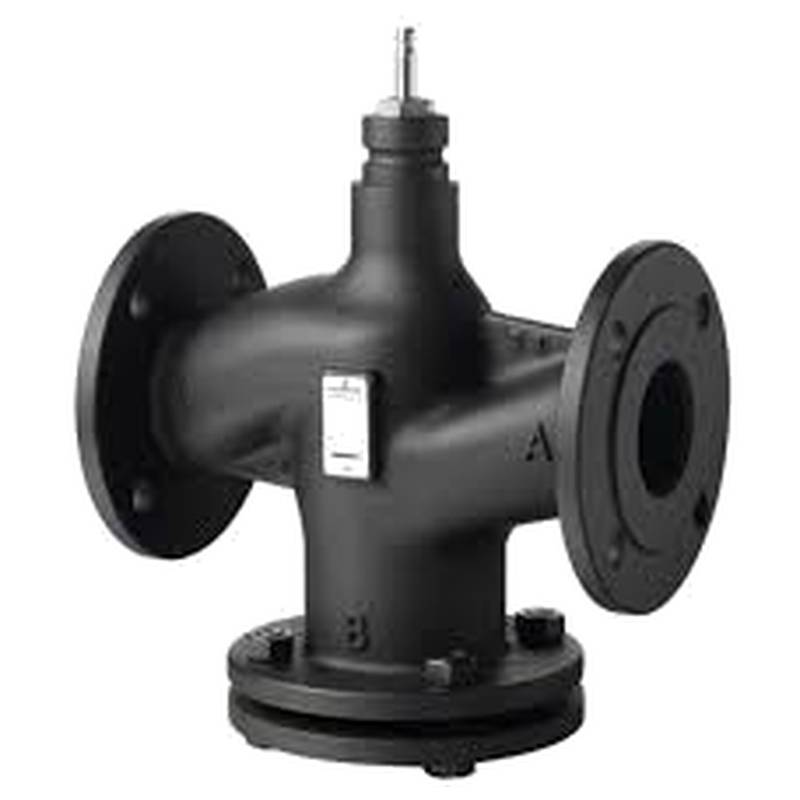
The Siemens VVF53.15-2 DN15 kvs 2.0 Standard is a high-performance two-way seat valve designed for precise fluid control in demanding industrial and HVAC applications. This robust valve offers a nominal pressure rating of PN 25 and operates across a wide temperature range from -20°C to 220°C. Its durable construction, featuring a nodular cast iron body and stainless steel trim, ensures longevity and reliability in challenging environments. With a flow coefficient (kvs) of 2.0 m³/h at DN15, it provides excellent control accuracy for various media, including water, water with antifreeze additives, brine, saturated, and superheated steam, provided media compatibility and permissible temperature ranges are observed. The VVF53.15-2 is designed for seamless integration with Siemens electro-motoric and electro-hydraulic actuators, facilitating automated system control.
Product Specifications
| Parameter | Specification |
| :----------------------- | :------------------------------------------------------------------------------ |
| Product Name | SIEMENS VVF53.15-2 Two-Way Valve |
| Valve Type | 2-port seat valve |
| Connection Type | Flanged |
| Nominal Diameter (DN) | 15 |
| Flow Coefficient (kvs) | 2.0 m³/h |
| Nominal Pressure (PN) | 25 |
| Temperature Range | -20°C to 220°C |
| Body Material | Nodular cast iron (EN-GJS-400-18-LT or higher) |
| Trim Material | Stainless steel |
| Actuator Compatibility | Electro-motoric (SAX.., SAV..) and electro-hydraulic actuators (SKD.., SKB.., SKC..) |
| Application Media | Water, water with antifreeze, brine, steam |
| Differential Pressure | Up to 2500 kPa (max permissible) |
| Stroke | 20 mm (for DN up to 50) |
Core Features & Market Positioning
The Siemens VVF53.15-2 stands out in the market due to its exceptional durability and wide operating temperature range, making it a reliable choice for critical applications where failure is not an option. Its precise flow control capabilities, characterized by a kvs of 2.0, are crucial for maintaining optimal system performance and energy efficiency in HVAC and industrial processes. Compared to standard control valves, the VVF53.15-2 offers superior material quality and engineering, positioning it as a premium component for systems demanding high reliability and long service life. Its compatibility with a broad spectrum of Siemens actuators further enhances its appeal, allowing for flexible and advanced automation solutions.
Key Application Scenarios
This versatile two-way valve finds extensive application in various sectors. It is a primary component in boiler plants, district heating systems, and refrigeration plants, where precise temperature and flow regulation are paramount. In HVAC systems, it is integral to air handling units (AHUs) and heating groups, ensuring comfort and efficiency. The Siemens VVF53.15-2 is also utilized in cooling devices and cooling towers. Its robust design makes it suitable for both open and closed hydraulic circuits, serving effectively as either a control or a shut-off valve.
Practical System Integration Guidance
Integrating the Siemens VVF53.15-2 into existing systems is streamlined due to its standard flanged connections, compatible with flange type 21 and design B. Proper installation requires ensuring that the actuator is mechanically connected to the valve, with a rigid connection between the valve stem and actuator stem in all positions. For optimal performance and longevity, it is crucial to observe compatibility between the valve and the selected Siemens actuator (e.g., SAX.., SAV.., SKD.., SKB.., SKC.. types). When operating at media temperatures below -5°C and with spindle heating, the stem sealing gland may require replacement; ensure the correct replacement gland is ordered if this condition is met. Referencing the product datasheet is recommended for detailed installation and connection terminal information.
Operation and Risk Mitigation
The VVF53.15-2 operates reliably within its specified parameters. The primary risk involves exceeding the maximum permissible differential pressure (Δpmax), which can affect the valve's closing security and overall functionality. It is imperative to operate the valve within its stated pressure and temperature limits to prevent damage or failure. The valve is designed for maintenance-free operation. In the event of a fault, troubleshooting typically involves verifying actuator-valve communication, checking for mechanical obstructions, and ensuring correct electrical signals. Specific fault codes are generally associated with the actuator rather than the valve itself. Always ensure proper handling and installation procedures are followed to mitigate operational risks.
Scalability & Long-Term Value
The Siemens VVF53.15-2 is part of a broader series of VVF53 valves, offering scalability through various DN sizes and kvs ratings, allowing systems to be designed or upgraded to meet evolving flow requirements. Its compatibility with a range of Siemens actuators supports integration into advanced building management systems (BMS) and Industrial Internet of Things (IIoT) platforms. This interoperability ensures that the valve can be a part of intelligent, connected environments, contributing to optimized energy management and predictive maintenance strategies. The inherent durability and Siemens' commitment to product development ensure long-term value and reliable performance throughout the system's lifecycle.
Frequently Asked Questions (FAQs)
Q1: What media can the Siemens VVF53.15-2 valve handle?
The Siemens VVF53.15-2 valve is engineered to handle a variety of industrial fluids with precision. This includes standard water, as well as water with antifreeze additives, commonly found in heating and cooling systems. It is also suitable for brine solutions, which are often used in refrigeration applications.
Furthermore, this versatile valve can effectively manage saturated and superheated steam, making it applicable in a broader range of industrial processes where high temperatures are present. However, it is crucial to consult the specific Siemens catalogue sheet for detailed media compatibility and to ensure the operating temperatures remain within the permissible range for each fluid.
The valve's construction, with its nodular cast iron body and stainless steel trim, provides the necessary durability to withstand the stresses associated with these different media. Proper selection based on detailed media and temperature specifications is key to ensuring optimal performance and longevity.
Q2: What is the maximum operating pressure for the Siemens VVF53.15-2?
The Siemens VVF53.15-2 valve is rated for a nominal pressure of PN 25, which is equivalent to 25 bar or approximately 362.5 psi. This rating indicates the standard pressure the valve can safely withstand under normal operating conditions. The valve's specifications also detail a maximum permissible differential pressure (Δpmax) and a maximum closing pressure (Δps) for different configurations and applications.
For instance, specific models within the VVF53 series show maximum permissible differential pressures reaching up to 2500 kPa for certain configurations. It is essential to consult the specific datasheet for the VVF53.15-2 model to identify the precise maximum allowable differential pressure and closing pressure values. Exceeding these limits can compromise the valve's integrity and operational effectiveness.
Adhering to these pressure ratings is critical for ensuring safe operation, preventing leaks, and maintaining the valve's performance over its intended lifespan. Always ensure your system's operating pressures remain well within the specified limits provided by Siemens.
Q3: What are the typical applications for the Siemens VVF53.15-2 valve?
This Siemens valve is predominantly utilized in HVAC systems for precise temperature and flow control. It is commonly found in air handling units (AHUs) and heating groups within commercial and industrial buildings. Its robust design also makes it suitable for more demanding applications in industrial settings.
The VVF53.15-2 is a key component in boiler plants, district heating networks, and refrigeration systems, where consistent and reliable fluid regulation is essential. Its application extends to cooling devices and cooling towers, contributing to efficient thermal management.
Beyond these core areas, the valve serves effectively as either a control or a shut-off valve in both open and closed hydraulic circuits across various industrial processes. Its versatility allows it to adapt to different system requirements.
Q4: Can the Siemens VVF53.15-2 valve be used with steam?
Yes, the Siemens VVF53.15-2 valve is designed to handle saturated and superheated steam, offering a broad operational capability. This feature expands its applicability in various industrial processes beyond typical HVAC water systems.
When using the valve with steam, it is important to consult the specific Siemens catalogue sheet for detailed information on media compatibility and the permissible temperature ranges. Ensuring these parameters are met is crucial for safe and efficient operation.
For steam applications, the valve operates with a reverse flow direction, which is a specific operational characteristic to be aware of during installation and system design. Always verify that the steam conditions align with the valve's specifications.
Q5: What is the kvs value of the Siemens VVF53.15-2?
The Siemens VVF53.15-2 valve features a nominal flow coefficient (kvs) of 2.0 m³/h. This value is a crucial parameter that defines the flow rate of water at a temperature of 20°C passing through the valve with a pressure drop of 1 bar (100 kPa).
A kvs value of 2.0 indicates a moderate flow capacity for a DN15 valve, suitable for precise control in many HVAC and industrial applications. It allows for fine-tuning of flow rates to meet specific system demands.
This specific kvs rating ensures that the valve offers a good balance between flow capacity and control accuracy, enabling efficient management of fluid dynamics within the system. It is a key specification for system designers when calculating hydraulic requirements.
Q6: What type of actuators are compatible with the Siemens VVF53.15-2?
The Siemens VVF53.15-2 valve is designed for compatibility with a range of Siemens actuators to enable automated control. It can be paired with electro-motoric actuators, such as those in the SAX.. and SAV.. series.
Additionally, it supports electro-hydraulic actuators, including models from the SKD.., SKB.., and SKC.. series. This broad compatibility allows for flexibility in system design and integration, catering to different control requirements and performance needs.
Ensuring the correct mechanical linkage and electrical compatibility between the valve and the chosen actuator is essential for reliable operation. Always refer to the actuator and valve datasheets for specific pairing guidelines.
Q7: What is the body material of the Siemens VVF53.15-2?
The body of the Siemens VVF53.15-2 valve is constructed from nodular cast iron, specifically conforming to standards such as EN-GJS-400-18-LT or higher. This material choice ensures exceptional durability and robustness.
Nodular cast iron offers excellent mechanical strength and resistance to corrosion, making it suitable for a wide range of industrial and HVAC applications. Its inherent toughness contributes significantly to the valve's longevity, even in demanding operating environments.
This durable construction is a key factor in the valve's ability to withstand high pressures and a broad spectrum of operating temperatures, from -20°C to 220°C, as specified for the VVF53 series.
Q8: What is the temperature range for the Siemens VVF53.15-2 valve?
The Siemens VVF53.15-2 valve is engineered to operate reliably across an extensive temperature range, from -20°C to 220°C. This wide operating window makes it suitable for diverse applications, including those with extreme temperature conditions.
The ability to function effectively in both sub-zero and high-temperature environments is a significant advantage. This wide range allows for its deployment in systems that experience significant thermal fluctuations, such as industrial processes and district heating networks.
The robust construction materials, including nodular cast iron and stainless steel, are instrumental in ensuring the valve's performance and integrity across this broad temperature spectrum. It is vital to ensure that the specific media being handled are also compatible with these temperatures.
Q9: Does the Siemens VVF53.15-2 require regular maintenance?
The Siemens VVF53.15-2 valve is designed to be maintenance-free under normal operating conditions. This feature contributes to reduced operational costs and minimal system downtime.
While the valve itself requires no routine maintenance, ensuring the proper functioning of the connected actuator and the overall system is important. Any issues are typically related to the control system or actuator rather than the valve body itself.
However, in specific extreme conditions, such as operation below -5°C with stem heating, the stem sealing gland might need attention or replacement to maintain sealing integrity. Always refer to the technical documentation for any specific operational considerations.
Q10: What is the flange standard for the Siemens VVF53.15-2 valve?
The Siemens VVF53.15-2 valve features a flanged connection design, typically conforming to flange type 21 and flange design B. This standardized interface ensures ease of installation and integration into existing piping systems.
Flanged connections are widely adopted in industrial applications for their robustness and reliability, allowing for secure and leak-free connections. The specific type and design ensure compatibility with standard piping practices and associated fittings.
When installing, ensure that the mating flanges on the pipework are correctly aligned and that appropriate gaskets and fasteners are used according to industry standards and the valve's installation manual for optimal sealing and safety.