











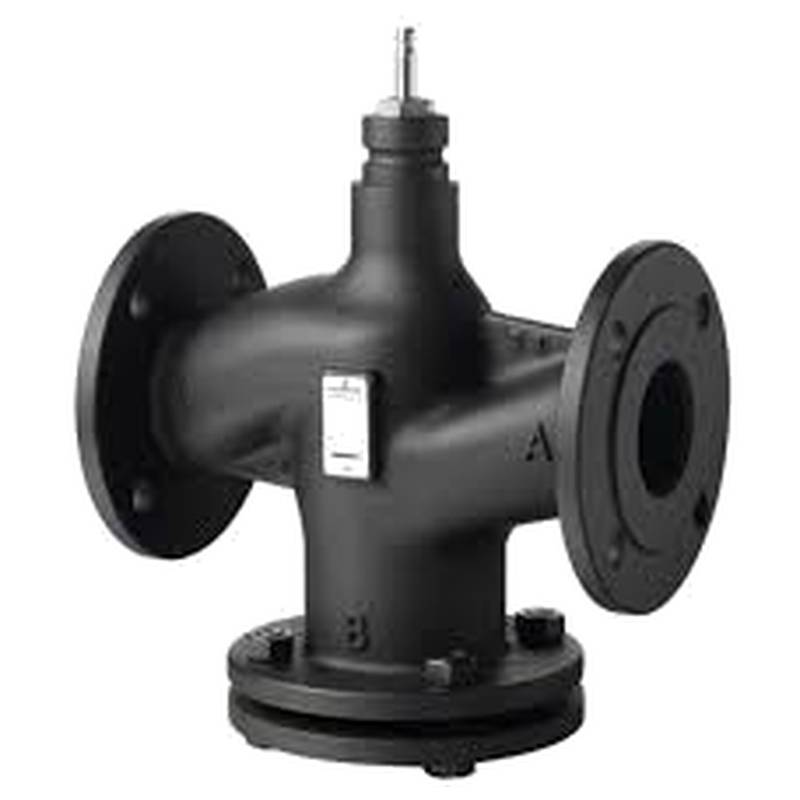
SIEMENS VVF53.15-3.2 Two-Way Valve DN15 kvs 3.2 Low Flow


The SIEMENS VVF53.15-3.2 Two-Way Valve, a DN15 unit with a kvs of 3.2, is engineered for precise low-flow control in critical industrial applications. Its robust design offers superior durability and reliable performance, making it a cornerstone for sophisticated HVAC and building automation systems. Key advantages include its exceptional accuracy in flow regulation, low energy consumption, and seamless integration capabilities. This valve exemplifies Siemens' commitment to innovation, providing efficient and dependable fluid management solutions.
| Parameter | Specification |
| :------------------- | :------------------------------------------- |
| Product Type | Two-Way Control Valve |
| Manufacturer | SIEMENS |
| Model Number | VVF53.15-3.2 |
| Nominal Size (DN) | 15 |
| Valve Capacity (kvs) | 3.2 m³/h |
| Connection Type | Flanged |
| Body Material | Cast Iron (GG25) |
| Seal Material | EPDM |
| Max. Differential | 100 kPa (10 mWC) |
| Pressure | |
| Temperature Range | -10...+120 °C |
| Actuator Type | Requires separate actuator (e.g., electric) |
Core Features & Market Positioning
The SIEMENS VVF53.15-3.2 distinguishes itself through its precise low-flow control capabilities, a critical requirement in many industrial processes and sophisticated HVAC systems where minimal, accurate fluid adjustments are paramount. This valve is designed for applications demanding high accuracy and reliability, positioning it as a premium choice for engineers and facility managers seeking robust and long-lasting control solutions. Its construction, featuring a durable cast iron body and EPDM seals, ensures compatibility with a wide range of fluids and operating conditions, reinforcing its market standing as a dependable component in complex fluid management networks. The inherent precision also contributes to energy efficiency by preventing over-regulation and associated waste.
Key Application Scenarios
This SIEMENS VVF53.15-3.2 valve is ideally suited for precise temperature control in heating and cooling circuits within commercial buildings and industrial facilities. Its low-flow characteristic makes it exceptionally well-suited for small terminal units, fan coil units, and radiant panel systems where accurate water flow management is essential for maintaining optimal comfort levels and energy efficiency. Furthermore, it finds application in process control loops requiring delicate adjustment of fluid media, such as in pilot plants or specific chemical processing setups where maintaining exact flow rates is critical to product quality and safety. The DN15 size and kvs of 3.2 are optimized for these specific, often demanding, control tasks.
Practical System Integration Guidance
Integrating the SIEMENS VVF53.15-3.2 valve into existing systems requires careful consideration of actuator selection and wiring. The valve itself is a body and trim assembly; an appropriate actuator, such as a Siemens electric actuator (e.g., from the GLB or GBB series), must be specified and mounted to provide the necessary operational force and control signal response. For optimal performance, ensure the actuator's torque and stroke characteristics match the valve's requirements. Wiring should follow the actuator manufacturer's guidelines, typically involving low-voltage control signals (e.g., 0-10 V or 4-20 mA) and power supply connections. Proper commissioning involves setting actuator travel limits and ensuring the valve operates smoothly throughout its range, ideally with feedback from the building management system (BMS) for verification.
Operation and Risk Mitigation
Proper operation of the SIEMENS VVF53.15-3.2 valve hinges on adherence to its specified operating parameters, particularly concerning differential pressure and temperature limits, to prevent premature wear or failure. Risk mitigation strategies include regular visual inspection for leaks or external damage and ensuring that actuators are functioning correctly without binding. Avoid exceeding the maximum differential pressure of 100 kPa (10 mWC) and the operating temperature range of -10 to 120 °C, as deviations can compromise valve seal integrity and performance. Periodic functional testing, especially after maintenance, helps identify potential issues early. While specific fault codes are actuator-dependent, signs of malfunction often manifest as erratic control, leaks, or complete loss of function, necessitating prompt investigation.
Scalability & Long-Term Value
The SIEMENS VVF53.15-3.2 valve offers significant long-term value through its compatibility with Siemens' broader Building Management System (BMS) platforms, such as Desigo. This integration facilitates centralized control, monitoring, and optimization of fluid systems, contributing to overall building efficiency and predictive maintenance capabilities. While the valve itself is a fixed DN15 size, scalability in system design can be achieved by using multiple VVF53.15-3.2 units in parallel or by selecting appropriately sized valves for other parts of the network. Its robust construction and reliance on standard control signals ensure it can remain a functional and efficient component for many years, aligning with the trend towards IIoT integration and smart building technologies.
FAQs
1. What is the maximum flow rate for the SIEMENS VVF53.15-3.2 valve?
The SIEMENS VVF53.15-3.2 two-way valve has a nominal size of DN15 and a kvs rating of 3.2. This kvs value signifies the flow rate in cubic meters per hour (m³/h) when a pressure drop of 1 bar (100 kPa or 10 mWC) occurs across the valve. Therefore, its maximum controllable flow rate is directly linked to this kvs value under specific pressure conditions.
It is crucial to note that the actual flow rate achievable will depend on the system's total dynamic head and the specific differential pressure across the valve at any given moment. Engineers must calculate the expected differential pressure in their system to ensure the valve operates within its designed flow control range.
This valve is specifically designed for low-flow applications, meaning it excels at precise regulation of small volumes of fluid, rather than handling high-capacity flow. Understanding its kvs is key to correctly sizing it for optimal performance in its intended applications.
2. What type of actuator is compatible with the SIEMENS VVF53.15-3.2 valve?
The SIEMENS VVF53.15-3.2 valve body is designed to accept a range of Siemens actuators, typically electric or electro-hydraulic types. Common compatible actuators include those from the Siemens GLB and GBB series, which offer various torque outputs and control signal options (e.g., 0-10V, 4-20mA). The selection of the actuator is critical and depends on the required balancing force, the stroke length needed for full closure and opening, and the control strategy of the connected building management system.
It is imperative to consult the specific datasheets for both the valve and the chosen actuator to verify compatibility, especially regarding mounting dimensions, shaft engagement, and the electrical control interface. Incorrect actuator selection can lead to poor control, valve damage, or system malfunction.
Ensure the actuator's power supply, control signal type, and fail-safe position (if applicable) align with the requirements of the overall system design. Proper installation and setup of the actuator on the valve body are essential for achieving the specified performance.
3. What is the maximum operating temperature and pressure for this valve?
The SIEMENS VVF53.15-3.2 valve is rated for a maximum operating temperature range of -10 °C to +120 °C. This wide range allows for application in both heating and cooling systems. Exceeding these temperature limits can compromise the integrity of the EPDM seals and the valve body materials, leading to leaks or reduced performance.
In terms of pressure, the valve can handle a maximum differential pressure of 100 kPa, which is equivalent to 10 meters of water column (mWC). This specification is particularly important for low-flow applications, as it defines the operational limits to prevent cavitation or excessive wear on valve internals. It's vital to consider the system's pressure profile to ensure this limit is not surpassed.
Adhering to these maximum operating parameters is crucial for ensuring the longevity, reliability, and safe operation of the SIEMENS VVF53.15-3.2 valve within its intended industrial or building automation environment.
4. Can this valve be used in high-flow industrial processes?
The SIEMENS VVF53.15-3.2 valve is specifically designed and optimized for low-flow control applications, as indicated by its DN15 nominal size and kvs of 3.2. While it offers precise regulation, its flow capacity is limited compared to larger valves used in high-flow industrial processes. Attempting to use it in such applications would likely result in insufficient flow, potential valve damage due to excessive pressure drop, and inaccurate control.
High-flow processes typically require valves with significantly larger nominal diameters and higher kvs values to accommodate the substantial volumes of fluid involved. Using this specific valve outside its intended operational envelope would lead to performance issues and could compromise the efficiency and safety of the industrial process.
For high-flow industrial applications, it would be necessary to select a different valve model from Siemens or other manufacturers that is specifically engineered for higher flow rates and pressures commensurate with the process demands.
5. What are the typical industries or sectors that utilize the SIEMENS VVF53.15-3.2 valve?
This SIEMENS VVF53.15-3.2 valve is commonly found in the Building Technology sector, particularly within commercial and institutional facilities. Its precision in regulating small water flows makes it ideal for HVAC systems in office buildings, hospitals, hotels, and educational institutions. Specific applications include controlling flow to fan coil units, air handling units, and radiant heating/cooling panels.
The chemical and process industries may also utilize this valve, but typically in niche applications where very fine control of low-volume fluid streams is required. This could include pilot plants, laboratory setups, or specific stages in fine chemical manufacturing where precise media management is critical for product quality and process consistency.
Essentially, any industry that requires accurate, reliable, and efficient control of fluid media at low flow rates, especially for temperature regulation or process balancing, can benefit from the application of the SIEMENS VVF53.15-3.2.
6. How is the SIEMENS VVF53.15-3.2 valve installed and commissioned?
Installation of the SIEMENS VVF53.15-3.2 involves securely mounting the valve body in the pipeline, ensuring correct flow direction as indicated by any markings on the valve. Connections, typically flanged, must be properly sealed to prevent leaks. The actuator is then mounted onto the valve stem, ensuring proper engagement and alignment according to the manufacturer's instructions.
Commissioning begins after installation and electrical connections are made. The actuator needs to be initialized, which often involves setting the stroke limits (fully open and fully closed positions) to match the valve's physical travel. This is usually done via the actuator's internal programming or through a connected Building Management System (BMS).
Functional testing follows, where the valve is commanded through its full range of operation to verify smooth movement and accurate positioning. System readings, such as flow rates and temperature changes, are monitored to confirm that the valve is performing as expected and contributing to the desired process or comfort control.
7. What maintenance is required for this type of control valve?
Routine maintenance for the SIEMENS VVF53.15-3.2 valve primarily involves visual inspections for any signs of external leakage around the stem or connections, which would indicate a seal failure. It's also important to check that the actuator is functioning smoothly without unusual noises or excessive vibration during operation.
Periodic functional testing, particularly at the start of each heating or cooling season, is recommended. This ensures the valve actuates correctly through its full stroke and that the control signal is accurately translated into fluid flow adjustment. If the valve shows signs of sticking or incomplete closure/opening, further investigation is warranted.
While the internal components of the valve are generally robust and designed for long service life, in environments with aggressive fluid media or high particulate content, more frequent checks or potential internal inspections might be advised by a qualified technician. However, for standard clean water applications, external checks and functional tests are typically sufficient.
8. What are the advantages of using a kvs value of 3.2 for a DN15 valve?
A kvs value of 3.2 for a DN15 valve indicates a specific flow coefficient that is carefully selected for precise low-flow control. This combination allows for sensitive and accurate adjustments of fluid volume, which is critical in applications where small changes in flow significantly impact system performance, such as maintaining a stable room temperature.
This specific kvs value ensures that the valve can achieve a good control range, meaning it can effectively regulate flow from very low rates up to its maximum capacity without becoming unstable or unresponsive. It strikes a balance, providing sufficient flow for its intended applications while maintaining the high degree of modulation required for fine-tuning.
Using a kvs value that is too high for a low-flow application would result in poor control granularity, making it difficult to achieve precise setpoints. Conversely, a kvs that is too low might restrict necessary flow. The 3.2 kvs is therefore a deliberate engineering choice for optimal performance in its target scenarios.
9. How does this valve contribute to energy efficiency in HVAC systems?
The SIEMENS VVF53.15-3.2 valve contributes to energy efficiency primarily through its precise flow control capabilities. By accurately regulating the amount of water flowing to a heating or cooling coil, it ensures that the system does not over-supply conditioned water, thereby preventing unnecessary energy consumption. This precision helps maintain desired temperatures with minimal deviation.
Furthermore, its low-flow design means it is inherently suited for systems that operate at lower flow rates, which can reduce pumping energy. In variable flow systems, accurate modulation by the valve ensures that the pumps operate at optimal speeds rather than running at higher capacities than needed, further saving electricity.
Its reliability and accurate operation also minimize system fluctuations, leading to more stable operating conditions. This reduces the need for frequent re-adjustments and helps maintain setpoints efficiently, contributing to overall reduced energy usage in the building.
10. Where can I find the full technical specifications and product documentation for the SIEMENS VVF53.15-3.2?
Detailed technical specifications, including dimension drawings, performance curves, and material compositions, can be found in the official product documentation provided by Siemens. This documentation is typically available through Siemens' authorized distributors or directly via their industry portal or website, often under the Building Technologies or HVAC components sections.
When searching for documentation, it is advisable to use the exact product designation "SIEMENS VVF53.15-3.2" along with terms like "datasheet," "technical manual," or "product specifications." These documents are essential for accurate system design, installation, and maintenance, providing all necessary data for engineers and technicians.
Always ensure you are accessing the most current version of the documentation to guarantee that the information reflects the latest product revisions and compliance standards. This ensures correct application and optimal performance of the valve in your specific system.