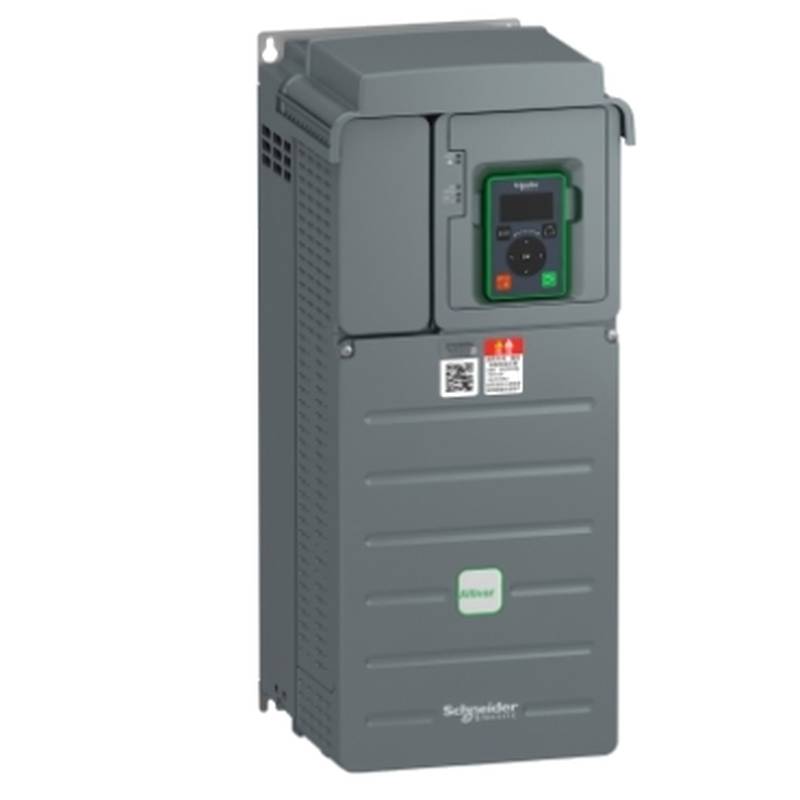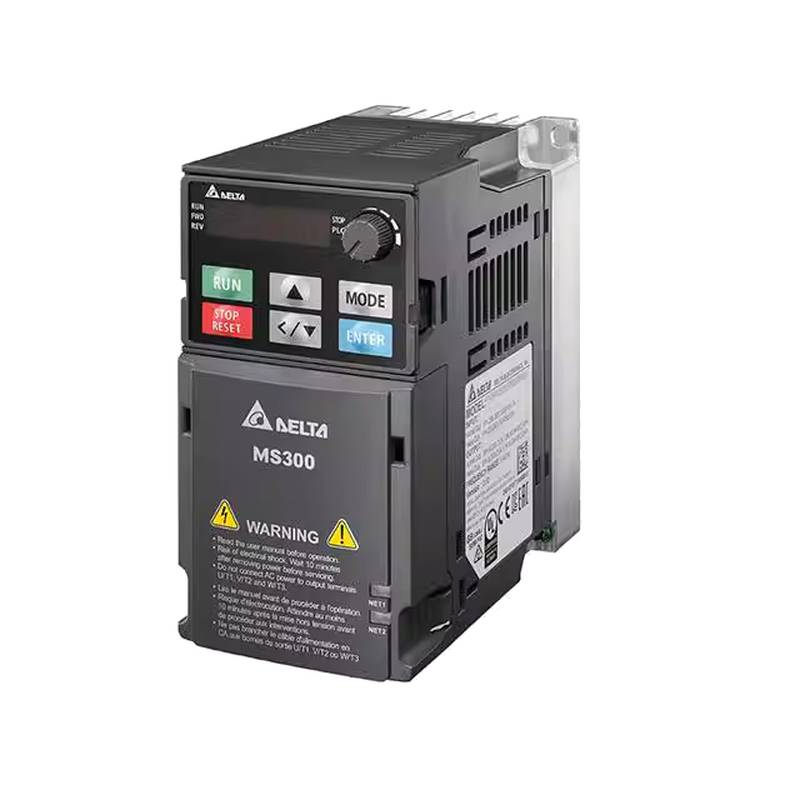
Delta VFD9A0MH43ANSAA MS300 Frequency Drive 9.0A 3.7kW


The Delta VFD9A0MH43ANSAA MS300 Series represents a robust and versatile variable frequency drive designed for demanding industrial applications, offering precise motor control and significant energy savings. This 3.7kW (5HP) drive boasts a 9.0A continuous output current and operates on a 400V AC input, making it suitable for a wide range of machinery. Its advanced features, including a high-performance control core and comprehensive protection functions, position it as a competitive solution for process automation and equipment optimization. Key technical parameters include a rated output of 3.7kW, a continuous output current of 9.0A, and an input voltage range of 380-480V AC, with an output frequency of up to 600Hz.
Product Specifications
| Parameter | Value |
| :------------------ | :--------------------------------------- |
| Model | VFD9A0MH43ANSAA |
| Series | MS300 |
| Rated Power (kW) | 3.7 |
| Rated Power (HP) | 5 |
| Continuous Output Current (A) | 9.0 |
| Input Voltage (V) | 380-480 |
| Output Frequency (Hz) | 0-600 |
| Control Method | Sensorless Vector Control, V/f Control |
| Protection Level | IP20 |
| Communication | Built-in Modbus (RS-485) |
Core Features & Market Positioning
The Delta VFD9A0MH43ANSAA MS300 drive distinguishes itself with its advanced 32-bit high-speed processor, enabling superior sensorless vector control for precise torque and speed regulation, even under varying load conditions. This drive offers multiple control modes, including V/f, enhanced V/f, and sensorless vector control, providing flexibility for diverse motor types and application requirements. Its compact design and modular structure facilitate easier installation and maintenance, while integrated features like a built-in brake unit (on select models) and optional communication modules enhance its adaptability. The MS300 series is recognized for its robust performance, energy efficiency, and reliable operation in challenging industrial environments, making it a compelling choice against competitors focused on mid-range variable speed control.
Key Application Scenarios
The Delta VFD9A0MH43ANSAA is exceptionally well-suited for a broad spectrum of industrial applications where precise motor control and energy efficiency are paramount. It excels in driving pumps and fans in HVAC systems, chemical processing, and water treatment plants, optimizing flow and pressure while reducing energy consumption. Its robust performance also makes it ideal for conveyor systems, packaging machinery, textile equipment, and machine tools, where accurate speed adjustments and smooth acceleration/deceleration are critical for product quality and operational efficiency. The drive's ability to handle varying loads and its comprehensive protection features ensure reliable operation in these demanding scenarios.
Practical System Integration Guidance
Integrating the Delta VFD9A0MH43ANSAA into existing systems is streamlined due to its user-friendly interface and flexible communication options. For wiring, ensure proper grounding and connection of power terminals (L1, L2, L3 for input; U, V, W for output) according to local electrical codes and the drive's manual. The drive supports both analog (0-10V, 4-20mA) and digital I/O for control signals, as well as RS-485 for Modbus communication, allowing seamless integration with PLCs and SCADA systems. Initial parameter setup involves configuring motor data, acceleration/deceleration times, and operating modes. For example, setting up sensorless vector control requires accurate motor nameplate data, while V/f control is simpler for fixed applications. A common programming example involves configuring digital inputs to control start/stop and direction, and an analog input for speed reference.
Operation and Risk Mitigation
Safe operation of the Delta VFD9A0MH43ANSAA is achieved through adherence to safety guidelines and utilizing its built-in protection features. Always ensure the drive is de-energized before performing any wiring or maintenance. Key safety functions include overcurrent, overvoltage, undervoltage, overload, and short-circuit protection, which automatically shut down the drive to prevent damage. Common troubleshooting scenarios often involve motor parameter misconfiguration, leading to poor performance or trip events. For instance, an "Overload" fault (e.g., F01) might indicate incorrect motor thermal parameters or an overloaded mechanical system. Referencing the drive's fault code list in the manual is crucial for accurate diagnosis and resolution, ensuring minimal downtime.
Scalability & Long-Term Value
The Delta VFD9A0MH43ANSAA MS300 series offers significant scalability and long-term value through its compatibility with Delta's broader automation ecosystem and support for modern industrial communication protocols. Its modular design allows for the addition of optional communication cards (e.g., Profibus, DeviceNet) and expansion modules, enabling integration into complex networked systems. This adaptability ensures that the drive can be part of an evolving IIoT strategy, providing data for predictive maintenance and performance monitoring. For users with existing Delta control systems, the MS300 series offers seamless integration, leveraging common programming interfaces and support structures. This makes it a future-proof investment for enhancing operational efficiency and maintaining competitiveness in an increasingly connected industrial landscape.
Frequently Asked Questions
What are the primary advantages of the Delta VFD9A0MH43ANSAA?
This drive offers superior sensorless vector control for precise motor operation, ensuring optimal performance across various loads. Its compact design saves panel space, while robust protection features enhance operational reliability and safety.
It provides significant energy savings through precise speed regulation, reducing electricity costs in pump, fan, and other variable load applications. The drive's versatility in supporting multiple control modes further adds to its advantage.
The Delta MS300 series features advanced communication capabilities, including built-in Modbus, facilitating seamless integration into automated systems and enabling remote monitoring and control.
How do I perform initial setup and parameter configuration?
Start by ensuring all power is disconnected and then correctly wire the motor and power supply terminals as per the manual. Upload the motor's nameplate data accurately into the drive's parameters for optimal sensorless vector control performance.
Configure essential operating parameters such as acceleration and deceleration times, maximum/minimum frequency, and choose the appropriate control mode (V/f or sensorless vector). Test basic start/stop functions with the motor unloaded.
Utilize the built-in keypad or an optional remote keypad for parameter adjustment and monitoring. For advanced setup, consider connecting via the RS-485 port for parameter backup or remote configuration using Delta's software tools.
What are common fault codes and troubleshooting steps for the VFD9A0MH43ANSAA?
An "Overload" fault (F01) typically indicates the motor is drawing too much current, possibly due to mechanical issues or incorrect motor thermal settings. Check the load and verify motor parameters.
A "Short Circuit" fault (F03) signifies a short between motor phases or to ground. Inspect motor windings and output wiring for damage or loose connections.
An "Overvoltage" fault (F04) occurs when the DC bus voltage exceeds limits, often during regenerative braking or rapid deceleration. Check braking resistor configuration or adjust deceleration ramp times.
What is the input voltage range for this drive?
The Delta VFD9A0MH43ANSAA operates on a standard industrial input voltage range of 380 to 480 Volts AC. This makes it suitable for use in regions and facilities that utilize higher voltage power supplies.
It is crucial to ensure that the incoming power supply to the drive is within this specified range to prevent damage or improper operation. Always verify your local power grid's voltage before installation.
This voltage rating ensures compatibility with a wide array of industrial power systems, facilitating its integration into diverse manufacturing environments without requiring complex voltage conversion equipment.
Can this drive be used with different types of motors?
Yes, the VFD9A0MH43ANSAA supports various motor types, offering both V/f control and advanced sensorless vector control. Sensorless vector control is particularly effective for induction motors, providing high performance without encoder feedback.
For standard applications, V/f control is a straightforward and reliable option that works well with most AC motors. The drive's flexibility allows users to select the control method best suited to their specific motor and application needs.
When using sensorless vector control, accurate entry of the motor's nameplate data is essential for achieving optimal torque, speed, and dynamic response. Consult the user manual for specific motor compatibility details.
What communication protocols does the VFD9A0MH43ANSAA support?
The MS300 series drive comes with a built-in Modbus communication port, specifically RS-485, allowing for easy integration into standard industrial networks. This enables digital communication for parameter setting, monitoring, and control.
Beyond the standard Modbus, Delta offers optional communication cards that expand compatibility with other prevalent industrial protocols. These can include options like Profibus, DeviceNet, and EtherNet/IP, depending on the specific card chosen.
This multi-protocol support is vital for modern automation systems, allowing the drive to communicate seamlessly with various PLCs, HMIs, and SCADA systems, facilitating centralized control and data acquisition.
How is the Delta VFD9A0MH43ANSAA installed in an electrical panel?
Installation involves mounting the drive vertically onto a DIN rail or using screw mounting holes, ensuring adequate clearance for ventilation. The IP20 rating means it should be installed in an enclosure to protect against dust and accidental contact.
Proper grounding is essential for safety and electromagnetic compatibility (EMC). Connect the ground terminal to the panel's grounding busbar. Ensure all power and control wiring is secure and routed appropriately to minimize noise interference.
Adequate airflow must be maintained around the drive to prevent overheating. Avoid installing it near heat sources or in environments with excessive dust or moisture. Follow the clearance guidelines specified in the installation manual precisely.
What is the power rating and output current of this specific model?
The Delta VFD9A0MH43ANSAA is rated for a continuous output current of 9.0 Amperes. This current rating dictates the size and type of motor the drive can reliably control under normal operating conditions.
Its power rating is 3.7 kilowatts (kW), which is equivalent to approximately 5 horsepower (HP). This power specification is a key factor in selecting the drive for applications with motors of this capacity.
These specifications ensure the drive is suitable for medium-duty applications requiring precise speed control and energy efficiency for motors up to 3.7kW, providing ample capacity for many industrial tasks.
What are the typical applications for the MS300 series drives?
MS300 series drives are ideal for variable torque applications like centrifugal pumps and fans, commonly found in HVAC, water management, and building automation systems. They optimize energy usage by matching motor speed to system demand.
They are also widely used in material handling systems, such as conveyor belts, where precise speed control and smooth acceleration/deceleration are critical for product throughput and quality. Packaging machinery also benefits from this precise control.
Other suitable applications include textile machinery, machine tools, and general-purpose industrial equipment that requires flexible speed adjustment and robust motor control. Their versatility makes them a popular choice across various manufacturing sectors.
How does the Delta VFD9A0MH43ANSAA contribute to energy savings?
The drive enables significant energy savings by precisely controlling motor speed to match the exact demand of the application, rather than running at full speed constantly. This is especially effective in pump and fan applications where power consumption is proportional to the cube of speed.
By adjusting the motor's frequency and voltage, the drive optimizes its operational efficiency, reducing wasted energy and lowering electricity bills. This dynamic adjustment minimizes energy consumption during periods of lower demand.
The precise speed control also leads to reduced mechanical wear on equipment, potentially lowering maintenance costs and extending the operational life of machinery, contributing to overall operational cost savings.