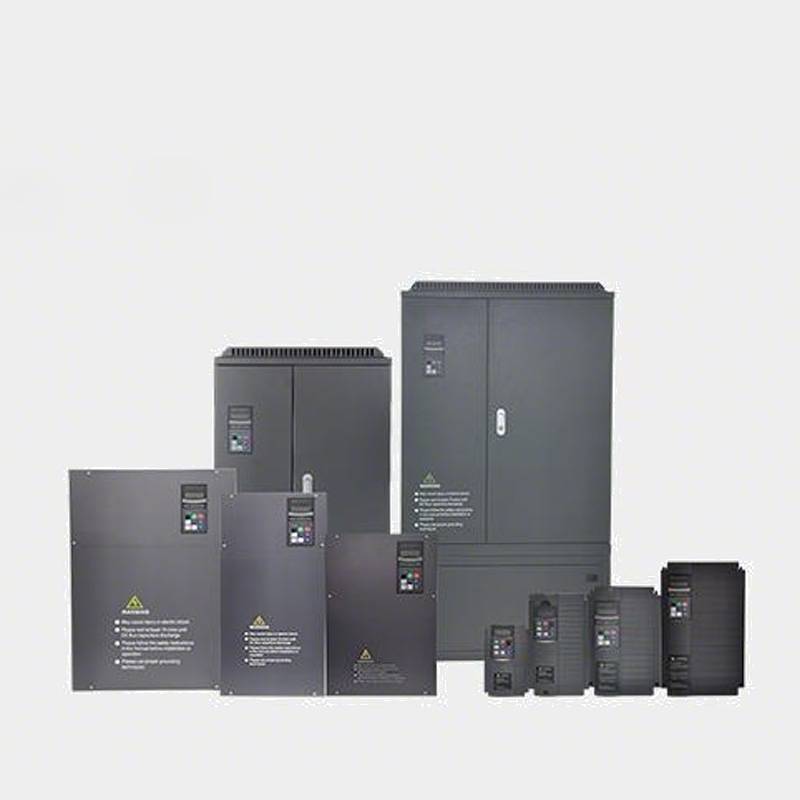












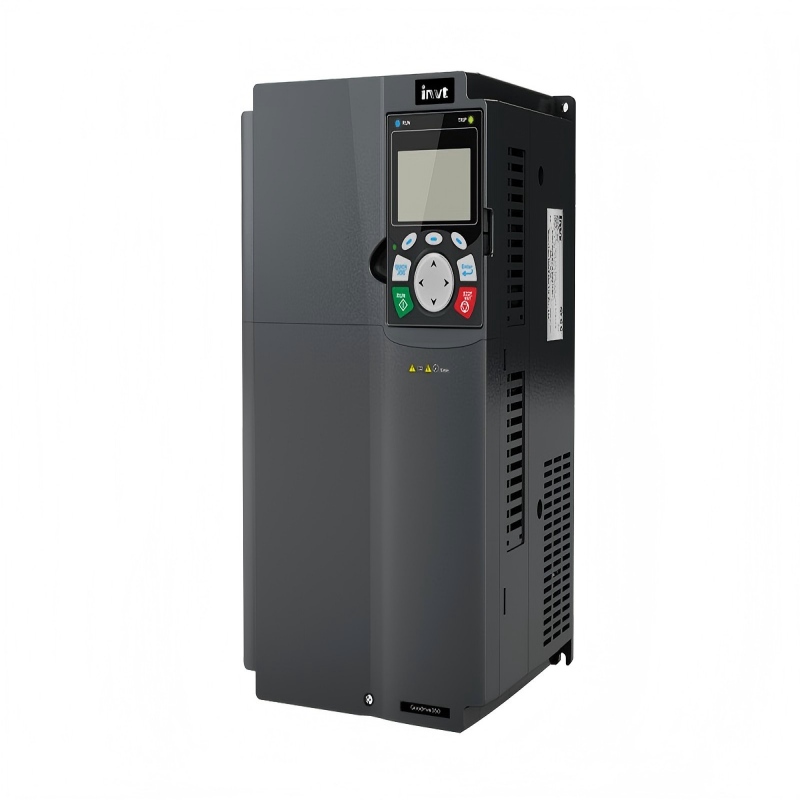
INVT GD350-280G-6 Goodrive350 High Voltage Inverter 280kW Advanced Safety Power 690V


The INVT GD350-280G-6 Goodrive350 High Voltage Inverter, a 280kW power solution operating at 690V, represents a significant advancement in industrial motor control, offering robust performance, advanced safety features, and exceptional energy efficiency. This high-performance variable frequency drive (VFD) is engineered to optimize the operation of high-power machinery across demanding industrial sectors. Its core advantages lie in its superior control algorithms, comprehensive protection mechanisms, and flexible integration capabilities, making it an ideal choice for applications requiring precise speed and torque management. Key technical parameters include a rated power of 280kW, an input/output voltage of 690V, and a sophisticated control method that ensures smooth acceleration and deceleration, minimizing mechanical stress on driven equipment. The GD350 series is specifically designed for reliability and efficiency in heavy-duty industrial environments.
Product Specifications
| Parameter | Specification |
| :--------------------- | :---------------------------------------------- |
| Model | GD350-280G-6 |
| Rated Power | 280 kW |
| Input/Output Voltage | 690V AC |
| Control Method | Vector Control, V/f Control |
| Frequency Range | 0-300 Hz |
| Protection Features | Overload, Overcurrent, Overvoltage, Undervoltage, Overtemperature, Short Circuit, Ground Fault |
| Communication | RS485, Optional fieldbus modules (Profibus, DeviceNet, EtherNet/IP) |
| Cooling Method | Forced Air Cooling |
| Ambient Temperature | -10°C to +40°C (derating above 40°C) |
| Altitude | Up to 1000m (derating above 1000m) |
Core Features & Market Positioning
The INVT GD350-280G-6 distinguishes itself in the high voltage inverter market through its implementation of advanced sensorless vector control, providing high-precision torque and speed regulation without the need for motor encoders. This not only reduces system complexity and cost but also enhances reliability in environments prone to dust or vibration. Its modular design facilitates easy maintenance and upgrades, a critical factor for industrial operations aiming for sustained productivity. The inverter is positioned as a premium solution for industries demanding robust performance and exceptional energy savings, directly competing with established global brands by offering a compelling blend of advanced technology and cost-effectiveness. Its focus on integrated safety functions, including safe torque off (STO), further solidifies its market standing for critical applications where operational safety is paramount.
Key Application Scenarios
This high voltage inverter is exceptionally well-suited for a wide array of demanding industrial applications. It excels in driving large centrifugal pumps and fans in water treatment plants and HVAC systems, where precise flow and pressure control are essential for energy efficiency and process stability. In the mining and metallurgy sectors, the GD350-280G-6 is deployed for conveyors, crushers, and mill drives, benefiting from its high starting torque capabilities and ability to withstand harsh operating conditions. Furthermore, its application extends to the petrochemical industry for compressors and extruders, and to cement plants for kiln and mill operations, where reliable, continuous operation and precise speed adjustment are critical. The 690V rating makes it ideal for directly powering high-power industrial motors without the need for step-up transformers.
Practical System Integration Guidance
Integrating the INVT GD350-280G-6 into existing or new industrial systems requires careful consideration of electrical and control aspects. Ensure the main power supply is stable and meets the 690V AC requirement, with appropriate surge protection devices installed. For motor connections, use shielded cables to minimize electromagnetic interference, and ensure proper grounding of both the inverter and the motor. Parameter configuration is typically performed via the inverter's keypad or through PC-based software. Initial setup involves defining motor parameters (e.g., rated voltage, current, frequency, pole count), selecting the control mode (sensorless vector control is recommended for most applications), and setting up speed/torque references. Communication interfaces, such as RS485, can be used for remote monitoring and control, integrating the inverter into SCADA or PLC systems. Always adhere to local electrical codes and safety standards during installation.
Operation and Risk Mitigation
Operating the INVT GD350-280G-6 effectively involves understanding its operational parameters and safety protocols. Users should familiarize themselves with common fault codes displayed on the HMI to facilitate rapid troubleshooting. For instance, fault codes related to overcurrent (e.g., OC) typically indicate a rapid increase in motor current, which could stem from sudden load changes, incorrect motor parameters, or internal component issues. Overload (OL) faults suggest the motor is drawing more current than its rated capacity for an extended period, requiring an assessment of the driven load or a review of the inverter's overload settings. Implementing the Safe Torque Off (STO) function is crucial for applications requiring emergency stops, preventing inadvertent motor restarts. Regular maintenance, including checking cooling fan operation and ensuring ventilation pathways are clear, is vital to prevent over-temperature faults and ensure long-term reliability.
Scalability & Long-Term Value
The INVT GD350-280G-6 offers significant scalability and long-term value through its flexible design and compatibility with evolving industrial automation trends. Its ability to integrate with various industrial communication protocols, including optional modules for Profibus, DeviceNet, and EtherNet/IP, allows seamless integration into existing distributed control systems or the development of new, sophisticated IIoT-enabled solutions. This forward compatibility ensures that the inverter can be a cornerstone of a smart factory initiative, supporting data acquisition for performance monitoring, predictive maintenance, and process optimization. Furthermore, INVT's commitment to product development suggests that firmware updates and ongoing technical support will ensure the GD350 series remains a relevant and high-performing component of industrial infrastructure for years to come, protecting the initial investment and maximizing operational uptime.
Frequently Asked Questions (FAQs)
What are the primary benefits of using the INVT GD350-280G-6?
This inverter offers precise motor control via sensorless vector technology, enhancing energy efficiency. It boasts comprehensive protection features, ensuring equipment longevity and operational safety. Its modular design simplifies maintenance and promotes system flexibility.
The advanced control algorithms minimize mechanical stress on connected machinery, reducing wear and tear. It supports a wide operating temperature range, making it suitable for diverse industrial environments. The ability to integrate with various fieldbus protocols enhances its connectivity.
Its high power rating at 690V makes it ideal for direct connection to high-voltage motors, eliminating the need for intermediate transformers. This results in reduced system complexity and lower installation costs.
How does the GD350-280G-6 handle motor overload conditions?
The inverter is equipped with sophisticated overload protection that continuously monitors motor current against set limits. It provides adjustable time delays to accommodate transient overloads common in certain applications. If the overload persists beyond the programmed threshold, it will initiate a controlled shutdown and display an OL fault code.
This protection mechanism is configurable, allowing engineers to fine-tune sensitivity based on the specific motor characteristics and application demands. This prevents motor overheating and premature failure due to excessive current draw over extended periods.
By preventing sustained overcurrent, the GD350-280G-6 safeguards the motor and the inverter itself from thermal damage, contributing significantly to the overall reliability and lifespan of the driven equipment.
Can the INVT GD350-280G-6 be integrated into a PLC control system?
Yes, the GD350-280G-6 is designed for seamless integration into PLC-based automation systems. It features standard communication ports like RS485, enabling easy connection to most PLCs. This allows for remote start/stop, speed control, and status monitoring.
For more advanced integration, optional communication modules are available, supporting popular industrial networks such as Profibus, DeviceNet, and EtherNet/IP. These modules provide higher bandwidth and more robust communication capabilities for complex control architectures.
With appropriate configuration and programming on the PLC side, the inverter can be fully managed within a centralized control strategy, facilitating sophisticated process automation and data logging.
What are the typical applications for a 280kW, 690V inverter?
High-power industrial applications are the primary use case for this inverter. This includes driving large pumps and fans in sectors like water treatment and power generation, where precise flow control is critical. It is also extensively used in heavy industries such as mining, cement, and steel production for applications like conveyors, crushers, and mills.
These applications often involve high inertia loads or require significant starting torque. The 690V rating is specifically chosen to match the voltage of standard industrial high-power motors, simplifying system design and reducing losses compared to lower voltage systems with step-up transformers.
The ability to precisely control speed and torque in these demanding scenarios leads to substantial energy savings and improved process efficiency, while also reducing mechanical stress on the equipment.
What safety features are included in the INVT GD350-280G-6?
The inverter incorporates advanced safety functions, most notably the Safe Torque Off (STO) capability. STO ensures that the inverter actively prevents the motor from generating torque, providing a safe state for personnel during maintenance or emergency stops. This function is certified to relevant safety standards, enhancing workplace safety.
Beyond STO, it offers a comprehensive suite of electronic protections against common electrical faults. These include overcurrent, overvoltage, undervoltage, short circuit, ground fault, and over-temperature protection. These measures protect both the inverter and the connected motor from damage.
The robust enclosure and design considerations for high voltage operation also contribute to overall system safety. Proper installation, including grounding and shielding, is critical to realizing the full safety potential of the GD350-280G-6.
How is the GD350-280G-6 installed and commissioned?
Installation requires careful mounting in a clean, well-ventilated environment, ensuring adequate clearance for cooling. Electrical connections for the 690V power input and output to the motor must be made using appropriately rated cables and connectors, with strict adherence to grounding procedures. Control wiring for digital and analog inputs/outputs should also be completed according to the manual.
Commissioning begins with an initial power-up and basic parameter setup. This involves configuring motor data, selecting the control mode, and setting basic operational limits like maximum frequency and acceleration/deceleration times. Safety functions like STO must be verified at this stage.
Fine-tuning of parameters, such as PID control loops for closed-loop applications or advanced vector control tuning, may follow to optimize performance for the specific load and process. A test run under load is essential to confirm correct operation and stability.
What is the expected lifespan of the INVT GD350-280G-6?
The expected lifespan of the INVT GD350-280G-6 is significantly influenced by operating conditions and maintenance practices. Under ideal conditions, with regular maintenance and operation within specified environmental limits, these high-voltage inverters are designed for a service life of 15 to 20 years. Key components like cooling fans and electrolytic capacitors have a finite life and may require periodic replacement.
Proactive maintenance, including keeping ventilation pathways clear, checking for dust accumulation, and monitoring for any unusual operational sounds or temperatures, is crucial. Implementing predictive maintenance strategies based on operational data can help anticipate component failures, such as fan wear, and schedule replacements before they lead to unexpected downtime.
Adherence to derating guidelines for ambient temperature and altitude, along with ensuring stable power input, also plays a vital role in extending the operational life of the inverter. Consistent operation within design parameters minimizes stress on internal components.
What types of motors can be controlled by this inverter?
The INVT GD350-280G-6 is primarily designed to control three-phase AC induction motors. It excels in applications requiring precise speed and torque control, especially when using its advanced sensorless vector control mode. This mode allows for high performance without the need for a motor-mounted encoder.
The inverter is rated for 690V output, meaning it is intended for use with motors that operate at this voltage level. It supports a wide frequency range, typically from 0 Hz up to 300 Hz, enabling both low-speed operation and high-speed applications. Users must ensure the motor's voltage, power, and current ratings are compatible with the inverter's specifications.
While primarily for induction motors, some configurations might support synchronous reluctance motors or permanent magnet synchronous motors with appropriate parameterization and potentially optional encoder feedback for enhanced control precision in specialized applications.
Are there specific wiring requirements for high voltage inverters?
Yes, high voltage inverters like the GD350-280G-6 have stringent wiring requirements due to the increased electrical hazards. All power conductors must be sized appropriately for the 280kW load and the 690V operating voltage, using high-quality, VFD-rated shielded cables. Proper shielding is critical to minimize electromagnetic interference (EMI) and ensure system integrity.
Grounding is paramount. The inverter chassis and the motor frame must be effectively grounded to a common grounding point to ensure safety and reduce noise. Follow the manufacturer's specific grounding instructions, which often involve using a dedicated ground conductor and ensuring low impedance paths.
Shielded cables should be terminated correctly, with the shield connected at the inverter end and typically left unterminated or connected via a clamp at the motor end to prevent ground loops. Adhering to these wiring practices is essential for safe and reliable operation.
How do I access and configure the parameters on the GD350-280G-6?
Parameter access and configuration can be done directly through the inverter's integrated Human-Machine Interface (HMI) keypad, which typically features a digital display and navigation buttons. For more complex configurations or to manage multiple inverters, INVT provides dedicated software tools that can be installed on a PC. This software connects to the inverter via its communication port (e.g., RS485).
The parameter menu is usually organized hierarchically, with different groups for motor data, control settings, protection limits, I/O configuration, and communication settings. Users need to refer to the product manual for a detailed explanation of each parameter and its recommended settings for their specific application.
It is advisable to save the initial configuration settings as a backup, either via the software or by noting down critical parameters. This backup is invaluable for restoring settings in case of a fault or for quickly commissioning a replacement unit.