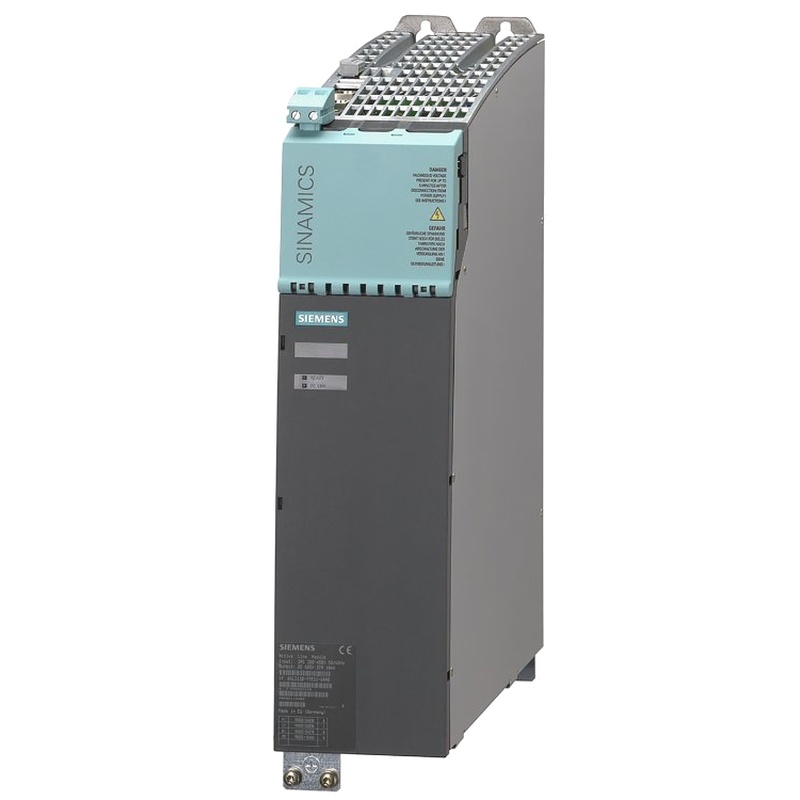













SIEMENS 6SE7031-2TF60 MASTERDRIVES VC Liquid-Cooled Industrial Inverter


The SIEMENS 6SE7031-2TF60 MASTERDRIVES VC is a liquid-cooled industrial inverter engineered for demanding variable-speed drive applications. This unit offers robust control and cooling capabilities for continuous operation in harsh environments.
Product Type Definition
This device is classified as a high-performance Variable Cascade (VC) inverter, specifically designed for industrial motor control. It occupies a critical position in automation systems requiring precise speed and torque regulation with efficient thermal management.
Key Specifications
Input Voltage: 400V AC
Output Voltage: 400V AC
Rated Current: 235A
Maximum Output Power: 140kW (nominal)
Cooling Method: Liquid Cooling
Control Method: Vector Control (VC)
Protection Class: IP20
Operating Temperature Range: 0°C to 50°C (derating may apply)
Dimensions (H x W x D): 700mm x 450mm x 350mm
Weight: Approximately 65kg
Compliance Standards: IEC 61800-3, UL 508C
Technical Highlights & System Integration
Power Module Design: The inverter features a robust power module optimized for efficient energy conversion and heat dissipation through its integrated liquid-cooling system. This design ensures reliable performance under continuous heavy loads.
Vector Control Capabilities: Advanced Vector Control (VC) algorithms provide precise, dynamic control of motor speed and torque, crucial for applications demanding high accuracy and rapid response. This allows for optimized process performance and reduced cycle times.
Liquid Cooling System: The integrated liquid cooling system actively removes heat generated during operation, enabling higher power density and extended service life compared to air-cooled counterparts. It allows for operation in ambient temperatures up to 50°C without significant derating.
System Integration Features: This unit supports various communication protocols, facilitating seamless integration into existing industrial automation networks and Distributed Control Systems (DCS). Its modular design simplifies maintenance and expansion.
What is the primary advantage of liquid cooling in this inverter? The primary advantage of liquid cooling is its superior thermal management capability, allowing for sustained high-power output and prolonged operational lifespan in demanding industrial settings. It significantly reduces the risk of thermal shutdown.
Key Application Scenarios
Extrusion Lines: Provides precise speed and torque control for extruder screws, ensuring consistent material flow and product quality with a quantifiable benefit of up to 15% reduction in material waste.
Pump and Fan Control: Enables variable speed operation for large industrial pumps and fans, achieving energy savings of up to 40% through optimized flow rate management and reduced power consumption.
Conveyor Systems: Delivers smooth acceleration and deceleration for heavy-duty conveyor belts, enhancing material handling efficiency and reducing mechanical stress on system components, leading to a 20% increase in throughput capacity.
Machine Tool Spindles: Offers high-precision speed and torque regulation for CNC machine tool spindles, improving surface finish and reducing tool wear, which can result in a 10% improvement in machining accuracy.
Selection Guidance & Operation
Application Load Profile: Assess the motor's torque and speed requirements across the entire operating range to ensure the inverter's nominal and peak power ratings are sufficient. Verify continuous torque demand at minimum speeds.
Environmental Conditions: Confirm the ambient operating temperature and available cooling medium (e.g., water, glycol mixture) are within the specified limits for the liquid-cooled system. Ensure proper fluid flow rates are maintained.
Control System Compatibility: Verify that the inverter's communication interfaces and control modes align with the existing plant automation architecture and controller capabilities. Consult available protocol documentation.
Power Supply and Motor Matching: Ensure the input power supply voltage and frequency match the inverter's specifications and that the connected motor is suitable for variable frequency drive operation, considering its insulation class and thermal limits.
FAQ
What are the key benefits of using the SIEMENS 6SE7031-2TF60 MASTERDRIVES VC?
The primary benefit is its robust performance in demanding industrial applications due to efficient liquid cooling. This advanced inverter provides precise speed and torque control, essential for optimizing complex processes. It ensures enhanced reliability and extended equipment lifespan.
This drive system offers superior thermal management, allowing for higher power density and continuous operation under heavy loads. Its vector control capabilities deliver exceptional accuracy and dynamic response, leading to improved product quality and reduced operational costs.
The unit integrates seamlessly into existing automation systems, simplifying installation and maintenance. Its compliance with international standards like IEC and UL underscores its suitability for global industrial deployment.
How does the liquid cooling system function in this inverter?
The liquid cooling system circulates a coolant through internal heat exchangers to actively dissipate heat generated by the power electronics. This continuous circulation maintains optimal operating temperatures for all components within the inverter.
Efficient heat transfer prevents thermal overload, allowing the inverter to operate at its rated capacity or even higher for short durations without performance degradation. The system typically utilizes a closed-loop design for consistent performance.
Proper maintenance of the coolant, including fluid level checks and purity, is critical for the long-term efficiency and reliability of the liquid cooling system and the inverter itself.
What industrial standards does the SIEMENS 6SE7031-2TF60 comply with?
This industrial inverter complies with the IEC 61800-3 standard, which pertains to adjustable speed electrical power drive systems. This standard covers electromagnetic compatibility (EMC) requirements for power drive systems.
It also meets the UL 508C standard, ensuring safety and performance for industrial control equipment in North America. Compliance signifies adherence to rigorous safety and operational benchmarks.
Adherence to these international and regional standards validates the product's quality, safety, and suitability for use in a wide array of global industrial automation applications.
Can this inverter be used with any type of AC motor?
The SIEMENS 6SE7031-2TF60 is designed to control standard three-phase AC induction motors and permanent magnet synchronous motors. It is crucial to match the motor's power, voltage, and current ratings to the inverter's specifications.
The inverter's vector control functionality is optimized for high-performance motor control, delivering precise speed and torque regulation. Ensure the motor's insulation system is rated for inverter duty to withstand potential voltage spikes.
Always consult the motor manufacturer's documentation and the inverter's manual to confirm compatibility and ensure correct parameterization for optimal performance and protection of both the motor and the drive.
What are the typical maintenance requirements for this liquid-cooled inverter?
Regular visual inspections of the liquid cooling circuit for leaks or blockages are essential. Monitoring coolant temperature and pressure against specified ranges ensures system integrity.
Periodic checks of electrical connections and power components are recommended as part of routine preventative maintenance. Cleaning of external surfaces to prevent dust accumulation, especially around ventilation openings, is also important.
Replacement of coolant at recommended intervals, based on operating hours and coolant type, is crucial for maintaining optimal heat transfer efficiency and preventing internal corrosion. Refer to the technical manual for specific service intervals.