











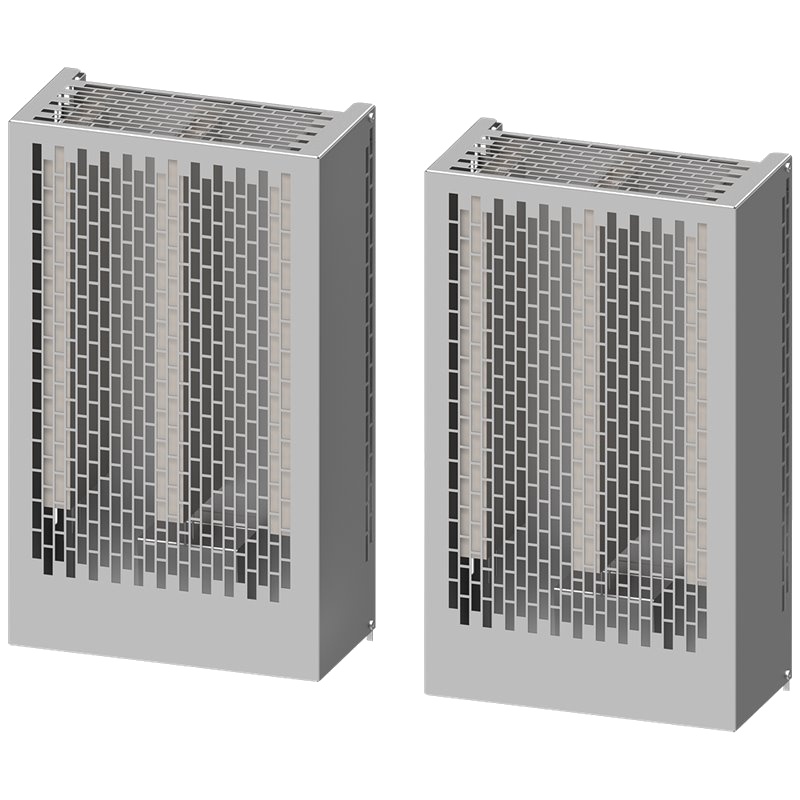
SIEMENS JJY:023464020001 SINAMICS G120 Braking Resistor for Power Module FSF 13kW 26kW


The SIEMENS JJY:023464020001 SINAMICS G120 braking resistor is a critical component for managing regenerative energy in variable frequency drive (VFD) systems, specifically designed for the SINAMICS G120 Power Module. This resistor effectively dissipates excess energy generated during motor deceleration, preventing overvoltage within the drive and ensuring system stability. Key advantages include its robust construction for demanding industrial environments, seamless integration with the SINAMICS G120 platform, and efficient thermal management. Technical parameters such as its suitability for 13kW and 26kW power modules, and its specific resistance and power ratings, are essential for proper application.
Product Specifications
| Parameter | Value |
| :----------------- | :----------------------------------------- |
| Manufacturer | Siemens |
| Product Number | JJY:023464020001 |
| Product Family | SINAMICS G120 |
| Component Type | Braking Resistor |
| Power Module Compatibility | FSF (FSG is also commonly associated with G120) |
| Rated Power | 13kW, 26kW |
| Resistance Value | Varies based on specific configuration, typically in Ohms |
| Protection Rating | IP20 |
| Ambient Temperature | -20°C to +50°C (typical) |
Core Features & Market Positioning
The SIEMENS JJY:023464020001 stands out due to its engineered compatibility and reliability within the SINAMICS G120 ecosystem, a widely adopted VFD series in automation. Its primary advantage lies in its role as a safety and performance enhancer, actively mitigating voltage spikes that can arise from inductive loads during rapid motor stops or overhauling applications. This component is positioned as an essential add-on for applications demanding precise motor control and high uptime, contributing to the overall longevity of the power module by preventing stress from electrical transients. Siemens' reputation for industrial automation solutions further solidifies its market position as a trusted, high-quality component for critical applications.
Key Application Scenarios
This braking resistor is indispensable in industrial scenarios where a motor frequently decelerates or operates in an overhauling mode, feeding energy back into the drive. Common applications include hoist and crane systems, where gravity can cause the motor to act as a generator during descent. Conveyor systems, particularly those with heavy loads, also benefit from the controlled dissipation of regenerative energy during stopping. Furthermore, applications involving high inertia loads, such as centrifuges or mixers, that require rapid stopping will leverage the resistor's capacity to handle peak energy loads, thereby ensuring smooth and safe operation.
Practical System Integration Guidance
Integrating the SIEMENS JJY:023464020001 braking resistor with a SINAMICS G120 Power Module requires careful attention to connection and parameterization. The resistor is typically connected to the DC bus terminals of the power module, often via external terminals designated for braking applications. Ensure that the resistor's power and resistance ratings are correctly matched to the specific SINAMICS G120 Power Module’s capabilities (e.g., 13kW or 26kW variants) to prevent component damage or malfunction. Within the SINAMICS G120 parameter settings, specific drive parameters need to be configured to enable the braking resistor function and define the overvoltage threshold at which it becomes active. Consult the SINAMICS G120 parameter manual for precise parameter numbers, such as those related to braking control and DC bus voltage limits.
Operation and Risk Mitigation
Proper operation of the SIEMENS JJY:023464020001 braking resistor is crucial for preventing drive faults and ensuring personnel safety. The resistor is designed to dissipate heat during operation; therefore, adequate ventilation around the resistor unit is paramount to prevent thermal overload. Avoid obstructing the airflow around the resistor. In case of frequent braking resistor activation, it may indicate that the resistor's capacity is insufficient for the application's demands or that the regenerative energy is excessive. Common fault codes associated with braking resistors on SINAMICS drives often relate to overvoltage (e.g., F07001 or similar) or braking chopper faults, signaling that the resistor is either not functioning correctly or is being overwhelmed. Regular visual inspection for physical damage or signs of overheating is recommended.
Scalability & Long-Term Value
The SIEMENS JJY:023464020001 braking resistor is inherently designed for seamless scalability within the SINAMICS G120 platform, allowing for straightforward upgrades or expansion of existing automated systems. Its compatibility with multiple SINAMICS G120 power module sizes (13kW and 26kW) offers flexibility. For integration with modern Industrial Internet of Things (IIoT) initiatives and digital manufacturing strategies, the SINAMICS G120 drives, and by extension their accessory components like this braking resistor, can be networked via communication modules to provide detailed operational data, including braking resistor status and energy consumption patterns. This enables predictive maintenance and optimized system performance, enhancing the long-term value and operational intelligence of the machinery.
FAQs
What is the primary function of the SIEMENS JJY:023464020001 braking resistor?
It dissipates excess regenerative energy generated during motor deceleration. This prevents overvoltage within the SINAMICS G120 drive. It ensures stable operation and protects the power module.
This resistor is a crucial safety component for VFD systems. It manages energy spikes, enhancing system reliability. Its integration is vital for demanding applications.
It safeguards the power electronics from voltage transients. This extends the lifespan of the drive. It is essential for applications with frequent stopping.
How does this braking resistor integrate with the SINAMICS G120 Power Module?
It connects to the DC bus terminals of the power module. Proper wiring to dedicated braking resistor terminals is required. Ensure secure connections to prevent faults.
Parameter settings in the SINAMICS G120 are essential. Specific drive parameters activate the resistor function. These parameters define overvoltage thresholds.
Consult the SINAMICS G120 manual for exact settings. Correct configuration ensures the resistor operates as intended. It is key for safe and efficient performance.
What are the key technical specifications to consider for the SIEMENS JJY:023464020001?
Compatibility with 13kW and 26kW SINAMICS G120 power modules is critical. Ensure the resistor's power and resistance ratings are matched. This prevents operational issues.
The IP20 protection rating indicates it's for indoor use. Consider the ambient temperature range for reliable operation. Proper environmental conditions are vital.
Check the resistance value (in Ohms) and power dissipation capacity. These determine its effectiveness in handling braking energy. Always verify these against application needs.
In which industrial applications is this braking resistor most commonly used?
It's essential for applications with frequent motor deceleration. Hoist and crane systems are prime examples. Applications with overhauling loads benefit greatly.
Conveyor systems, especially those moving heavy materials, require it. High inertia loads, like centrifuges, also utilize it. Any application needing rapid, controlled stops benefits.
These uses involve motors acting as generators during braking. The resistor safely absorbs this feedback energy. It ensures smooth, controlled operation.
What are the installation requirements for the SIEMENS JJY:023464020001?
Mount the resistor in a well-ventilated area. Ensure adequate airflow around the unit to dissipate heat. Avoid enclosing it in tight spaces.
Connect the resistor to the correct DC bus terminals on the G120. Follow wiring diagrams precisely to avoid short circuits. Secure all electrical connections firmly.
Verify that the resistor's specifications match the G120 power module. Improper selection can lead to damage or malfunction. Consult the installation manual.
What maintenance is recommended for this braking resistor?
Regular visual inspections are key. Check for any signs of physical damage or overheating. Ensure connections remain secure and free from corrosion.
Monitor the drive's performance for frequent braking resistor activation. Excessive use may indicate an application issue or undersized resistor. This helps prevent premature failure.
Ensure the surrounding area is clean and free of debris. Dust buildup can impede ventilation and increase operating temperatures. Cleanliness aids in efficient heat dissipation.
What are common fault codes associated with this braking resistor?
Overvoltage faults are common, like F07001. This signifies that the DC bus voltage is too high. It often means the braking resistor is activated.
Braking chopper faults can also occur. These indicate issues with the internal chopper circuit or the resistor connection. It may signal a resistor failure.
Other faults could relate to wiring or parameter settings. Always refer to the SINAMICS G120 fault code list for specifics. Troubleshooting guides are essential.
Can this braking resistor be used with other Siemens drive families?
The JJY:023464020001 is specifically designed for the SINAMICS G120 platform. Its integration and electrical characteristics are optimized for this VFD. Using it with other families is not recommended without verification.
Other Siemens drive families may have different DC bus voltages. They might also use different braking resistor control mechanisms. Compatibility must be thoroughly checked.
For alternative drive families, Siemens offers specific braking resistor solutions. Always select a resistor that is explicitly stated as compatible. This ensures safe and optimal performance.
How does this resistor contribute to the long-term value of a system?
It protects the power module from overvoltage stress. This extends the lifespan of the SINAMICS G120 drive. It reduces the likelihood of costly component failures.
By enabling efficient braking, it contributes to smoother operation. This can improve process control and product quality. It also reduces wear on mechanical components.
Integration with digital platforms allows for monitoring. This enables predictive maintenance and optimized energy usage. This enhances overall system efficiency and ROI.
What happens if the braking resistor is undersized for the application?
The drive will likely experience overvoltage faults frequently. This is because the resistor cannot dissipate the generated energy fast enough. This can lead to intermittent or complete system shutdowns.
The braking resistor itself may overheat and suffer damage. In severe cases, the resistor could fail prematurely. This necessitates replacement and can cause production downtime.
The overall system's performance will be compromised. Repeated voltage spikes can also stress other drive components. It is crucial to select the correct resistor size for the application.