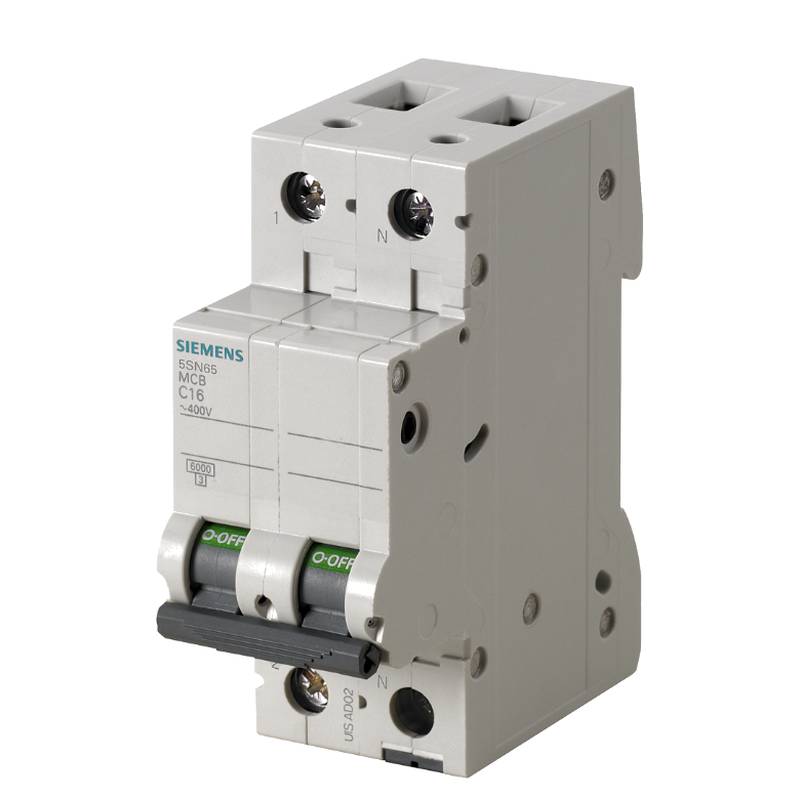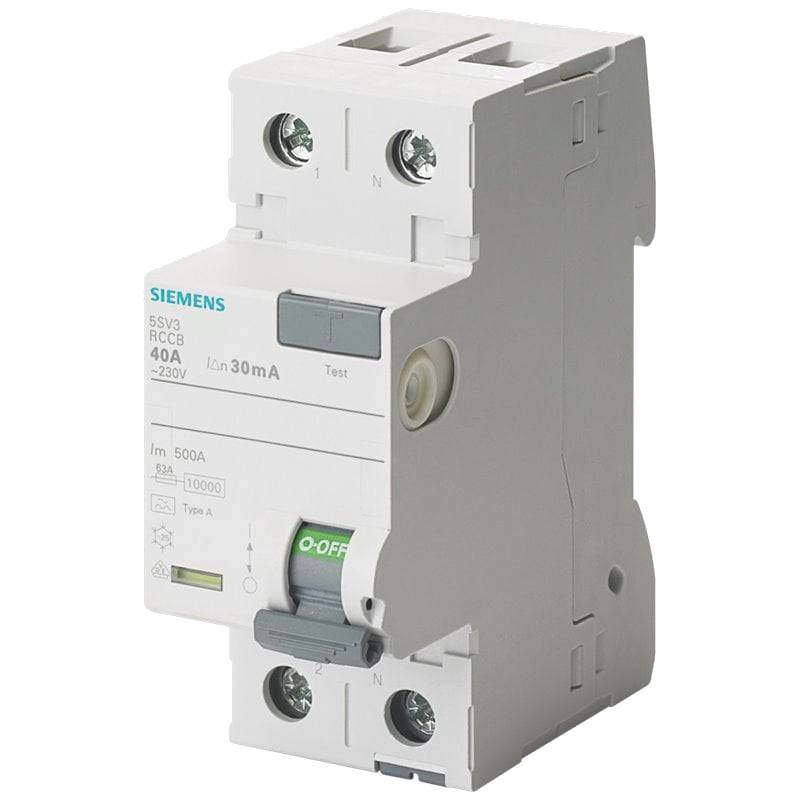
Siemens 5SV3317-6 Earth Leakage RCBO Isolator 2P 80A 30mA


The Siemens 5SV3317-6 is a high-performance 2-pole, 80A, 30mA Earth Leakage RCBO Isolator, engineered for superior circuit protection and operational safety in demanding industrial and commercial environments. This advanced device combines residual current protection (RCD) and overcurrent protection (MCB) functions within a single, compact unit, significantly simplifying electrical installations and enhancing reliability. Its robust design ensures consistent performance, safeguarding personnel and equipment from electrical hazards such as shocks, fires, and equipment damage caused by earth faults and overloads. The 5SV3317-6 offers a critical 30mA sensitivity for enhanced personal protection, making it an indispensable component in modern electrical distribution systems.
Product Specifications
| Feature | Specification |
| :--------------------------- | :------------------------------------------------ |
| Product Type | Residual Current Operated Circuit Breaker with Overcurrent Protection (RCBO) |
| Pole Configuration | 2-Pole |
| Rated Current (In) | 80 A |
| Rated Residual Operating Current (IΔn) | 30 mA |
| Rated Breaking Capacity (Icn) | 6 kA |
| Tripping Characteristic | Type AC |
| Voltage Rating | 230/400 V AC |
| Frequency | 50/60 Hz |
| Terminal Type | Screw Terminal |
| Mounting Type | DIN Rail |
| Ambient Temperature Range | -25 °C to +45 °C |
| Compliance | IEC/EN 61009-1 |
Core Features & Market Positioning
The Siemens 5SV3317-6 stands out in the market due to its integration of both RCD and MCB functionalities, offering a space-saving and cost-effective solution for comprehensive electrical safety. This dual-functionality streamlines panel building and reduces the need for separate devices, a key advantage in applications where space is at a premium. Its Type AC tripping characteristic ensures reliable detection of sinusoidal alternating residual currents, providing essential protection against indirect contact. Siemens' reputation for quality and durability further solidifies the 5SV3317-6's market position as a trusted choice for critical infrastructure and industrial settings where performance and safety are non-negotiable.
Key Application Scenarios
This RCBO isolator is exceptionally well-suited for protecting individual circuits in industrial facilities, commercial buildings, and residential complexes. Its primary applications include safeguarding power circuits supplying machinery, lighting systems, and socket outlets where earth leakage faults pose a significant risk. It is particularly valuable in areas with higher moisture levels or where conductive surfaces are prevalent, such as workshops, laboratories, and washdown areas. The 5SV3317-6 is also a robust solution for main distribution boards and sub-distribution panels, ensuring reliable isolation and protection of downstream electrical equipment.
Practical System Integration Guidance
Integrating the Siemens 5SV3317-6 into existing electrical systems is straightforward, leveraging standard DIN rail mounting for quick installation. The 2-pole design allows for simultaneous disconnection of both live and neutral conductors, ensuring complete isolation and preventing hazardous neutral conductor currents. Wiring connections are made via secure screw terminals, accommodating appropriate conductor sizes for the 80A rating. Proper grounding of the protected circuit is paramount for the effective operation of the earth leakage protection. Detailed wiring diagrams and installation best practices are typically found in the product's official technical documentation, ensuring safe and compliant implementation.
Operation and Risk Mitigation
The 5SV3317-6 operates by continuously monitoring the balance of current flowing in the live and neutral conductors. If an imbalance exceeding 30mA occurs, indicating a potential earth fault, the device swiftly trips, interrupting the circuit and preventing electrical shock or fire hazards. This rapid response mechanism is critical for personal safety. Overcurrent protection is also integrated, tripping the circuit in case of overload or short circuit conditions, thus protecting the wiring and connected equipment from damage. Regular testing of the RCBO function using its integrated test button is essential to ensure its continued operational readiness and adherence to safety standards.
Scalability & Long-Term Value
As part of Siemens' comprehensive electrical product portfolio, the 5SV3317-6 offers excellent compatibility with other Siemens components, facilitating seamless integration into larger electrical distribution systems and control panels. While the RCBO itself is a fixed-rated device, its design ensures longevity and reliability, contributing to the long-term value of the electrical installation. For evolving needs, scalability is achieved through the addition of further RCBOs or other protective devices within the Siemens ecosystem, allowing for modular expansion of protection as requirements change. Its robust construction minimizes maintenance needs, further enhancing its long-term economic viability.
Frequently Asked Questions
Q1: What is the primary function of the Siemens 5SV3317-6 RCBO?
The Siemens 5SV3317-6 serves a dual protective role. It acts as a residual current device (RCD) to detect earth leakage currents. It also functions as an overcurrent protection device (MCB) for overloads and short circuits. This combination ensures comprehensive safety for electrical circuits.
This integrated approach offers enhanced safety by detecting dangerous current imbalances. It protects both people and equipment from electrical hazards. The device provides essential protection against electric shock.
Its ability to combine two protective functions simplifies electrical installations. This leads to reduced wiring and panel space requirements. It is a key component for modern electrical safety.
Q2: What does "2P 80A 30mA" signify in the product name?
"2P" indicates that the RCBO has two poles. This means it can switch both the live and neutral conductors simultaneously. This ensures complete isolation of the circuit.
"80A" is the rated current or ampere rating of the device. This specifies the maximum continuous current the RCBO can safely handle. Exceeding this limit will trigger overcurrent protection.
"30mA" refers to the rated residual operating current. This is the sensitivity of the earth leakage protection. It trips when a fault current of 30 milliamperes or more flows to earth.
Q3: Can the Siemens 5SV3317-6 be used for DC circuits?
The Siemens 5SV3317-6 is designed for AC (Alternating Current) circuits. Its tripping mechanism is specifically calibrated for AC residual currents. It is not suitable for direct current (DC) applications.
Using this AC-rated RCBO on DC circuits can lead to unreliable tripping or complete failure. This would compromise safety significantly. Always ensure the device is matched to the circuit type.
For DC circuit protection, separate DC-rated residual current devices and circuit breakers are necessary. Always consult the product specifications for intended use.
Q4: How does the 30mA sensitivity protect against electric shock?
A residual current of 30mA is considered the threshold for causing a potentially dangerous electric shock to humans. The 5SV3317-6 rapidly detects any imbalance of this magnitude. This imbalance signals current flowing through an unintended path, such as a person.
Upon detecting a residual current of 30mA or higher, the RCBO trips almost instantaneously. This swift disconnection interrupts the flow of electricity. It significantly reduces the duration and severity of a potential electric shock.
This rapid interruption is crucial for preventing serious injury or fatality. The 30mA sensitivity is a standard for personal protection devices. It offers a vital layer of safety in many environments.
Q5: What is the breaking capacity (Icn) of this RCBO?
The breaking capacity, denoted as Icn, for the Siemens 5SV3317-6 is 6 kA (kiloamperes). This rating specifies the maximum fault current the device can safely interrupt without sustaining damage. It ensures the RCBO can handle and safely clear short-circuit events.
A higher breaking capacity indicates a more robust protective device. It is essential that the breaking capacity of the protective device is greater than or equal to the prospective short-circuit current at the point of installation. This prevents catastrophic failure during a fault.
The 6 kA rating is suitable for many standard residential, commercial, and light industrial applications. Always verify this against the system's fault current levels for compliance.
Q6: What type of residual current does this RCBO detect?
The Siemens 5SV3317-6 is a Type AC RCBO. This means it is designed to detect sinusoidal alternating residual currents. These are the most common types of residual currents encountered in standard AC power systems.
It will reliably trip for alternating fault currents but may not detect pulsating DC residual currents. For applications where pulsating DC currents might occur, Type A or Type B RCDs are required. Understanding the type is critical for correct application.
Ensure the electrical system's characteristics align with the Type AC capability for optimal performance and safety. Check the application environment for potential non-AC fault current sources.
Q7: How do I test the functionality of the Siemens 5SV3317-6?
The RCBO is equipped with a built-in test button, usually labeled "T". To test, press this button firmly. This simulates an earth fault condition, and the RCBO should trip, disconnecting the circuit.
Perform this test periodically, typically monthly, to ensure the tripping mechanism remains functional. Always reset the device after testing by lifting the switch lever. If the device does not trip, it requires immediate inspection or replacement.
Ensure the circuit is not under load or that essential services are not interrupted before testing. Consult the product manual for specific testing instructions and safety precautions.
Q8: What are the key advantages of using an RCBO over separate RCD and MCB?
Using an RCBO like the 5SV3317-6 offers significant space savings in electrical panels. It combines two devices into one, reducing clutter and simplifying wiring. This leads to more compact and aesthetically pleasing installations.
There is also a cost advantage, as purchasing a single RCBO can be more economical than buying separate RCD and MCB units. Installation is also streamlined, as fewer connections are required. This can reduce labor costs.
Integrated devices also minimize potential points of failure. Troubleshooting can be simpler as there is only one device to check for combined fault conditions. It offers a neat and efficient protective solution.
Q9: What is the operating temperature range for this device?
The Siemens 5SV3317-6 is designed to operate reliably within an ambient temperature range of -25°C to +45°C. This broad range allows for installation in various environmental conditions. It ensures consistent performance across different climates and industrial settings.
Operating outside this specified temperature range can affect the device's performance and lifespan. Extreme cold can impact mechanical components, while excessive heat can affect electrical insulation and tripping characteristics. Adherence to this range is crucial.
Always ensure adequate ventilation around the electrical panel where the RCBO is installed. This helps maintain the ambient temperature within the recommended limits for optimal operation.
Q10: Is the Siemens 5SV3317-6 compatible with smart home or IIoT systems?
The standard Siemens 5SV3317-6 RCBO is primarily a mechanical protective device. It does not inherently possess direct communication capabilities for smart home or IIoT integration. Its core function is electrical safety, not data networking.
For smart grid or IIoT applications, Siemens offers advanced solutions. These might include smart meters, communication-enabled circuit breakers, or gateway devices. These can monitor and control circuits remotely and provide data logging.
To integrate protection into an IIoT system, you would typically use compatible Siemens automation components. These would work in conjunction with standard protective devices like the 5SV3317-6 to provide the necessary intelligence.