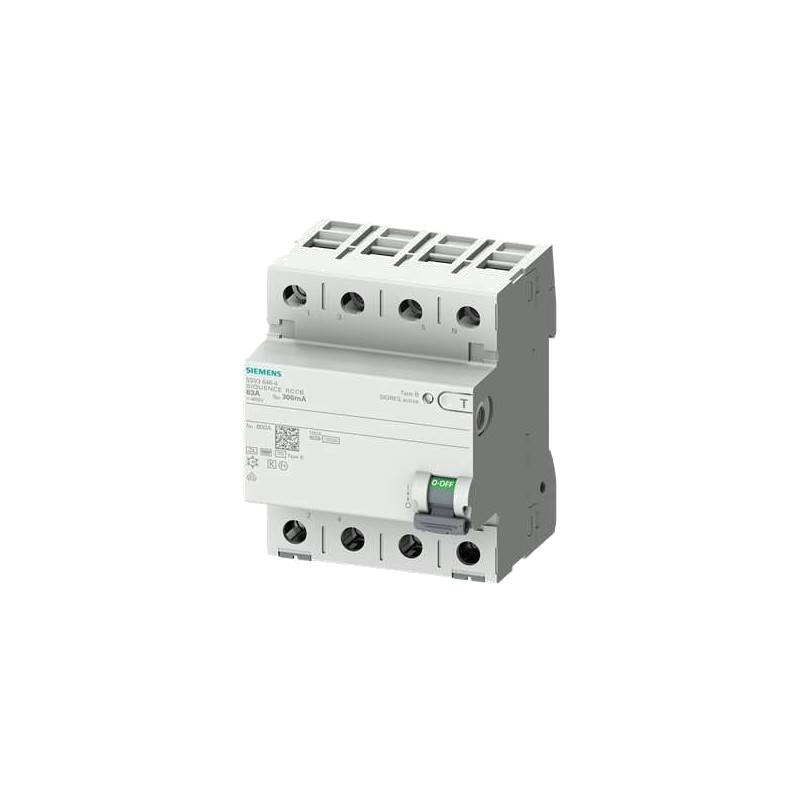












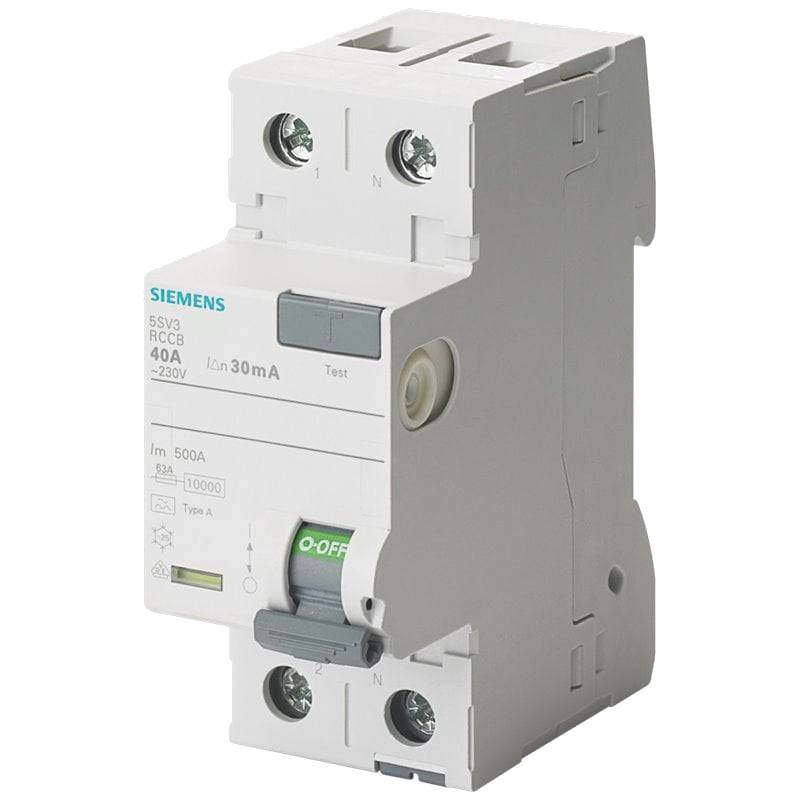
Siemens 5SV3616-6 Miniature Circuit Breaker 2P 63A 300mA


The Siemens 5SV3616-6 Miniature Circuit Breaker (MCB) is a robust 2-pole, 63 Amp, 300mA residual current device designed for reliable protection in demanding industrial and commercial environments. This MCB offers superior safety through its high breaking capacity and precise tripping characteristics, safeguarding electrical installations against overcurrents and earth faults. Its compact design facilitates efficient space utilization in distribution boards, while its advanced tripping mechanism ensures rapid disconnection, minimizing damage and downtime. Key technical parameters include a rated voltage of 400V AC, a rated current of 63A, and a residual current sensitivity of 300mA, all contributing to its performance as a critical safety component in modern electrical systems.
Product Specifications
| Parameter | Value |
| :------------------- | :------------------------- |
| Product Type | Miniature Circuit Breaker |
| Manufacturer | Siemens |
| Series | 5SV3 |
| Poles | 2 |
| Rated Current (In) | 63 A |
| Rated Residual Current (IΔn) | 300 mA |
| Rated Voltage (Un) | 400 V AC |
| Breaking Capacity (Icn) | 6 kA |
| Tripping Curve | Type B or C (typical, to be confirmed by specific datasheet) |
| Frequency | 50/60 Hz |
| Terminal Type | Screw Terminals |
| Mounting Type | DIN Rail |
| Protection Class | IP20 (device), IP40 (enclosure) |
| Operating Temperature | -25°C to +45°C |
Core Features & Market Positioning
The Siemens 5SV3616-6 distinguishes itself through its robust construction and adherence to stringent international safety standards, positioning it as a dependable choice for professionals seeking reliable circuit protection. Its 6 kA breaking capacity is a significant advantage, offering ample protection against short circuits in systems where fault currents can be substantial. The 300mA residual current setting is optimized for industrial applications and certain commercial settings requiring enhanced protection against fire hazards and electrical shock, exceeding standard residential protection levels. This MCB leverages Siemens' established reputation for quality and innovation, ensuring consistent performance and longevity, which translates into reduced maintenance costs and enhanced operational safety for end-users.
Key Application Scenarios
This Siemens 5SV3616-6 MCB is ideally suited for protecting electrical circuits in industrial facilities, manufacturing plants, and large commercial buildings where higher current loads and increased fault risks are prevalent. Its 63A rating makes it suitable for branch circuits feeding machinery, heavy-duty equipment, and main distribution panels. The 300mA residual current sensitivity is particularly effective in preventing fires caused by insulation faults and providing an additional layer of protection against indirect contact in environments with increased electrical conductivity or where personnel are in close proximity to electrical apparatus. Common applications include motor control circuits, power distribution for workshops, and protection of large appliance circuits.
Practical System Integration Guidance
Integrating the Siemens 5SV3616-6 into existing electrical systems is straightforward due to its standard DIN rail mounting and familiar terminal layout. Ensure the main power supply is de-energized before installation. Connect the line conductors to the designated input terminals and the load conductors to the output terminals, observing proper polarity. For 2-pole operation, both line and neutral conductors should be connected and protected by the MCB. The screw terminals accommodate a wide range of wire gauges, typically from 10mm² to 35mm² for 63A, ensuring secure connections. Proper torque application, as specified by Siemens, is critical for preventing overheating and ensuring long-term reliability. Always verify that the upstream protection device is adequately rated and that the total load does not exceed the MCB's 63A capacity.
Operation and Risk Mitigation
The Siemens 5SV3616-6 operates by continuously monitoring both the phase and neutral conductors for current imbalance. When a fault occurs, such as an earth leakage, the current flowing into the protected circuit will not return through the neutral conductor, creating a differential current. If this differential current exceeds the 300mA threshold, the internal mechanism is triggered, causing the MCB to rapidly trip and disconnect the power supply. This significantly reduces the risk of electric shock, fire, and equipment damage. Common issues to mitigate include ensuring correct installation by qualified electricians, periodic testing of the tripping function (often facilitated by a "Test" button on the device), and avoiding overloading circuits beyond the 63A rating. Proper wiring and connection integrity are paramount to prevent nuisance tripping or failure to trip during a fault.
Scalability & Long-Term Value
The 5SV3 series, including the 5SV3616-6, is part of Siemens' broader portfolio of low-voltage electrical components, offering excellent compatibility with other Siemens circuit protection devices, busbars, and enclosures. This ensures seamless integration into existing or expanding electrical infrastructure, providing a scalable solution for growing facilities. While this specific MCB is a fixed-rated device, its inclusion in a well-designed system allows for future upgrades by potentially reconfiguring downstream circuits or upgrading upstream protective devices without necessitating a complete overhaul of the Siemens components. Its robust design and high-quality manufacturing contribute to a long operational lifespan, delivering sustained value and reliable protection over many years of service.
FAQs
1. What is the breaking capacity of the Siemens 5SV3616-6 MCB?
The Siemens 5SV3616-6 MCB features a breaking capacity of 6 kA. This ensures it can safely interrupt fault currents up to this level without sustaining damage. It is suitable for installations where short-circuit currents are likely to exceed lower breaking capacity ratings.
This high breaking capacity provides a critical safety margin in industrial and commercial environments. It protects downstream equipment and personnel from the destructive effects of severe short circuits. Understanding this parameter is key for correct system design and compliance.
When specifying this device, ensure that the prospective fault current at the installation point does not exceed the 6 kA rating for safe operation. This is a fundamental aspect of electrical safety engineering.
2. What is the purpose of the 300mA residual current setting on this MCB?
The 300mA residual current setting is designed for enhanced protection against fire and electric shock. It detects smaller leakage currents that could indicate insulation degradation or incipient faults. These smaller leaks, if unchecked, can lead to overheating and potential fires.
This higher sensitivity (compared to 30mA devices) is typically employed in specific industrial or commercial applications where the risk of fire is a primary concern. It offers a balance between sensitive fault detection and avoiding nuisance tripping from normal operational leakage currents.
In many regulatory frameworks, 300mA RCDs are mandated for certain types of installations to prevent fire hazards arising from persistent low-level earth faults. This makes the 5SV3616-6 a critical component for life safety and asset protection.
3. How does the Siemens 5SV3616-6 protect against electric shock?
This MCB protects against electric shock by rapidly disconnecting power when it detects an imbalance in current. If a person touches a live conductor and an earthed object, current will flow through them to earth. The MCB detects this leakage current.
The 300mA sensitivity means that even a significant leakage current, which could be dangerous, will cause the MCB to trip very quickly. This rapid interruption minimizes the duration of current flow through the body, thus reducing the severity of an electric shock.
It is important to note that while this device offers excellent protection, it does not eliminate all risks. Proper installation, maintenance, and adherence to safety procedures remain essential for complete electrical safety.
4. Can the Siemens 5SV3616-6 be used for both overcurrent and earth fault protection?
Yes, the Siemens 5SV3616-6 is a residual current circuit breaker with overcurrent protection (RCBO). It combines the functions of a miniature circuit breaker (MCB) for overcurrent protection and a residual current device (RCD) for earth leakage protection in a single unit.
The MCB function protects against overloads and short circuits, ensuring the circuit is not subjected to excessive current. Simultaneously, the RCD function monitors for earth faults, tripping when it detects an imbalance between the live and neutral conductors.
This dual functionality simplifies installation and reduces space requirements in electrical panels compared to using separate MCBs and RCDs. It provides comprehensive protection against the most common electrical hazards.
5. What type of tripping curve is typically associated with the Siemens 5SV3616-6?
While specific datasheets must be consulted, miniature circuit breakers like the Siemens 5SV3616-6 are commonly available with Type B or Type C tripping characteristics. Type B is generally for lower inrush currents, while Type C is designed for circuits with higher inductive loads.
Type C breakers are designed to withstand higher peak currents for a short duration without tripping, making them suitable for circuits feeding motors, transformers, or fluorescent lighting. These types of loads can cause temporary current surges upon energization.
The choice between Type B and Type C depends on the specific application and the nature of the connected loads. For most industrial machinery, a Type C curve is often preferred to prevent nuisance tripping.
6. What is the rated voltage and frequency for this MCB?
The Siemens 5SV3616-6 MCB is rated for operation at 400V AC. This voltage rating is standard for many industrial and commercial power distribution systems in Europe and other regions. It is crucial to ensure the supply voltage does not exceed this rating.
The device is also designed to operate reliably on a frequency of either 50 Hz or 60 Hz. This dual-frequency capability makes it suitable for a wide range of geographical locations and compliant with international electrical standards.
Always verify the voltage and frequency of your electrical supply to ensure compatibility with the MCB's specifications for safe and effective operation. Mismatched ratings can lead to device failure or safety hazards.
7. How is the Siemens 5SV3616-6 installed in an electrical panel?
The Siemens 5SV3616-6 is designed for easy installation onto a standard 35mm DIN rail. This is the universal mounting standard for many modular electrical components in distribution boards and control cabinets.
Installation involves snapping the MCB onto the DIN rail. Connections are made via screw terminals, which typically accommodate conductors of various sizes, facilitating a secure electrical interface for both incoming and outgoing power.
It is essential to ensure the DIN rail is properly grounded and that all connections are tightened to the manufacturer's recommended torque specifications to prevent overheating and ensure reliable electrical contact. Always de-energize the panel before commencing installation.
8. What are the typical environments where the 5SV3616-6 would be deployed?
This MCB is typically deployed in industrial settings such as manufacturing plants, workshops, and processing facilities where robust protection is needed for machinery and power distribution. It is also suitable for commercial buildings, including offices, retail spaces, and hotels, especially for sub-distribution boards or circuits with higher demand.
Its IP20 protection class for the device itself means it is protected against solid objects greater than 12.5mm and offers no protection against water. Therefore, it should be installed within an enclosure (like a distribution board) that provides adequate environmental protection (e.g., IP40).
Common applications include protecting motor circuits, lighting circuits, socket outlets, and general power circuits that require both overcurrent and earth leakage protection.
9. Does Siemens offer accessories for the 5SV3616-6?
Yes, Siemens typically offers a range of accessories for their modular circuit protection devices, including the 5SV3 series. These can include auxiliary contacts for remote signaling of the MCB's status (tripped or on/off), shunt trip releases for remote tripping, and various busbar connectors for panel building.
These accessories enhance the functionality of the MCB, allowing for integration into more complex control and monitoring systems. Auxiliary contacts, for instance, are crucial for SCADA systems or building management systems to provide real-time status updates.
When planning a system, consult Siemens' product catalog or contact their technical support to identify compatible accessories that can extend the capabilities of the 5SV3616-6 for specific application requirements.
10. What is the expected lifespan and maintenance for this type of MCB?
Miniature circuit breakers like the Siemens 5SV3616-6 are designed for a long operational lifespan, often exceeding 15-20 years under normal operating conditions. The lifespan is typically measured in the number of switching cycles and the severity of fault interruptions.
Routine maintenance is generally minimal, focusing on visual inspection for damage and ensuring connections remain tight. Periodic testing of the tripping function, often annually or as per site regulations, is highly recommended to confirm its operational readiness.
While robust, factors like frequent nuisance tripping, exposure to extreme environmental conditions, or significant fault interruptions can reduce the lifespan. Proactive system design and load management contribute to maximizing the longevity and reliability of the MCB.