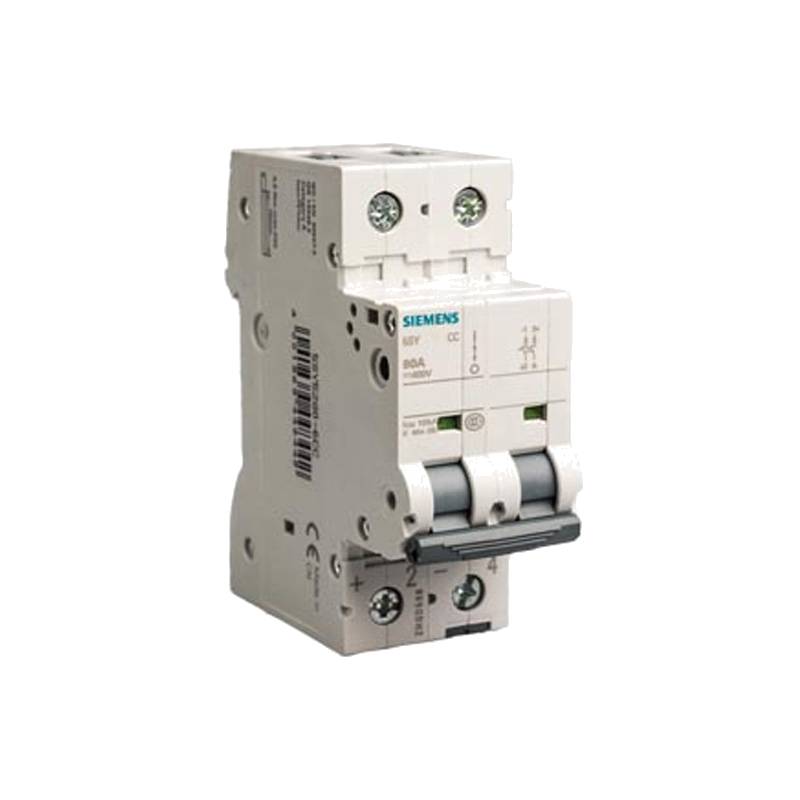












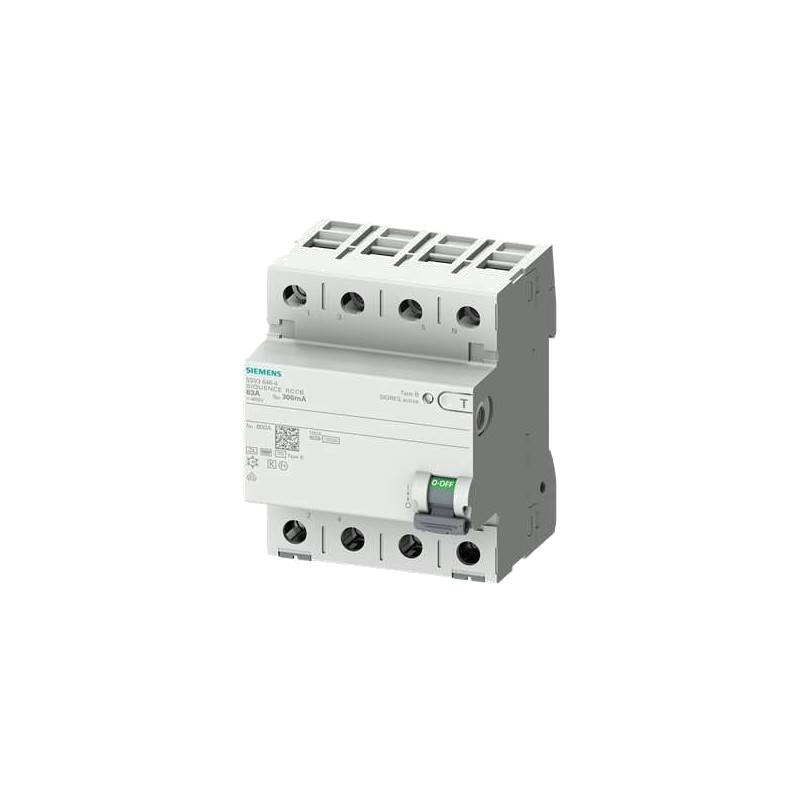
Siemens 5SV3342-6KK12 RCBO Circuit Breaker 4P 25A 30mA


The Siemens 5SV3342-6KK12 RCBO is a robust four-pole, 25-ampere residual current circuit breaker with a 30mA trip current, designed for superior protection against electric shock and fire hazards in demanding industrial and commercial environments. This advanced device combines overcurrent protection with sensitive residual current detection, offering a compact and reliable solution for safeguarding electrical installations. Its key advantages include enhanced safety through rapid fault interruption, reduced downtime with integrated overload and short-circuit protection, and simplified installation due to its space-saving four-pole design.
Product Specifications
| Specification | Value |
| :------------------- | :---------------------------------------- |
| Product Type | RCBO (Residual Current Breaker with Overcurrent Protection) |
| Manufacturer | Siemens |
| Series | 5SV3 |
| Number of Poles | 4 |
| Rated Current (In) | 25 A |
| Rated Residual Current (IΔn) | 30 mA |
| Rated Voltage (Un) | 400 V AC |
| Breaking Capacity (Icn) | 6 kA |
| Trip Curve | Type A |
| Frequency | 50/60 Hz |
| Protection Class | IP20 |
| Terminal Type | Screw Terminals |
| Mounting Type | DIN Rail |
| Operating Temperature | -25°C to +45°C |
Core Features & Market Positioning
The Siemens 5SV3342-6KK12 RCBO distinguishes itself in the market through its superior combination of residual current and overcurrent protection within a single, highly reliable unit. As part of Siemens' extensive range of low-voltage protection devices, it leverages decades of expertise in electrical engineering to ensure operational safety and system integrity. The Type A tripping characteristic provides enhanced protection against both sinusoidal AC residual currents and pulsating DC residual currents, a crucial differentiator in applications where mixed current types are present. Its robust breaking capacity of 6 kA ensures it can safely interrupt fault currents, making it suitable for installations with significant short-circuit potential. This RCBO is positioned as a premium, dependable solution for professionals demanding high performance and comprehensive safety in diverse electrical systems.
Key Application Scenarios
This Siemens 5SV3342-6KK12 RCBO is ideally suited for protecting circuits in a variety of demanding environments. It is commonly specified for main distribution boards in commercial buildings, industrial facilities, and workshops where reliable protection against overload, short circuits, and sensitive residual currents is paramount. Its four-pole configuration makes it exceptionally useful for protecting three-phase loads, such as motors and pumps, ensuring all phases are disconnected simultaneously in the event of a fault. It's also an excellent choice for circuits supplying sensitive electronic equipment that could be affected by waveform distortions, thanks to its Type A tripping characteristic. The 30mA sensitivity is specifically designed for personal protection against electric shock in areas with increased risk, such as areas with water presence or where conductive parts are easily touched.
Practical System Integration Guidance
Integrating the Siemens 5SV3342-6KK12 RCBO into existing or new electrical systems is a straightforward process for qualified electricians. The unit is designed for standard DIN rail mounting, ensuring compatibility with most distribution boards. For wiring, ensure the line conductors (L1, L2, L3, N) are connected to the upper terminals in the correct sequence, and the load conductors are connected to the lower terminals. The dedicated neutral terminal is essential for proper residual current detection. When connecting to three-phase loads, it is critical to ensure the breaker is rated for the total load current and the system's prospective short-circuit current. Always verify that the incoming power supply is de-energized before commencing any wiring work to prevent electric shock. Proper torque should be applied to the screw terminals as specified by Siemens to ensure secure connections and prevent overheating.
Operation and Risk Mitigation
The Siemens 5SV3342-6KK12 RCBO operates by continuously monitoring the balance of current flowing through the live and neutral conductors. If an imbalance exceeding 30mA occurs – indicative of a fault to earth or a person – the device rapidly trips, interrupting the circuit and mitigating the risk of electric shock or fire. In addition to residual current protection, it also provides overload and short-circuit protection, preventing damage to the connected equipment and wiring due to excessive current. The test button integrated into the device allows for periodic verification of the residual current trip function, a critical step in risk mitigation and ensuring ongoing safety. Regular testing, as recommended by electrical codes and standards, is vital. In the event of nuisance tripping, common causes include insulation degradation, faulty appliances, or transient surges; a systematic troubleshooting approach involving insulation resistance testing and appliance inspection is recommended.
Scalability & Long-Term Value
The Siemens 5SV3342-6KK12 RCBO offers significant long-term value through its robust construction and compatibility with Siemens' broader industrial automation and electrical distribution ecosystem. While this specific unit is a standalone protective device, its integration into Siemens' product lines ensures that it aligns with the company's future technological advancements in smart grids and digitalized electrical infrastructure. Its reliable performance minimizes unexpected downtime and potential equipment damage, directly contributing to operational continuity and cost savings. For facility upgrades or expansions, the standardized DIN rail mounting and clear terminal markings simplify retrofitting and integration with other Siemens circuit breakers, contactors, and monitoring devices, ensuring a scalable and coherent electrical system design that can adapt to evolving industrial needs.
Frequently Asked Questions
What is the primary function of the Siemens 5SV3342-6KK12 RCBO?
This RCBO provides combined protection against electric shock, fire hazards, and overcurrent faults. It detects small imbalances in current flow, signaling a potential safety risk.
It integrates residual current detection with overload and short-circuit protection in a single device. This dual function enhances safety and simplifies electrical panel design.
The 30mA tripping sensitivity is crucial for personal protection, quickly interrupting power when leakage current exceeds safe limits.
What are the key technical specifications of the 5SV3342-6KK12?
The breaker has 4 poles and a rated current of 25 Amperes. Its residual current sensitivity is 30 milliamperes.
It operates at a rated voltage of 400V AC and features a breaking capacity of 6 kA. The trip curve is Type A for enhanced fault detection.
It is designed for DIN rail mounting and has a protection class of IP20, suitable for standard industrial environments.
Where is this specific RCBO most commonly applied?
It is ideal for protecting three-phase circuits in industrial and commercial settings. This includes motors, pumps, and machinery.
The 30mA tripping level makes it suitable for personnel protection in areas with higher risks of electric shock. This could be in workshops or near conductive surfaces.
Its Type A characteristic is beneficial for circuits with mixed AC and pulsating DC leakage currents, offering broader protection capabilities.
Can the Siemens 5SV3342-6KK12 be used for single-phase applications?
While it is a four-pole device, it can be adapted for single-phase applications by utilizing only two poles (L and N). This requires careful wiring to ensure correct operation.
Using a four-pole breaker for single-phase may be overkill but provides a robust solution. Ensure proper isolation of unused poles according to local electrical codes.
For dedicated single-phase circuits, a two-pole RCBO might be more space-efficient, but the 5SV3342-6KK12 offers flexibility if three-phase capacity might be needed later.
How does the Type A tripping characteristic differ from Type AC?
Type A RCBOs can detect sinusoidal AC residual currents and pulsating DC residual currents. This is a significant advantage over Type AC.
Type AC RCBOs only detect sinusoidal AC residual currents. They may not trip correctly in situations with pulsating DC components.
Many modern electronic devices produce pulsating DC leakage currents, making Type A the preferred choice for enhanced safety in diverse applications.
What is the importance of the 30mA trip current rating?
The 30mA rating is the standard for residual current devices used for personal protection against electric shock. It is a critical safety threshold.
This level of sensitivity allows the RCBO to react quickly enough to prevent severe injury or fatality from electric shock. It is mandated by many safety regulations.
Lower mA ratings (e.g., 10mA) are used for special applications requiring even higher sensitivity, but 30mA is the benchmark for general safety.
How often should the test button on the RCBO be used?
The test button should be operated periodically to verify the proper functioning of the residual current tripping mechanism. Monthly testing is a common recommendation.
Regular testing ensures the RCBO remains operational and ready to protect against earth faults. This is a vital part of electrical safety maintenance.
Always ensure the circuit is energized when testing. De-energize the circuit if any issues are detected during testing before further investigation.
What are the implications of a 6 kA breaking capacity?
A 6 kA breaking capacity means the RCBO can safely interrupt a short-circuit fault current of up to 6,000 Amperes. This rating is crucial for system safety.
This capacity ensures the device can handle fault conditions without failing or causing further damage. It is important to match this to the prospective fault current of the installation.
Installations with higher fault current potential may require RCBOs with higher breaking capacities, such as 10 kA or more. Consult electrical design specifications.
How does this RCBO contribute to energy efficiency or system optimization?
While primarily a safety device, reliable protection minimizes equipment downtime and damage, indirectly supporting operational efficiency. Preventing electrical fires also avoids significant energy and resource loss.
By integrating overload protection, it prevents excessive current draw that can lead to overheating and energy wastage in wiring and connected equipment. This promotes better power management.
Its precise tripping characteristics ensure it only intervenes when necessary, avoiding unnecessary disconnections that could disrupt production or operations.
Is the Siemens 5SV3342-6KK12 compatible with smart home or IoT systems?
This specific model is a traditional industrial component and does not have built-in smart connectivity for direct IoT integration. It focuses on core protective functions.
However, Siemens offers a range of advanced circuit protection devices and power monitoring solutions that can be integrated into IoT platforms. These may complement the 5SV3342-6KK12 in a broader system.
For smart functionality, one would typically look at Siemens' newer lines of connected devices or incorporate external smart meters and gateways into the electrical panel.