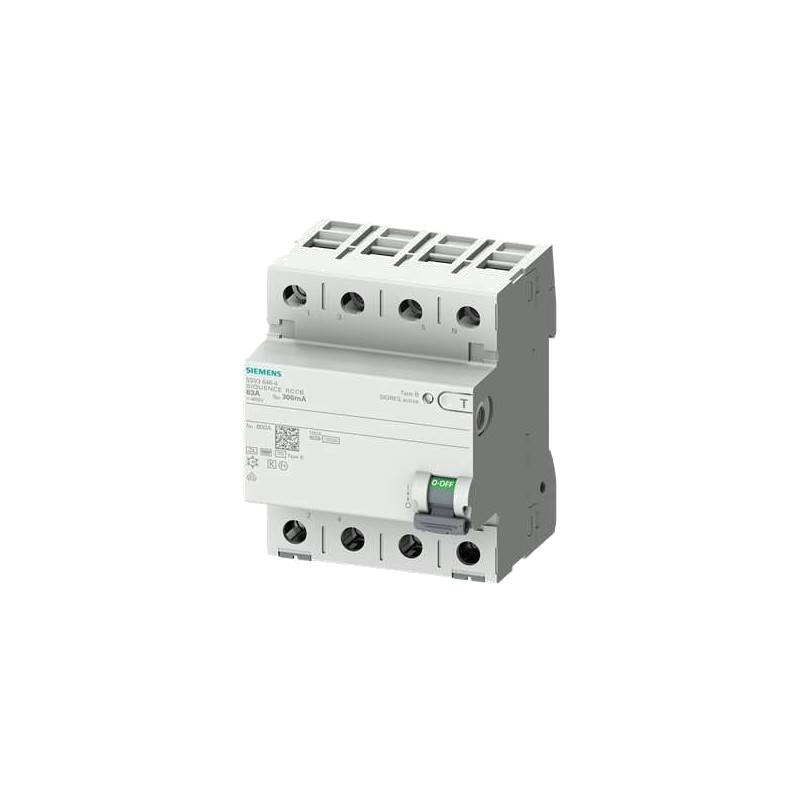












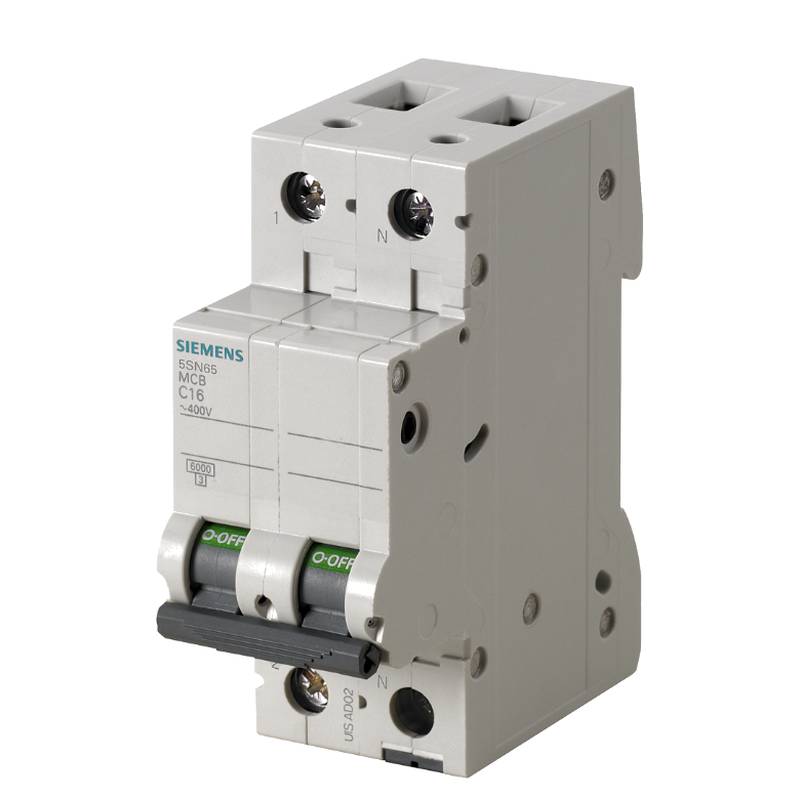
Siemens 5SN6520-8CN High Power Motor Protection MCB 1P+N 20A


The Siemens 5SN6520-8CN is a highly efficient 1-pole + neutral Motor Protection Miniature Circuit Breaker (MCB) rated at 20A, engineered for robust protection of electric motors in industrial and commercial applications. This device offers superior overcurrent and short-circuit protection, ensuring operational continuity and safeguarding valuable equipment. Its core advantages lie in its precise tripping characteristics, advanced thermal-magnetic release mechanism, and compact design, facilitating easy integration into control panels. Key technical parameters include a rated voltage of 230/400V, breaking capacity of 6kA, and adherence to stringent international standards such as IEC 60898-1 and IEC 60947-2.
Product Specifications
| Feature | Specification |
| :---------------------- | :--------------------------------- |
| Product Type | Motor Protection MCB |
| Poles | 1P+N (1 Pole + Neutral) |
| Rated Current (In) | 20A |
| Rated Voltage (Ue) | 230/400V AC |
| Breaking Capacity (Icn) | 6kA |
| Tripping Characteristic | Thermal-Magnetic |
| Frequency | 50/60 Hz |
| Ambient Temperature | -25°C to +45°C |
| Protection Class | IP20 |
| Standards | IEC 60898-1, IEC 60947-2 |
| Terminal Type | Screw Terminals |
| Mounting | DIN Rail (35mm) |
Core Features & Market Positioning
The Siemens 5SN6520-8CN distinguishes itself through its finely tuned thermal-magnetic release, which provides selective protection against both overload and short-circuit conditions, thereby minimizing nuisance tripping and maximizing motor uptime. This precision engineering positions it as a reliable component for safeguarding critical motor loads in demanding environments. Its compatibility with the broader Siemens industrial control and automation ecosystem further enhances its value, offering seamless integration into existing Siemens-based electrical infrastructure. The robust construction ensures longevity and consistent performance, a hallmark of Siemens' commitment to quality and industrial durability.
Key Application Scenarios
This 1P+N MCB is ideally suited for protecting single-phase motors, pumps, fans, compressors, and other inductive loads found in manufacturing plants, HVAC systems, and water treatment facilities. Its 20A rating makes it a versatile choice for medium-sized motor applications where precise overcurrent protection is paramount. The inclusion of neutral pole protection is particularly beneficial in systems where unbalanced loads or neutral conductor faults can occur, preventing potential damage and ensuring operational safety. It is also commonly specified in control panel building for original equipment manufacturers (OEMs) requiring reliable motor protection solutions.
Practical System Integration Guidance
Integrating the Siemens 5SN6520-8CN into electrical systems is straightforward due to its standard DIN rail mounting and accessible screw terminals. For installation, ensure the main power supply is de-energized. Connect the incoming power conductors to the line side terminals and the motor or downstream load to the load side terminals, ensuring correct polarity for the live and neutral conductors. Proper wire sizing according to local electrical codes and the MCB's 20A rating is crucial for safe and efficient operation. While this device is primarily a protective component and does not require programming, it should be wired in series with the motor control circuit, often after a contactor, to provide comprehensive protection.
Operation and Risk Mitigation
The Siemens 5SN6520-8CN operates by continuously monitoring the current flowing through the protected circuit. The thermal element responds to sustained overloads, while the magnetic element reacts instantaneously to high fault currents, tripping the breaker to interrupt power. This dual-action mechanism prevents motor burnout from gradual overheating and protects against damaging short circuits. To mitigate risks, always ensure the MCB is correctly rated for the motor's full-load current and starting characteristics. Avoid bypassing or tampering with the device, and conduct regular visual inspections for any signs of damage or wear. In case of repeated tripping, investigate the underlying cause of the fault (e.g., motor issue, wiring problem) rather than oversizing the breaker.
Scalability & Long-Term Value
The 5SN6520-8CN offers significant long-term value through its inherent reliability and compatibility with Siemens' extensive range of industrial automation products. While this specific MCB is a fixed-rating device, its integration into modular switchboard systems allows for easy replacement or upgrade should motor requirements change. Its adherence to international standards ensures it remains relevant and compatible with evolving electrical infrastructure. For facilities looking to enhance monitoring and diagnostics, this MCB can be part of a larger system that includes intelligent motor control and communication modules, paving the way for IIoT integration and predictive maintenance strategies.
Frequently Asked Questions
What is the primary function of the Siemens 5SN6520-8CN?
The Siemens 5SN6520-8CN serves as a motor protection circuit breaker. It is designed to safeguard electric motors from damage caused by overcurrents and short circuits. This prevents costly downtime and extends the lifespan of motor-driven equipment.
This device offers precise tripping thresholds for both thermal overloads and rapid short-circuit events. It ensures that power is disconnected quickly and reliably when abnormal conditions are detected, protecting the motor windings from overheating and electrical faults.
Its 1-pole + neutral configuration is suitable for single-phase motor applications, offering a comprehensive protection solution for the live and neutral conductors. It meets rigorous industrial safety and performance standards.
How does the thermal-magnetic release work in this MCB?
The MCB utilizes a two-stage protection mechanism. The thermal element, typically a bimetallic strip, detects sustained overcurrents by heating up and bending. This bending action eventually triggers the release mechanism, opening the circuit.
The magnetic element provides instantaneous protection against severe short circuits. A sudden, high surge of current generates a strong magnetic field that immediately trips the mechanism, interrupting the circuit far faster than the thermal element can react.
Together, these elements provide reliable protection against both slow, gradual overloads that can overheat a motor and sudden, damaging short circuits. This dual functionality is crucial for comprehensive motor safeguarding.
Can the Siemens 5SN6520-8CN be used for DC motor applications?
The Siemens 5SN6520-8CN is specifically designed and rated for AC (Alternating Current) applications. It is not intended or certified for use in DC (Direct Current) circuits. Using it in a DC system could lead to improper operation, failure to trip, and significant safety hazards.
DC circuits have different arc-quenching requirements and characteristics compared to AC circuits. MCBs designed for AC may not be able to extinguish the arc effectively when interrupting DC current, potentially leading to equipment damage or electrical fires.
Always ensure that the circuit breaker's specifications match the type of current (AC or DC) and voltage of the system it will be installed in. For DC motor protection, specific DC-rated circuit breakers must be selected.
What is the breaking capacity of the 5SN6520-8CN and why is it important?
The breaking capacity, or interrupting rating, of the Siemens 5SN6520-8CN is 6kA. This is a critical safety parameter indicating the maximum fault current the MCB can safely interrupt without sustaining damage. A higher breaking capacity signifies a more robust device capable of handling larger short-circuit currents.
If a short circuit occurs that exceeds the MCB's breaking capacity, the device may fail catastrophically. This could result in an explosion, fire, and widespread damage to the electrical system, posing severe risks to personnel and property.
Therefore, it is essential to ensure that the breaking capacity of the installed MCB is greater than the prospective fault current at the point of installation. This ensures reliable protection and safety in the event of a fault.
What are the typical installation requirements for this 1P+N MCB?
Installation requires mounting the MCB onto a standard 35mm DIN rail within an electrical enclosure. Ensure that the power supply to the enclosure is completely de-energized before commencing any wiring work. Connect the line conductor to the designated line terminal and the neutral conductor to the neutral terminal on the MCB.
The load connections for the motor or protected circuit are made to the corresponding load-side terminals. It is crucial to use appropriately sized conductors that comply with local electrical codes and the MCB's 20A rating to prevent overheating and ensure efficient current transfer.
After wiring, double-check all connections for tightness and correct polarity. Once confirmed, power can be restored, and the MCB can be operated by its toggle switch. Regular inspection of terminals for any signs of corrosion or looseness is recommended.
How does the 5SN6520-8CN protect against motor overload?
The MCB's built-in thermal element is responsible for detecting motor overloads. This component typically consists of a bimetallic strip that heats up due to excessive current flow over a prolonged period. As the strip heats, it bends, and this mechanical action eventually trips the MCB's internal mechanism, interrupting the power supply to the motor.
This slow-acting thermal protection is crucial because motors can draw slightly higher currents during startup or when operating under heavy loads. The thermal element is calibrated to tolerate these temporary excursions without tripping but will activate if the overload condition persists, preventing the motor windings from reaching damaging temperatures.
By disconnecting power during sustained overloads, the thermal mechanism prevents gradual overheating that can degrade insulation, reduce motor efficiency, and ultimately lead to motor failure. It is a key feature for extending motor lifespan.
What is the short-circuit protection mechanism in the 5SN6520-8CN?
The short-circuit protection is handled by the magnetic element within the MCB. This element is essentially an electromagnet that reacts to sudden, very high current surges characteristic of short circuits. When a fault current of a specific magnitude flows through the MCB, it generates a strong magnetic field.
This powerful magnetic field immediately actuates a tripping mechanism, causing the MCB contacts to open very rapidly, often within milliseconds. This instantaneous interruption is vital to prevent severe damage to the motor, associated wiring, and other electrical components from the immense energy released during a short circuit.
The magnetic trip point is set much higher than the thermal trip point, ensuring that the MCB only interrupts for true fault conditions and not for normal operational current fluctuations or moderate overloads. This selective coordination is a cornerstone of effective electrical protection.
What are the voltage and frequency ratings for this Siemens MCB?
The Siemens 5SN6520-8CN is rated for use with AC power systems. Its specified voltage rating is 230/400V AC. This means it is suitable for single-phase systems operating at 230V (between line and neutral) and three-phase systems operating at 400V (between phases), where it would protect individual phases and potentially their neutral connections in specific configurations.
The frequency rating for this MCB is 50/60 Hz. This dual-frequency capability makes it suitable for use in most global regions, as both 50 Hz and 60 Hz are standard power frequencies for industrial and commercial electricity supplies worldwide.
It is imperative to ensure that the supply voltage and frequency of the electrical system match these specifications to guarantee safe and effective operation of the circuit breaker and the connected equipment.
Is this MCB suitable for use in hazardous (explosive) environments?
The Siemens 5SN6520-8CN is designed for general-purpose industrial and commercial applications and is not rated for use in hazardous or explosive environments. These environments require specialized equipment, often designated with ATEX or similar certifications, which have enhanced safety features to prevent ignition of flammable atmospheres.
Standard MCBs like the 5SN6520-8CN do not possess the necessary enclosure sealing, explosion-proof construction, or arc containment features required to operate safely where explosive dusts, gases, or vapors might be present. Using them in such locations poses a significant risk of ignition and explosion.
For installations in potentially explosive atmospheres, consult with a qualified electrical engineer to select appropriate, certified equipment that meets the specific safety standards and classifications for that hazardous location.
What is the significance of the '1P+N' designation in the product name?
The '1P+N' designation signifies that the circuit breaker has one protected pole for the live conductor and also incorporates a switched neutral pole. In a single-phase system, this means both the live wire and the neutral wire are interrupted when the breaker trips, offering a more complete disconnection.
While a standard 1-pole breaker only interrupts the live conductor, leaving the neutral connected, the 1P+N version provides enhanced safety by isolating both conductors. This is particularly beneficial for maintenance work, as it ensures the circuit is fully de-energized, reducing the risk of electric shock from potential grounding issues or residual voltage.
This type of breaker is commonly used in specific single-phase applications where code requirements or safety best practices mandate the switching of the neutral conductor alongside the live conductor.