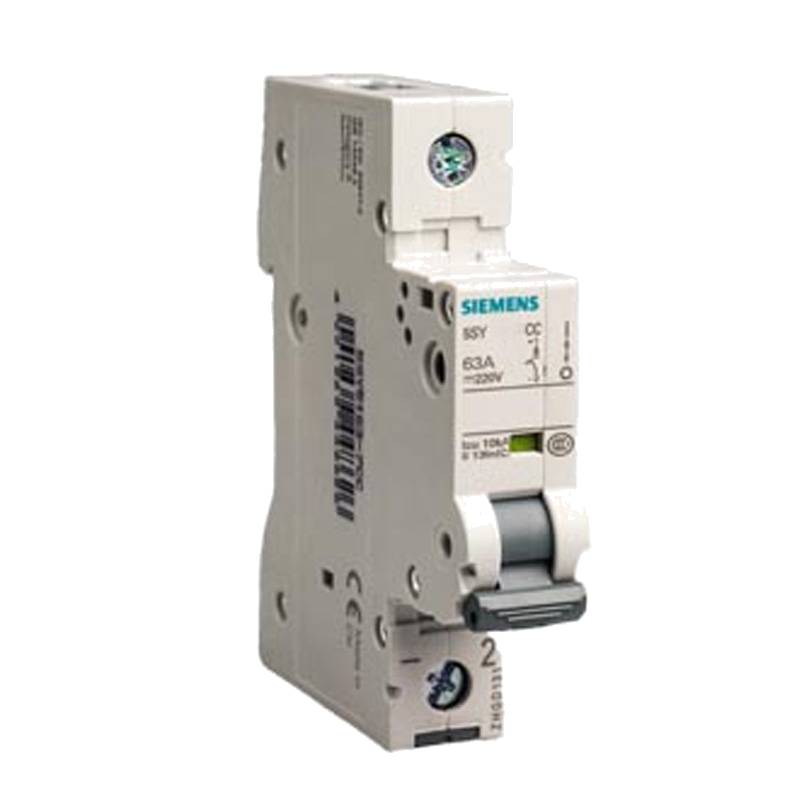












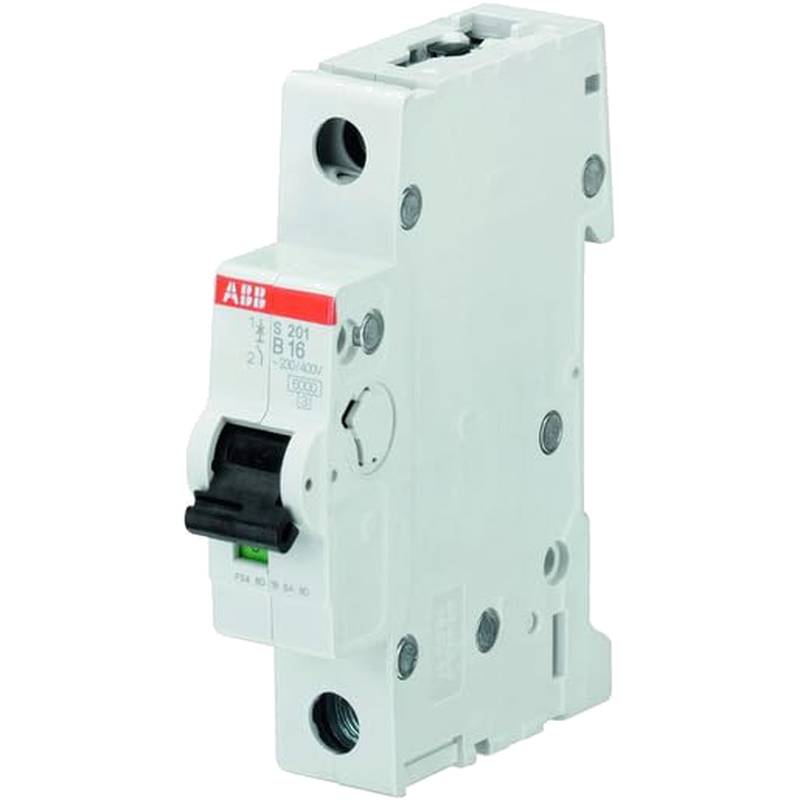
ABB S201-C4 Miniature Breaker 4A Current Limiting Unit


The ABB S201-C4 Miniature Circuit Breaker (MCB) is a highly reliable and efficient current-limiting unit designed for robust overcurrent protection in a wide range of electrical installations. Engineered for demanding industrial and commercial environments, this single-pole MCB offers exceptional performance and safety. Its compact design, coupled with advanced tripping characteristics, makes it a preferred choice for safeguarding circuits against short circuits and overloads. With a rated current of 4A and a breaking capacity of 6kA, the S201-C4 ensures swift disconnection, minimizing damage to equipment and preventing electrical hazards. Its Type C tripping curve is particularly suited for applications with moderate inrush currents, such as lighting systems, motors, and general power distribution.
Product Specifications
| Feature | Specification |
| :---------------------- | :----------------------------------------------- |
| Product Type | Miniature Circuit Breaker (MCB) |
| Manufacturer | ABB |
| Series | S200 |
| Pole Configuration | 1 Pole |
| Rated Current (In) | 4A |
| Tripping Curve | C |
| Breaking Capacity (Icn) | 6kA (6000A) |
| Rated Voltage (Ue) | 230/400V AC |
| Frequency | 50/60 Hz |
| Protection Type | Thermal-magnetic |
| Terminal Type | Screw Terminal |
| Mounting Type | DIN Rail (35mm) |
| Degree of Protection | IP20 (IP40 in enclosure) |
| Operating Temperature | -25°C to +45°C |
| Certifications | CE, IEC/EN 60898-1, IEC/EN 60947-2 |
Core Features & Market Positioning
The ABB S201-C4 stands out in the market due to its superior current-limiting capability, a critical feature that rapidly reduces fault current magnitudes, thereby protecting downstream components and wiring from thermal and dynamic stresses. This advanced protection mechanism is a hallmark of ABB's S200 series, positioning it as a premium solution for installers and engineers who prioritize safety and equipment longevity. The robust thermal-magnetic tripping mechanism ensures reliable operation across a wide temperature range, a key differentiator in harsh industrial settings. Furthermore, its compatibility with a broad ecosystem of ABB accessories, such as auxiliary contacts and surge protective devices, enhances its market appeal by offering integrated system solutions.
Key Application Scenarios
The versatile nature of the ABB S201-C4 makes it indispensable across various sectors. In residential and commercial buildings, it is extensively used for protecting lighting circuits, socket outlets, and small appliance circuits where moderate inductive loads are common. Industrial facilities widely deploy the S201-C4 for safeguarding control circuits, auxiliary power supplies, and specific motor loads that fall within its 4A rating and C-curve characteristics. Its application also extends to renewable energy systems, protecting inverter outputs or small energy storage units. The 6kA breaking capacity is sufficient for many standard distribution boards, ensuring compliance with safety regulations for general power distribution networks.
Practical System Integration Guidance
Integrating the ABB S201-C4 into electrical systems is straightforward due to its standard DIN rail mounting. The breaker should be installed in a clean, dry environment, ideally within an enclosure to maintain its IP rating. When wiring, ensure the correct gauge of wire is used, respecting the 4A rating and local electrical codes. Connect the incoming power supply to the upper terminals and the outgoing load to the lower terminals. For systems requiring remote signaling of breaker status or fault conditions, auxiliary contacts can be easily attached to the side of the unit. Always ensure that the main power is isolated before commencing any installation or wiring work.
Operation and Risk Mitigation
The S201-C4 operates by utilizing a bimetallic strip for overload protection and an electromagnetic coil for short-circuit protection. Overloads cause a slow-acting thermal trip, while sudden, high-magnitude currents trigger an almost instantaneous magnetic trip. This dual mechanism ensures comprehensive protection. To mitigate risks, users must ensure the breaker's rated current and tripping curve are correctly selected for the intended circuit load. Overloading the breaker beyond its 4A rating or using it in applications with high inrush currents not suited for a Type C curve can lead to nuisance tripping or, more critically, failure to protect. Regular visual inspection for damage and ensuring secure terminal connections are essential maintenance practices.
Scalability & Long-Term Value
The S200 series, to which the S201-C4 belongs, offers significant scalability and long-term value. Its modular design allows for easy replacement or addition of circuit breakers on a standard DIN rail, facilitating system upgrades or modifications. Compatibility with a wide range of ABB system pro M compact accessories, such as busbars, shunt releases, and undervoltage releases, enables enhanced functionality and integration into more complex control and protection schemes. For facilities moving towards digitalization, the S201-C4 can be part of a broader smart grid infrastructure, where its performance data can be monitored and analyzed when integrated with compatible communication modules, supporting predictive maintenance and energy management initiatives.
Frequently Asked Questions
What is the main purpose of the ABB S201-C4 Miniature Breaker?
This device serves as a crucial safety component for electrical circuits. It protects wiring and equipment from damage caused by overloads and short circuits. Its primary function is to automatically interrupt the flow of electricity when a fault condition is detected.
The breaker employs thermal and magnetic tripping mechanisms for reliable fault detection. The 4A rating is ideal for circuits with lower current demands. Its current-limiting design minimizes destructive fault current energy.
By preventing excessive current, it significantly reduces the risk of fire hazards and equipment failure. This ensures the integrity and safety of the entire electrical installation.
Can the ABB S201-C4 be used for motor protection?
Yes, the S201-C4 can be used for protecting small motors, especially those with moderate starting currents. Its Type C tripping curve is designed to tolerate temporary inrush currents typical of motor startups. However, it's essential to ensure the motor's full load current and starting characteristics are within the breaker's capabilities.
For larger motors or those with high starting currents, a motor-rated circuit breaker (like a Type D curve MCB) or a dedicated motor protection relay might be more suitable. Always consult the motor manufacturer's specifications and local electrical codes.
Proper sizing and application are critical. Incorrect application can lead to nuisance tripping or inadequate protection, compromising both the motor and the electrical system.
What does the 'C' in S201-C4 signify?
The 'C' in S201-C4 refers to its tripping characteristic, specifically a Type C curve. This classification indicates how quickly the breaker will trip when subjected to an overcurrent. Type C breakers are designed to trip between 5 to 10 times the rated current.
This characteristic makes them suitable for circuits with moderate inductive loads or inrush currents, such as lighting systems, socket outlets, and small motors. They offer a balance between sensitivity to faults and tolerance for temporary surges.
In contrast, Type B breakers trip at lower multiples (1-5 times rated current) and are used for purely resistive loads, while Type D breakers trip at higher multiples (10-20 times rated current) for loads with very high inrush currents, like transformers or large motors.
How do I install the ABB S201-C4 Miniature Breaker?
Installation requires ensuring the main power supply to the distribution board is switched off and locked out. The S201-C4 is designed for quick mounting onto a standard 35mm DIN rail. Slide the breaker's mounting clip onto the rail and secure it firmly.
Connect the incoming power conductors to the upper terminals of the breaker. The outgoing conductors for the protected circuit should be connected to the lower terminals. Use appropriately sized wires and ensure all connections are tight and secure to prevent overheating.
After wiring, double-check all connections and ensure the breaker is correctly seated on the DIN rail. Then, restore power and test the breaker's functionality by operating its toggle and, if applicable, by simulating a fault condition.
What is the breaking capacity (kA) of the S201-C4?
The ABB S201-C4 Miniature Circuit Breaker has a breaking capacity of 6kA (kiloamperes), which is also denoted as 6000A. This specification indicates the maximum fault current that the breaker can safely interrupt without sustaining damage. It ensures that the breaker will reliably disconnect the circuit during a severe short-circuit event.
A 6kA breaking capacity is generally suitable for most standard residential, commercial, and light industrial distribution systems where the prospective fault current at the point of installation does not exceed this level. It is a crucial parameter for ensuring safety and compliance with electrical codes.
Before selecting any circuit breaker, it is essential to determine the prospective fault current at the installation point. If the fault current exceeds the breaker's rating, a higher-rated breaker or a solution to reduce the fault current (e.g., using a current-limiting upstream device) must be employed.
What are the environmental operating conditions for the S201-C4?
The S201-C4 is designed to operate reliably within a specific range of environmental conditions. Its typical operating temperature range is from -25°C to +45°C. This broad range allows for its use in various climates and industrial environments without significant performance degradation.
It is crucial to maintain these conditions to ensure the breaker's longevity and protective functions. Extreme temperatures, whether too high or too low, can affect the performance of the thermal tripping element, potentially leading to nuisance tripping or delayed tripping.
Additionally, the breaker should be installed in a dry environment, preferably within an enclosure, to protect it from dust, moisture, and other contaminants. The degree of protection is typically IP20 for the device itself, but can be increased to IP40 when installed in a suitable enclosure.
Can I replace an existing circuit breaker with the ABB S201-C4?
Yes, you can often replace an existing circuit breaker with the ABB S201-C4, provided the new breaker meets the same or higher specifications. Crucially, ensure the rated current (4A), tripping curve (Type C), and breaking capacity (6kA) are appropriate for the circuit being protected.
It is vital to verify that the existing wiring is adequately sized for the circuit's load and compatible with the breaker's rating. You must also confirm that the mounting mechanism (e.g., DIN rail compatibility) and physical dimensions are suitable for the existing panel board.
Always consult a qualified electrician before performing any replacement. They can assess the circuit's requirements, ensure compatibility, and perform the installation safely and in compliance with all relevant electrical codes and standards.
What is the difference between Type C and Type D tripping curves?
The 'C' and 'D' designations refer to the tripping characteristics of miniature circuit breakers, indicating the multiple of the rated current at which they will magnetically trip during a short circuit. A Type C breaker trips between 5 to 10 times its rated current, making it suitable for circuits with moderate inrush currents like lighting or outlets.
A Type D breaker, on the other hand, trips at a higher range, typically 10 to 20 times its rated current. This higher threshold is designed to accommodate the very large, but short-duration, inrush currents associated with inductive loads such as transformers, large motors, or X-ray equipment.
Choosing the correct tripping curve is essential for effective circuit protection. Using a Type C where a Type D is needed can result in nuisance tripping, while using a Type D where a Type C is sufficient may lead to inadequate protection against certain types of faults.
How can I test the functionality of the ABB S201-C4?
The basic functionality of the ABB S201-C4 can be tested by manually operating its toggle switch to the ON and OFF positions to ensure smooth mechanical action. For a more thorough test of its protective functions, a dedicated circuit breaker tester or injection test set is required.
These professional testers can simulate specific overload and short-circuit conditions to verify that the thermal and magnetic trip mechanisms operate within their specified parameters. This is particularly important during commissioning or after significant maintenance.
A simpler, though less precise, method for testing the overload function in low-risk applications might involve gradually increasing the load on the circuit until the breaker trips, then reducing the load and resetting the breaker. However, this should only be done by qualified personnel familiar with safe electrical testing procedures.
Does the ABB S201-C4 come with any certifications?
Yes, the ABB S201-C4 Miniature Circuit Breaker is equipped with several key certifications that attest to its quality, safety, and compliance with international standards. It meets the requirements of IEC/EN 60898-1, which is the international standard for circuit breakers used in domestic and similar installations for protection against overcurrents.
Additionally, it complies with IEC/EN 60947-2, the international standard for low-voltage switchgear and controlgear, Part 2: Circuit-breakers. This certification is crucial for industrial applications, signifying robust construction and reliable performance under more demanding conditions.
The breaker also typically carries the CE mark, indicating conformity with health, safety, and environmental protection standards for products sold within the European Economic Area. These certifications provide assurance of the product's reliability and suitability for its intended applications.