











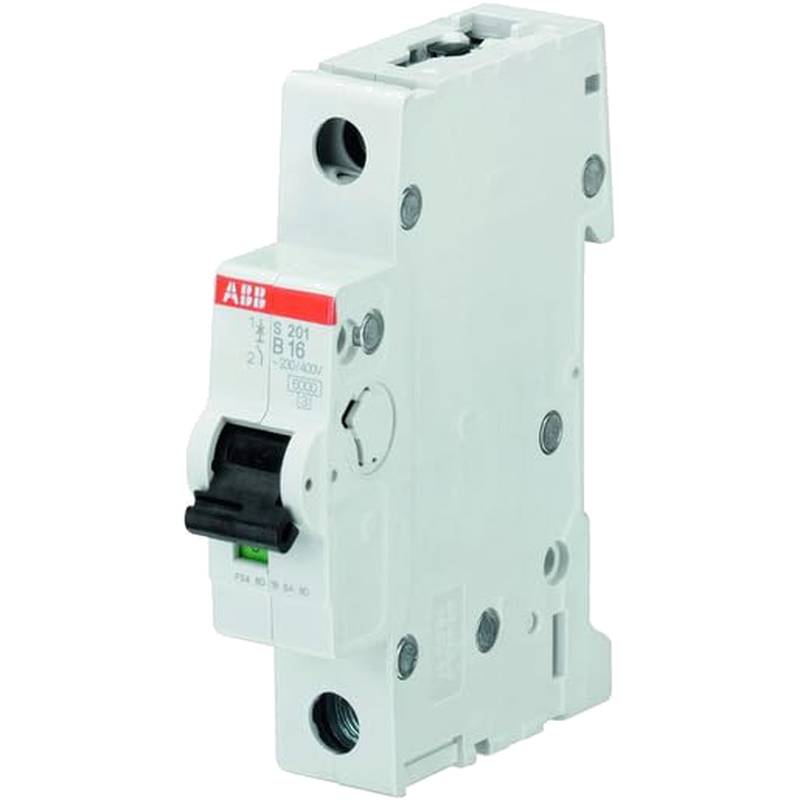
ABB S201-C16 Compact Circuit Breaker 16A C Curve


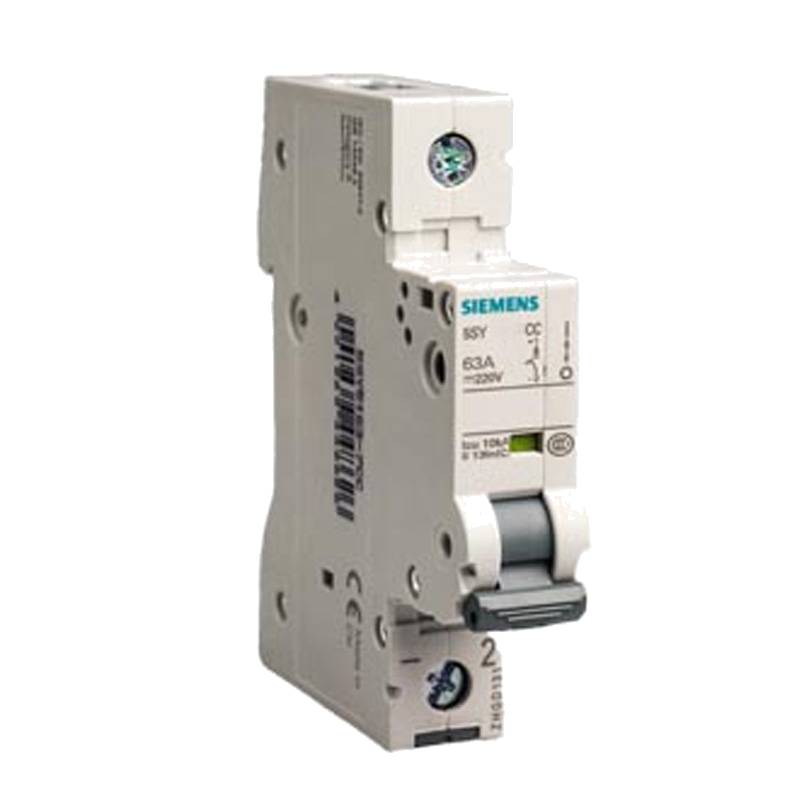
The ABB S201-C16 is a single-pole, compact miniature circuit breaker (MCB) designed for robust protection of electrical circuits. It offers a rated current of 16A and features a C-curve tripping characteristic, making it ideal for applications with moderate inrush currents. With a breaking capacity of up to 6 kA at 230/400V AC and compliance with stringent international standards like IEC/EN 60898-1, IEC/EN 60947-2, and UL1077, the S201-C16 provides reliable safety against overloads and short circuits in residential, commercial, and industrial settings. Its compact 17.5 mm width allows for efficient space utilization in distribution boards, while features such as finger-proof terminals and clear contact position indication enhance installation safety and ease of use.
Product Specifications
| Specification | Value |
| :-------------------------------- | :----------------------------------------------------------------------- |
| Product Code | S201-C16 / 2CDS251001R0164 |
| Manufacturer | ABB |
| Product Range | System Pro M Compact S200 |
| Type | Miniature Circuit Breaker (MCB) |
| Number of Poles | 1 Pole (1P) |
| Rated Current (In) | 16 A |
| Tripping Characteristic | C Curve |
| Rated Operational Voltage (Ue) | 230/400 V AC |
| Maximum Operating Voltage (UL/CSA)| 277 V AC |
| Breaking Capacity (Icn) | 6 kA at 230/400 V AC / 10 kA at 230 VAC |
| Frequency | 50/60 Hz |
| Terminal Type | Screw clamps / Captive screws |
| Cable Cross-section | Up to 35 sq-mm |
| Tightening Torque | 2.8 N-m (recommended) / 18 in·lb (UL/CSA) |
| Wire Stripping Length | 12.5 mm |
| Width | 17.5 mm (1 module) |
| Height | 88 mm |
| Depth | 69 mm |
| Mounting | DIN rail |
| Degree of Protection | IP20 (device), IP40 (enclosure with cover) |
| Pollution Degree | 3 |
| Operating Temperature | -25 °C to +55 °C |
| Storage Temperature | -40 °C to +70 °C |
| Electrical Endurance | Up to 20,000 cycles |
| Housing Material | ABS/Plastic |
| Color | RAL 7035 Grey |
| Standards Compliance | IEC/EN 60898-1, IEC/EN 60947-2, UL 1077, CSA 22.2 No. 235, AS/NZS 60898-1, AS/NZS 60947-2 |
| Certifications | UL1077, AS/NZS |
Core Features & Market Positioning
The ABB S201-C16 stands out in the competitive landscape of miniature circuit breakers due to its robust construction, adherence to multiple international safety standards, and a design optimized for ease of installation and reliability. Its C-curve characteristic makes it particularly suitable for circuits with inductive loads that exhibit moderate inrush currents, such as lighting systems, small motor loads, and control circuits, offering precise protection without nuisance tripping. The S200 series, to which the S201-C16 belongs, is recognized for its high performance and the availability of a wide range of accessories, positioning it as a versatile solution for various electrical installations. The patented twin terminals with captive screws and increased opening for cables up to 35mm² offer enhanced safety and connection reliability, differentiating it from standard MCBs and contributing to its market appeal for professional installers and system integrators.
Key Application Scenarios
The ABB S201-C16 is a highly adaptable protective device, finding its place in a multitude of applications where reliable overcurrent protection is paramount. Its C-curve tripping characteristic is a key enabler for its widespread use in circuits experiencing moderate inductive loads, such as those powering motors, transformers, and lighting ballasts. Common applications include:
Residential Electrical Panels: Providing essential protection for circuits in homes, safeguarding against faults caused by appliance startups or wiring issues. Commercial Buildings: Utilized in offices, retail spaces, and other commercial facilities for general circuit protection, ensuring the safety and continuous operation of lighting and power circuits. Industrial Environments: Deployed in light industrial settings for protecting machinery, control panels, and auxiliary circuits where its specific tripping profile is beneficial. Specialized Systems: Its UL1077 certification makes it suitable for supplementary protection in various equipment, including HVAC systems, and certain types of electronic equipment where robust fault interruption is required.
Practical System Integration Guidance
Integrating the ABB S201-C16 into electrical systems is straightforward, thanks to its user-centric design and compatibility with standard mounting hardware. Installation typically involves mounting the unit onto a 35mm DIN rail, a ubiquitous standard in electrical enclosures. The MCB features patented twin terminals with captive screws, designed to accept conductors up to 35 mm², ensuring secure and reliable connections for a range of wire sizes. For optimal termination, a tightening torque of 2.8 N-m is recommended, and the wire stripping length should be precisely 12.5 mm. The connection opening for cables is strategically placed above the busbar slot, improving visibility during wiring and installation. The clear contact position indication (CPI) in red and green also aids in quickly assessing the breaker's status. For systems requiring additional signaling or remote control, bottom-fitting auxiliary contacts can be easily mounted, saving valuable space within the enclosure.
Operation and Risk Mitigation
The ABB S201-C16 operates using a dual-protection mechanism: a delayed thermal tripping mechanism for overload protection and an electromechanical tripping mechanism for short-circuit protection. This ensures comprehensive protection against various electrical fault conditions. The C-curve characteristic is designed to tolerate moderate inrush currents typical of inductive loads without tripping, thus preventing nuisance outages while still providing rapid response to severe short circuits. To mitigate operational risks, always ensure the circuit breaker is de-energized before performing any installation or maintenance work. Verify that the correct breaker rating is selected for the protected circuit's load. Regular visual inspection of the breaker and its connections can help identify any signs of wear or damage. In the event of repeated tripping, a thorough investigation of the circuit load and potential fault conditions is necessary, rather than simply replacing the breaker.
Scalability & Long-Term Value
The ABB S201-C16, as part of the System Pro M Compact S200 series, offers significant scalability and long-term value. Its modular design and compatibility with a wide range of accessories allow for easy system expansion and adaptation. For instance, bottom-fitting auxiliary contacts, shunt trips, and alarm contacts can be added to enhance functionality, enabling integration with alarm systems or remote monitoring solutions. This compatibility with accessories ensures that as system requirements evolve, the protective infrastructure can be upgraded without necessitating a complete overhaul of the circuit breaker itself. Furthermore, the device's robust construction and adherence to high-quality manufacturing standards, including extensive pre-shipment testing by ABB, contribute to its long electrical endurance of up to 20,000 cycles, promising reliable performance over an extended operational lifespan. This makes the S201-C16 a cost-effective and sustainable choice for long-term electrical system integrity.
Frequently Asked Questions (FAQs)
What is the primary function of the ABB S201-C16 circuit breaker?
The ABB S201-C16 is an MCB designed for overload and short-circuit protection. It safeguards electrical circuits and connected equipment from damage due to excessive current.
It employs both thermal and electromechanical tripping mechanisms for comprehensive fault response. This dual system ensures reliable protection against various electrical anomalies.
This device is crucial for maintaining electrical safety in residential, commercial, and industrial applications. It prevents fires and equipment failures caused by faults.
What does the "C Curve" designation mean for the S201-C16?
A C-curve breaker is designed for circuits with moderate inrush currents. These are common with inductive loads like motors or transformers.
It allows for a higher inrush current before tripping compared to a B-curve breaker. This prevents nuisance tripping during normal startup surges.
However, it still offers rapid tripping for significant short-circuit currents, ensuring safety. It's a balance between sensitivity and tolerance.
What voltage and current ratings does the ABB S201-C16 support?
This circuit breaker is rated for 16 Amps of continuous current. It supports operational voltages of 230/400 Volts AC for standard applications.
It also has a specific rating for UL/CSA applications, typically up to 277 Volts AC. Always check the specific marking for precise details.
The breaking capacity is 6 kA at 230/400V AC, meaning it can safely interrupt this fault current level. Some sources indicate 10 kA at 230V AC.
Can the ABB S201-C16 be used in both residential and industrial settings?
Yes, the S201-C16 is versatile and suitable for both residential and commercial installations. Its compliance with standards like IEC/EN and UL facilitates broad application.
In industrial settings, it's often used for specific circuits with moderate inductive loads. Its C-curve characteristic is beneficial for motor control circuits.
It provides reliable protection, making it a staple for many electrical distribution systems across different sectors.
What are the physical dimensions and mounting requirements for the S201-C16?
The ABB S201-C16 is a compact, single-pole device measuring 17.5 mm in width. This standard module size allows for efficient use of space in electrical panels.
It is designed for easy installation on a standard 35mm DIN rail. The terminals accommodate wire sizes up to 35 mm², with secure screw clamp connections.
The dimensions are approximately 88 mm in height and 69 mm in depth, fitting standard enclosures.
How does the S201-C16 handle overload versus short-circuit protection?
It features a two-stage protection system. The delayed thermal mechanism handles gradual overloads.
The electromechanical mechanism responds instantly to high short-circuit currents. This dual approach ensures broad protection coverage.
This combination is standard for miniature circuit breakers, providing robust safety.
What standards does the ABB S201-C16 comply with?
The S201-C16 complies with key international standards for circuit protection devices. These include IEC/EN 60898-1 and IEC/EN 60947-2.
It also meets UL 1077 and CSA 22.2 No. 235 standards. These certifications are vital for its use in North American markets and specific applications.
Compliance ensures the breaker meets rigorous safety and performance requirements globally.
What are the advantages of using a C-curve breaker like the S201-C16?
C-curve breakers offer better tolerance for inrush currents from inductive loads. This reduces nuisance tripping in applications with motors or lighting.
They provide a good balance between overload protection and short-circuit response. It is a common choice for general-purpose applications.
The S201-C16 leverages this characteristic for reliable operation in dynamic electrical environments.
What kind of loads is the ABB S201-C16 best suited for?
It is ideal for loads with moderate inrush currents, such as fluorescent lighting, transformers, and small to medium-sized motors. These are typical in commercial and light industrial settings.
It's also suitable for general power distribution circuits where inductive loads are present. Its C-curve prevents unnecessary trips during normal operation.
Avoid using it for high inrush loads like large motors or specific equipment that requires a D-curve breaker.
Can auxiliary contacts be added to the ABB S201-C16?
Yes, the S200 series, including the S201-C16, supports the addition of bottom-fitting auxiliary contacts. These can be easily mounted to save space.
Auxiliary contacts can be used for signaling purposes, such as indicating the breaker's status to a control system. They can also trigger alarms.
This feature enhances the breaker's integration capabilities with smart building or automation systems.