











ABB S201-C32 Industrial Breaker 32A C Curve Protection


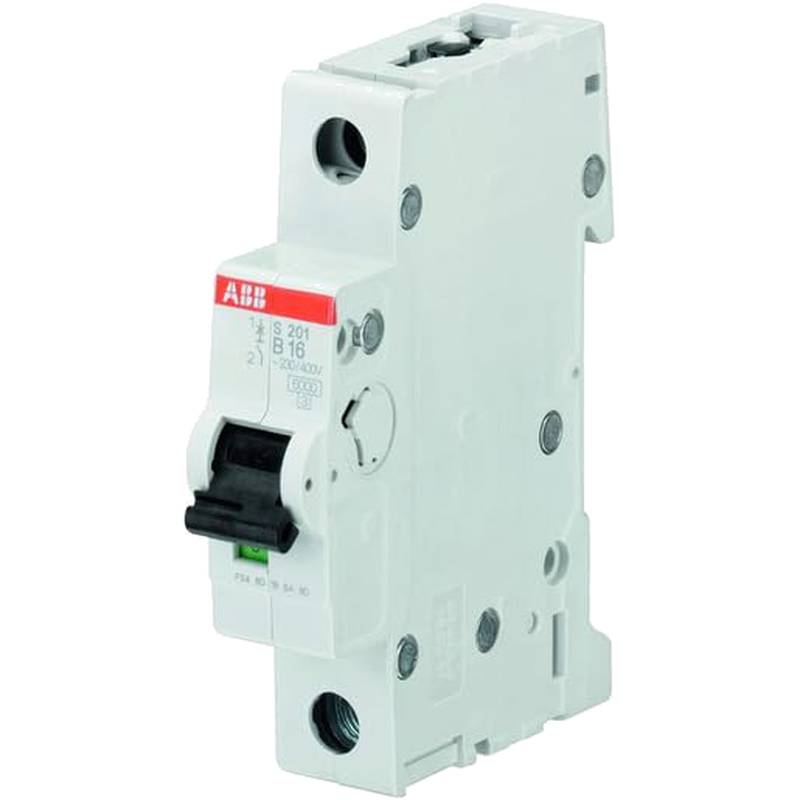
The ABB S201-C32 Industrial Breaker stands as a cornerstone of electrical protection within demanding industrial environments, offering a robust 32A C-curve tripping characteristic for reliable safeguarding of circuits against overcurrents and short circuits. This compact yet powerful Miniature Circuit Breaker (MCB) ensures operational continuity and personnel safety through its high breaking capacity and dependable tripping mechanisms. Key technical specifications include a rated voltage of 400V AC, a rated current of 32A, and a tripping curve type C, designed to handle moderate inrush currents typical of industrial equipment. Its modular design facilitates seamless integration into standard distribution boards and control cabinets, making it a preferred choice for electricians and system designers prioritizing efficiency and robust protection.
Product Specifications
| Feature | Specification |
| :------------------- | :---------------------- |
| Product Type | Miniature Circuit Breaker |
| ABB Series | S200 |
| Model Number | S201-C32 |
| Number of Poles | 1 |
| Rated Current (In) | 32 A |
| Tripping Curve | C |
| Rated Voltage (Ue) | 400 V AC |
| Frequency | 50/60 Hz |
| Breaking Capacity | 6 kA |
| Protection Type | Overcurrent, Short Circuit |
| Mounting Type | DIN Rail |
| Terminal Type | Screw Terminal |
| Degree of Protection | IP20 |
Core Features & Market Positioning
The ABB S201-C32 is distinguished by its reliable C-curve tripping characteristic, which provides enhanced protection for inductive loads, such as motors and transformers, by tolerating higher inrush currents without nuisance tripping. This feature positions the S201-C32 as a superior choice over B or K curve breakers in applications where transient overcurrents are common, thereby improving system uptime. Its compact 1-module width design maximizes panel space, a critical consideration in space-constrained industrial control cabinets. Furthermore, ABB's reputation for quality and durability in industrial automation and power distribution lends significant market confidence to the S201-C32, underscoring its role as a dependable component in mission-critical systems.
Key Application Scenarios
This industrial breaker finds extensive use in protecting individual circuits within motor control centers (MCCs), power distribution boards in manufacturing plants, and control panels for machinery. Its suitability for applications with moderate inductive or capacitive loads, such as HVAC systems, pumps, and conveyor belts, makes it a versatile solution for the process industry, building automation, and general manufacturing. The S201-C32 is also a common specification for protecting lighting circuits that may experience inrush from discharge lamps, ensuring reliable operation.
Practical System Integration Guidance
Installation of the ABB S201-C32 is straightforward, requiring mounting onto a standard 35mm DIN rail. Wiring is typically accomplished using screw terminals, accommodating conductor sizes up to 25mm² for reliable connections. Proper termination is crucial to prevent overheating and ensure consistent performance. When integrating multiple S201 series breakers, maintaining adequate spacing for heat dissipation is recommended, especially in densely populated panels, to ensure optimal performance and longevity.
Operation and Risk Mitigation
The primary function of the S201-C32 is to interrupt electrical current when it exceeds a predetermined safe level, preventing damage to connected equipment and mitigating fire hazards. The C-curve tripping characteristic means that the breaker will trip between 5 to 10 times the rated current, offering a balance between protection and tolerance for startup surges. In the event of a fault, the breaker will visibly indicate its tripped status, requiring manual reset after the fault condition has been cleared. Regular visual inspection for any signs of damage or wear, and periodic testing of trip mechanisms, are recommended to ensure continued operational integrity and safety.
Scalability & Long-Term Value
The S201-C32 is part of ABB's broader S200 series, ensuring compatibility with a wide range of complementary protective devices, such as residual current devices (RCDs) and surge protective devices (SPDs), allowing for scalable protection strategies. Its robust construction is designed for a long operational lifespan, reducing the need for frequent replacements and contributing to lower total cost of ownership. While not a direct digital device, its reliable electrical protection serves as a fundamental building block for more complex, digitally monitored systems, ensuring the integrity of the underlying power infrastructure.
FAQs
What is the primary function of the ABB S201-C32 industrial breaker?
The ABB S201-C32 serves as a critical safety device. It protects electrical circuits from overcurrents. This includes both overload and short-circuit conditions.
Its main role is to prevent damage to equipment. It also mitigates fire risks by quickly interrupting fault currents. The breaker ensures operational continuity by isolating faulty sections.
This breaker is designed for industrial applications. It offers reliable protection for various types of machinery and power distribution systems.
How does the 'C' curve on the ABB S201-C32 breaker benefit industrial applications?
The C-curve tripping characteristic is optimized for inductive loads. It allows for higher inrush currents during startup. This is common for motors and transformers.
This feature prevents nuisance tripping. It ensures that the breaker does not trip unnecessarily. This improves system reliability and uptime for industrial processes.
Compared to B-curve breakers, the C-curve offers better protection for loads with moderate transient current demands. This makes it a versatile choice for many industrial settings.
What are the key technical specifications for the ABB S201-C32 breaker?
This breaker has a rated current of 32A. It operates at a voltage of 400V AC. The tripping curve is Type C.
It features a single pole (1P) design. The breaking capacity is 6 kA. This indicates its ability to safely interrupt fault currents.
The unit is designed for DIN rail mounting. It has an IP20 degree of protection. This breaker is built for robust industrial use.
Can the ABB S201-C32 be used for protecting motor circuits?
Yes, the S201-C32 is well-suited for motor circuit protection. Its C-curve is designed to handle motor startup inrush currents. This avoids premature tripping.
It provides essential overcurrent and short-circuit protection. This guards the motor and the associated wiring against damage. It's a foundational component in motor control systems.
Always ensure the breaker's rating matches the motor's requirements. Consult motor protection guidelines for optimal system design.
What type of loads is the ABB S201-C32 most suitable for?
This breaker is ideal for loads with moderate inrush currents. Examples include motors, transformers, and solenoid coils. It handles inductive and capacitive loads effectively.
The C-curve ensures reliable operation for equipment that experiences transient overloads. It balances protection with operational needs. This makes it versatile for various industrial applications.
It is also suitable for general power distribution. This includes lighting and socket outlets in industrial or commercial settings.
What is the breaking capacity of the ABB S201-C32 and why is it important?
The breaking capacity is 6 kA. This is the maximum fault current the breaker can safely interrupt. It's a critical safety parameter.
A higher breaking capacity ensures the breaker can handle severe short circuits. This prevents catastrophic failure of the breaker itself. It protects the entire electrical installation.
For industrial environments, a 6 kA rating provides adequate protection. It meets the requirements for many standard distribution systems.
How is the ABB S201-C32 installed in an electrical panel?
Installation involves clipping the breaker onto a standard 35mm DIN rail. This is a common mounting standard in electrical enclosures. Proper alignment ensures secure fitting.
Connections are made via screw terminals. Ensure conductors are correctly sized and stripped for a secure connection. Follow torque specifications for optimal electrical contact and safety.
Always disconnect power before installation or maintenance. Proper wiring is essential for the breaker's performance and safety.
What does the '32A' rating signify on the ABB S201-C32 breaker?
The '32A' indicates the nominal rated current. This is the maximum continuous current the breaker can carry. It operates without tripping under normal conditions.
Exceeding this current continuously will eventually lead to tripping. This protects against overloads that could damage wiring or equipment. It's crucial for selecting the right breaker for a circuit.
This rating must be matched with the circuit's expected load. It is a primary factor in preventing electrical hazards.
What is the voltage rating of the ABB S201-C32 and where is it typically used?
The rated voltage is 400V AC. This makes it suitable for standard industrial power grids. It is commonly used in Europe and other regions with 400V systems.
This breaker is designed for main power distribution panels. It's also used in sub-distribution boards for machinery. Its voltage rating ensures safe operation within specified limits.
Ensure compatibility with your local power supply voltage. This is critical for safe and effective operation.
How does the ABB S201-C32 contribute to electrical safety in industrial settings?
It provides essential protection against electrical faults. This prevents equipment damage and reduces fire risks. The breaker isolates faulty circuits quickly and reliably.
Its reliable tripping mechanism ensures that hazardous conditions are quickly addressed. This protects personnel from electrical shock hazards. It ensures compliance with safety standards.
By interrupting overcurrents, it safeguards the integrity of the entire electrical system. This promotes a safer working environment in industrial facilities.