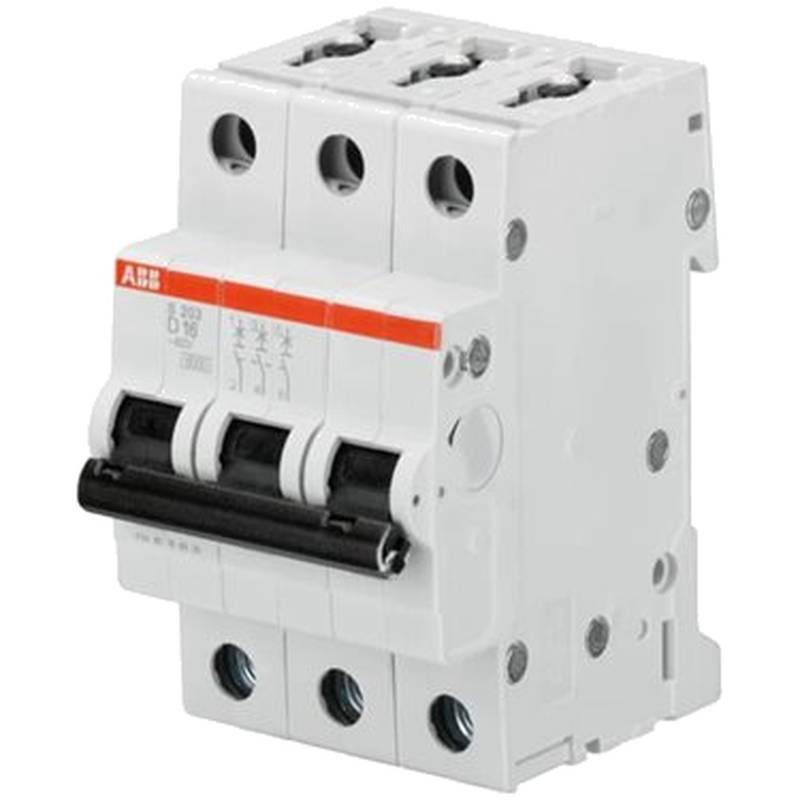
ABB S203-D40 Miniature Circuit Breaker 40A D Curve 3P


The ABB S203-D40 Miniature Circuit Breaker (MCB) is a robust 3-pole device engineered for reliable overcurrent protection in demanding industrial and commercial electrical systems. Featuring a D-curve tripping characteristic, this 40A MCB offers enhanced immunity to nuisance tripping caused by inrush currents, making it ideal for inductive loads like motors and transformers. Its compact design, high breaking capacity, and adherence to international standards ensure safety, efficiency, and seamless integration into various electrical panels.
Product Specifications
| Parameter | Specification |
| :----------------------- | :--------------------------------------------- |
| Manufacturer | ABB |
| Product Series | S200 |
| Product Type | Miniature Circuit Breaker (MCB) |
| Pole Configuration | 3-Pole |
| Rated Current (In) | 40 A |
| Tripping Curve | D |
| Rated Voltage (Ue) | 400V AC |
| Breaking Capacity (Icn) | 6 kA |
| Frequency | 50/60 Hz |
| Insulation Voltage (Ui) | 500 V |
| Impulse Withstand Voltage (Uimp) | 4 kV |
| Terminal Type | Screw Terminals |
| Mounting Type | DIN Rail (35mm) |
| Degree of Protection | IP20 (with cover) |
| Operating Temperature | -25 to +55 °C |
| Standards Compliance | IEC/EN 60898-1, IEC/EN 60947-2 |
Core Features & Market Positioning
The ABB S203-D40 stands out in the market due to its superior D-curve tripping characteristics, a critical feature for applications involving high inrush currents such as motor starting or transformer energization. Unlike B or C curves, the D-curve allows for a much higher temporary overload before tripping, preventing unnecessary shutdowns and ensuring continuous operation of sensitive equipment. This inherent robustness positions the S203-D40 as a premium choice for industries where operational reliability is paramount. ABB's reputation for quality and innovation further solidifies its market standing, offering users confidence in the device's longevity and performance. The S200 series, to which this MCB belongs, is widely recognized for its versatility and compliance with stringent global safety standards, making it a trusted component in electrical distribution systems worldwide.
Key Application Scenarios
This ABB S203-D40 Miniature Circuit Breaker is exceptionally well-suited for safeguarding inductive loads that experience significant inrush currents during activation. Primary applications include the protection of electric motors across various industrial machinery, pumps, and fans, where the transient surge during startup could otherwise trigger standard circuit breakers. It is also highly effective in protecting transformer banks, especially those with larger power ratings, and capacitor banks used for power factor correction. Furthermore, this 3-pole MCB is an ideal choice for main incoming protection in smaller industrial facilities or for critical sub-distribution boards where robust protection against both short circuits and overloads is essential. Its 40A rating makes it suitable for circuits supplying moderate to heavy loads within these industrial environments.
Practical System Integration Guidance
Integrating the ABB S203-D40 MCB into existing or new electrical panels is straightforward due to its standard 35mm DIN rail mounting capability. Ensure the main power source is de-energized before proceeding with installation. Connect the incoming power conductors to the designated terminals on the top of the breaker and the outgoing load conductors to the terminals on the bottom. For a 3-pole unit, all three phases must be connected and protected. Utilize appropriate torque settings for the screw terminals to ensure secure connections and prevent overheating, consulting the ABB installation manual for specific torque values. The MCB should be installed in an environment within its specified operating temperature range and protected from dust and moisture to maintain its IP20 rating. Proper phase rotation is not critical for the MCB's operation, but maintaining consistent phase order throughout the distribution system is best practice for downstream equipment.
Operation and Risk Mitigation
The ABB S203-D40 operates by continuously monitoring the current flow. If the current exceeds a predetermined level for a duration that indicates an overload or a short circuit, the internal tripping mechanism activates, rapidly interrupting the circuit to prevent damage to connected equipment and to mitigate fire hazards. The D-curve characteristic means it tolerates inrush currents up to 10-20 times the rated current for a brief period, significantly reducing nuisance tripping. In the event of a fault, the breaker will trip, and the lever will move to the 'OFF' position. To reset, move the lever fully to the 'OFF' position and then back to the 'ON' position. If the breaker trips repeatedly, do not force it back on; investigate the cause of the fault, which could be an overload, a short circuit, or a malfunctioning connected device. Always ensure personnel are trained in electrical safety procedures when working with or near energized equipment.
Scalability & Long-Term Value
The ABB S203-D40 Miniature Circuit Breaker, as part of the widely adopted S200 series, offers excellent scalability and long-term value through its broad compatibility. It seamlessly integrates with other ABB components within the S200 range and across various ABB busbar systems, allowing for easy expansion or modification of electrical distribution boards. This interoperability ensures that as power demands evolve or system configurations change, the S203-D40 can remain a critical protective element without requiring a complete system overhaul. While this specific model is not inherently an IIoT device, its reliable operation and standardization make it a foundational component in any electrical system, including those that may be upgraded with smart monitoring or control modules in the future. Its robust construction and adherence to international standards also guarantee a long service life, minimizing the need for premature replacements and contributing to overall system cost-effectiveness.
Frequently Asked Questions
What is the primary advantage of the D-curve on the ABB S203-D40?
The D-curve offers high immunity to temporary overcurrents. This is crucial for inductive loads that draw large inrush currents during startup, preventing nuisance tripping.
This characteristic ensures operational continuity for equipment like motors and transformers. It allows for significantly higher surge currents before the breaker trips compared to standard B or C curves.
This design choice minimizes unexpected downtime and maintenance, making it ideal for industrial settings where reliability is paramount. It directly addresses the unique challenges of protecting high-power inductive equipment.
How do I correctly install the ABB S203-D40 in a panel?
Ensure the main power supply is completely disconnected and de-energized. Mount the S203-D40 onto a standard 35mm DIN rail by snapping it into place.
Connect the incoming line conductors to the top terminals and the outgoing load conductors to the bottom terminals. Use appropriate tools and torque settings for secure connections.
Verify that all three poles are connected and that the wiring is neat and compliant with local electrical codes for safety and optimal performance.
What types of loads are best protected by the ABB S203-D40?
This breaker is ideal for protecting inductive loads with high inrush currents. Examples include electric motors, transformers, and pumps.
It is also suitable for applications involving capacitor banks or other equipment that experiences significant temporary current surges upon energization. The D-curve prevents premature tripping in these scenarios.
The 40A rating makes it a robust choice for main incomers or critical sub-circuits in industrial and commercial environments requiring substantial power.
Can the ABB S203-D40 be used for residential applications?
While technically possible, the D-curve is generally not recommended for standard residential circuits. Residential circuits typically use B or C curve MCBs.
The D-curve's high inrush tolerance can lead to oversizing for typical home appliances and wiring. This might pose a slightly elevated risk if not properly managed.
For residential use, B or C curve breakers offer more appropriate sensitivity for common household loads and are the standard choice for safety and efficiency.
What is the breaking capacity of the ABB S203-D40?
The ABB S203-D40 has a breaking capacity of 6 kA. This specifies the maximum fault current it can safely interrupt without damage.
This 6 kA rating is suitable for many common industrial and commercial distribution systems. It ensures protection against severe short-circuit events.
Always ensure the breaking capacity of the MCB is greater than the prospective short-circuit current at the installation point for adequate safety.
How do I reset the ABB S203-D40 after it trips?
To reset the breaker, first move the operating lever fully to the 'OFF' position. Then, move the lever firmly to the 'ON' position to re-establish the circuit.
If the breaker trips again immediately upon resetting, do not force it. This indicates a persistent fault condition that requires investigation and resolution.
Always ensure the cause of the tripping (overload or short circuit) is identified and rectified before attempting to reset the breaker.
What are the dimensions of the ABB S203-D40?
The ABB S203-D40 is designed to be compact for efficient panel space utilization. It occupies three standard module widths on a DIN rail.
Each module width is typically 18mm, meaning this 3-pole breaker will occupy approximately 54mm of space on the DIN rail. Precise dimensions are available in technical datasheets.
Its compact form factor allows for dense electrical panel designs, accommodating more protective devices within a given space while maintaining accessibility.
What safety standards does the ABB S203-D40 comply with?
This MCB adheres to key international safety and performance standards. It is compliant with IEC/EN 60898-1 and IEC/EN 60947-2.
These standards ensure the breaker provides reliable protection against overcurrents and short circuits as per global electrical safety requirements. Compliance is critical for safety and certification.
Adherence to these rigorous standards guarantees the product's quality, reliability, and suitability for use in diverse electrical installations worldwide.
Can I use auxiliary contacts with the ABB S203-D40?
Yes, the ABB S203-D40 is typically compatible with auxiliary contacts. These contacts provide remote signaling of the breaker's status (ON/OFF/TRIPPED).
Various types of auxiliary and fault signaling contacts can be attached to the side of the MCB. These modules expand its integration capabilities for monitoring systems.
Check the specific product documentation or contact ABB for compatible auxiliary contact models to ensure seamless integration with your control and monitoring systems.
Is the ABB S203-D40 suitable for DC applications?
The ABB S203-D40 Miniature Circuit Breaker is primarily designed and rated for AC applications (400V AC). Using it for DC circuits can be unsafe and will likely lead to premature failure.
DC circuits present different arc-quenching challenges compared to AC. MCBs specifically designed and rated for DC operation must be used for such applications.
Always refer to the product's specifications to confirm its suitability for AC or DC circuits. Using the wrong type of breaker can result in hazardous conditions and equipment damage.