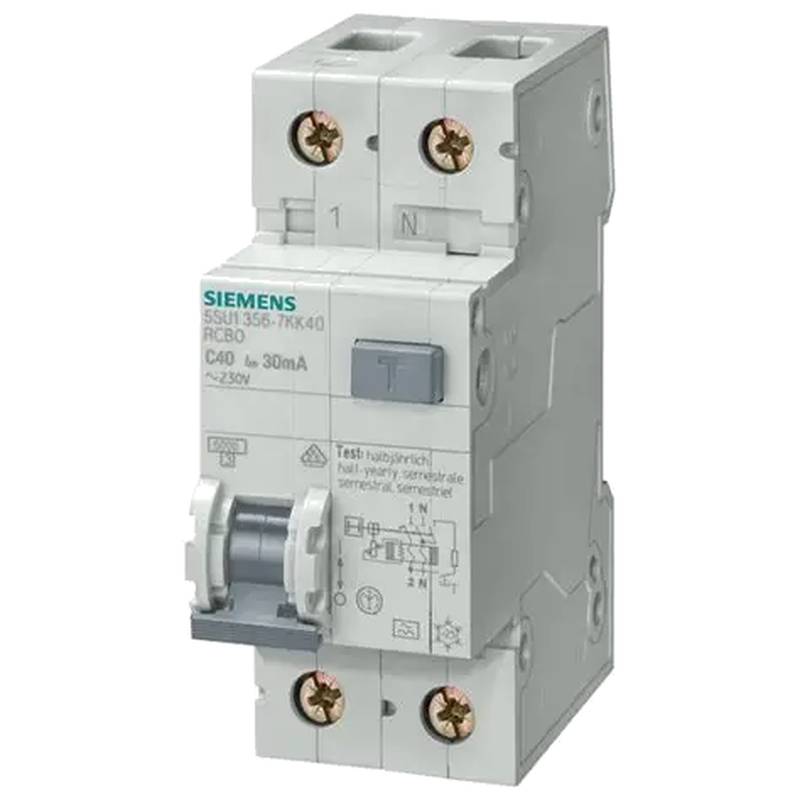
ABB S204-C40 40A Four Pole Miniature Breaker C Curve


The ABB S204-C40 is a robust four-pole miniature circuit breaker (MCB) designed for reliable circuit protection in demanding industrial environments. This C-curve MCB offers a tripping characteristic suitable for inductive loads, providing swift disconnection against overcurrents and short circuits. Its key advantages lie in its high breaking capacity, thermal overload protection, and compact design, making it a staple for safeguarding electrical installations. Technical specifications include a rated current of 40A, a rated voltage of 400VAC, and a breaking capacity of 6kA, adhering to EN 60898-1 and IEC 60947-2 standards.
Product Specifications
| Feature | Specification |
| :---------------------- | :-------------------------------- |
| Product Type | Miniature Circuit Breaker (MCB) |
| Manufacturer | ABB |
| Model | S204-C40 |
| Number of Poles | 4 |
| Rated Current (In) | 40A |
| Tripping Curve | C |
| Rated Voltage (Ue) | 400VAC |
| Frequency | 50/60 Hz |
| Breaking Capacity (Icn) | 6kA |
| Terminal Type | Screw Terminal |
| Mounting Type | DIN Rail |
| Degree of Protection | IP20 |
| Compliance Standards | EN 60898-1, IEC 60947-2 |
Core Features & Market Positioning
The ABB S204-C40 distinguishes itself through its superior performance and reliability, a hallmark of ABB's extensive experience in electrical protection. Its C-curve tripping characteristic makes it exceptionally well-suited for applications with moderate inrush currents, such as motors, transformers, and lighting systems, preventing nuisance tripping. This capability positions the S204-C40 as a preferred choice for industrial automation, power distribution, and control panel manufacturers seeking dependable and precise overcurrent protection. The robust construction ensures longevity and consistent performance even under challenging operational conditions.
Key Application Scenarios
This four-pole miniature breaker is instrumental in safeguarding diverse electrical circuits across various industrial sectors. It is frequently deployed in main distribution boards, sub-distribution panels, and motor control centers to protect against overloads and short circuits in machinery, pumps, fans, and HVAC systems. The S204-C40's C-curve is ideal for inductive loads where momentary current surges are expected during startup. Its application extends to renewable energy systems, building management systems, and manufacturing plants where consistent power delivery and equipment protection are paramount.
Practical System Integration Guidance
Integrating the ABB S204-C40 into existing electrical systems is straightforward due to its standard DIN rail mounting and user-friendly screw terminals. For installation, ensure the main power supply is de-energized. Connect the incoming phase and neutral conductors to the designated input terminals and the outgoing load conductors to the corresponding output terminals. Proper torque must be applied to the terminals to ensure secure connections and prevent overheating. It is crucial to wire all four poles in parallel for applications requiring complete isolation or protection across all phases and the neutral line, commonly found in three-phase systems with residual current monitoring.
Operation and Risk Mitigation
Safe operation of the ABB S204-C40 relies on understanding its tripping mechanisms and adhering to electrical safety protocols. The breaker provides protection against both thermal overload, indicated by a slow-moving temperature rise, and short circuits, which trigger a rapid magnetic trip. In the event of a trip, identify the cause of the overcurrent before resetting the breaker. Common troubleshooting involves checking for faulty equipment, overloaded circuits, or shorted wiring. Never attempt to bypass or disable the breaker, as this compromises system safety and can lead to equipment damage or fire hazards.
Scalability & Long-Term Value
The S204-C40, as part of ABB's extensive S200 series, offers excellent scalability and integration capabilities. Its compatibility with a wide range of ABB system pro M accessories, such as auxiliary contacts and alarm switches, allows for enhanced monitoring and control functionalities. This enables seamless upgrades and adaptations to evolving system requirements. For industries embracing Industry 4.0, the S204-C40 can be integrated into smart electrical panels that leverage digital communication protocols for real-time data acquisition, predictive maintenance, and remote diagnostics, thereby maximizing operational efficiency and long-term value.
FAQs
What is the primary function of the ABB S204-C40?
The ABB S204-C40 primarily functions as a miniature circuit breaker (MCB) designed to protect electrical circuits from overcurrents. It safeguards equipment and wiring from damage caused by overloads and short circuits, ensuring system safety.
This C-curve breaker is specifically engineered to handle inductive loads by allowing for a certain level of inrush current without tripping unnecessarily. Its four-pole configuration provides comprehensive protection for three-phase systems.
By interrupting the flow of electricity when fault conditions arise, it prevents potential hazards such as overheating, fire, and damage to connected appliances or machinery.
What are the key technical specifications of this breaker?
The ABB S204-C40 is a 40A, four-pole miniature circuit breaker with a C-curve tripping characteristic. It operates at a rated voltage of 400VAC and has a breaking capacity of 6kA.
This MCB conforms to international standards like EN 60898-1 and IEC 60947-2, ensuring its suitability for various industrial and commercial applications. It features standard DIN rail mounting and screw terminals for straightforward installation.
The IP20 degree of protection indicates that it is protected against solid objects larger than 12.5mm and is not protected against water, typical for enclosed electrical equipment.
What types of loads is the ABB S204-C40 best suited for?
The C-curve tripping characteristic of the ABB S204-C40 makes it ideal for inductive loads that exhibit moderate inrush currents during startup. This includes electric motors, transformers, and solenoid coils.
It is commonly used in applications like pump control, fan systems, and lighting circuits where temporary current surges are expected but should not lead to nuisance tripping. This ensures reliable operation of sensitive equipment.
The four-pole design is particularly beneficial for three-phase power distribution systems, offering protection across all active conductors and the neutral, crucial for certain types of motor loads and grid connections.
How does the C-curve tripping characteristic differ from other curves?
The C-curve is designed to trip when the current reaches 5 to 10 times the rated current, making it suitable for loads with moderate inrush currents. This contrasts with B-curves (2-5 times rated current) for resistive loads and D-curves (10-20 times rated current) for high inrush loads like large motors.
This specific tripping range allows inductive equipment, such as motors, to start up without causing the breaker to trip prematurely. It balances sensitivity to faults with tolerance for normal operational surges.
Choosing the correct curve is essential for optimal protection and operational continuity, preventing unnecessary downtime and equipment damage due to improper breaker selection.
Can this breaker be used in residential applications?
While primarily designed for industrial settings, the ABB S204-C40 can be used in some high-power residential applications requiring four-pole protection. This might include specific setups for heating systems or electric vehicle charging stations.
However, for standard household circuits, B or C curve single-pole or double-pole MCBs are more commonly used and sufficient. The selection should always align with electrical codes and the specific load requirements.
Consulting with a qualified electrician is recommended to ensure the correct breaker type and rating are used for any residential installation to meet safety standards and performance needs.
What are the safety considerations when installing the S204-C40?
Always ensure the power supply is completely disconnected and locked out before beginning installation to prevent electrical shock. Verify that the breaker's rating matches the circuit's load requirements and wiring capacity.
Properly torque all terminal connections to prevent loose connections, which can cause overheating and potential fire hazards. The breaker should be securely mounted on a standard DIN rail within an appropriate enclosure.
Familiarize yourself with the local electrical codes and regulations that apply to the installation location. If unsure, always consult a certified electrician for safe and compliant installation.
How do I reset a tripped S204-C40 breaker?
To reset a tripped ABB S204-C40 miniature circuit breaker, first determine the cause of the trip by inspecting the protected circuit for faults or overloads. Ensure the fault has been cleared or the overload condition resolved.
Then, firmly push the breaker's operating handle to the "OFF" position. After this, move the handle decisively to the "ON" position to restore power to the circuit.
If the breaker trips repeatedly, do not force it. This indicates a persistent issue that requires professional diagnosis and repair by a qualified electrician to prevent further damage or safety risks.
What is the breaking capacity (kA) and why is it important?
The breaking capacity (Icn) of the ABB S204-C40 is 6kA, meaning it can safely interrupt a fault current of up to 6,000 amperes without sustaining damage. This is a critical safety feature.
A higher breaking capacity is essential for installations where high fault currents are possible, such as in industrial power distribution systems close to the main supply. It ensures the breaker can safely extinguish the arc generated during a short circuit.
Selecting a breaker with an adequate breaking capacity for the specific installation point is vital to prevent catastrophic failure of the breaker during a severe short circuit event, protecting personnel and property.
Can the ABB S204-C40 be used with RCDs or RCBOs?
Yes, the ABB S204-C40 can be used in conjunction with residual current devices (RCDs) or residual current circuit breakers with overcurrent protection (RCBOs) for enhanced safety. These devices provide protection against earth faults and electric shocks.
Typically, the MCB (like the S204-C40) is installed downstream of an RCD or forms part of an RCBO unit, offering coordinated protection. The RCD/RCBO detects small leakage currents to earth, while the MCB handles overloads and short circuits.
Ensuring proper coordination between the MCB and the RCD/RCBO is crucial to prevent nuisance tripping and maintain effective protection against all types of electrical faults.
What is the significance of it being a "four-pole" breaker?
A four-pole breaker, like the ABB S204-C40, simultaneously switches all four conductors: three phases and the neutral. This provides complete isolation for three-phase systems and ensures protection across all lines.
It is particularly important for certain types of equipment and regulations, such as IT equipment power supplies and specific grid connection requirements, where neutral switching is mandatory for safety and performance.
In three-phase systems, using a four-pole breaker offers enhanced protection and ensures that if a fault occurs on any phase, the neutral is also disconnected, preventing dangerous voltage imbalances or neutral current issues.