











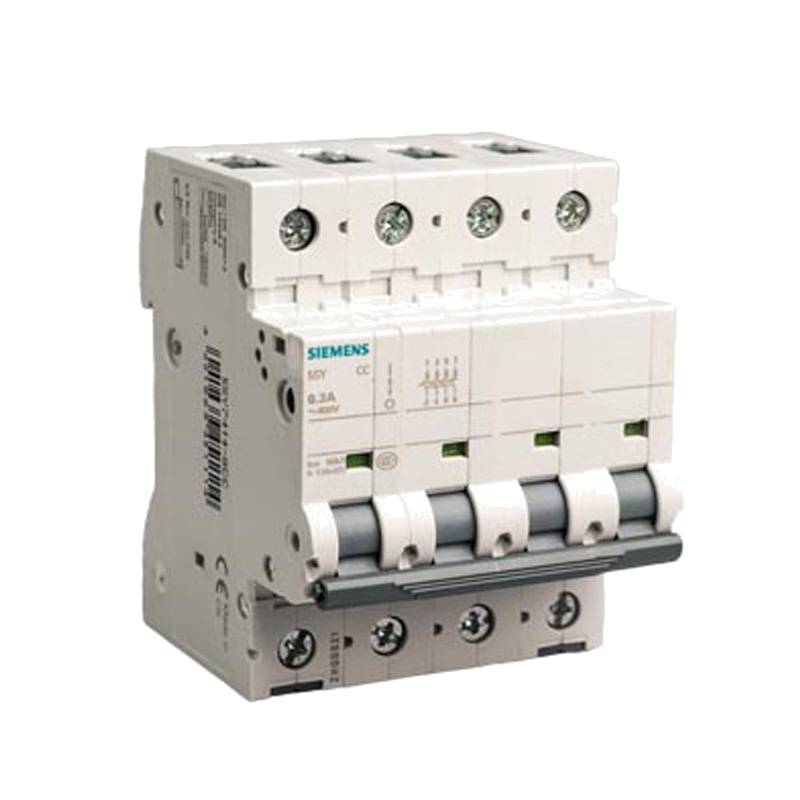
Siemens 5SY6632-7CC Miniature Air Circuit Breaker 3P+N 32A


The Siemens 5SY6632-7CC Miniature Air Circuit Breaker (MCCB) stands as a robust solution for sophisticated electrical protection in demanding industrial environments. This 3-pole + Neutral (3P+N) breaker, rated at 32A, distinguishes itself with superior breaking capacity and enhanced tripping characteristics, ensuring unparalleled safety and operational reliability. Its advanced thermal-magnetic tripping mechanism offers precise overcurrent and short-circuit protection, safeguarding sensitive equipment and preventing costly downtime. Designed for straightforward integration into standard distribution boards and control panels, the 5SY6632-7CC is engineered for high performance and longevity, making it a cornerstone for modern electrical infrastructure.
Product Specifications
| Feature | Specification |
| :------------------ | :------------------------------------------ |
| Manufacturer | Siemens |
| Product Series | 5SY6 |
| Product Type | Miniature Circuit Breaker (MCCB) |
| Poles | 3P+N (3-Pole + Neutral) |
| Rated Current (In) | 32A |
| Rated Voltage (Ue) | 400V AC |
| Breaking Capacity | 6 kA (IEC 60898-1) |
| Tripping Curve | C |
| Frequency | 50/60 Hz |
| Protection Type | Thermal-Magnetic |
| Mounting | DIN Rail (35mm) |
| Terminal Type | Screw Terminals |
| IP Rating | IP20 (Enclosure), IP40 (Panel Front) |
| Operating Temperature | -25°C to +55°C |
| Compliance | IEC, CE |
Core Features & Market Positioning
The Siemens 5SY6632-7CC MCCB excels in its market segment due to its high breaking capacity of 6 kA, providing a significant safety margin for installations susceptible to fault currents. The Type C tripping characteristic is optimized for applications with moderate inrush currents, such as lighting circuits and control systems, offering robust protection without nuisance tripping. This positioning allows it to compete effectively against other leading brands by delivering a balance of performance, reliability, and cost-effectiveness in critical power distribution applications. Siemens' reputation for quality manufacturing further solidifies its competitive edge.
Key Application Scenarios
This 32A, 3P+N circuit breaker is ideally suited for protecting main distribution circuits and branch circuits in commercial buildings, industrial facilities, and even sophisticated residential installations. Its C-curve tripping characteristic makes it particularly effective for safeguarding motor loads, transformers, and lighting systems where temporary overloads or inductive loads are common. It ensures compliance with stringent electrical codes and standards for power distribution and overload protection, facilitating safe and reliable operation of machinery and building services.
Practical System Integration Guidance
Integrating the Siemens 5SY6632-7CC into existing or new electrical panels is straightforward, leveraging the standard 35mm DIN rail mounting system. Proper wiring involves securely connecting the line conductors to the top terminals and load conductors to the bottom terminals for each of the three phases and the neutral. Ensure that all connections are tightened to the manufacturer's recommended torque specifications to prevent overheating and ensure reliable contact. For systems requiring multiple breakers, ensure adequate spacing and ventilation within the enclosure to maintain optimal operating temperatures.
Operation and Risk Mitigation
The primary function of the Siemens 5SY6632-7CC is to interrupt electrical circuits automatically when overcurrent or short-circuit conditions are detected, thereby preventing damage to downstream equipment and mitigating fire hazards. Its thermal tripping mechanism responds to sustained overloads, while the magnetic tripping provides rapid disconnection during short circuits. Regular inspection and testing of circuit breakers are crucial for ensuring their continued operational integrity. Avoid tampering with internal components, as this can compromise safety and void warranties.
Scalability & Long-Term Value
The 5SY6632-7CC offers significant long-term value through its robust design and compatibility with Siemens' broader range of electrical distribution components. While this specific model is a standalone device, its integration within a standardized system allows for future expansion by adding more breakers or upgrading to higher-capacity units in parallel circuits as power demands evolve. Its durability ensures a long service life, reducing the need for premature replacements and contributing to the overall cost-effectiveness of the electrical infrastructure.
Frequently Asked Questions
What is the breaking capacity of the Siemens 5SY6632-7CC?
The Siemens 5SY6632-7CC boasts a breaking capacity of 6 kA. This rating signifies its ability to safely interrupt fault currents up to this level. It ensures protection against severe short circuits in industrial and commercial settings.
This robust specification is crucial for complying with electrical safety standards. It provides a vital safety buffer for personnel and equipment.
The 6 kA rating is a key differentiator for this model. It makes it suitable for applications where higher fault currents are anticipated.
What does the 'C' curve signify on the Siemens 5SY6632-7CC?
The 'C' curve indicates a moderate inrush current capability. It's designed to tolerate brief, high current surges without tripping. This makes it ideal for inductive loads like motors and transformers.
This tripping characteristic prevents nuisance tripping from normal operational surges. It ensures reliable power delivery for sensitive equipment. Standard applications often benefit from this balanced protection.
Compared to 'B' or 'D' curves, the 'C' curve offers a versatile middle ground. It strikes a balance between sensitivity to faults and tolerance for inrush currents.
Can the Siemens 5SY6632-7CC be used for DC circuits?
The Siemens 5SY6632-7CC is designed and rated for AC circuits only. Using it in DC applications can lead to unpredictable performance and potential safety hazards. DC circuits have different arc extinguishing requirements than AC circuits.
It is crucial to select circuit breakers specifically designed for the type of current (AC or DC). Consult the product datasheet or Siemens support for DC-rated breaker options. Using the wrong type of breaker can compromise electrical safety.
Always verify the product's specifications for its intended application. For DC protection, look for breakers explicitly marked for DC use and with appropriate voltage and current ratings.
What is the typical application for a 3-pole + Neutral breaker like the 5SY6632-7CC?
A 3P+N breaker is used for systems with three-phase power and a neutral conductor. This is common in industrial and commercial power distribution. It provides individual protection for each phase and the neutral.
It is essential for protecting three-phase loads and ensuring balanced power distribution. The neutral pole offers an additional layer of safety and protection. This configuration is standard for many motor control circuits and larger equipment.
This type of breaker ensures that all live conductors are disconnected simultaneously during a fault. It offers a comprehensive protection solution for three-phase installations. It is crucial for preventing electrical hazards.
How do I properly wire the Siemens 5SY6632-7CC breaker?
Wire the line (incoming power) conductors to the top terminals of each pole and the neutral. Connect the load (outgoing power) conductors to the bottom terminals of each pole and the neutral. Ensure correct phase sequence for three-phase applications.
Always use appropriately sized conductors rated for the breaker's current (32A) and the system's voltage. Ensure all connections are securely tightened to the manufacturer's specified torque to prevent overheating. Improper wiring is a significant safety risk.
Double-check all connections before energizing the circuit. For safety, it is recommended to have electrical work performed by a qualified electrician. Consult the official Siemens installation manual for detailed wiring diagrams.
What is the environmental operating temperature range for this breaker?
The Siemens 5SY6632-7CC is designed to operate within a temperature range of -25°C to +55°C. Operating outside this range can affect the breaker's performance and lifespan. Extreme temperatures can impact tripping characteristics.
Ensuring adequate ventilation within the electrical enclosure is crucial, especially in higher ambient temperatures. Overheating can lead to premature failure or nuisance tripping. Maintain a safe operating environment for optimal reliability.
Adhering to the specified temperature range is vital for safety and performance. It ensures that the thermal-magnetic tripping mechanism functions as intended. Consider environmental factors during installation planning.
What does IP20 and IP40 signify for this breaker?
IP20 indicates that the breaker's enclosure is protected against solid objects larger than 12.5mm. It offers protection against accidental contact with hazardous parts. However, it does not provide protection against water ingress.
IP40 signifies that the panel front where the breaker is mounted is protected against solid objects larger than 1mm. This rating is relevant once the breaker is installed in a panel. It means the operational parts are protected from small tools and wires.
These ratings are important for understanding the environmental protection provided by the breaker and its installation. They help determine suitability for different installation environments.
What is the significance of the '3P+N' configuration?
The '3P+N' configuration means the breaker has three poles for the three phases and an additional pole for the neutral conductor. This provides comprehensive protection for three-phase systems. It ensures all live conductors and the neutral are disconnected during a fault.
This setup is critical for safety in three-phase power distribution. It allows for the disconnection of all current-carrying conductors. This prevents dangerous voltage imbalances or potential shock hazards.
It is commonly used in industrial applications where three-phase motors and equipment are prevalent. The neutral pole is essential for ensuring symmetrical current distribution and for safety.
Is the Siemens 5SY6632-7CC compatible with other brands of switchgear?
While the 5SY6632-7CC mounts on a standard 35mm DIN rail, full compatibility with other brands' switchgear is not guaranteed. Electrical components are often designed with specific system integration in mind. Interoperability can depend on physical dimensions and electrical characteristics.
It is best practice to use components from the same manufacturer within a critical electrical system. This ensures optimal performance, safety, and compliance with warranty conditions. Siemens switchgear is designed to work seamlessly with other Siemens components.
For specific integration questions with non-Siemens components, consult the technical documentation for both products or contact the manufacturers directly. Relying on certified system designs is always recommended.
What are the main benefits of a C-curve tripping characteristic for motor protection?
A C-curve breaker can handle the temporary inrush current of motors during startup. Motors draw significantly higher current for a brief moment when they begin to rotate. This avoids nuisance tripping of the breaker.
This characteristic allows the motor to start up smoothly without interruption. It provides protection against sustained overloads and short circuits once the motor is running. It offers a good balance for many motor applications.
While C-curve is suitable for many motor types, larger or specific motors might require a D-curve breaker for their higher starting currents. Always consider the motor's specifications and application.