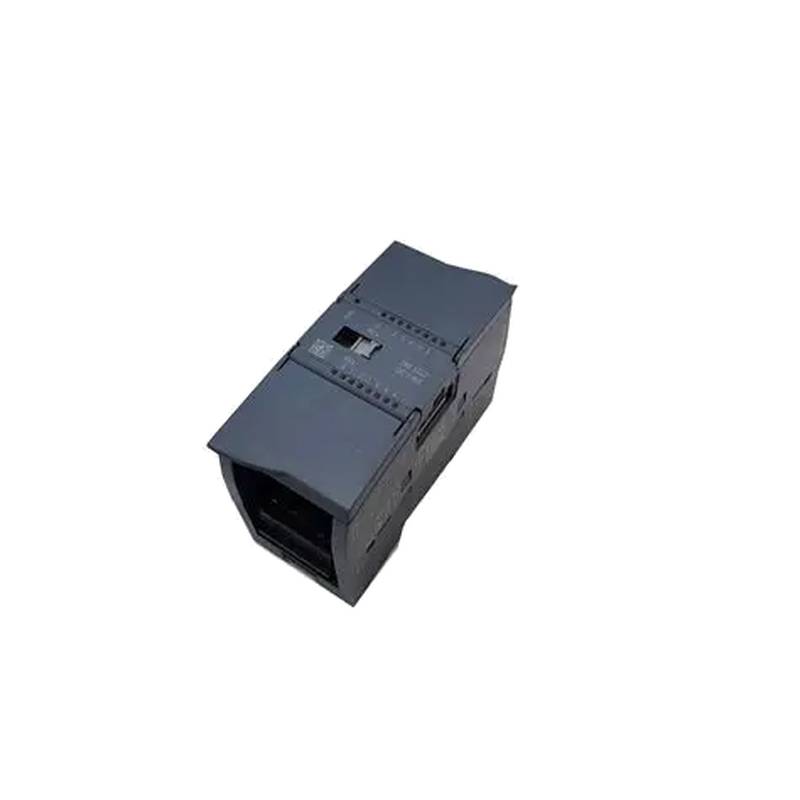












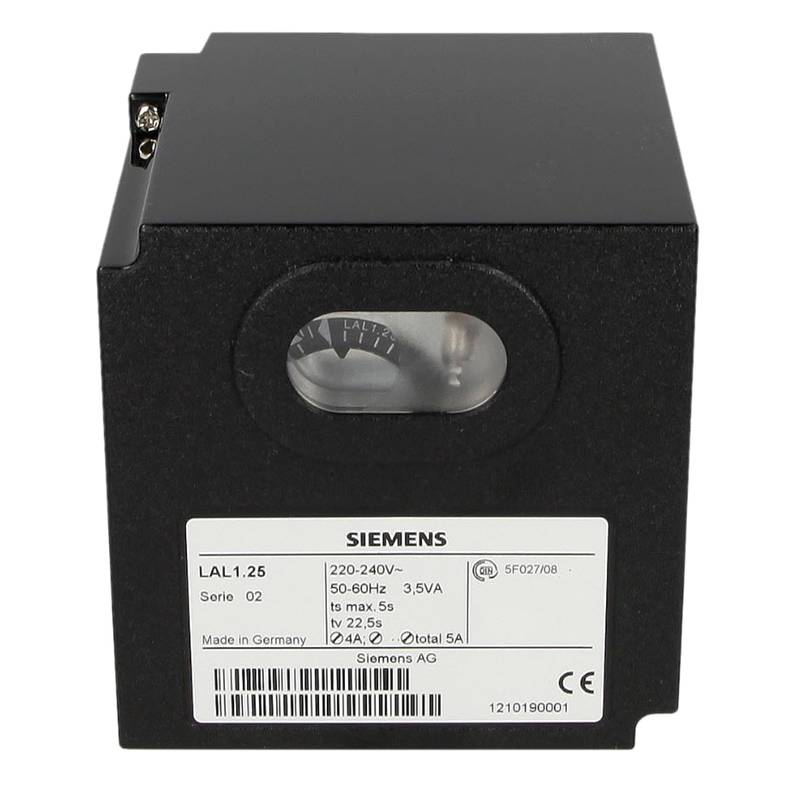
SIEMENS LFL1.622-110V 110V Two-Stage Burner Program Controller


The SIEMENS LFL1.622-110V 110V Two-Stage Burner Program Controller stands as a robust solution for precise and reliable burner management in industrial applications. Its core advantages lie in its dual-stage operational capability, ensuring optimal fuel efficiency and combustion control. Key features include robust diagnostic capabilities, extensive safety interlocks, and a programmable logic sequence, all designed to meet stringent industrial standards. Important technical parameters include its 110V operating voltage, two-stage control functionality, and compatibility with various burner types.
Product Specifications
| Feature | Specification |
| :---------------------- | :-------------------------------------------- |
| Product Number | LFL1.622-110V |
| Operating Voltage | 110V AC |
| Control Stages | Two-Stage |
| Burner Type Compatibility | Gas, oil, dual-fuel |
| Safety Function | Integrated safety relay |
| Flame Detection Input | Compatible with various flame detectors |
| Reset Function | Manual or automatic |
| Environmental Rating | Industrial grade enclosure |
| Communication Interface | N/A (typically hardwired) |
Core Features & Market Positioning
The SIEMENS LFL1.622-110V distinguishes itself through its integrated safety functions, providing a reliable platform for burner control systems. Its two-stage operation allows for optimized heat output, reducing energy consumption and operational costs, a critical factor in industrial settings. Market positioning emphasizes its dependability and Siemens' reputation for quality and longevity in industrial automation components. This controller is designed for applications where precise control and unwavering safety are paramount, differentiating it from simpler single-stage controllers.
Key Application Scenarios
This burner program controller finds extensive use in commercial and industrial heating systems, including boilers, furnaces, and process heaters. Its two-stage capability is particularly valuable in applications requiring modulation of heat output, such as large institutional buildings, manufacturing plants, and food processing facilities. Users frequently seek solutions for reliable ignition sequences, safe shutdown procedures, and efficient fuel management, all of which the LFL1.622-110V addresses directly.
Practical System Integration Guidance
Integrating the SIEMENS LFL1.622-110V involves careful wiring of power supply, burner components (igniter, fuel valves, fan motor), and flame detection devices. The controller's internal logic dictates the sequence of operations, requiring adherence to the wiring diagrams provided in the technical documentation. Proper grounding and adherence to voltage specifications (110V) are crucial for safe and effective operation. Initial commissioning typically involves setting parameters for pilot flame, main flame timing, and interlock logic, often requiring specialized knowledge of burner management systems.
Operation and Risk Mitigation
Safe operation of the LFL1.622-110V relies on correct installation and regular maintenance. The controller incorporates extensive safety interlocks to prevent hazardous conditions, such as unburnt fuel release. Key troubleshooting often involves diagnosing flame failure, ignition issues, or valve malfunctions. Understanding the unit's status indicators and diagnostic codes is vital for prompt resolution of any operational anomalies. Users should always refer to the official Siemens manual for detailed error code explanations and recommended corrective actions.
Scalability & Long-Term Value
While the LFL1.622-110V is a standalone controller, its integration into larger SCADA or Building Management Systems is typically achieved through auxiliary relays and status outputs that can be wired to PLCs or other control platforms. Its long-term value is secured by Siemens' commitment to product reliability and availability of spare parts. For applications requiring advanced digital integration or IIoT connectivity, Siemens offers more advanced burner management systems that can work in conjunction with or replace older controllers like the LFL1.622-110V.
Frequently Asked Questions
What is the primary function of the SIEMENS LFL1.622-110V?
This controller manages the entire burner operation sequence. It ensures safe ignition and controlled fuel delivery.
It is designed for two-stage firing, offering enhanced efficiency. The device also includes critical safety interlocks.
Its primary role is to automate and secure the combustion process in industrial heating equipment.
What are the main advantages of using a two-stage burner controller?
Two-stage controllers provide better temperature regulation. They offer more precise control over heat output.
This leads to improved energy efficiency by avoiding constant full-power operation. Fuel consumption is optimized accordingly.
They reduce wear and tear on equipment compared to single-stage on/off systems. This enhances overall system longevity.
Can the LFL1.622-110V be used with different types of burners?
Yes, it is versatile and supports gas, oil, and dual-fuel burners. Compatibility depends on specific burner design.
Flame detection methods must be compatible with the controller's inputs. Ensure proper sensor selection.
Consult the product manual or Siemens technical support for specific burner model integration.
What safety features are integrated into the LFL1.622-110V?
It includes essential safety interlocks for a secure startup and operation. These prevent hazardous conditions.
The controller monitors flame presence and interlocks fuel supply. A safety relay is built-in for immediate shutdown if needed.
These features are crucial for preventing dangerous scenarios like flame failure or fuel accumulation.
How do I troubleshoot flame failure on the LFL1.622-110V?
First, check the flame sensor for cleanliness and proper connection. Ensure it is correctly positioned.
Verify fuel supply and ignition system functionality. Check for any error codes displayed by the controller.
Consult the LFL1.622-110V manual for specific fault diagnosis and troubleshooting steps.
What is the operating voltage for the SIEMENS LFL1.622-110V?
The unit operates on a 110V AC power supply. It is crucial to use the correct voltage for operation.
Incorrect voltage can lead to malfunction or permanent damage to the controller. Always verify the supply.
Ensure the electrical system feeding the controller matches this specification precisely.
How is the LFL1.622-110V typically installed in a system?
Installation requires correct wiring of power, burner components, and flame sensors. Follow the manufacturer's diagram.
It's typically mounted in a control panel within the boiler or furnace system. Ensure proper ventilation and protection.
Proper grounding and electrical safety precautions are paramount during installation.
What does "two-stage" mean in the context of this controller?
It means the burner can operate at two different output levels. Typically, a low fire and a high fire setting.
This allows for more nuanced control of heating demand. It improves efficiency and comfort.
The controller sequences between these stages based on system requirements and pre-set parameters.
Does the LFL1.622-110V support remote monitoring or communication?
Typically, this model relies on hardwired connections for control and status feedback. It lacks direct digital communication ports.
However, its status outputs can be wired to PLCs or SCADA systems for integration. This allows for indirect monitoring.
For advanced digital integration and IIoT, newer Siemens models are available.
What kind of maintenance is recommended for this burner controller?
Regular visual inspections for damage or loose connections are important. Keep the enclosure clean.
Periodically test safety interlocks and flame detection systems. Refer to the operational manual for specific schedules.
Follow manufacturer recommendations for professional servicing and functional checks.